
蛋白激酶C激活通过ROCK-II依赖性刺激肌动球蛋白收缩性破坏上皮顶端连接。
Protein kinase C activation disrupts epithelial apical junctions via ROCK-II dependent stimulation of actomyosin contractility.
作者信息
Ivanov Andrei I, Samarin Stanislav N, Bachar Moshe, Parkos Charles A, Nusrat Asma
机构信息
Department of Medicine, University of Rochester, Rochester, NY 14642, USA.
出版信息
BMC Cell Biol. 2009 May 7;10:36. doi: 10.1186/1471-2121-10-36.
BACKGROUND
Disruption of epithelial cell-cell adhesions represents an early and important stage in tumor metastasis. This process can be modeled in vitro by exposing cells to chemical tumor promoters, phorbol esters and octylindolactam-V (OI-V), known to activate protein kinase C (PKC). However, molecular events mediating PKC-dependent disruption of epithelial cell-cell contact remain poorly understood. In the present study we investigate mechanisms by which PKC activation induces disassembly of tight junctions (TJs) and adherens junctions (AJs) in a model pancreatic epithelium.
RESULTS
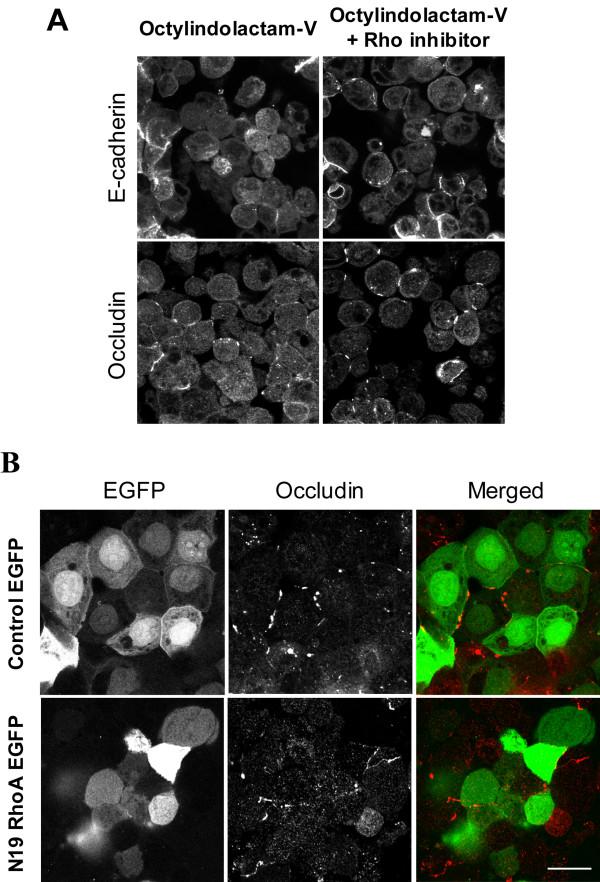
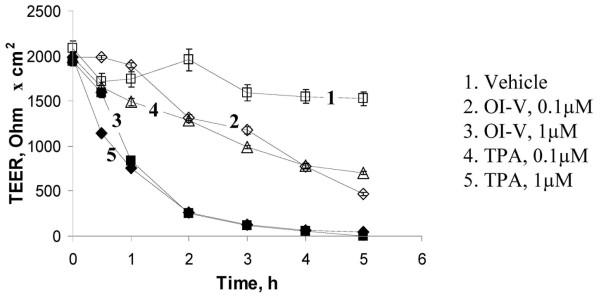
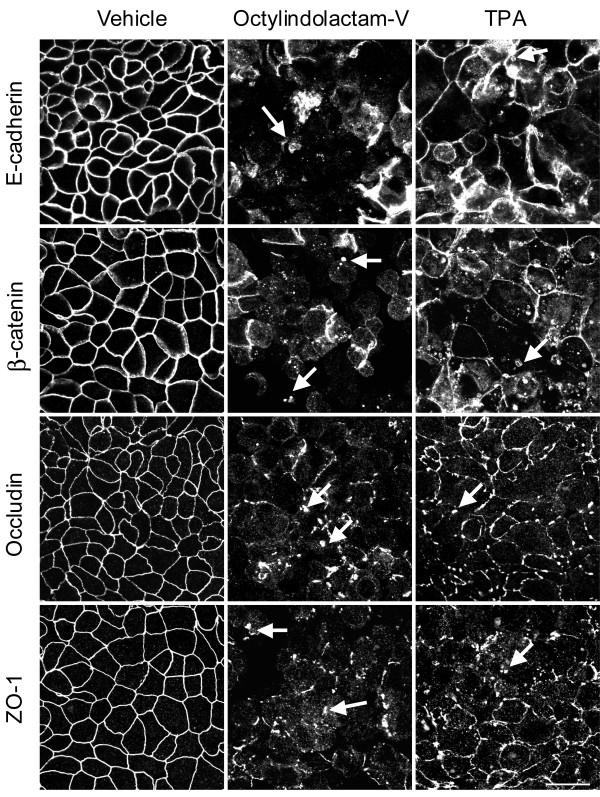
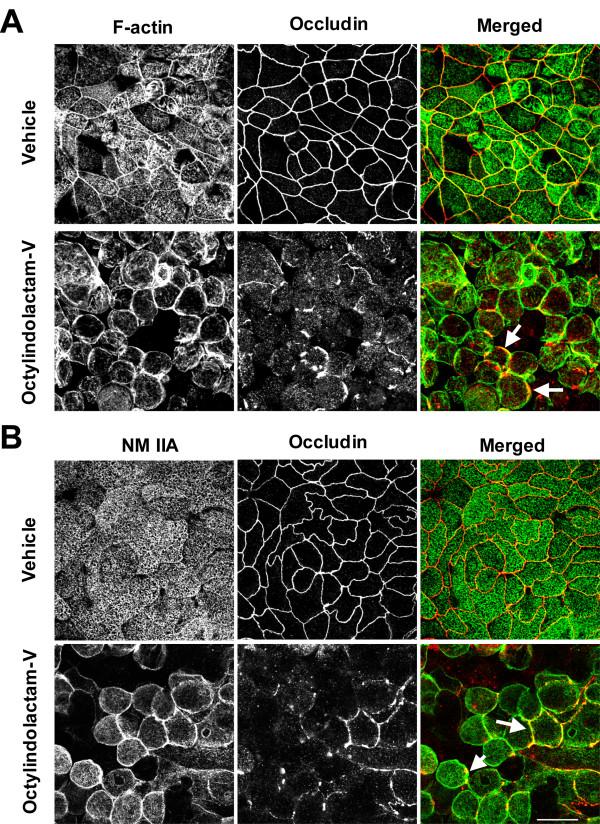
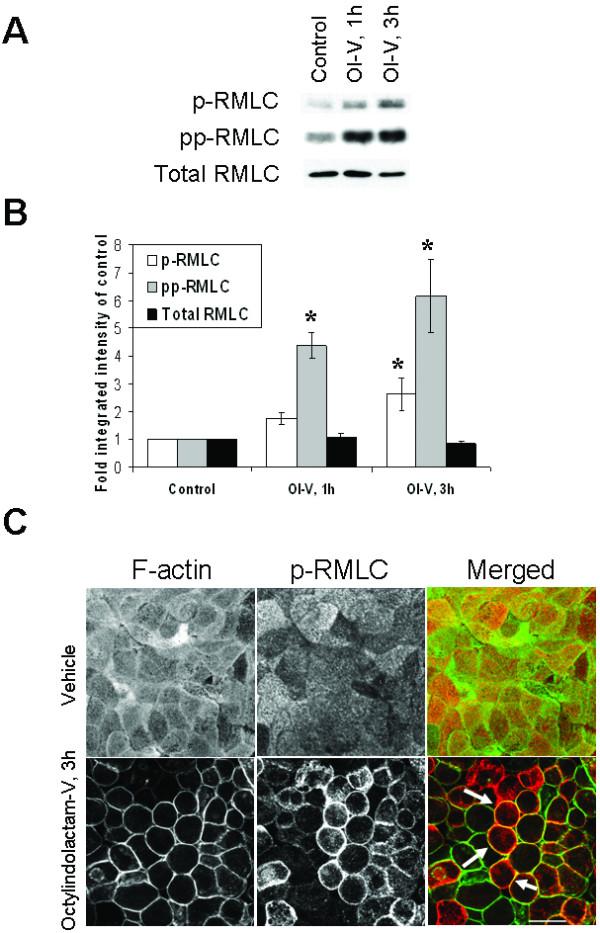
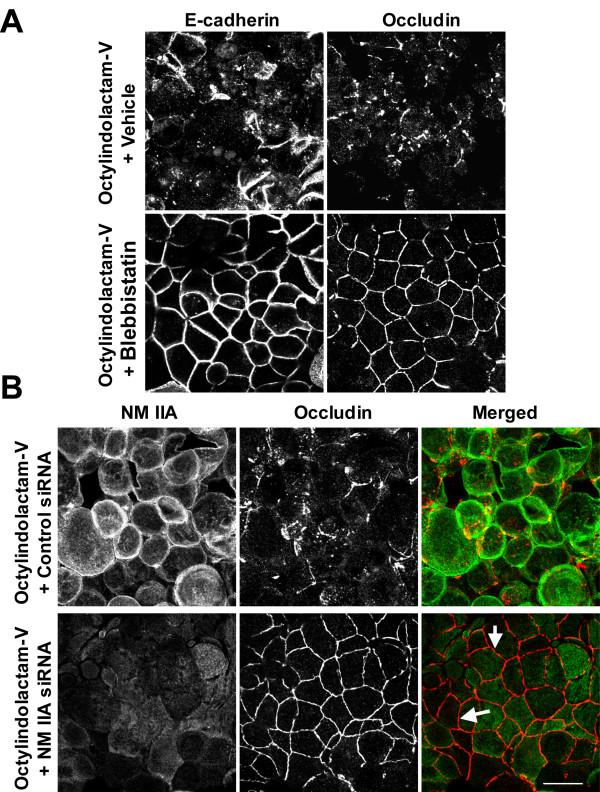
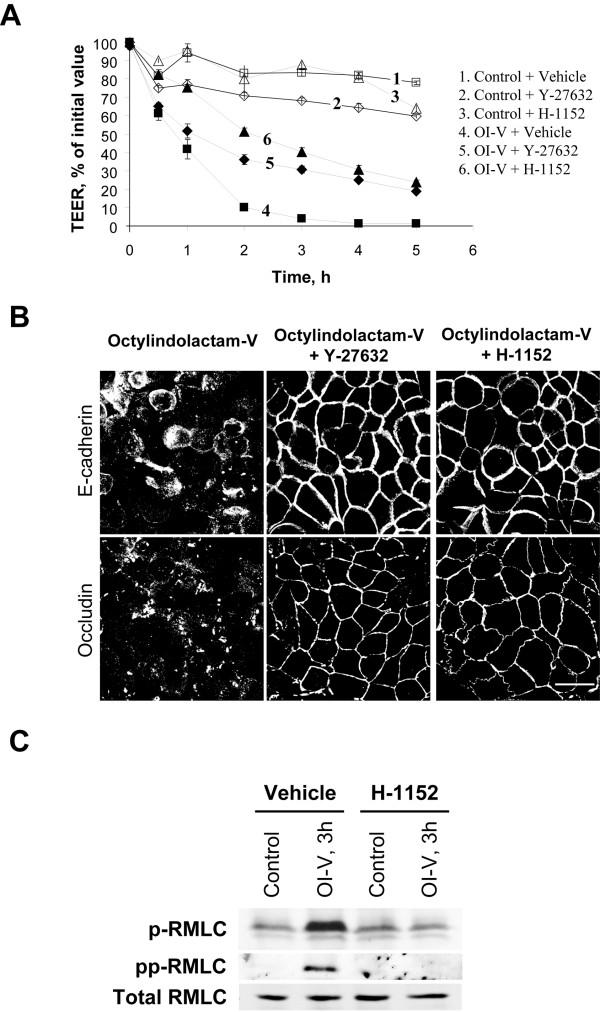
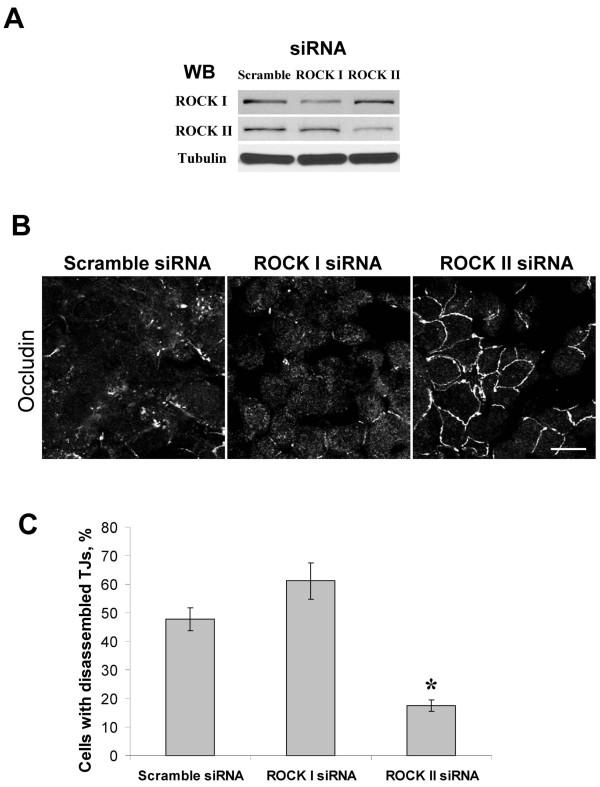
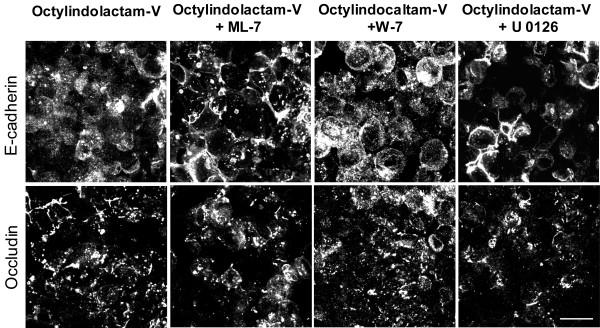
Exposure of HPAF-II human pancreatic adenocarcinoma cell monolayers to either OI-V or 12-O-tetradecanoylphorbol-13-acetate caused rapid disruption and internalization of AJs and TJs. Activity of classical PKC isoenzymes was responsible for the loss of cell-cell contacts which was accompanied by cell rounding, phosphorylation and relocalization of the F-actin motor nonmuscle myosin (NM) II. The OI-V-induced disruption of AJs and TJs was prevented by either pharmacological inhibition of NM II with blebbistatin or by siRNA-mediated downregulation of NM IIA. Furthermore, AJ/TJ disassembly was attenuated by inhibition of Rho-associated kinase (ROCK) II, but was insensitive to blockage of MLCK, calmodulin, ERK1/2, caspases and RhoA GTPase.
CONCLUSION
Our data suggest that stimulation of PKC disrupts epithelial apical junctions via ROCK-II dependent activation of NM II, which increases contractility of perijunctional actin filaments. This mechanism is likely to be important for cancer cell dissociation and tumor metastasis.
背景
上皮细胞间黏附的破坏是肿瘤转移早期的一个重要阶段。该过程可在体外通过将细胞暴露于化学肿瘤启动子、佛波酯和八氢吲哚酰胺 - V(OI - V)来模拟,已知这些物质可激活蛋白激酶C(PKC)。然而,介导PKC依赖性上皮细胞间接触破坏的分子事件仍知之甚少。在本研究中,我们探究了PKC激活在胰腺上皮模型中诱导紧密连接(TJ)和黏附连接(AJ)解体的机制。
结果
将HPAF - II人胰腺腺癌细胞单层暴露于OI - V或12 - O - 十四酰佛波醇-13 - 乙酸酯会导致AJ和TJ迅速破坏并内化。经典PKC同工酶的活性导致细胞间接触丧失,同时伴有细胞变圆、F - 肌动蛋白运动蛋白非肌肉肌球蛋白(NM)II的磷酸化和重新定位。通过用blebbistatin药理学抑制NM II或通过siRNA介导下调NM IIA可防止OI - V诱导的AJ和TJ破坏。此外,抑制Rho相关激酶(ROCK)II可减弱AJ/TJ解体,但对肌球蛋白轻链激酶(MLCK)、钙调蛋白、ERK1/2、半胱天冬酶和RhoA GTP酶的阻断不敏感。
结论
我们的数据表明,PKC的刺激通过ROCK - II依赖性激活NM II破坏上皮顶端连接,这增加了连接周围肌动蛋白丝的收缩性。这种机制可能对癌细胞解离和肿瘤转移很重要。

 Zotero 插件