Luo Ran, Wang Xiongwei, Dong Yuanxun, Wang Lei, Tian Chunlei
Department of Neurosurgery, Institute of Neurosurgery, Yichang Central People's Hospital & The First Clinical Medical College of Three Gorges University, Yichang, Hubei 443003, P,R, China.
J Biomed Sci. 2014 Mar 26;21(1):25. doi: 10.1186/1423-0127-21-25.
The pathogenesis of glioma is unclear. The disturbance of the apoptosis process plays a critical role in glioma growth. Factors regulating the apoptosis process are to be further understood. This study aims to investigate the role of protease activated receptor-2 (PAR2) in regulation the apoptosis process in glioma cells.
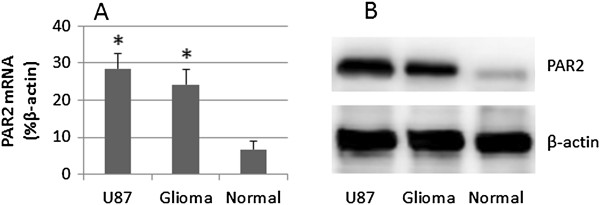
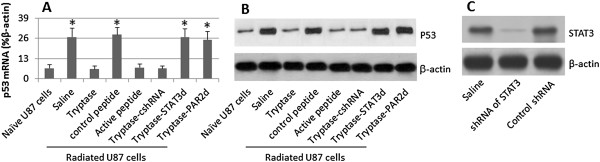
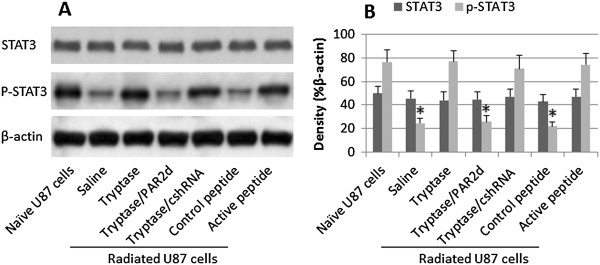
The results showed that U87 cells and human glioma tissue expressed PAR2. Exposure to tryptase, or the PAR2 active peptide, increased STAT3 phosphorylation in the radiated U87 cells, reduced U87 cell apoptosis, suppressed the expression of p53 in U87 cells.
Activation of PAR2 can reduce the radiated U87 cell apoptosis via modulating the expression of p53. The results implicate that PAR2 may be a novel therapeutic target in the treatment of glioma.
胶质瘤的发病机制尚不清楚。细胞凋亡过程的紊乱在胶质瘤生长中起关键作用。调节细胞凋亡过程的因素有待进一步了解。本研究旨在探讨蛋白酶激活受体-2(PAR2)在调节胶质瘤细胞凋亡过程中的作用。
结果显示,U87细胞和人胶质瘤组织表达PAR2。用类胰蛋白酶或PAR2活性肽处理后,辐射后的U87细胞中STAT3磷酸化增加,U87细胞凋亡减少,U87细胞中p53表达受到抑制。
PAR2的激活可通过调节p53的表达减少辐射后的U87细胞凋亡。结果表明,PAR2可能是治疗胶质瘤的一个新的治疗靶点。