Otero-Losada Matilde, Cao Gabriel, Mc Loughlin Santiago, Rodríguez-Granillo Gastón, Ottaviano Graciela, Milei José
Instituto de Investigaciones Cardiológicas, Universidad de Buenos Aires, Consejo Nacional de Investigaciones Científicas y Técnicas, ININCA.UBA.CONICET, Buenos Aires, Argentina.
PLoS One. 2014 Mar 26;9(3):e89838. doi: 10.1371/journal.pone.0089838. eCollection 2014.
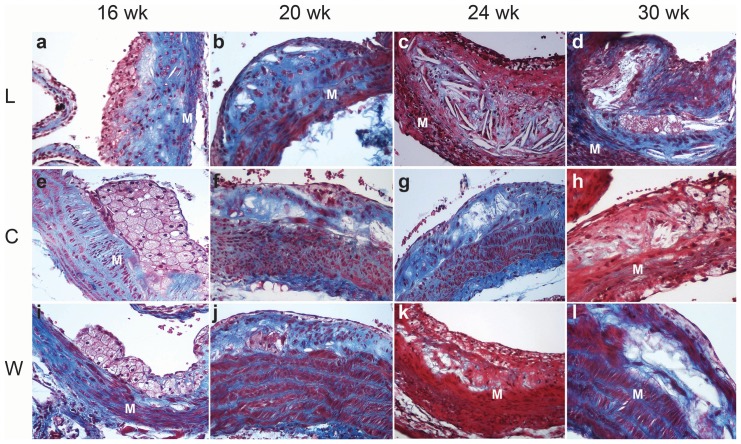
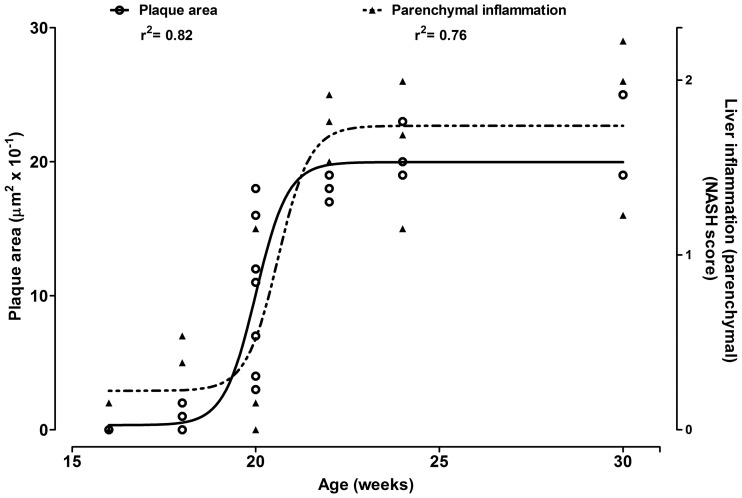
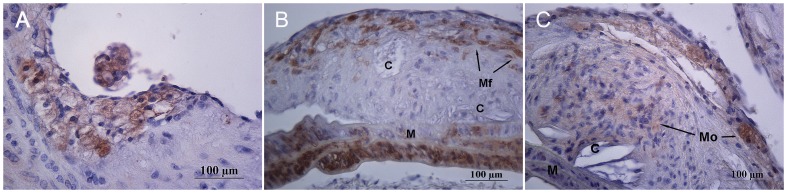
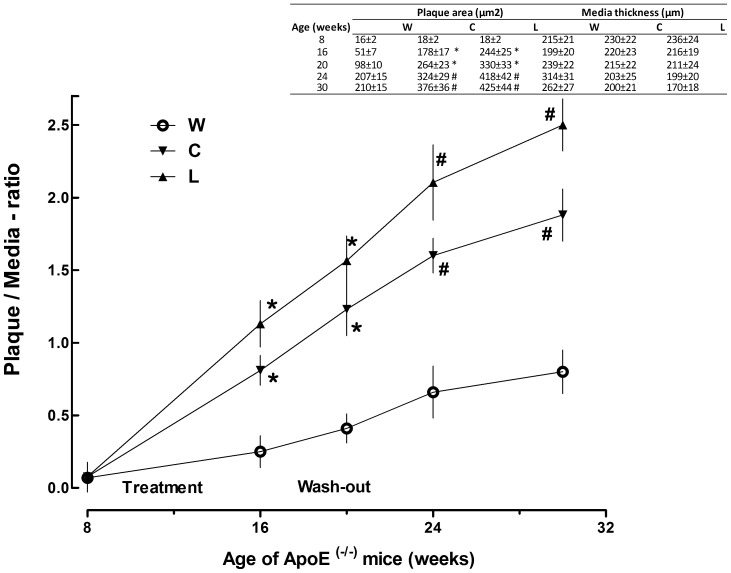
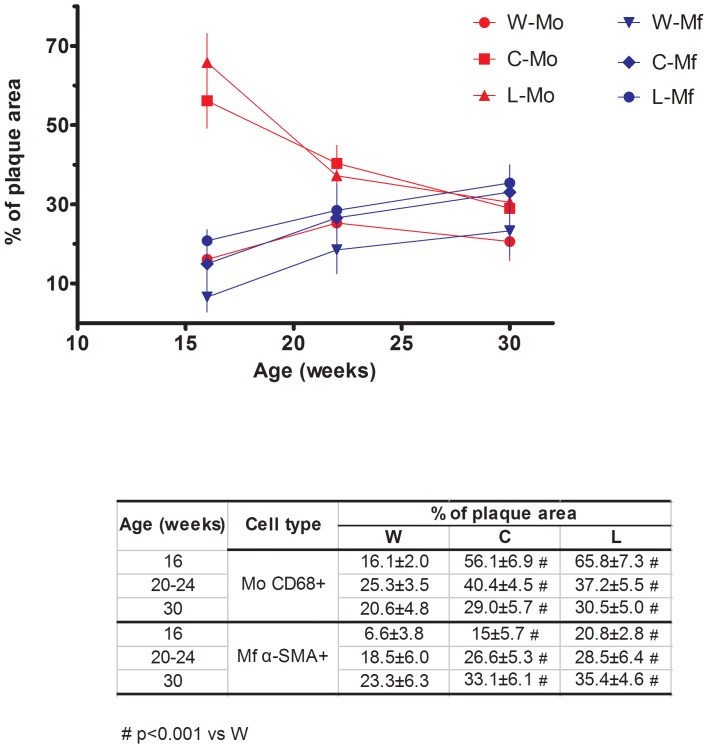
This study was conducted in order to evaluate the effect of cola beverages drinking on atherosclerosisand test the hypothesis whether cola beverages consumption at early life stages might affect the development and progression of atherosclerosis later in life. ApoE-/- C57BL/6J mice (8 week-old) were randomized in 3 groups (n = 20 each) according to free accessto water (W), sucrose sweetened carbonated cola drink(C) or aspartame-acesulfame K sweetened carbonated 'light' cola drink (L)for the next 8 weeks. Drinking treatment was ended by switching C and L groups to drinking water. Four mice per group and time were sequentially euthanized: before treatment (8 weeks-old), at the end of treatment (16 weeks-old) and after treatment discontinuation (20 weeks-old, 24 weeks-old, 30 week-old mice). Aortic roots and livers were harvested, processed for histology and serial cross-sections were stained. Aortic plaque area was analyzed and plaque/media-ratio was calculated. Early consumption of cola drinks accelerated atherosclerotic plaque progression favoring the interaction between macrophages and myofibroblasts, without the participation of either T lymphocytes or proliferative activity. Plaque/media-ratio varied according to drink treatment (F2,54 = 3.433, p<0.04) and mice age (F4,54 = 5.009, p<0.03) and was higher in C and L groups compared with age-matched W group (p<0.05 at 16 weeks and 20 weeks, p<0.01 at 24 weeks and 30 weeks). Natural evolution of atherosclerosis in ApoE-/- mice (W group) evidenced atherosclerosis acceleration in parallel with a rapid increase in liver inflammation around the 20 weeks of age. Cola drinking within the 8-16 weeks of age accelerated atherosclerosis progression in ApoE-/- mice favoring aortic plaque enlargement (inward remodeling) over media thinning all over the study time. Data suggest that cola drinking at early life stages may predispose to atherosclerosis progression later in life in ApoE-/- mice.
本研究旨在评估饮用可乐饮料对动脉粥样硬化的影响,并验证早期饮用可乐饮料是否会影响后期动脉粥样硬化的发生和发展这一假设。将8周龄的载脂蛋白E基因敲除(ApoE-/-)C57BL/6J小鼠随机分为3组(每组n = 20),在接下来的8周内分别自由饮用纯水(W组)、蔗糖碳酸可乐饮料(C组)或阿斯巴甜-安赛蜜K碳酸“低糖”可乐饮料(L组)。通过将C组和L组改为饮用纯水来结束饮料处理。每组在不同时间点依次处死4只小鼠:处理前(8周龄)、处理结束时(16周龄)以及停止处理后(20周龄、24周龄、30周龄小鼠)。采集主动脉根部和肝脏,进行组织学处理并对连续横断面进行染色。分析主动脉斑块面积并计算斑块/中膜比值。早期饮用可乐饮料加速了动脉粥样硬化斑块的进展,促进了巨噬细胞与肌成纤维细胞之间的相互作用,且T淋巴细胞未参与其中,也无增殖活性。斑块/中膜比值因饮料处理(F2,54 = 3.433,p<0.04)和小鼠年龄(F4,54 = 5.009,p<0.03)而有所不同,与年龄匹配的W组相比,C组和L组的该比值更高(16周和20周时p<0.05,24周和30周时p<0.01)。ApoE-/-小鼠(W组)动脉粥样硬化的自然发展过程表明,在20周龄左右,随着肝脏炎症的迅速增加,动脉粥样硬化加速。在8至16周龄期间饮用可乐加速了ApoE-/-小鼠的动脉粥样硬化进展,在整个研究期间,主动脉斑块增大(内向重塑)超过中膜变薄。数据表明,早期饮用可乐饮料可能使ApoE-/-小鼠在后期更容易发生动脉粥样硬化进展。