Herman Tania De La Fuente, Schnell Erich, Young Julie, Hildebrand Kim, Algan Ozer, Syzek Elizabeth, Herman Terence, Ahmad Salahuddin
Department of Radiation Oncology, Stephenson Cancer Center, University of Oklahoma Health Sciences Center, Oklahoma City, Oklahoma, USA.
J Med Phys. 2013 Oct;38(4):165-72. doi: 10.4103/0971-6203.121193.
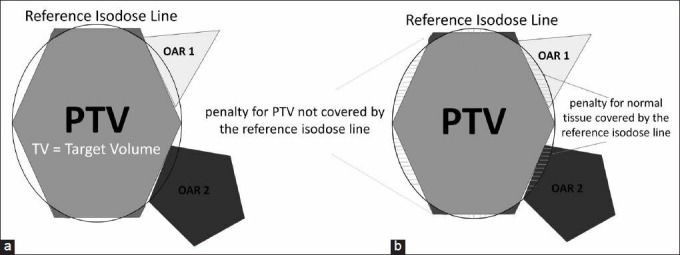
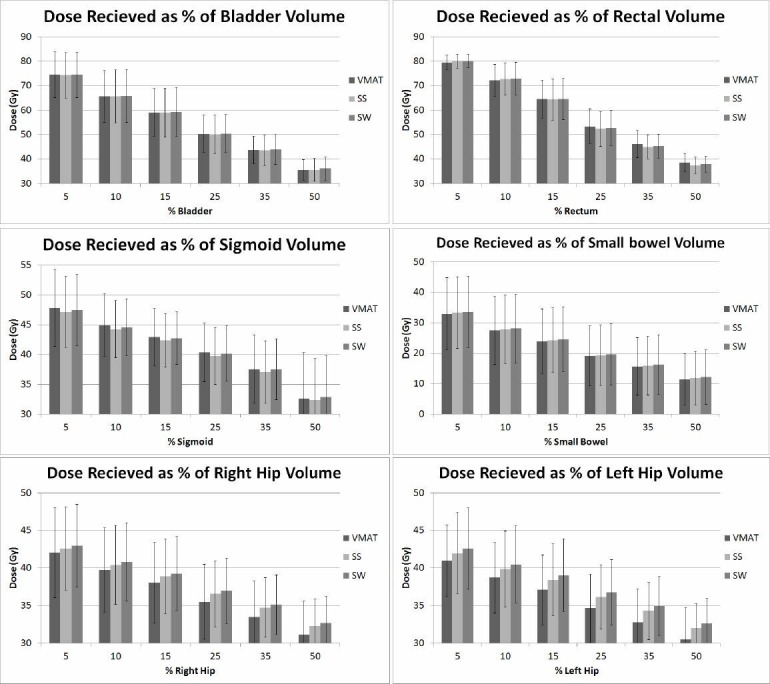
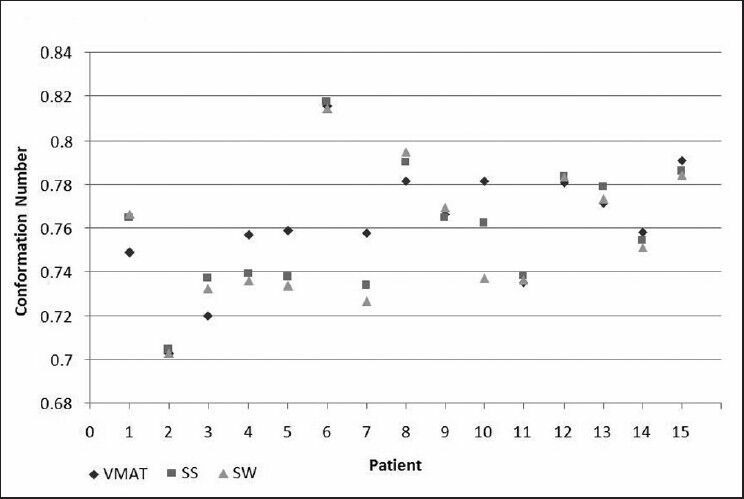
THIS STUDY WAS PERFORMED TO EVALUATE DOSIMETRIC DIFFERENCES BETWEEN CURRENT INTENSITY MODULATED RADIATION THERAPY (IMRT) DELIVERY MODES: Step-and-shoot (SS), sliding window (SW), and volumetric modulated arc therapy (VMAT). Plans for 15 prostate cancer patients with 10 MV photon beams using each IMRT mode were generated. Patients had three planning target volumes (PTVs) including prostate, prostate plus seminal vesicles, and pelvic lymphatics. Dose volume histograms (DVHs) of PTVs and organs at risk (OARs), tumor control probability (TCP) and normal tissue complication probabilities (NTCPs), conformation number, and monitor units (MUs) used were compared. Statistical analysis was performed using the analysis of variance (ANOVA) technique. The TCPs were < 99% with insignificant differences among modalities (P > 0.99). Doses to all critical structures were higher on average with SW method compared to SS, but insignificant. NTCP values were lowest for VMAT in all structures excepting bladder. Normal tissue volumes receiving doses in the 20-30 Gy range were reduced for VMAT compared to SS. Percentage of MUs required for VMAT to deliver a comparable plan to SS and SW was at least 40% less. In conclusion, similar target coverage and normal tissue doses were found by the three compared modes and the dosimetric differences were small.
本研究旨在评估当前调强放射治疗(IMRT)的不同照射模式:步进式(SS)、滑动窗口式(SW)和容积调强弧形治疗(VMAT)之间的剂量学差异。针对15例前列腺癌患者,分别使用每种IMRT模式生成了10MV光子束的治疗计划。患者有三个计划靶区(PTV),包括前列腺、前列腺加精囊以及盆腔淋巴结。比较了PTV和危及器官(OAR)的剂量体积直方图(DVH)、肿瘤控制概率(TCP)和正常组织并发症概率(NTCP)、适形数以及使用的监测单位(MU)。采用方差分析(ANOVA)技术进行统计分析。各模式之间的TCP均<99%,差异无统计学意义(P>0.99)。与SS相比,SW方法对所有关键结构的平均剂量更高,但差异无统计学意义。除膀胱外,VMAT在所有结构中的NTCP值最低。与SS相比,VMAT使接受20 - 30Gy剂量范围的正常组织体积减少。VMAT为达到与SS和SW相当的计划所需的MU百分比至少减少40%。总之,三种比较模式的靶区覆盖和正常组织剂量相似,剂量学差异较小。