Perez Benjamin Cruz, Morris Hugh J, Hart Richard T, Liu Jun
Department of Biomedical Engineering, The Ohio State University, Columbus, USA.
Department of Biomedical Engineering, The Ohio State University, Columbus, USA ; Department of Ophthalmology, The Ohio State University, Columbus, USA.
J Biomed Sci Eng. 2013 Dec;6(12A):29-37. doi: 10.4236/jbise.2013.612A005.
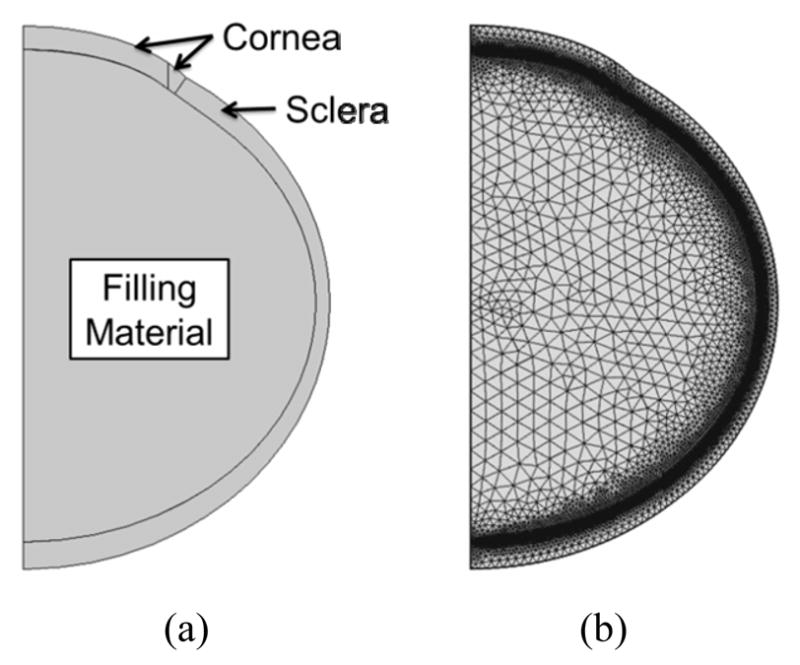
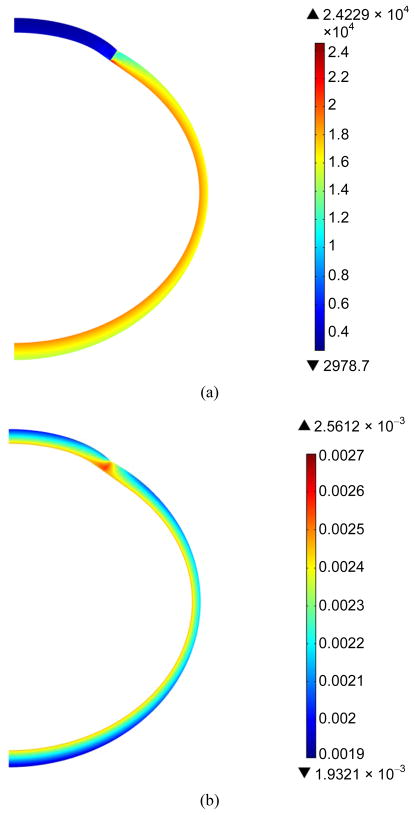
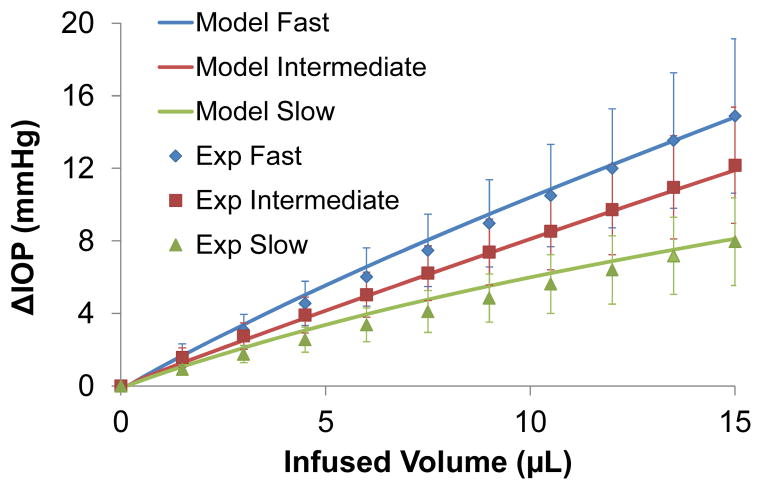
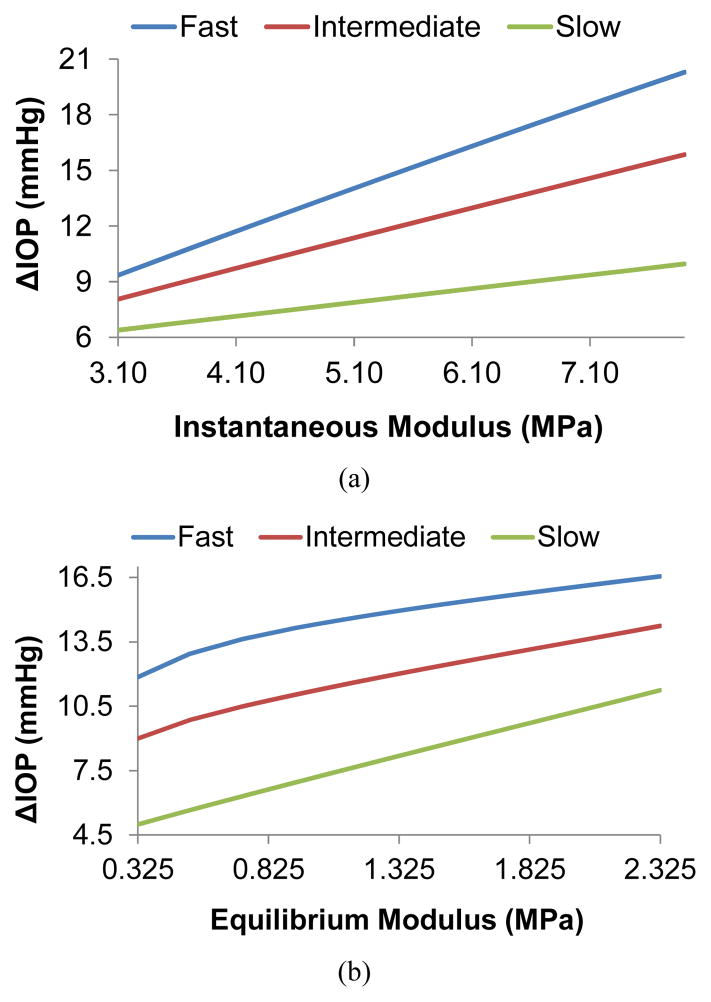
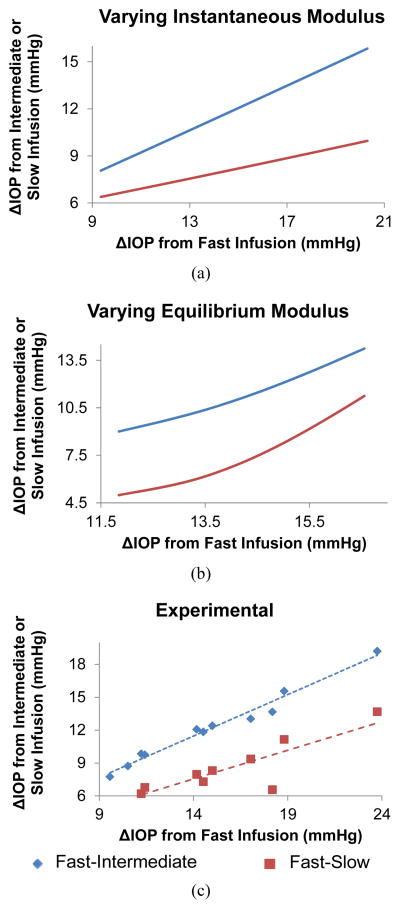
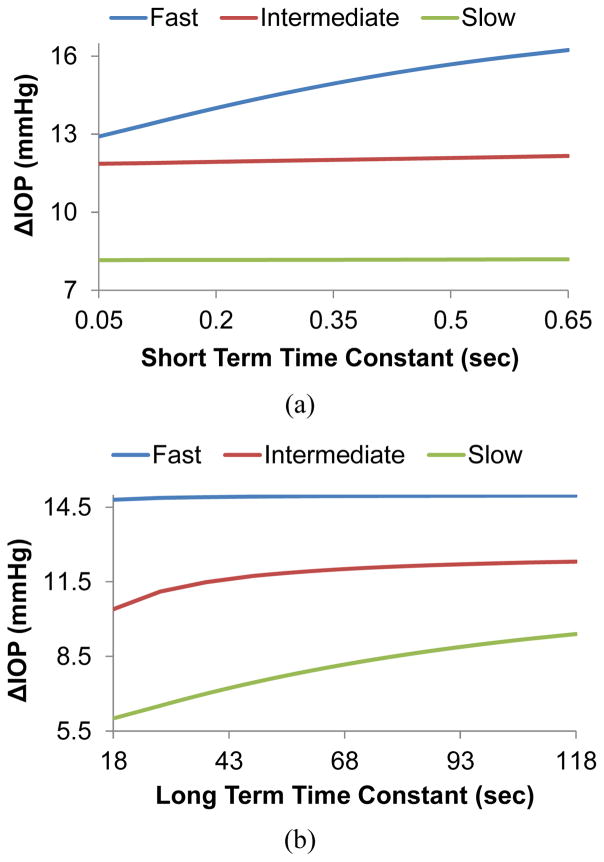
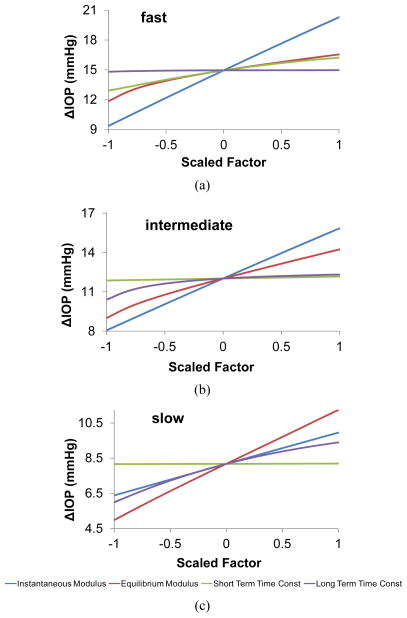
A linear viscoelastic finite element model was built to investigate factors that influenced the intraocular pressure (IOP) elevations due to micro-volumetric changes in the eye at three different rates. The viscoelastic properties of the cornea and the sclera, including the instantaneous modulus, equilibrium modulus, and relaxation time constants, parametrically varied to examine their effects on IOP elevations at different rates of volumetric changes. The simulated responses were in good agreement with the previously reported experimental results obtained from porcine globes, showing the general trend of higher IOP elevations at faster rates. The simulations showed that all viscoelastic properties influenced the profile of the dynamic IOP due to volumetric changes, and the relative significance of a specific parameter was highly dependent on the rate of change.
建立了一个线性粘弹性有限元模型,以研究在三种不同速率下,因眼睛微体积变化而导致眼压(IOP)升高的影响因素。角膜和巩膜的粘弹性特性,包括瞬时模量、平衡模量和松弛时间常数,进行参数变化,以检验它们在不同体积变化速率下对眼压升高的影响。模拟结果与先前从猪眼球获得的实验结果高度吻合,显示出在更快速率下眼压升高的总体趋势。模拟结果表明,所有粘弹性特性都会影响因体积变化而产生的动态眼压曲线,且特定参数的相对重要性高度依赖于变化速率。