Ihle Christoph, Ateschrang Atesch, Albrecht Dirk, Mueller Johannes, Stöckle Ulrich, Schröter Steffen
Department of Traumatology and Reconstructive Surgery, Eberhard Karls University Tübingen, BG Trauma Center Tübingen, Schnarrrenbergstr, 95, 72076 Tübingen, Germany.
BMC Res Notes. 2014 Mar 31;7:201. doi: 10.1186/1756-0500-7-201.
With incorrect or even without treatment, acute injuries of the posterior cruciate ligament (PCL) can lead to chronic instability of the knee joint. After delayed treatment, negative occupational changes and reduced quality of life can occur. These aspects have not yet been investigated. The purpose of this study was to evaluate occupational consequences after isolated reconstruction in cases of chronic PCL insufficiency.
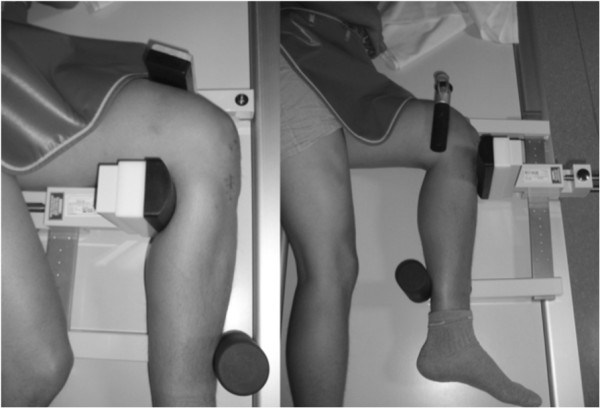
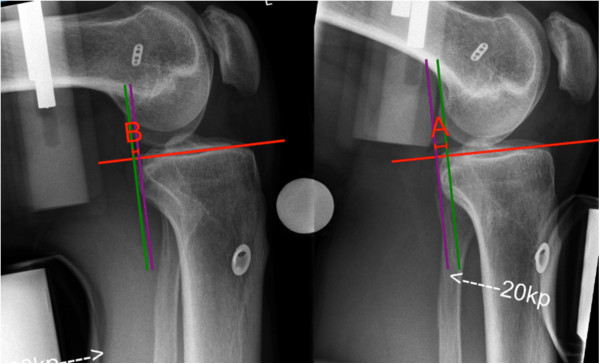
12 patients treated with PCL reconstruction in a single bundle technique, using hamstring tendon grafts, were evaluated. All patients were operated upon at least 3 months after injury. Mean time of follow-up was 51 ± 18.2 months (14-75). Radiological assessment (Telos stress device) showed a side comparison of total translation of 4.5 ± 2.6 mm. Occupational consequences have been evaluated by the classification system "REFA". Median time incapacity for work was 8 weeks. Nearly all patients achieved the mental status of the normal population (SF-36), but physical status was still restricted. A pre- to postoperative improvement of the clinical scores could be seen: Lysholm-Score: 46.4 ± 17.3 to 84.7 ± 14.1, HSS-Score: 74.3 ± 10.5 to 88.3 ± 10.7. Postoperative evaluated scores were: Tegner score: 4.8 ± 1.2, IKDC score: 80.0 ± 16.2, VPS: 3.4 ± 2.7. Patients with low physical load in their workplace described significantly better clinical results in every clinical score (p < .05) and less pain than patients with high physical load prior to the accident (VPS: REFA < 2: 2.4 ± 2.6, REFA ≥ 2: 5.5 ± 1.7; p < 0.05).
Operative treated patients with a chronic PCL insufficiency achieve an improvement of the clinical result. Patients with low physical load at their workplace achieve less restrictions.
后交叉韧带(PCL)急性损伤若治疗不当甚至未接受治疗,可导致膝关节慢性不稳定。延迟治疗后,可能出现负面的职业变化和生活质量下降。这些方面尚未得到研究。本研究的目的是评估慢性PCL功能不全病例单纯重建术后的职业后果。
对12例采用单束技术、使用腘绳肌腱移植物进行PCL重建的患者进行了评估。所有患者均在受伤后至少3个月接受手术。平均随访时间为51±18.2个月(14 - 75个月)。放射学评估(Telos应力装置)显示两侧总移位对比为4.5±2.6毫米。采用“REFA”分类系统评估职业后果。工作能力丧失的中位时间为8周。几乎所有患者都达到了正常人群的心理状态(SF - 36),但身体状态仍受到限制。临床评分从术前到术后有所改善:Lysholm评分:46.4±17.3至84.7±14.1,HSS评分:74.3±10.5至88.3±10.7。术后评估分数为:Tegner评分:4.8±1.2,IKDC评分:80.0±16.2,VPS:3.4±2.7。工作场所体力负荷低的患者在各项临床评分中均显著表现出更好的临床结果(p < 0.05),且疼痛程度低于事故前体力负荷高的患者(VPS:REFA < 2:2.4±2.6,REFA≥2:5.5±1.7;p < 0.05)。
手术治疗慢性PCL功能不全的患者临床结果得到改善。工作场所体力负荷低的患者受限较少。