Kharkiv National University of RadioElectronics, Lenin Ave, 14, Kharkiv 61166, Ukraine.
Nanoscale Res Lett. 2014 Mar 31;9(1):154. doi: 10.1186/1556-276X-9-154.
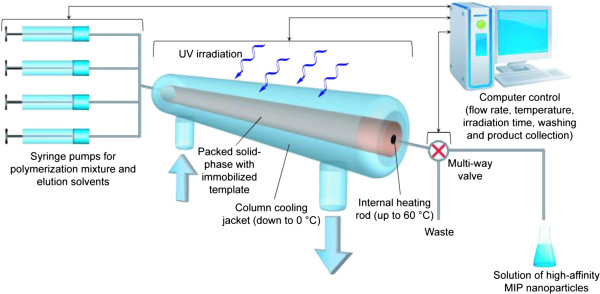
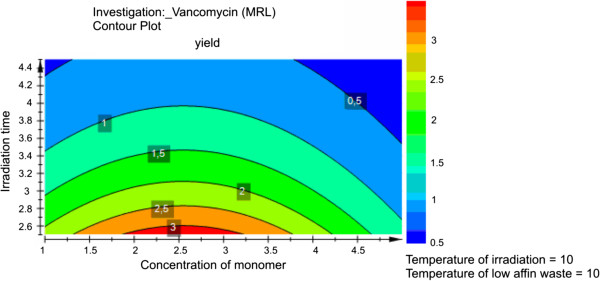
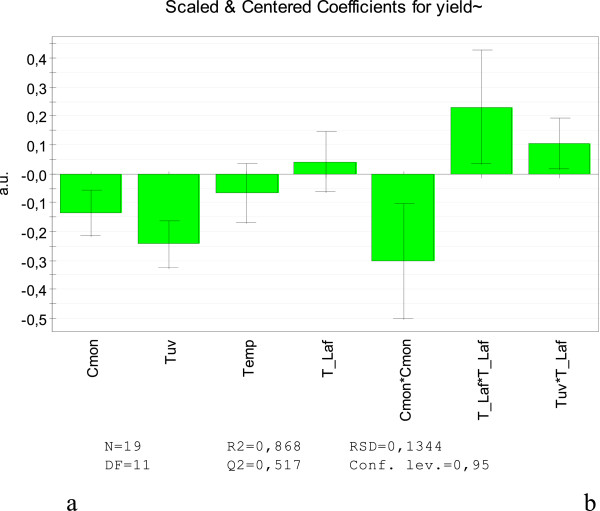
A novel optimized protocol for solid-state synthesis of molecularly imprinted polymer nanoparticles (nanoMIPs) with specificity for antibiotic vancomycin is described. The experimental objective was optimization of the synthesis parameters (factors) affecting the yield of obtained nanoparticles which have been synthesized using the first prototype of an automated solid-phase synthesizer. Applications of experimental design (or design of experiments) in optimization of nanoMIP yield were carried out using MODDE 9.0 software. The factors chosen in the model were the amount of functional monomers in the polymerization mixture, irradiation time, temperature during polymerization, and elution temperature. In general, it could be concluded that the irradiation time is the most important and the temperature was the least important factor which influences the yield of nanoparticles. Overall, the response surface methodology proved to be an effective tool in reducing time required for optimization of complex experimental conditions.
描述了一种用于固相合成具有抗生素万古霉素特异性的分子印迹聚合物纳米粒子(nanoMIPs)的新型优化方案。实验目的是优化影响所合成纳米粒子产率的合成参数(因素),这些纳米粒子是使用自动化固相合成仪的第一个原型合成的。使用 MODDE 9.0 软件进行实验设计(或实验设计)在优化 nanoMIP 产率中的应用。该模型中选择的因素是聚合混合物中功能单体的量、辐照时间、聚合过程中的温度和洗脱温度。总的来说,可以得出结论,辐照时间是影响纳米粒子产率的最重要因素,而温度是影响最小的因素。总的来说,响应面法被证明是一种有效的工具,可以减少优化复杂实验条件所需的时间。