Sadoughi Farahnaz, Kimiafar Khalil, Ahmadi Maryam, Shakeri Mohammad Taghi
Department of Health Information Management, School of Health Management and Information Sciences, Iran University of Medical Sciences, Tehran, IR Iran.
Department of Health Information Management, School of Health Management and Information Sciences, Iran University of Medical Sciences, Tehran, IR Iran ; Department of Medical records and Health Information Technology, School of Paramedical Sciences, Mashhad University of Medical Sciences, Mashhad, Iran.
Iran Red Crescent Med J. 2013 Dec;15(12):e11716. doi: 10.5812/ircmj.11716. Epub 2013 Dec 5.
Nowadays, using new information technology (IT) has provided remarkable opportunities to decrease medical errors, support health care specialist, increase the efficiency and even the quality of patient's care and safety.
The purpose of this study was the identification of Hospital Information System (HIS) success and failure factors and the evaluation methods of these factors. This research emphasizes the need to a comprehensive evaluation of HISs which considers a wide range of success and failure factors in these systems.
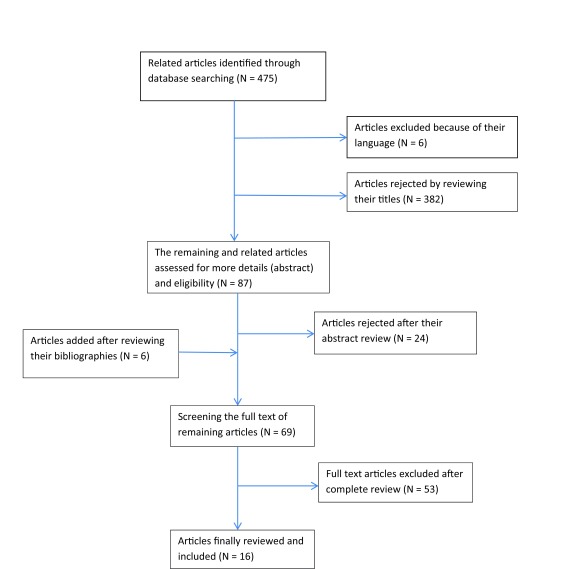
We searched for relevant English language studies based on keywords in title and abstract, using PubMed, Ovid Medline (by applying MeSH terms), Scopus, ScienceDirect and Embase (earliest entry to march 17, 2012). Studies which considered success models and success or failure factors, or studied the evaluation models of HISs and the related ones were chosen. Since the studies used in this systematic review were heterogeneous, the combination of extracted data was carried out by using narrative synthesis method.
We found 16 articles which required detailed analysis. Finally, the suggested framework includes 12 main factors (functional, organizational, behavioral, cultural, management, technical, strategy, economy, education, legal, ethical and political factors), 67 sub factors, and 33 suggested methods for the evaluation of these sub factors.
The results of the present research indicates that the emphasis of the HIS evaluation moves from technical subjects to human and organizational subjects, and from objective to subjective issues. Therefore, this issue entails more familiarity with more qualitative evaluation methods. In most of the reviewed studies, the main focus has been laid on the necessity of using multi-method approaches and combining methods to obtain more comprehensive and useful results.
如今,运用新信息技术为减少医疗差错、支持医护人员、提高效率乃至提升患者护理质量与安全提供了显著机遇。
本研究旨在识别医院信息系统(HIS)的成功与失败因素以及这些因素的评估方法。本研究强调有必要对HIS进行全面评估,该评估需考虑这些系统中广泛的成功与失败因素。
我们使用PubMed、Ovid Medline(通过应用医学主题词)、Scopus、ScienceDirect和Embase(最早收录至2012年3月17日),基于标题和摘要中的关键词搜索相关英文研究。选取考虑了成功模型、成功或失败因素,或研究了HIS及其相关系统评估模型的研究。由于本系统综述中使用的研究具有异质性,因此采用叙述性综合法对提取的数据进行合并。
我们找到16篇需要详细分析的文章。最终,所建议的框架包括12个主要因素(功能、组织、行为、文化、管理、技术、战略、经济、教育、法律、伦理和政治因素)、67个子因素以及33种用于评估这些子因素的建议方法。
本研究结果表明,HIS评估的重点从技术主题转向了人员和组织主题,从客观问题转向了主观问题。因此,这一问题需要更熟悉更多定性评估方法。在大多数综述研究中,主要重点在于使用多方法途径并结合多种方法以获得更全面和有用结果的必要性。