Rath Rachna, Reginald B Ajay
Department of Oral Pathology, Hi-Tech Dental College and Hospital, Bhubaneswar, Odisha, India.
Department of Oral Pathology, Narayana Dental College and Hospital, Nellore, Andhra Pradesh, India.
J Forensic Dent Sci. 2014 Jan;6(1):46-50. doi: 10.4103/0975-1475.127771.
The superiority of dentofacial structures as scientific identifiers, particularly in mass disasters is well known. Special techniques like rugoscopy are valuable not only in identification of skeletal remains but can also facilitate population differentiation, as few studies have shown.
The present study is to classify and compare the differences in rugae shape in populations of Andhra Pradesh and Odisha and to evaluate the discriminatory ability of rugae shape in population differentiation.
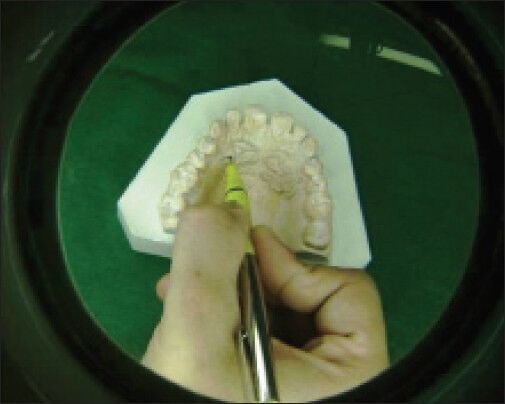
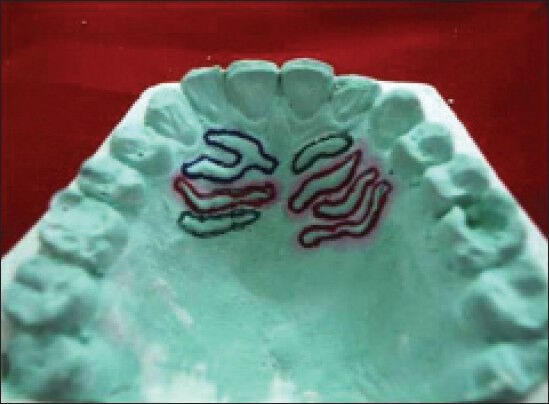
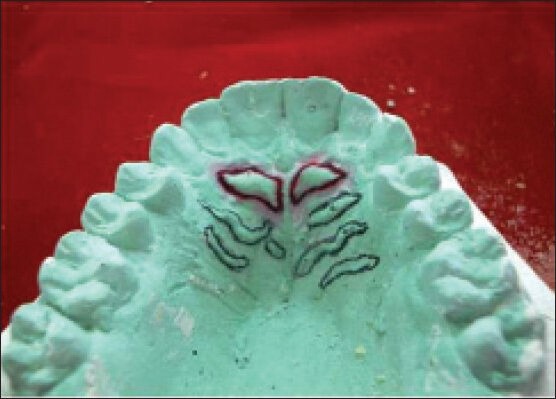
One hundred maxillary casts from each group, equally divided between the sexes and in a narrow age range, were classified as per rugae shapes. The incidence of rugae shape was recorded and their association with ethnicity was tested using Chi-square analysis and step wise discriminant function analysis. All analysis was undertaken using SPSS 16.0 (SPSS Inc., Chicago, Illinois, USA) and MS Excel Package.
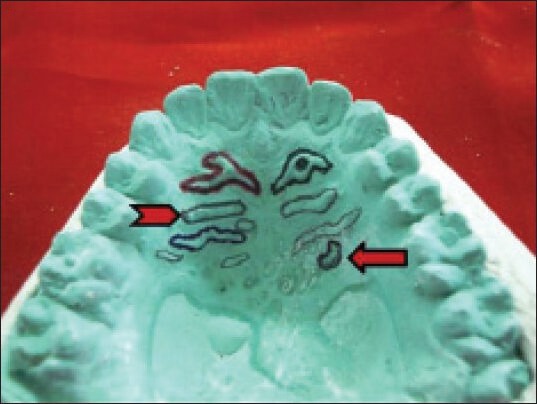
Straight and nonspecific rugae were most prevalent in Andhra Pradesh, whereas the wavy forms and unifications prevailed in Odisha. A hitherto unknown nonspecific "plaque pattern" was detected in considerable numbers in Andhra Pradesh population. The accuracy of the discriminant function analysis in differentiating the study populations was 93.5%.
Significant differences in rugae shape between the two populations emerged that also allowed a fair differentiation, thus validating previous reports of a good discriminatory ability of rugae shapes. Perhaps, more studies in genetically diverse populations as in India could also unearth new rugae patterns and further the identification process.
牙颌面结构作为科学的身份识别特征,其优越性众所周知,尤其是在大规模灾难中。像腭皱襞检查这样的特殊技术不仅在识别骨骼遗骸方面有价值,而且如少数研究所示,还能促进人群区分。
本研究旨在对安得拉邦和奥里萨邦人群的腭皱襞形状差异进行分类和比较,并评估腭皱襞形状在人群区分中的鉴别能力。
从每组中选取100个上颌模型,按性别平均分配且年龄范围较窄,根据腭皱襞形状进行分类。记录腭皱襞形状的发生率,并使用卡方分析和逐步判别函数分析测试其与种族的关联。所有分析均使用SPSS 16.0(美国伊利诺伊州芝加哥市SPSS公司)和MS Excel软件包进行。
直线型和非特异性腭皱襞在安得拉邦最为常见,而波浪形和联合形在奥里萨邦更为普遍。在安得拉邦人群中发现了相当数量的一种前所未知的非特异性“斑块模式”。判别函数分析区分研究人群的准确率为93.5%。
两个群体之间腭皱襞形状存在显著差异,这也使得能够进行合理区分,从而验证了之前关于腭皱襞形状具有良好鉴别能力的报道。或许,在印度这样基因多样化的人群中进行更多研究,也可能发现新的腭皱襞模式并推动身份识别进程。