Nevin Austin, Cesaratto Anna, Bellei Sara, D'Andrea Cosimo, Toniolo Lucia, Valentini Gianluca, Comelli Daniela
Istituto di Fotonica e Nanotecnologie-Consiglio Nazionale delle Ricerche (IFN-CNR), Dipartimento di Fisica, Politecnico di Milano, Piazza Leonardo da Vinci 32, 20133 Milano, Italy.
Dipartimento di Fisica, Politecnico di Milano, Piazza Leonardo da Vinci 32, 20133 Milano, Italy.
Sensors (Basel). 2014 Apr 2;14(4):6338-55. doi: 10.3390/s140406338.
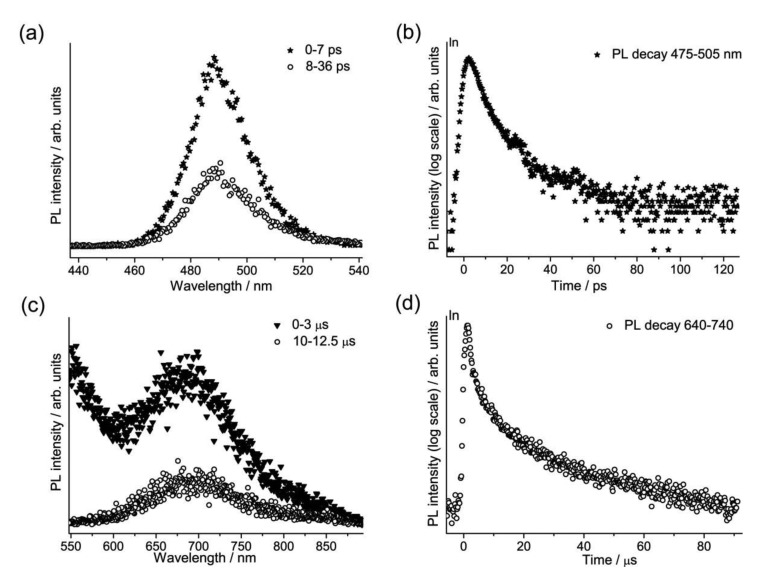
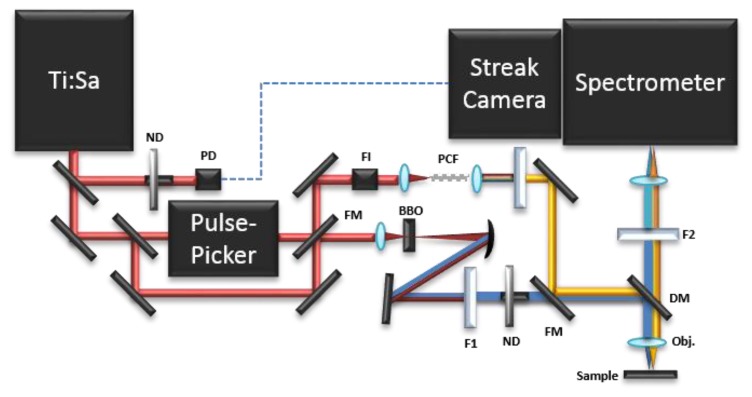
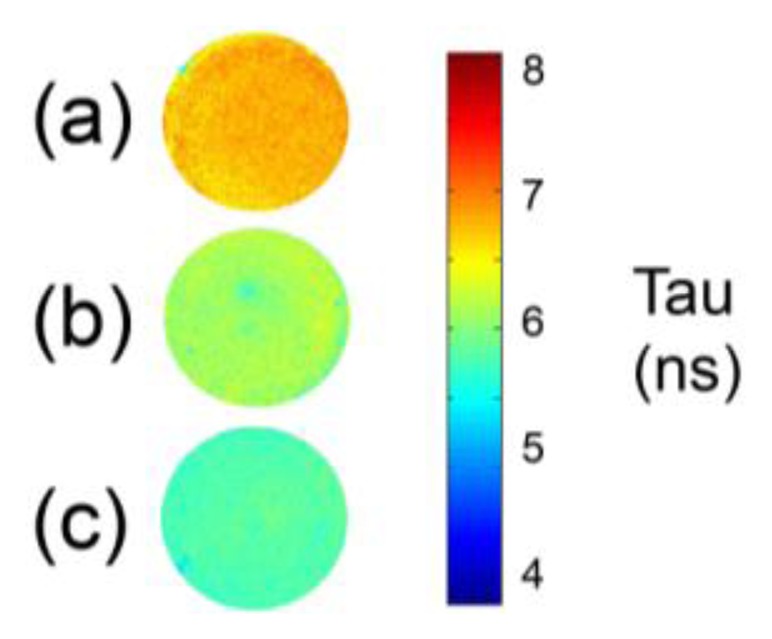
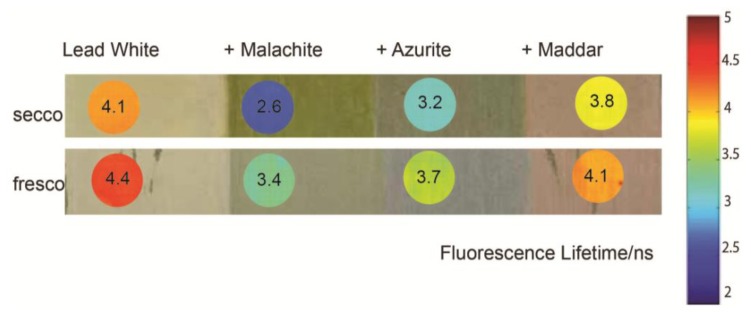
Applications of time-resolved photoluminescence spectroscopy (TRPL) and fluorescence lifetime imaging (FLIM) to the analysis of cultural heritage are presented. Examples range from historic wall paintings and stone sculptures to 20th century iconic design objects. A detailed description of the instrumentation developed and employed for analysis in the laboratory or in situ is given. Both instruments rely on a pulsed laser source coupled to a gated detection system, but differ in the type of information they provide. Applications of FLIM to the analysis of model samples and for the in-situ monitoring of works of art range from the analysis of organic materials and pigments in wall paintings, the detection of trace organic substances on stone sculptures, to the mapping of luminescence in late 19th century paintings. TRPL and FLIM are employed as sensors for the detection of the degradation of design objects made in plastic. Applications and avenues for future research are suggested.
介绍了时间分辨光致发光光谱(TRPL)和荧光寿命成像(FLIM)在文化遗产分析中的应用。实例涵盖从历史壁画和石雕到20世纪标志性设计物品。详细描述了在实验室或现场进行分析所开发和使用的仪器。这两种仪器都依赖于与门控检测系统耦合的脉冲激光源,但它们提供的信息类型有所不同。FLIM在模型样品分析和艺术品现场监测中的应用范围包括壁画中有机材料和颜料的分析、石雕上痕量有机物质的检测以及19世纪晚期绘画中发光的映射。TRPL和FLIM被用作检测塑料制品设计物体降解的传感器。还提出了未来研究的应用和途径。