Philip Subha, Zahoor Muhammad Atif, Zhi Huijun, Ho Yik-Khuan, Giam Chou-Zen
Department of Microbiology and Immunology, Uniformed Services University of the Health Sciences, Bethesda, Maryland, United States of America.
PLoS Pathog. 2014 Apr 3;10(4):e1004040. doi: 10.1371/journal.ppat.1004040. eCollection 2014 Apr.
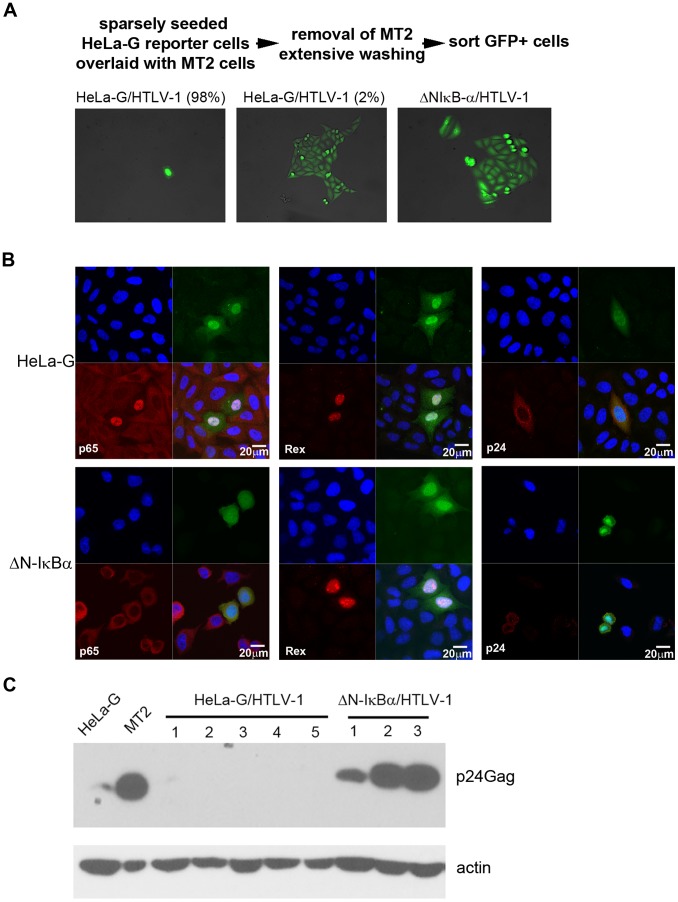
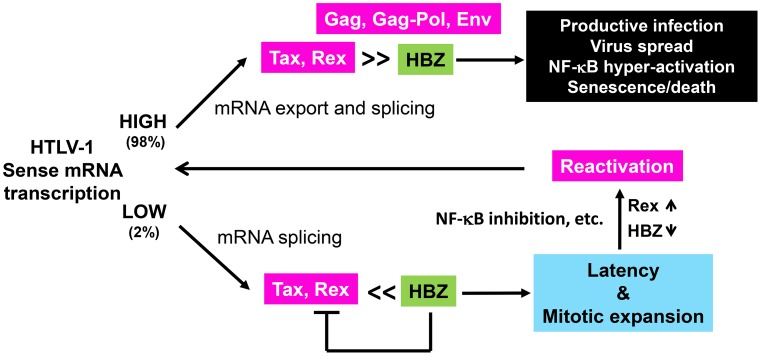
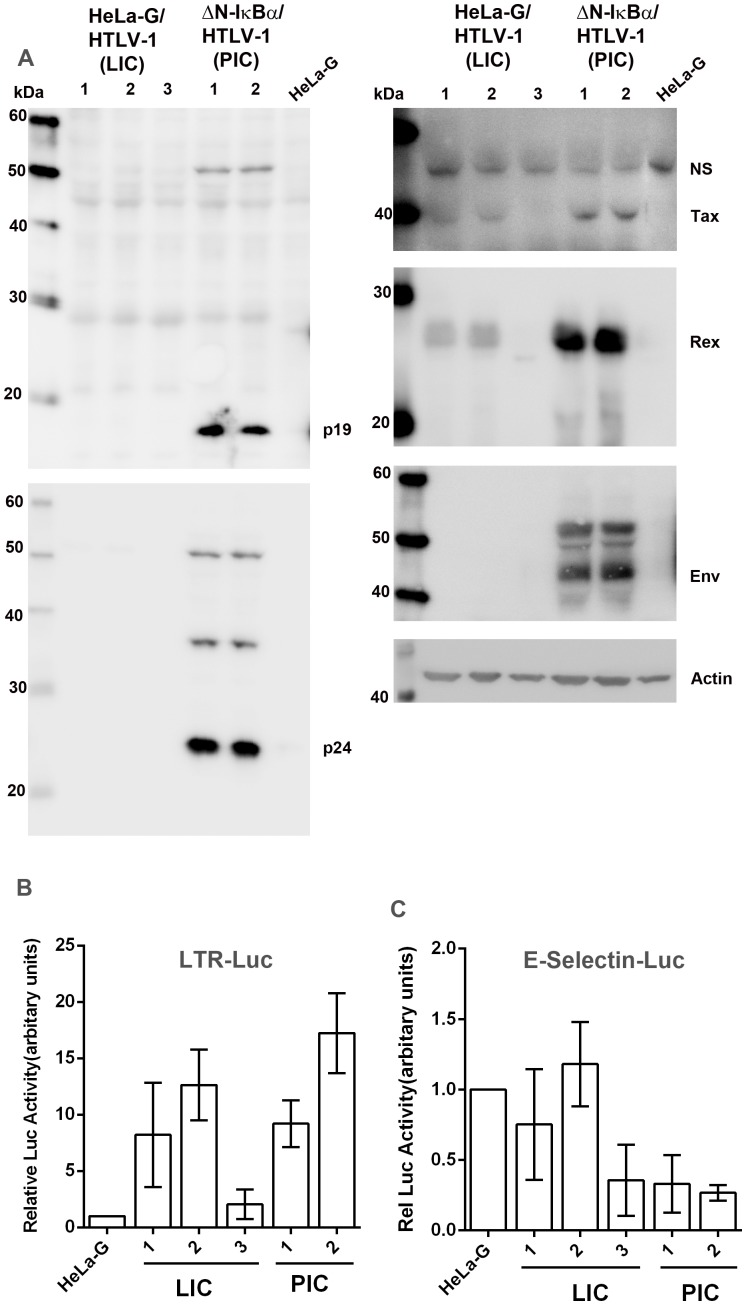
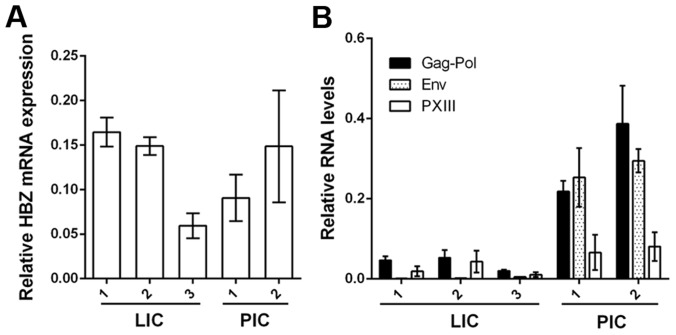
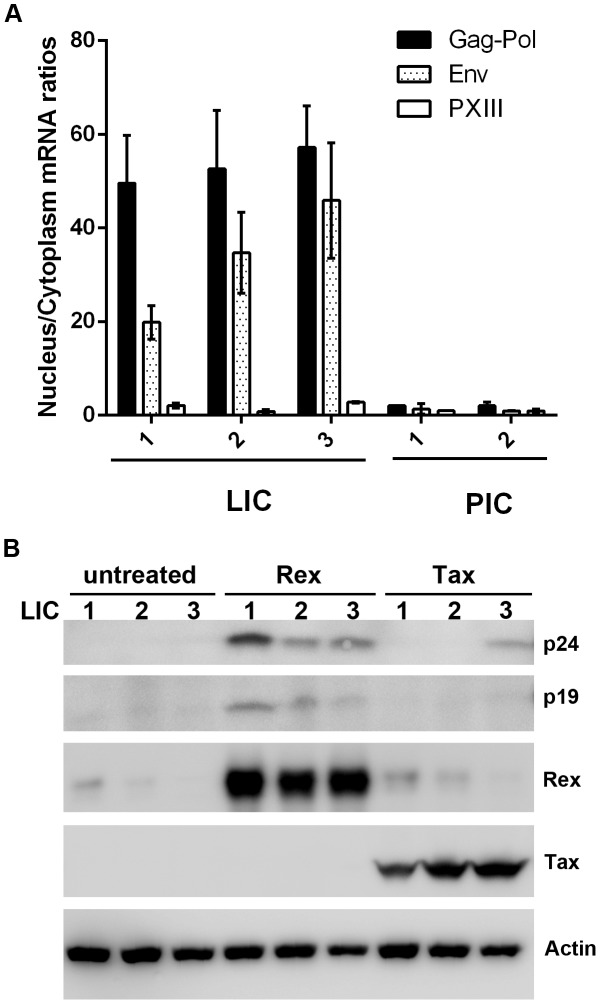
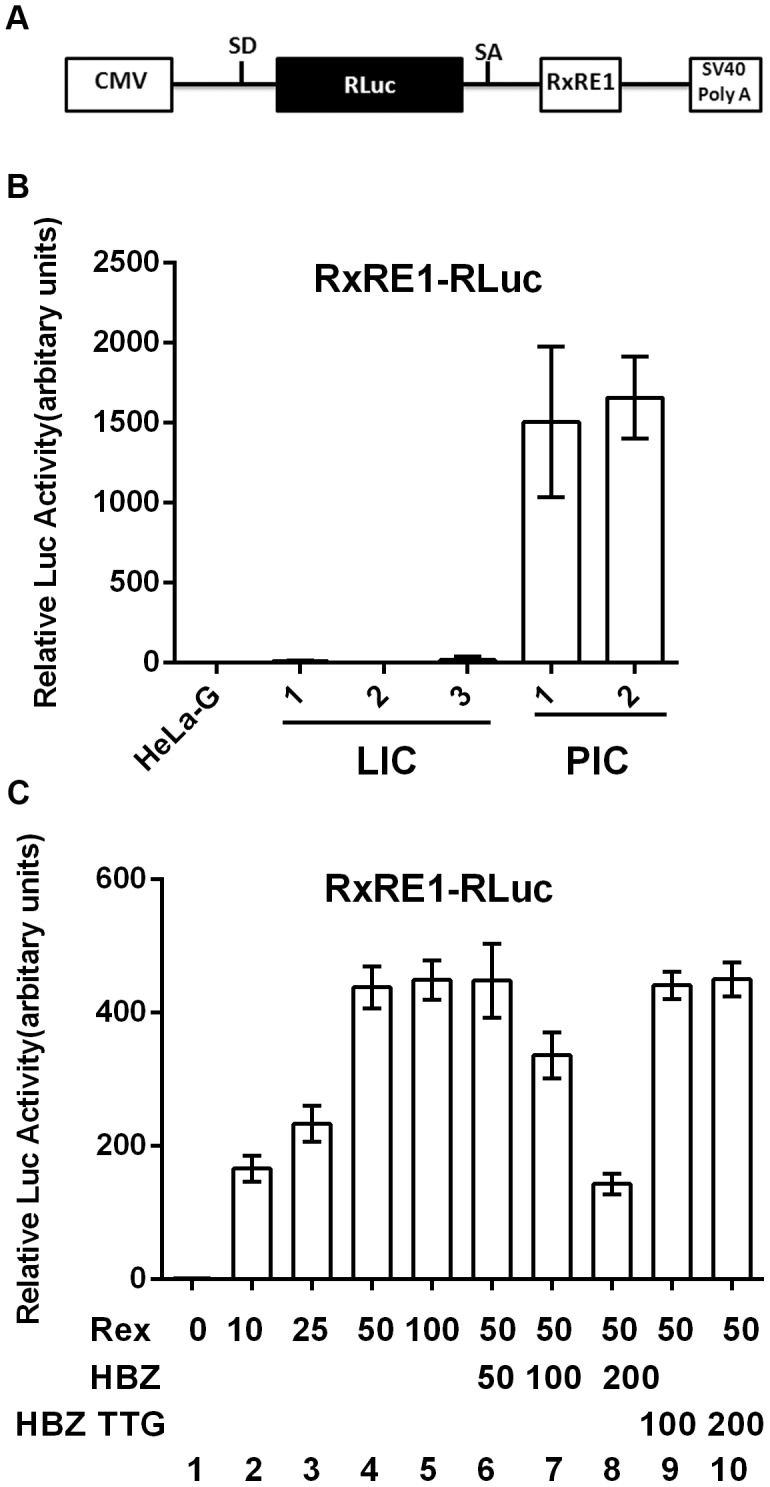
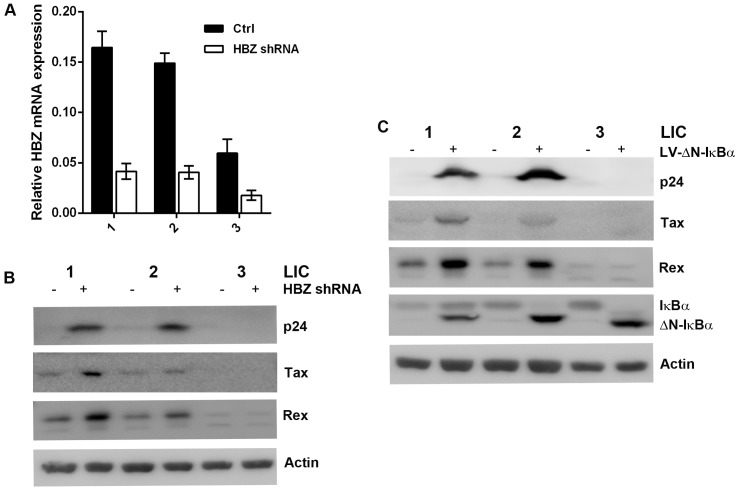
Human T lymphotropic virus type I (HTLV-I) infection is largely latent in infected persons. How HTLV-1 establishes latency and reactivates is unclear. Here we show that most HTLV-1-infected HeLa cells become senescent. By contrast, when NF-κB activity is blocked, senescence is averted, and infected cells continue to divide and chronically produce viral proteins. A small population of infected NF-κB-normal HeLa cells expresses low but detectable levels of Tax and Rex, albeit not Gag or Env. In these "latently" infected cells, HTLV-1 LTR trans-activation by Tax persists, but NF-κB trans-activation is attenuated due to inhibition by HBZ, the HTLV-1 antisense protein. Furthermore, Gag-Pol mRNA localizes primarily in the nuclei of these cells. Importantly, HBZ was found to inhibit Rex-mediated export of intron-containing mRNAs. Over-expression of Rex or shRNA-mediated silencing of HBZ led to viral reactivation. Importantly, strong NF-κB inhibition also reactivates HTLV-1. Hence, during HTLV-1 infection, when Tax/Rex expression is robust and dominant over HBZ, productive infection ensues with expression of structural proteins and NF-κB hyper-activation, which induces senescence. When Tax/Rex expression is muted and HBZ is dominant, latent infection is established with expression of regulatory (Tax/Rex/HBZ) but not structural proteins. HBZ maintains viral latency by down-regulating Tax-induced NF-κB activation and senescence, and by inhibiting Rex-mediated expression of viral structural proteins.
人类嗜T淋巴细胞病毒I型(HTLV-I)感染在感染者体内大多处于潜伏状态。HTLV-1如何建立潜伏状态并重新激活尚不清楚。在此我们表明,大多数被HTLV-1感染的HeLa细胞会衰老。相比之下,当NF-κB活性被阻断时,衰老得以避免,被感染细胞继续分裂并持续产生病毒蛋白。一小部分NF-κB正常的被感染HeLa细胞表达低水平但可检测到的Tax和Rex,尽管不表达Gag或Env。在这些“潜伏”感染的细胞中,Tax对HTLV-1 LTR的反式激活持续存在,但由于HTLV-1反义蛋白HBZ的抑制作用,NF-κB的反式激活减弱。此外,Gag-Pol mRNA主要定位于这些细胞的细胞核中。重要的是,发现HBZ可抑制Rex介导的含内含子mRNA的输出。Rex的过表达或HBZ的shRNA介导的沉默导致病毒重新激活。重要的是,强烈的NF-κB抑制也会重新激活HTLV-1。因此,在HTLV-1感染期间,当Tax/Rex表达强劲且占主导地位超过HBZ时,会发生有结构蛋白表达和NF-κB过度激活的生产性感染,从而诱导衰老。当Tax/Rex表达减弱且HBZ占主导地位时,会建立起表达调节性(Tax/Rex/HBZ)而非结构蛋白的潜伏感染。HBZ通过下调Tax诱导的NF-κB激活和衰老,以及抑制Rex介导的病毒结构蛋白表达来维持病毒潜伏状态。