Hall Belinda S, Hill Kirsti, McKenna Michael, Ogbechi Joy, High Stephen, Willis Anne E, Simmonds Rachel E
Department of Microbial and Cellular Sciences, Faculty of Health and Medical Sciences, University of Surrey, Guildford, United Kingdom.
The Babraham Institute, Babraham, Cambridge, United Kingdom.
PLoS Pathog. 2014 Apr 3;10(4):e1004061. doi: 10.1371/journal.ppat.1004061. eCollection 2014 Apr.
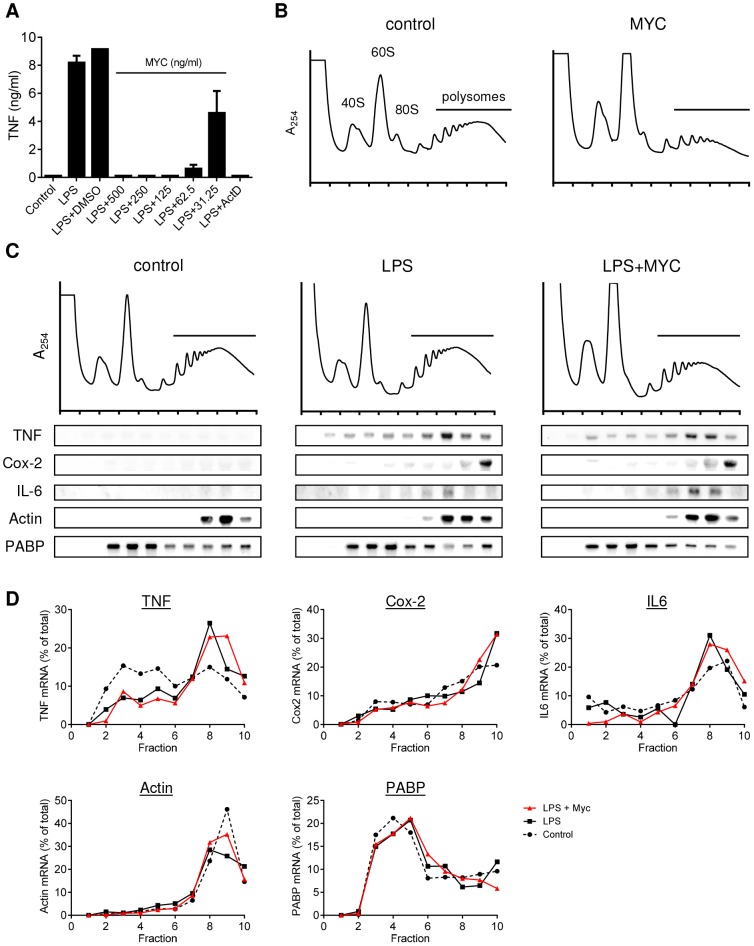
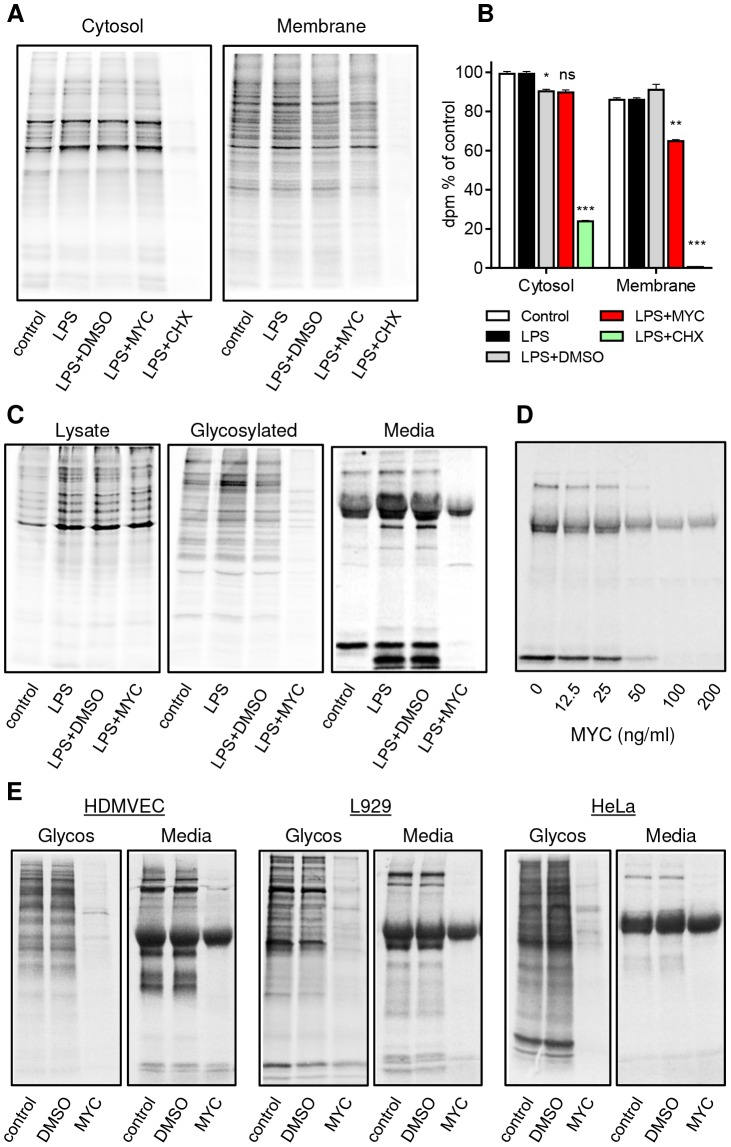
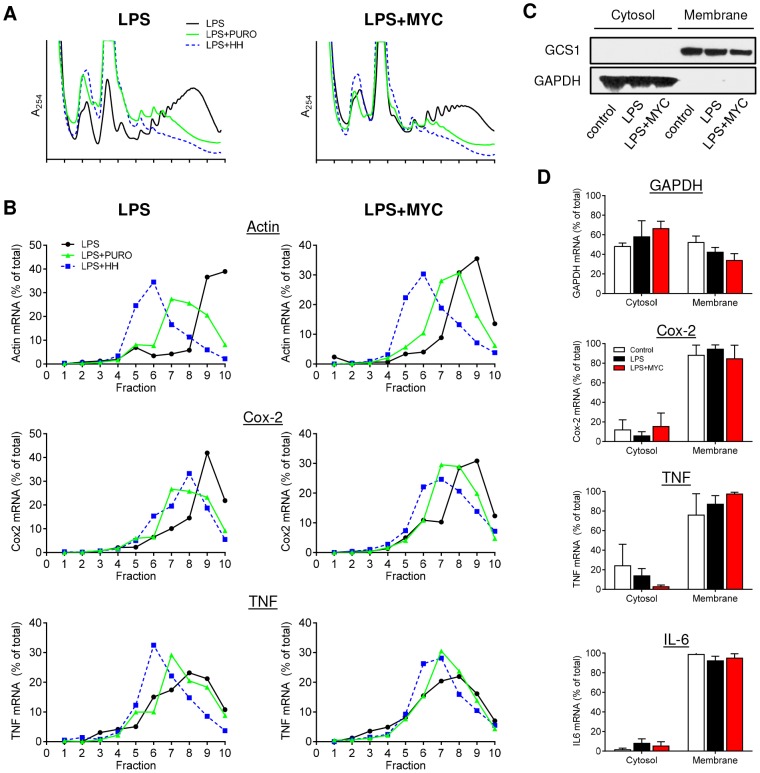
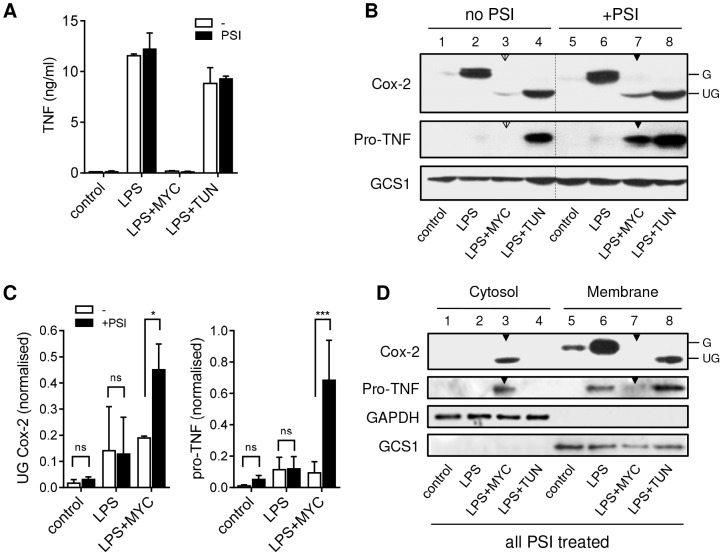
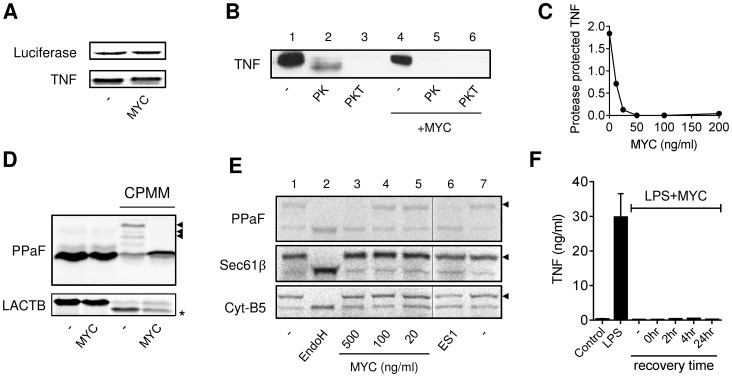
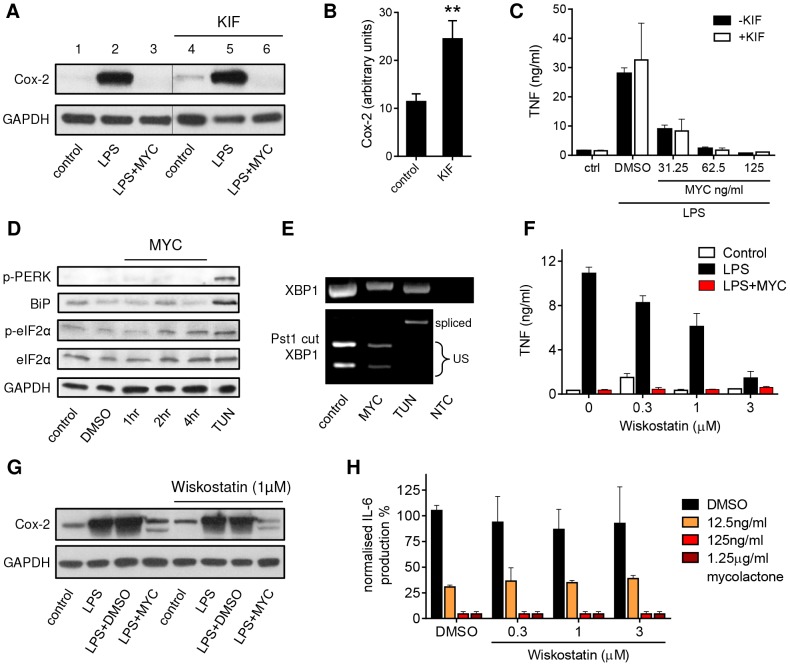
Infection with Mycobacterium ulcerans is characterised by tissue necrosis and immunosuppression due to mycolactone, the necessary and sufficient virulence factor for Buruli ulcer disease pathology. Many of its effects are known to involve down-regulation of specific proteins implicated in important cellular processes, such as immune responses and cell adhesion. We have previously shown mycolactone completely blocks the production of LPS-dependent proinflammatory mediators post-transcriptionally. Using polysome profiling we now demonstrate conclusively that mycolactone does not prevent translation of TNF, IL-6 and Cox-2 mRNAs in macrophages. Instead, it inhibits the production of these, along with nearly all other (induced and constitutive) proteins that transit through the ER. This is due to a blockade of protein translocation and subsequent degradation of aberrantly located protein. Several lines of evidence support this transformative explanation of mycolactone function. First, cellular TNF and Cox-2 can be once more detected if the action of the 26S proteasome is inhibited concurrently. Second, restored protein is found in the cytosol, indicating an inability to translocate. Third, in vitro translation assays show mycolactone prevents the translocation of TNF and other proteins into the ER. This is specific as the insertion of tail-anchored proteins into the ER is unaffected showing that the ER remains structurally intact. Fourth, metabolic labelling reveals a near-complete loss of glycosylated and secreted proteins from treated cells, whereas cytosolic proteins are unaffected. Notably, the profound lack of glycosylated and secreted protein production is apparent in a range of different disease-relevant cell types. These studies provide a new mechanism underlying mycolactone's observed pathological activities both in vitro and in vivo. Mycolactone-dependent inhibition of protein translocation into the ER not only explains the deficit of innate cytokines, but also the loss of membrane receptors, adhesion molecules and T-cell cytokines that drive the aetiology of Buruli ulcer.
溃疡分枝杆菌感染的特征是组织坏死和免疫抑制,这是由分枝杆菌内酯引起的,分枝杆菌内酯是布氏杆菌病病理的必要且充分的毒力因子。已知其许多作用涉及下调参与重要细胞过程(如免疫反应和细胞粘附)的特定蛋白质。我们之前已经表明,分枝杆菌内酯在转录后完全阻断脂多糖依赖性促炎介质的产生。现在,我们使用多核糖体分析最终证明,分枝杆菌内酯不会阻止巨噬细胞中TNF、IL-6和Cox-2 mRNA的翻译。相反,它会抑制这些蛋白以及几乎所有其他通过内质网转运的(诱导型和组成型)蛋白的产生。这是由于蛋白质转运受阻以及异常定位的蛋白质随后被降解。几条证据支持了对分枝杆菌内酯功能的这种变革性解释。首先,如果同时抑制26S蛋白酶体的作用,细胞中的TNF和Cox-2可以再次被检测到。其次,在细胞质中发现了恢复的蛋白质,这表明无法进行转运。第三,体外翻译试验表明,分枝杆菌内酯可阻止TNF和其他蛋白质转运到内质网中。这是特异性的,因为尾锚定蛋白插入内质网不受影响,表明内质网在结构上保持完整。第四,代谢标记显示,处理过的细胞中糖基化和分泌蛋白几乎完全丧失,而细胞质蛋白不受影响。值得注意的是,在一系列不同的与疾病相关的细胞类型中,糖基化和分泌蛋白产生的严重缺乏是显而易见的。这些研究提供了一种新的机制,解释了分枝杆菌内酯在体外和体内观察到的病理活性。分枝杆菌内酯依赖性抑制蛋白质转运到内质网中,不仅解释了先天细胞因子的缺乏,还解释了驱动布氏杆菌病病因的膜受体、粘附分子和T细胞细胞因子的丧失。