Akolgo Gideon Atinga, Asiedu Kingsley Bampoe, Amewu Richard Kwamla
Department of Chemistry, University of Ghana, Legon-Accra P.O. Box LG56, Ghana.
Department of Neglected Tropical Diseases, World Health Organization, 1211 Geneva, Switzerland.
Toxins (Basel). 2024 Dec 6;16(12):528. doi: 10.3390/toxins16120528.
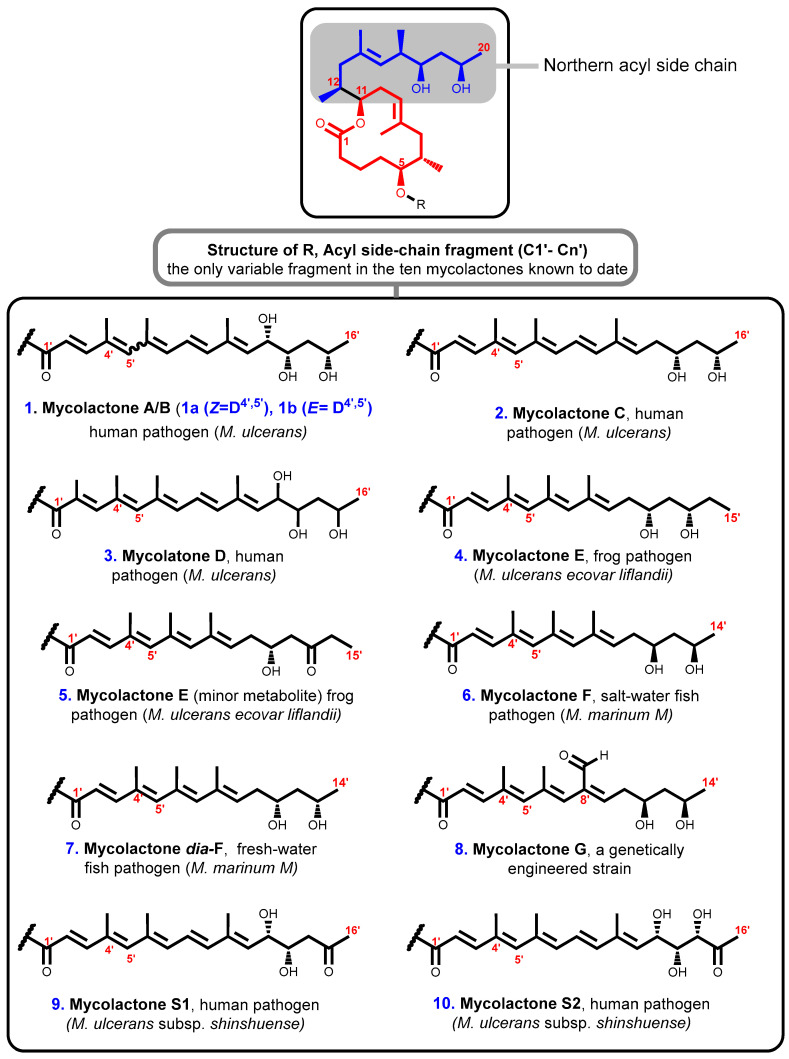
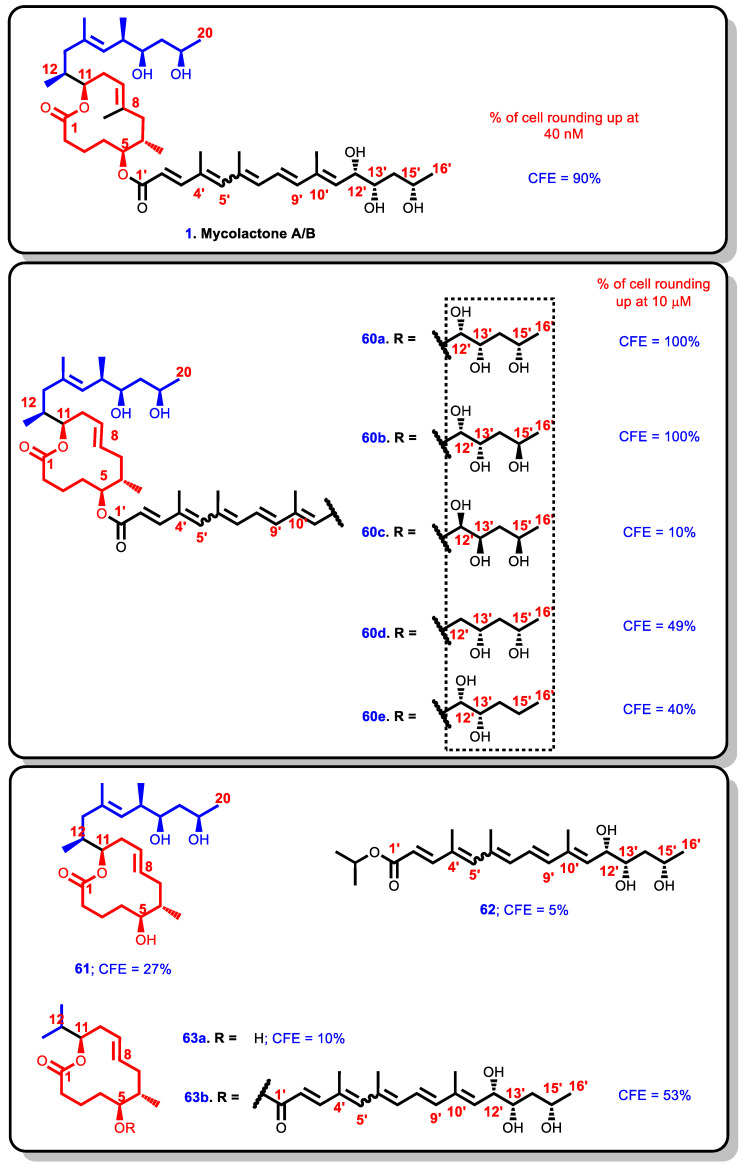
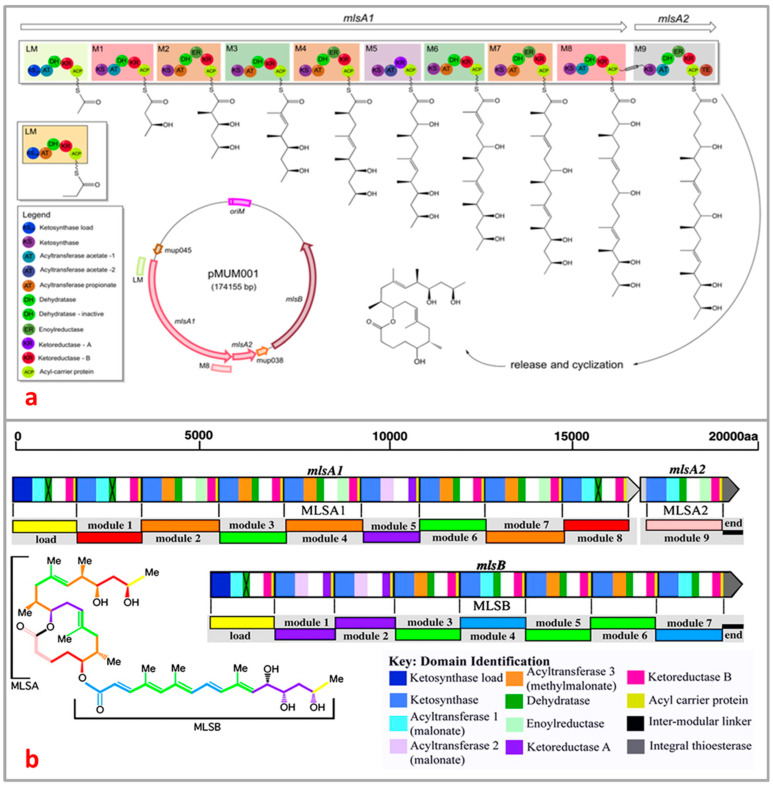
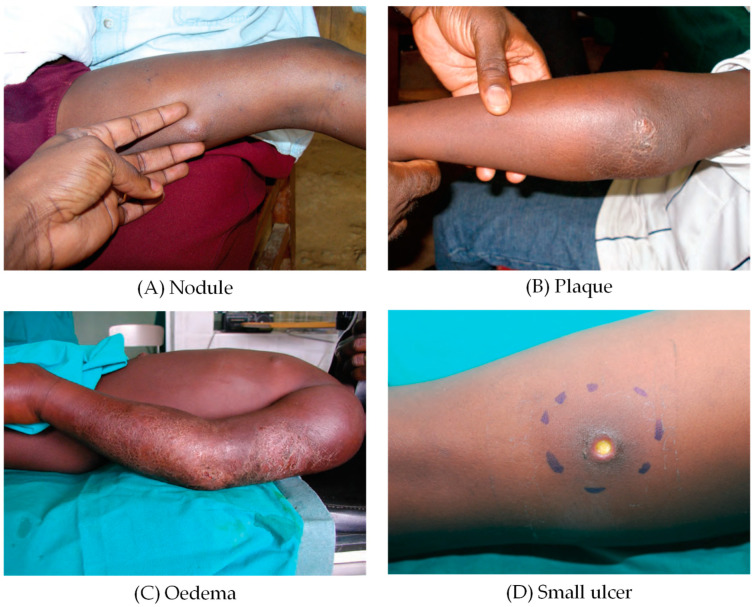
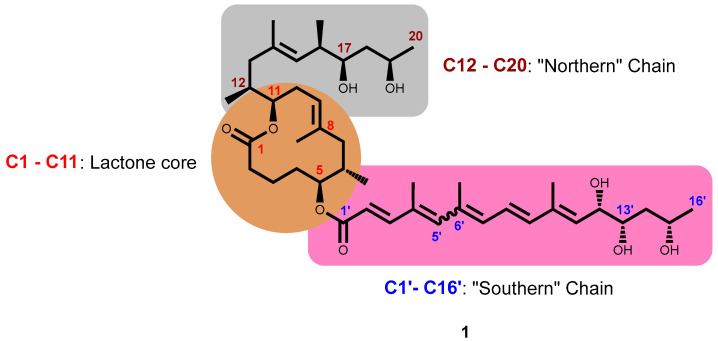
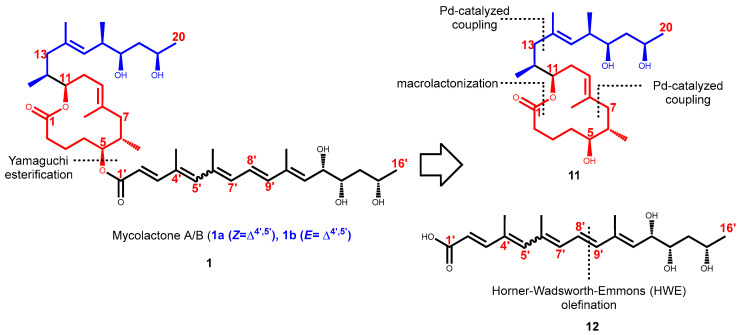
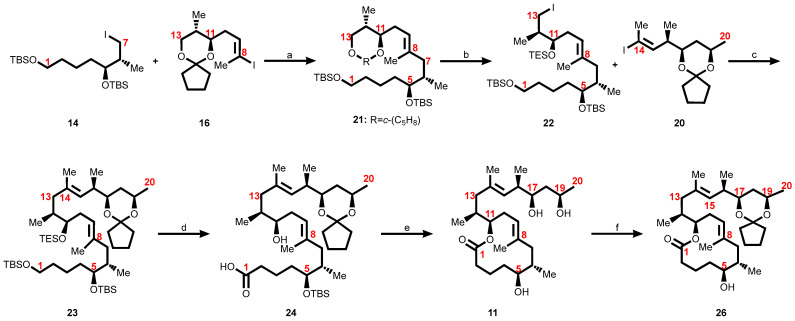
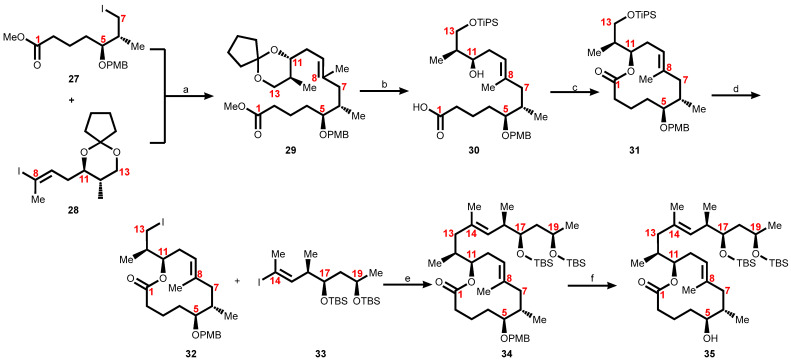
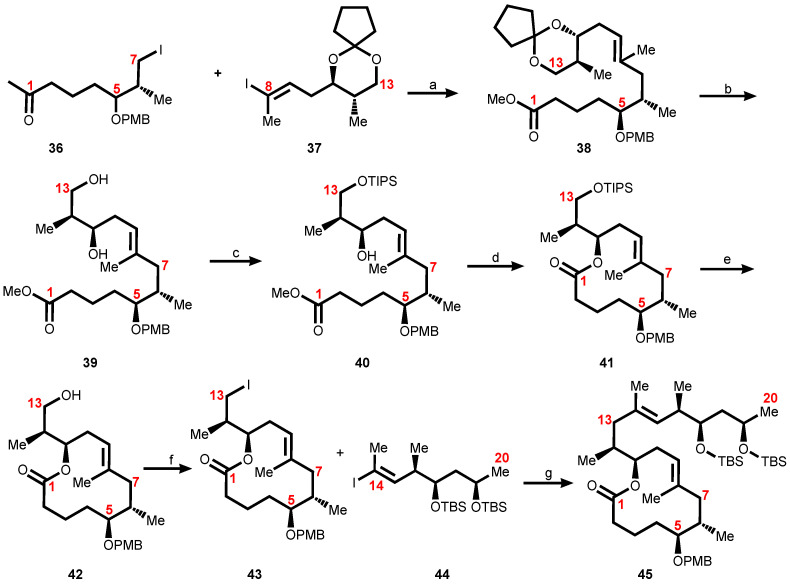
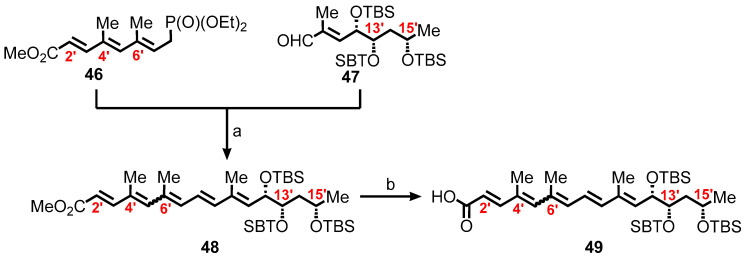
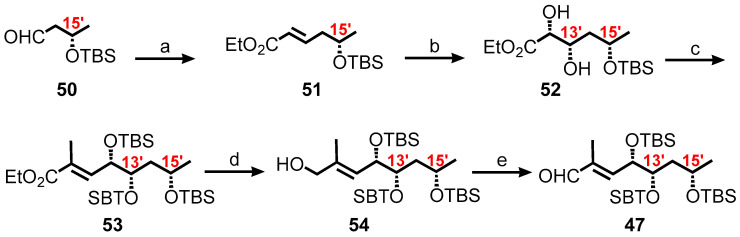
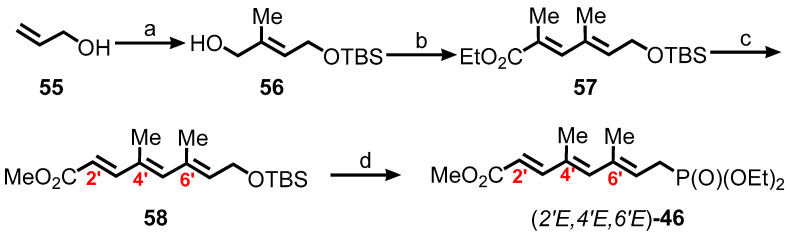
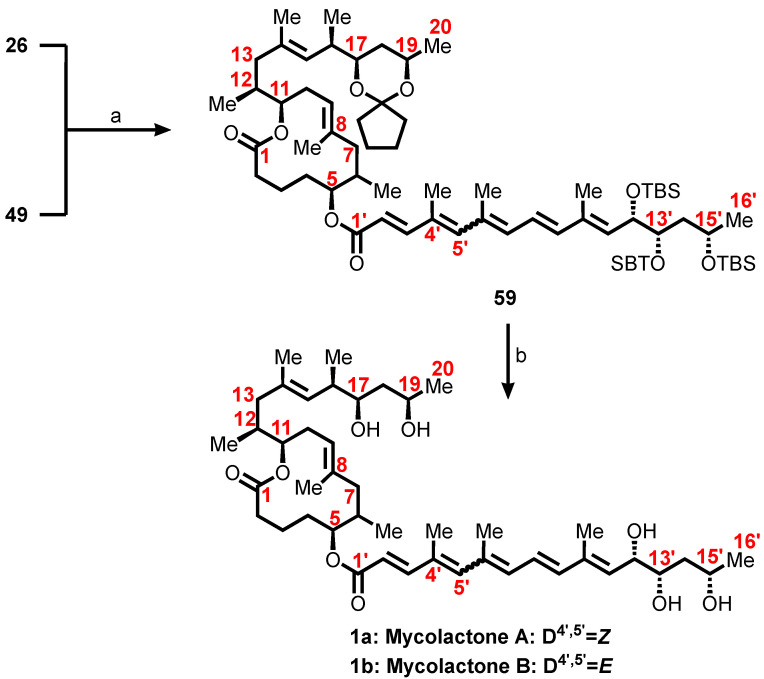
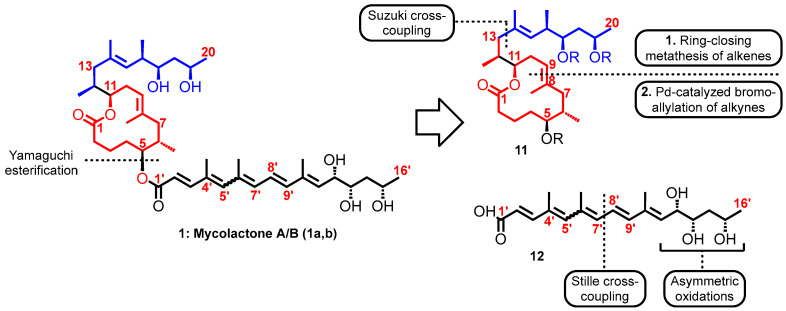
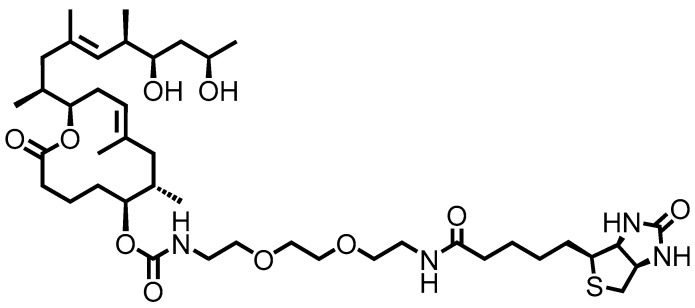
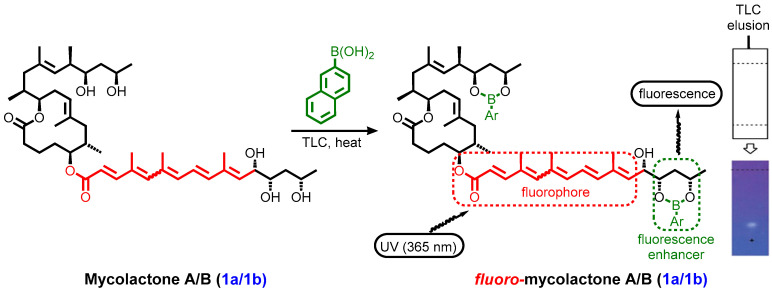
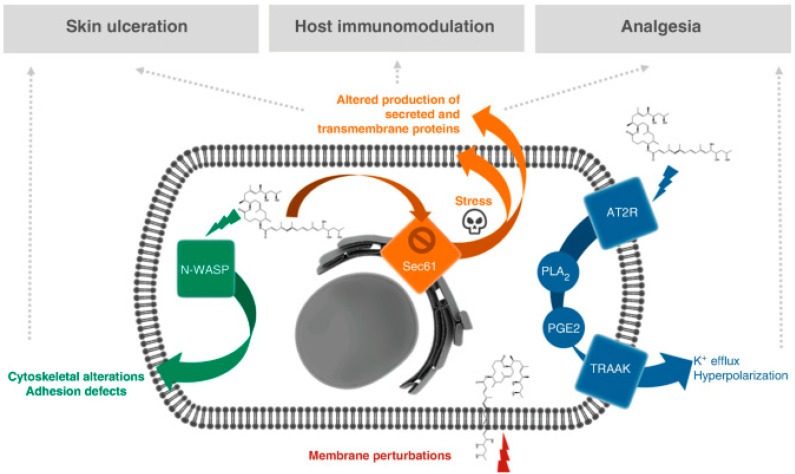
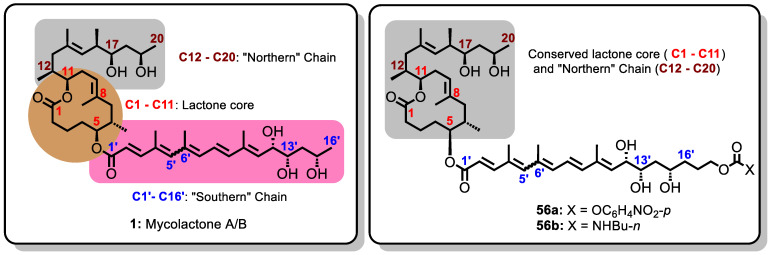
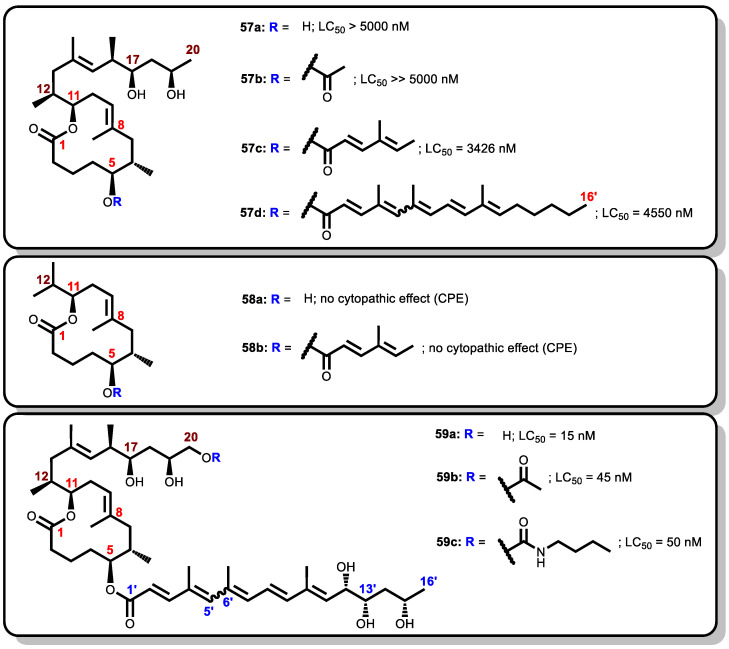
Mycolactone is a complex macrolide toxin produced by , the causative agent of Buruli ulcer. The aim of this paper is to review the chemistry, biosynthetic, and synthetic pathways of mycolactone A/B to help develop an understanding of the mode of action of these polyketides as well as their therapeutic potential. The synthetic work has largely been driven by the desire to afford researchers enough (≥100 mg) of the pure toxins for systematic biological studies toward understanding their very high biological activities. The review focuses on pioneering studies of Kishi which elaborate first-, second-, and third-generation approaches to the synthesis of mycolactones A/B. The three generations focused on the construction of the key intermediates required for the mycolactone synthesis. Synthesis of the first generation involves assignment of the relative and absolute stereochemistry of the mycolactones A and B. This was accomplished by employing a linear series of 17 chemical steps (1.3% overall yield) using the mycolactone core. The second generation significantly improved the first generation in three ways: (1) by optimizing the selection of protecting groups; (2) by removing needless protecting group adjustments; and (3) by enhancing the stereoselectivity and overall synthetic efficiency. Though the synthetic route to the mycolactone core was longer than the first generation, the overall yield was significantly higher (8.8%). The third-generation total synthesis was specifically aimed at an efficient, scalable, stereoselective, and shorter synthesis of mycolactone. The synthesis of the mycolactone core was achieved in 14 linear chemical steps with 19% overall yield. Furthermore, a modular synthetic approach where diverse analogues of mycolactone A/B were synthesized via a cascade of catalytic and/or asymmetric reactions as well as several Pd-catalyzed key steps coupled with hydroboration reactions were reviewed. In addition, the review discusses how mycolactone is employed in the diagnosis of Buruli ulcer with emphasis on detection methods of mass spectrometry, immunological assays, RNA aptamer techniques, and fluorescent-thin layer chromatography (f-TLC) methods as diagnostic tools. We examined studies of the structure-activity relationship (SAR) of various analogues of mycolactone. The paper highlights the multiple biological consequences associated with mycolactone such as skin ulceration, host immunomodulation, and analgesia. These effects are attributed to various proposed mechanisms of actions including Wiskott-Aldrich Syndrome protein (WASP)/neural Wiskott-Aldrich Syndrome protein (N-WASP) inhibition, Sec61 translocon inhibition, angiotensin II type 2 receptor (AT2R) inhibition, and inhibition of mTOR. The possible application of novel mycolactone analogues produced based on SAR investigations as therapeutic agents for the treatment of inflammatory disorders and inflammatory pain are discussed. Additionally, their therapeutic potential as anti-viral and anti-cancer agents have also been addressed.
分枝杆菌内酯是由溃疡分枝杆菌产生的一种复杂大环内酯毒素,溃疡分枝杆菌是布氏溃疡的病原体。本文旨在综述分枝杆菌内酯A/B的化学、生物合成和合成途径,以帮助理解这些聚酮化合物的作用模式及其治疗潜力。合成工作主要是出于为研究人员提供足够量(≥100毫克)的纯毒素用于系统生物学研究的需求,以了解其极高的生物活性。该综述重点介绍了岸义人(Kishi)的开创性研究,这些研究阐述了合成分枝杆菌内酯A/B的第一代、第二代和第三代方法。这三代方法聚焦于分枝杆菌内酯合成所需关键中间体的构建。第一代合成涉及确定分枝杆菌内酯A和B的相对和绝对立体化学。这是通过使用分枝杆菌内酯核心,采用17步线性化学合成序列完成的(总产率为1.3%)。第二代在三个方面显著改进了第一代方法:(1)优化保护基团的选择;(2)消除不必要的保护基团调整;(3)提高立体选择性和整体合成效率。虽然分枝杆菌内酯核心的合成路线比第一代更长,但总产率显著提高(8.8%)。第三代全合成专门针对高效、可扩展、立体选择性和更短步骤的分枝杆菌内酯合成。分枝杆菌内酯核心的合成通过14步线性化学合成实现,总产率为19%。此外,还综述了一种模块化合成方法,即通过一系列催化和/或不对称反应以及几个钯催化的关键步骤与硼氢化反应合成分枝杆菌内酯A/B的各种类似物。此外,该综述还讨论了分枝杆菌内酯在布氏溃疡诊断中的应用,重点介绍了作为诊断工具的质谱检测方法、免疫分析、RNA适配体技术和荧光薄层色谱(f-TLC)方法。我们研究了分枝杆菌内酯各种类似物的构效关系(SAR)研究。本文强调了与分枝杆菌内酯相关的多种生物学效应,如皮肤溃疡、宿主免疫调节和镇痛。这些效应归因于多种提出的作用机制,包括抑制威斯科特-奥尔德里奇综合征蛋白(WASP)/神经威斯科特-奥尔德里奇综合征蛋白(N-WASP)、抑制Sec61转运体、抑制血管紧张素II 2型受体(AT2R)以及抑制mTOR。讨论了基于SAR研究产生的新型分枝杆菌内酯类似物作为治疗炎症性疾病和炎性疼痛的治疗药物的可能应用。此外,还探讨了它们作为抗病毒和抗癌药物的治疗潜力。