Wilfred Devadass Clement, Mysorekar Vijaya Viswanath, Venkataramana Raju S, Eshwarappa Mahesh, Subramanyan Revathi
Department of Pathology, M. S. Ramaiah Medical College and Teaching Hospital, Bangalore, Karnataka, India.
Department of Nephrology, M. S. Ramaiah Medical College and Teaching Hospital, Bangalore, Karnataka, India.
J Lab Physicians. 2013 Jul;5(2):94-9. doi: 10.4103/0974-2727.119850.
The prevalence of nondiabetic renal disease (NDRD) among type 2 diabetics varies widely depending on the populations being studied and the selection criteria. Also, for patients found to have NDRD different predicting factors have been identified by different studies.
TO DETERMINE: (i) Frequency and spectrum of NDRD in type 2 diabetics with atypical clinical renal disease, in our set up and (ii) common clinical markers that are associated with NDRD in our local population.
Ninety-three type 2 diabetic patients with atypical clinical renal disease who had undergone renal biopsy to rule out NDRD were recruited. Patients were grouped into Group 1 with isolated NDRD, Group 2 with NDRD superimposed on diabetic nephropathy (DN), and Group 3 with isolated DN; and their clinical and biochemical parameters were statistically analyzed using analysis of variance, Kruskal-Wallis test, and Chi-square tests of statistical significance.
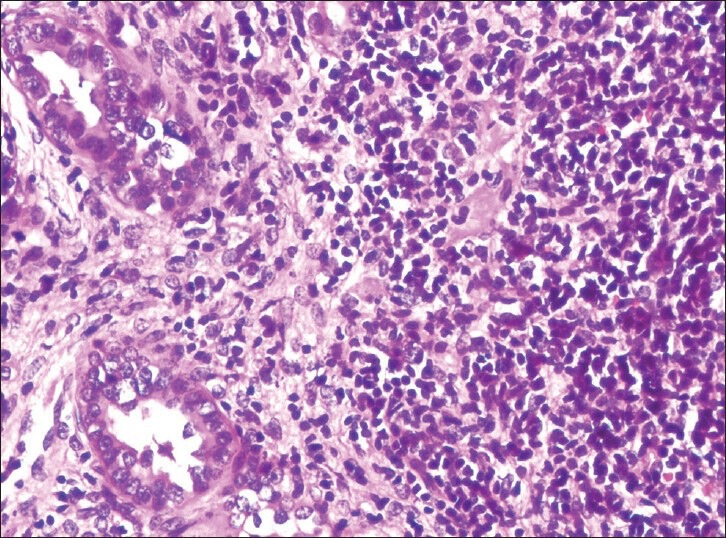
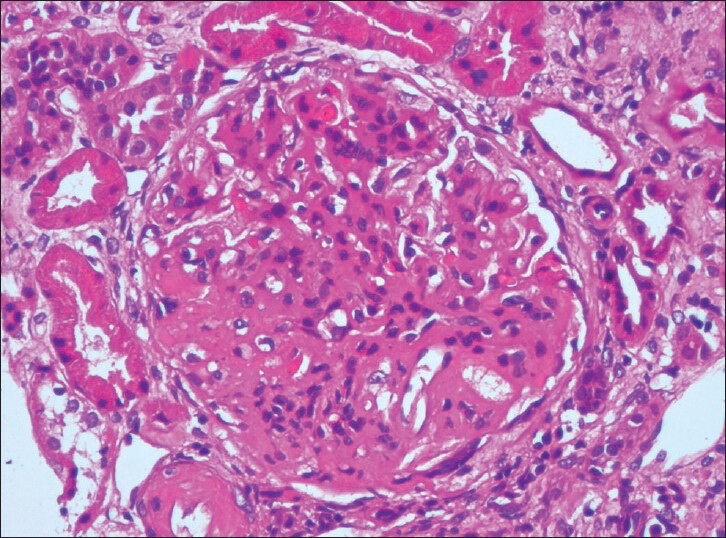
68.8% of the patients had NDRD with or without concurrent DN. Patients with isolated NDRD had shorter duration of diabetes compared to the other groups. Absence of retinopathy and presence of microscopic hematuria and active urinary sediment had positive predictive value of 79.24, 81, and 100%, respectively, for NDRD in type 2 diabetics. Chronic interstitial nephritis was the commonest NDRD and membranous glomerulonephritis was the commonest glomerular NDRD in our setup.
The frequency of NDRD in type 2 diabetics with atypical clinical renal disease is high in our setup thereby making the renal biopsy procedure imperative to rule out the same. Shorter duration of diabetes, absence of retinopathy, presence of microscopic hematuria, and active urinary sediment are markers associated with NDRD in type 2 diabetes with clinical renal disease.
2型糖尿病患者中非糖尿病性肾病(NDRD)的患病率因研究人群和选择标准的不同而有很大差异。此外,对于被发现患有NDRD的患者,不同的研究确定了不同的预测因素。
确定:(i)在我们的研究中,具有非典型临床肾病的2型糖尿病患者中NDRD的频率和谱;(ii)我们当地人群中与NDRD相关的常见临床标志物。
招募了93例患有非典型临床肾病且已接受肾活检以排除NDRD的2型糖尿病患者。患者被分为1组,即孤立性NDRD组;2组,即NDRD叠加糖尿病肾病(DN)组;3组,即孤立性DN组;并使用方差分析、Kruskal-Wallis检验和具有统计学意义的卡方检验对其临床和生化参数进行统计分析。
68.8%的患者患有NDRD,伴有或不伴有并发DN。与其他组相比,孤立性NDRD患者的糖尿病病程较短。无视网膜病变、存在镜下血尿和活动性尿沉渣对2型糖尿病患者NDRD的阳性预测值分别为79.24%、81%和100%。在我们的研究中,慢性间质性肾炎是最常见的NDRD,膜性肾小球肾炎是最常见的肾小球NDRD。
在我们的研究中,具有非典型临床肾病的2型糖尿病患者中NDRD的频率较高,因此必须进行肾活检以排除该病。糖尿病病程较短、无视网膜病变、存在镜下血尿和活动性尿沉渣是2型糖尿病合并临床肾病中与NDRD相关的标志物。