Wachter David L, Hartmann Arndt, Beckmann Matthias W, Fasching Peter A, Hein Alexander, Bayer Christian M, Agaimy Abbas
Institute of Pathology, University Hospital, Krankenhausstr 8-10, Erlangen 91054, Germany.
Department of Gynecology and Obstetrics, University Hospital, Universitätsstr 21, Erlangen 91054, Germany.
Biomed Res Int. 2014;2014:408459. doi: 10.1155/2014/408459. Epub 2014 Feb 19.
Carcinomas of the breast with neuroendocrine features are incorporated in the World Health Organization classification since 2003 and include well-differentiated neuroendocrine tumors, poorly differentiated neuroendocrine carcinomas/small cell carcinomas, and invasive breast carcinomas with neuroendocrine differentiation. Neuroendocrine differentiation is known to be more common in certain low-grade histologic special types and has been shown to mainly cluster to the molecular (intrinsic) luminal A subtype.
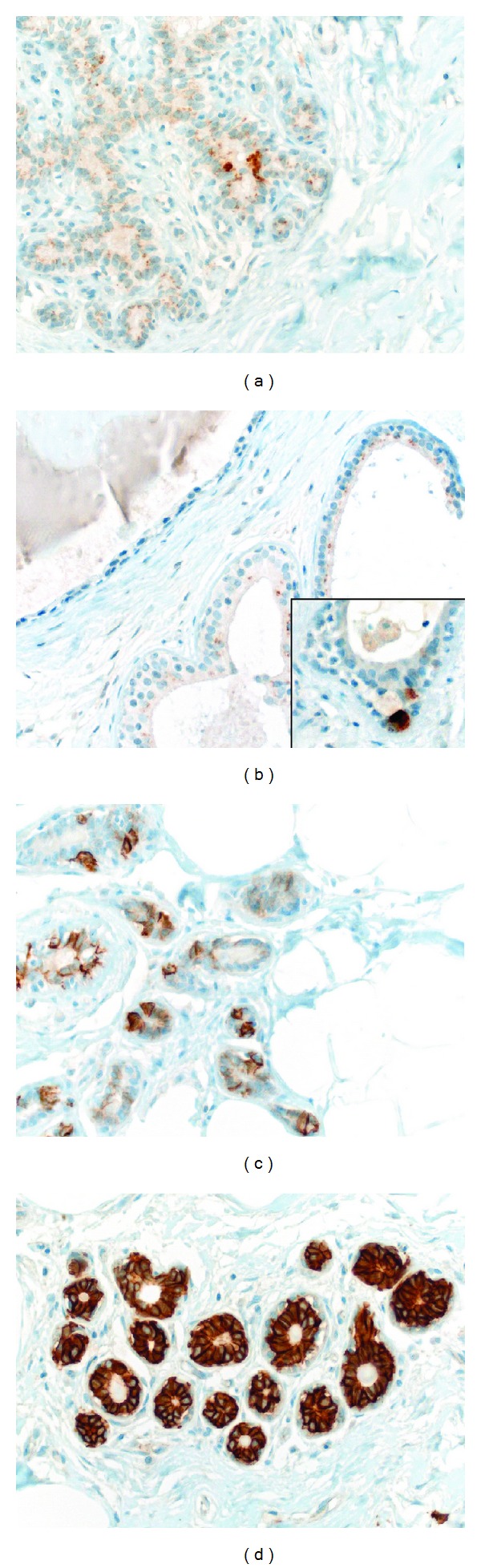
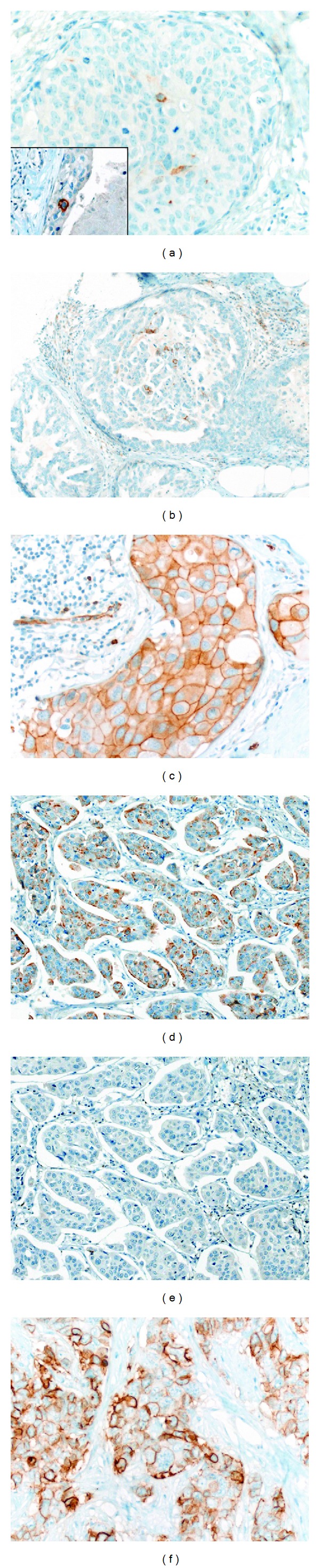
We analyzed the frequency of neuroendocrine differentiation in different molecular subtypes of breast carcinomas of no histologic special type using immunohistochemical stains with specific neuroendocrine markers (chromogranin A and synaptophysin).
We found neuroendocrine differentiation in 20% of luminal B-like carcinomas using current WHO criteria (at least 50% of tumor cells positive for synaptophysin or chromogranin A). In contrast, no neuroendocrine differentiation was seen in luminal A-like, HER2 amplified and triple-negative carcinomas. Breast carcinomas with neuroendocrine differentiation presented with advanced stage disease and showed aggressive behavior.
We conclude that neuroendocrine differentiation is more common than assumed in poorly differentiated luminal B-like carcinomas. Use of specific neuroendocrine markers is thus encouraged in this subtype to enhance detection of neuroendocrine differentiation and hence characterize the biological and therapeutic relevance of this finding in future studies.
具有神经内分泌特征的乳腺癌自2003年起被纳入世界卫生组织分类,包括高分化神经内分泌肿瘤、低分化神经内分泌癌/小细胞癌以及具有神经内分泌分化的浸润性乳腺癌。已知神经内分泌分化在某些低级别组织学特殊类型中更为常见,并且已显示主要聚集于分子(内在)腔面A型亚型。
我们使用具有特定神经内分泌标志物(嗜铬粒蛋白A和突触素)的免疫组织化学染色,分析了无组织学特殊类型的不同分子亚型乳腺癌中神经内分泌分化的频率。
根据目前的世界卫生组织标准(至少50%的肿瘤细胞突触素或嗜铬粒蛋白A呈阳性),我们在20%的腔面B样癌中发现了神经内分泌分化。相比之下,在腔面A样癌、HER2扩增癌和三阴性癌中未观察到神经内分泌分化。具有神经内分泌分化的乳腺癌呈现晚期疾病,并且表现出侵袭性行为。
我们得出结论,神经内分泌分化在低分化腔面B样癌中比预期更为常见。因此,鼓励在该亚型中使用特定的神经内分泌标志物,以加强神经内分泌分化的检测,并从而在未来研究中表征这一发现的生物学和治疗相关性。