Cook Lydia C, Hillhouse Andrew E, Myles Matthew H, Lubahn Dennis B, Bryda Elizabeth C, Davis J Wade, Franklin Craig L
Department of Veterinary Pathobiology, University of Missouri, Columbia, Missouri, United States of America.
Department of Veterinary Pathobiology, University of Missouri, Columbia, Missouri, United States of America; Department of Molecular Microbiology & Immunology, University of Missouri, Columbia, Missouri, United States of America.
PLoS One. 2014 Apr 7;9(4):e94209. doi: 10.1371/journal.pone.0094209. eCollection 2014.
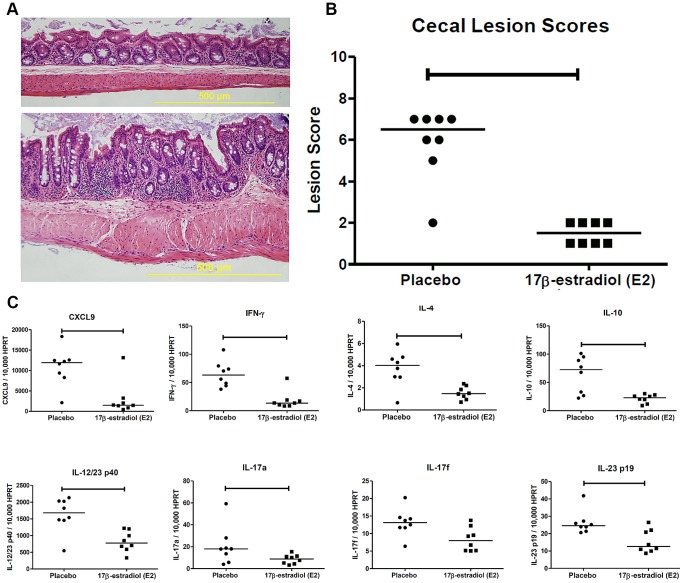
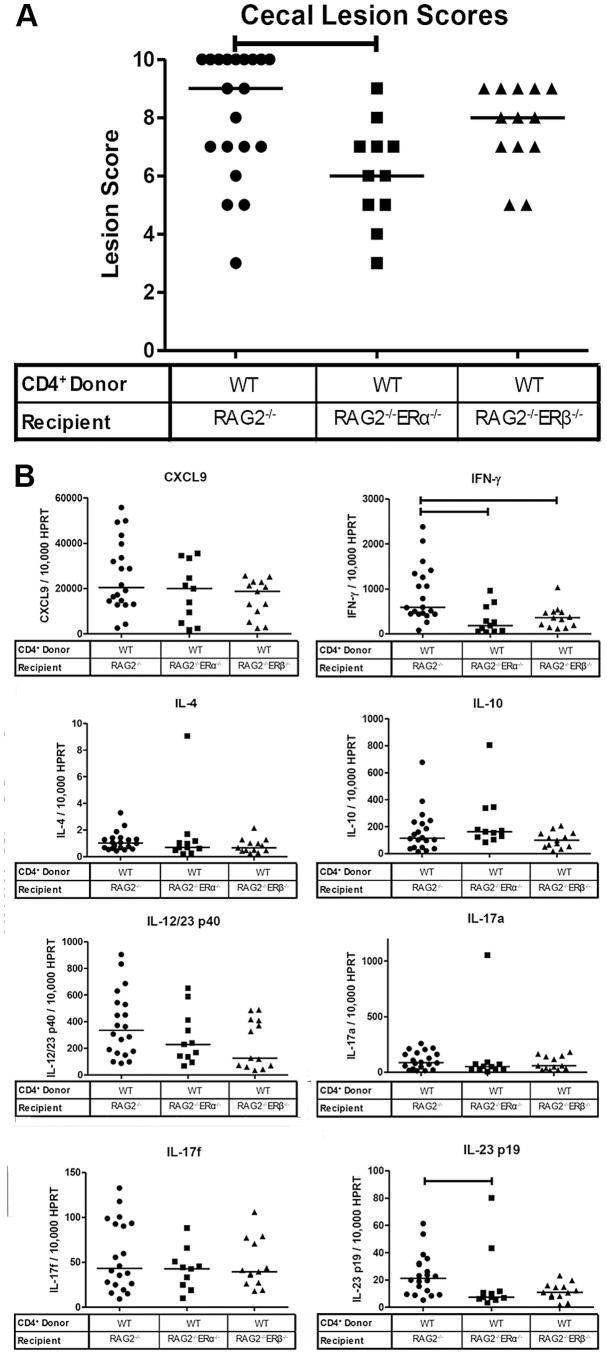
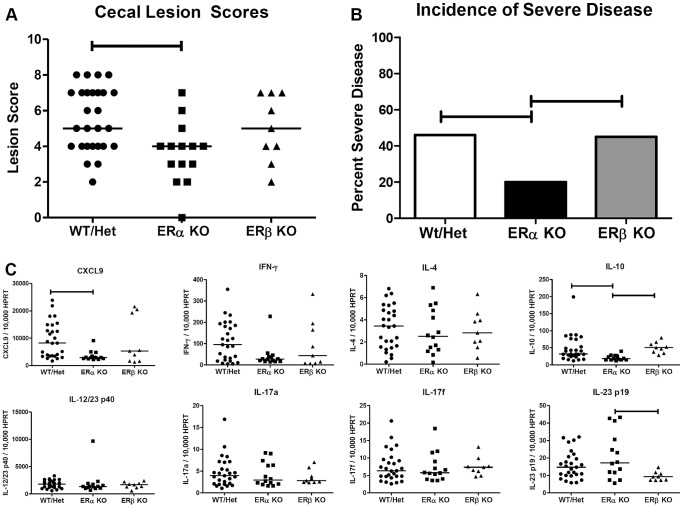
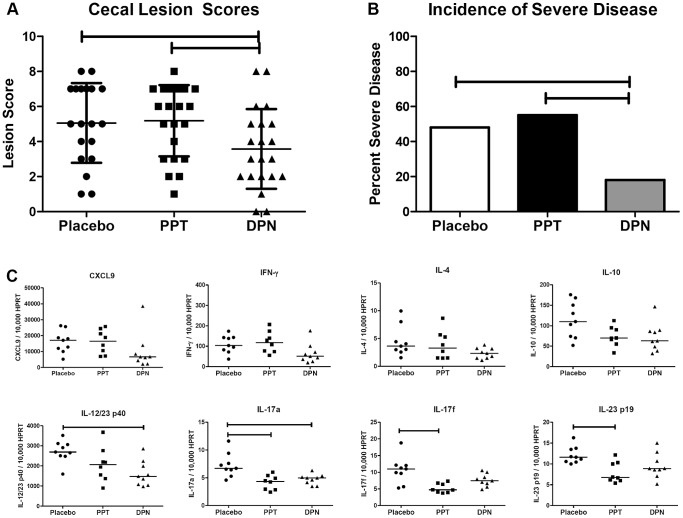
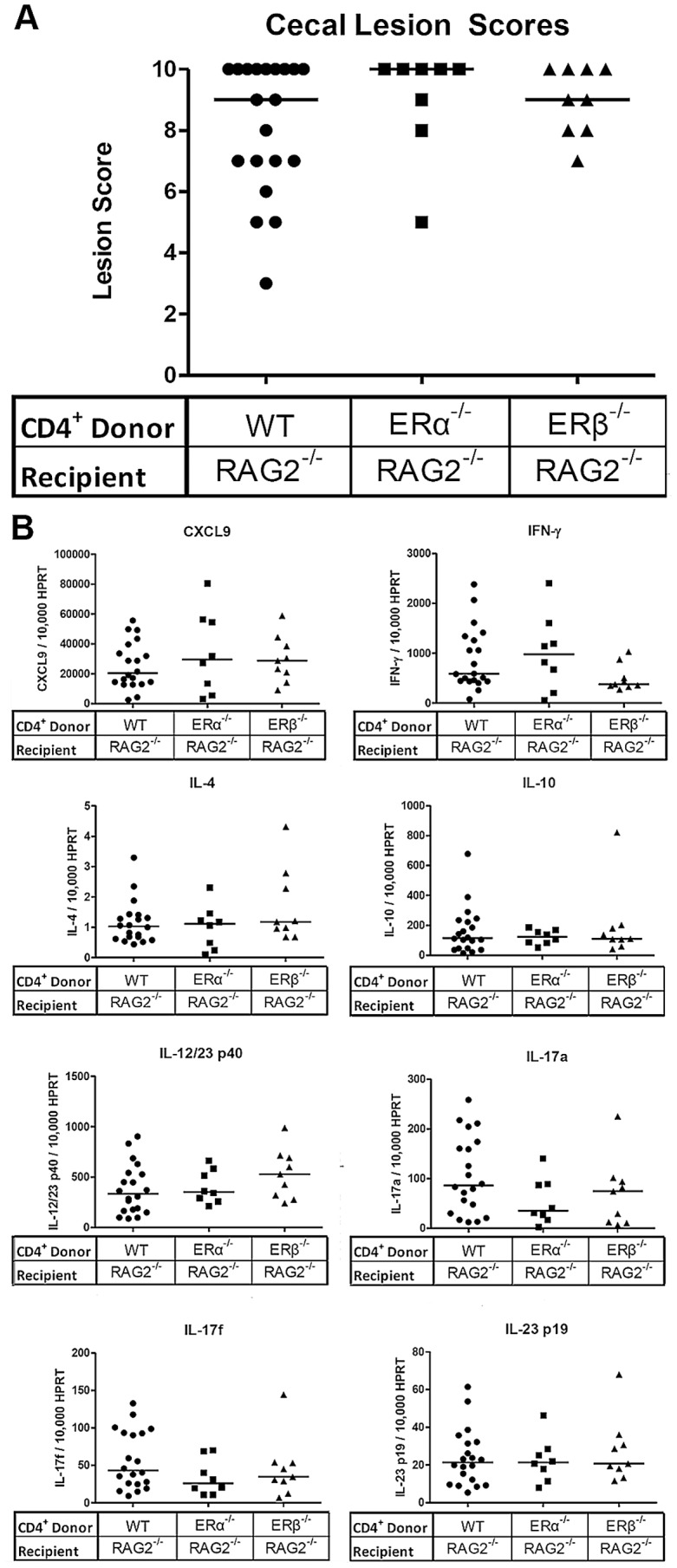
The pathogenesis of inflammatory bowel diseases (IBD), Crohn's disease and ulcerative colitis, is due in part to interactions between the immune system, genetics, the environment, and endogenous microbiota. Gonadal sex hormones (GSH), such as estrogen, are thought to be involved in the development of IBD as variations in disease severity occur during pregnancy, menopause, or oral contraceptives use. In certain strains of mice, infection with Helicobacter hepaticus triggers IBD-like mucosal inflammation that is more severe in female mice than in males, suggesting a role for GSH in this model. To determine the role of estrogen signaling in microbiota-induced intestinal inflammation, estrogen receptor (ER) α and β knock-out (KO) mice, ER agonists, and adoptive transfers were utilized. We demonstrate that, when signaling is limited to ERβ on a non-CD4+ cell subset, disease is less severe and this correlates with decreased expression of pro-inflammatory mediators.
炎症性肠病(IBD),即克罗恩病和溃疡性结肠炎,其发病机制部分归因于免疫系统、遗传学、环境和内源性微生物群之间的相互作用。性腺性激素(GSH),如雌激素,被认为与IBD的发生有关,因为在怀孕、绝经或使用口服避孕药期间疾病严重程度会发生变化。在某些品系的小鼠中,感染肝螺杆菌会引发类似IBD的黏膜炎症,雌性小鼠比雄性小鼠更严重,这表明GSH在该模型中发挥作用。为了确定雌激素信号在微生物群诱导的肠道炎症中的作用,我们利用了雌激素受体(ER)α和β基因敲除(KO)小鼠、ER激动剂和过继转移。我们证明,当信号传导仅限于非CD4+细胞亚群上的ERβ时,疾病的严重程度会降低,这与促炎介质表达的降低相关。