Suppr超能文献

耳蜗大小变异性及其在临床实践中的意义。

Cochlea size variability and implications in clinical practice.

作者信息

Pelliccia P, Venail F, Bonafé A, Makeieff M, Iannetti G, Bartolomeo M, Mondain M

机构信息

ENT Department, CHU, Montpellier, France; ; Department of Maxillo-Facial Surgery, University of Rome La Sapienza, Rome, Italy;

ENT Department, CHU, Montpellier, France;

出版信息

Acta Otorhinolaryngol Ital. 2014 Feb;34(1):42-9.
Abstract
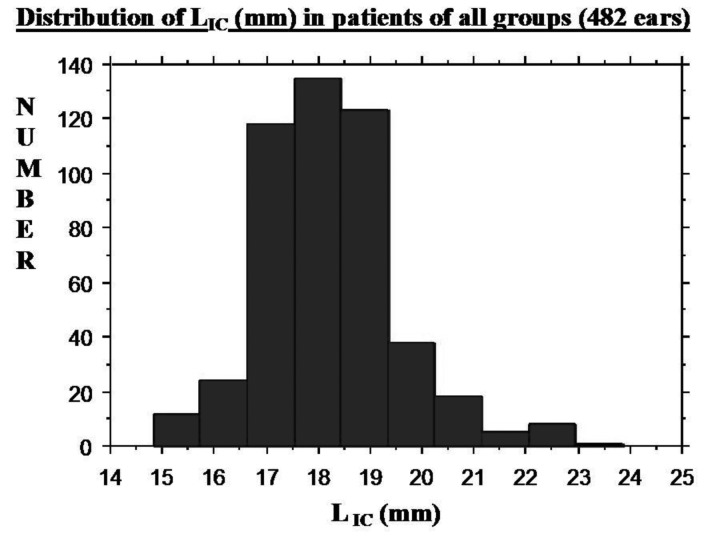
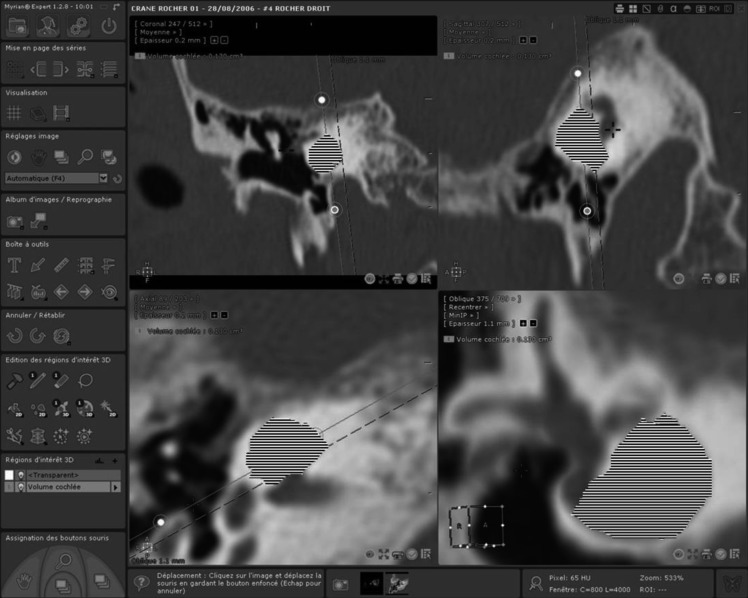
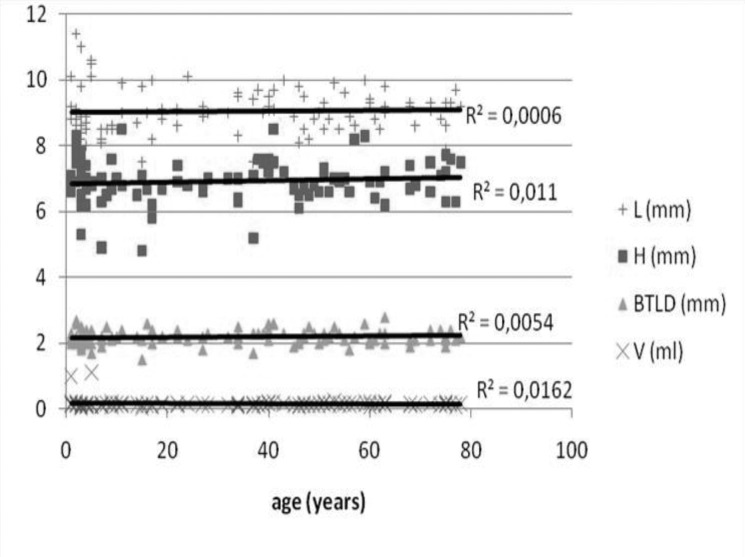
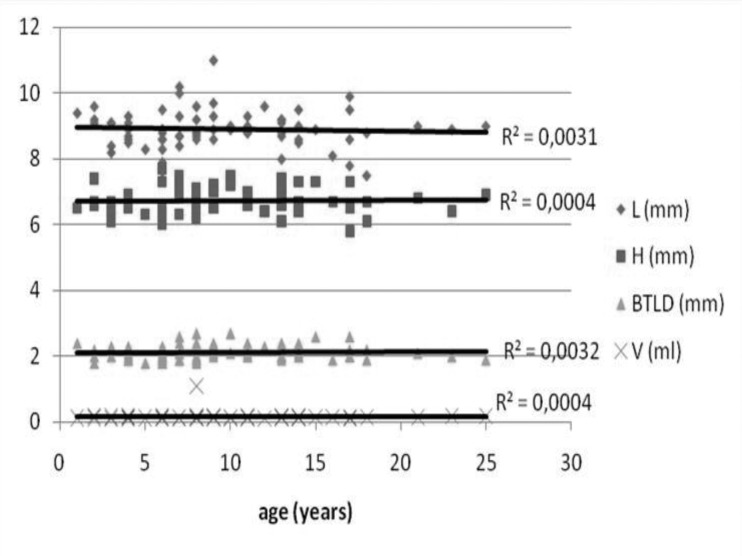
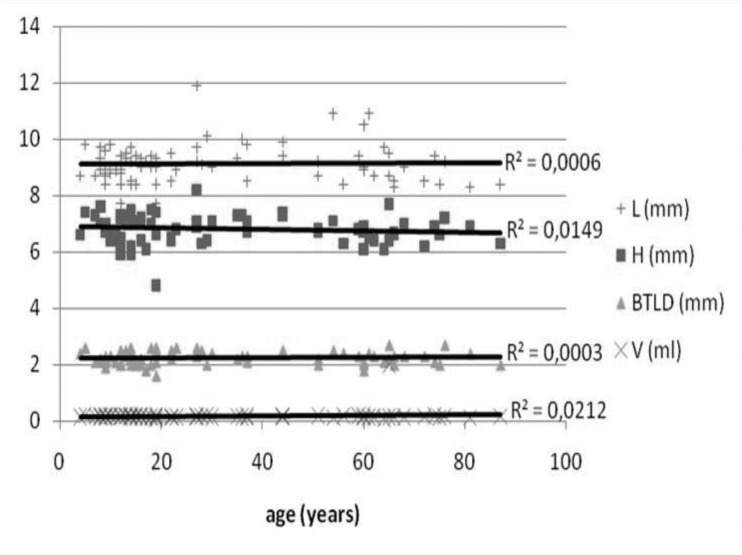
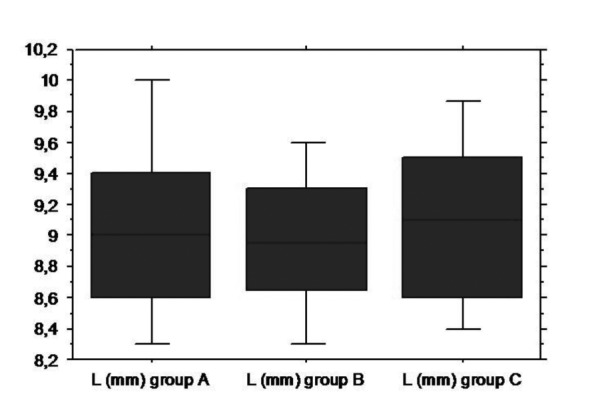
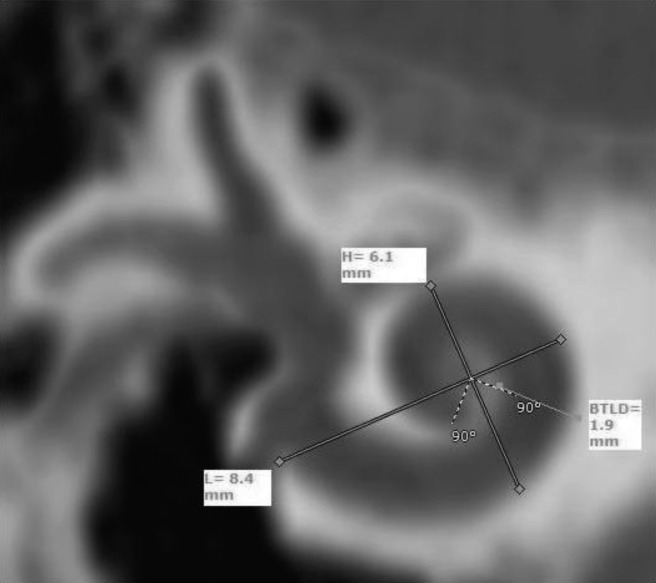
  1. study cochlea size variability among age and degree of deafness; 2) calculate the length of the cochlear implant electrode needed to obtain the optimal final insertion depth angle of 270°. A total of 241 patients (482 ears) that underwent high resolution computed tomography (HRCT) of the ear in our Institution between 2003 and 2008 were included to collect temporal bone data, and were divided in 3 groups: 97 (194 ears) patients with bilateral severe or profound sensorineural hearing loss (Group A), 70 patients (140 ears) with bilateral moderate sensorineural hearing loss (Group B), 74 patients (148 ears) without sensorineural or mixed hearing loss (Group C). In each of the 3 groups, 5 subgroups were identified with the following age criteria: 1) subgroup 1: subjects ≤5 years old; 2) subgroup 2: subjects 6-10 years old; 3) subgroup 3: patients 11-15 years old; 4) subgroup 4: patients 16-20 years old; 5) subgroup 5: subjects >; 20 years old. The length of the cochlea, height of the cochlea, basal turn lumen diameter (BTLD) and volume of the cochlea were measured. The Mann-Whitney test was used to assess the alternative hypothesis that a statistically significant difference in size exists between the different groups and subgroups. The following equation was adopted to calculate the length of a straight electrode which follows the outer wall of the scala tympani required to obtain the ideal insertion depth angle of 270°( LIC ): [Formula: see text] . We found that the cochlea is completely developed and has reached adult size at birth. The degree of deafness does not affect the length or volume of the cochlea, while it can affect the height and BTLD. To assist the surgeon to calculate the ideal insertion depth angle of 270° in order to preserve residual hearing, it is useful to propose a straight electrode with 3 landmarks on the array (the first at 16.635 mm from the tip, the second at 17.987 mm and the third at 19.34 mm).
摘要
  1. 研究不同年龄和耳聋程度的耳蜗大小变异性;2) 计算获得270°最佳最终插入深度角所需的人工耳蜗电极长度。纳入2003年至2008年间在本机构接受耳部高分辨率计算机断层扫描(HRCT)的241例患者(482耳)以收集颞骨数据,并将其分为3组:97例(194耳)双侧重度或极重度感音神经性听力损失患者(A组),70例(140耳)双侧中度感音神经性听力损失患者(B组),74例(148耳)无感音神经性或混合性听力损失患者(C组)。在这3组中的每组中,根据以下年龄标准确定5个亚组:1) 亚组1:年龄≤5岁的受试者;2) 亚组2:年龄6 - 10岁的受试者;3) 亚组3:年龄11 - 15岁的患者;4) 亚组4:年龄16 - 20岁的患者;5) 亚组5:年龄>20岁的受试者。测量耳蜗长度、耳蜗高度、底转管腔直径(BTLD)和耳蜗体积。采用曼 - 惠特尼检验来评估不同组和亚组之间大小存在统计学显著差异的备择假设。采用以下公式计算沿着鼓阶外壁获得270°理想插入深度角所需的直电极长度(LIC):[公式:见原文] 。我们发现耳蜗在出生时已完全发育并达到成人大小。耳聋程度不影响耳蜗的长度或体积,但会影响其高度和BTLD。为帮助外科医生计算270°的理想插入深度角以保留残余听力,建议在阵列上设置3个标记点的直电极(第一个标记点距尖端16.635毫米,第二个标记点距尖端17.987毫米,第三个标记点距尖端19.34毫米)是有用的。
https://cdn.ncbi.nlm.nih.gov/pmc/blobs/1ffe/3970226/f7169fe3e24a/0392-100X-34-42-g001.jpg

文献检索

告别复杂PubMed语法,用中文像聊天一样搜索,搜遍4000万医学文献。AI智能推荐,让科研检索更轻松。

立即免费搜索

文件翻译

保留排版,准确专业,支持PDF/Word/PPT等文件格式,支持 12+语言互译。

免费翻译文档

深度研究

AI帮你快速写综述,25分钟生成高质量综述,智能提取关键信息,辅助科研写作。

立即免费体验