Tabernero Patricia, Fernández Facundo M, Green Michael, Guerin Philippe J, Newton Paul N
Worldwide Antimalarial Resistance Network (WWARN), Churchill Hospital, University of Oxford, Oxford, UK.
Malar J. 2014 Apr 8;13:139. doi: 10.1186/1475-2875-13-139.
Poor quality medicines threaten the lives of millions of patients and are alarmingly common in many parts of the world. Nevertheless, the global extent of the problem remains unknown. Accurate estimates of the epidemiology of poor quality medicines are sparse and are influenced by sampling methodology and diverse chemical analysis techniques. In order to understand the existing data, the Antimalarial Quality Scientific Group at WWARN built a comprehensive, open-access, global database and linked Antimalarial Quality Surveyor, an online visualization tool. Analysis of the database is described here, the limitations of the studies and data reported, and their public health implications discussed.
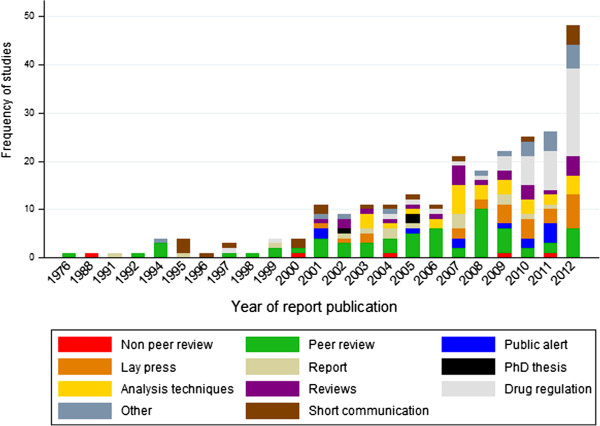
The database collates customized summaries of 251 published anti-malarial quality reports in English, French and Spanish by time and location since 1946. It also includes information on assays to determine quality, sampling and medicine regulation.
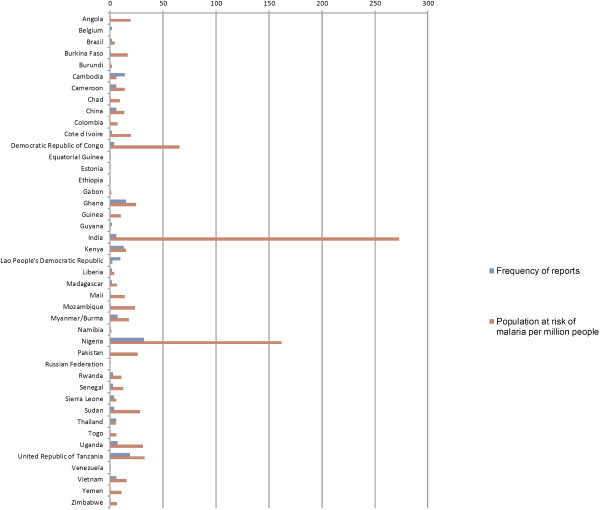
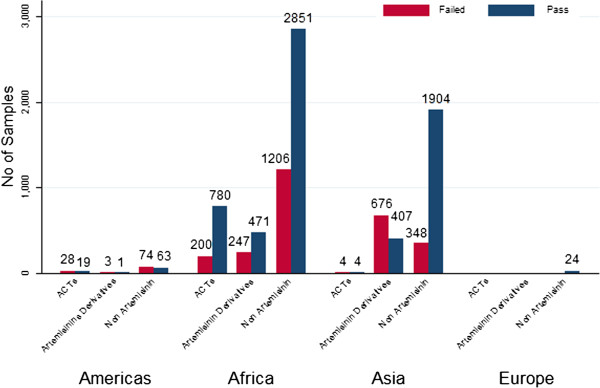
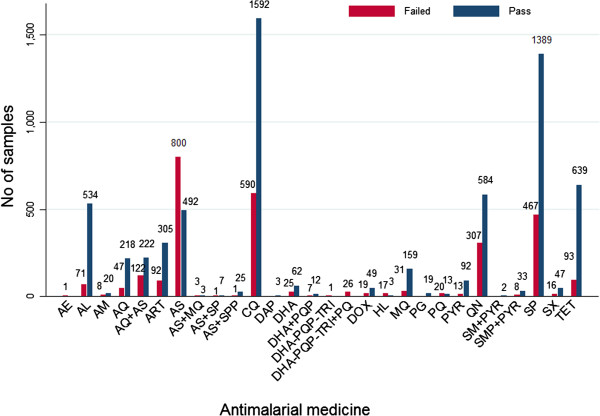
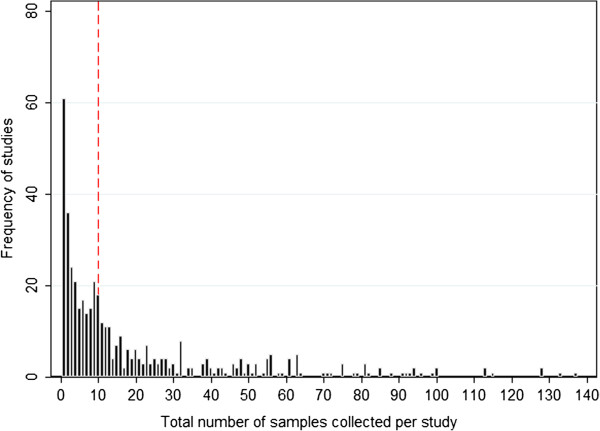
No publicly available reports for 60.6% (63) of the 104 malaria-endemic countries were found. Out of 9,348 anti-malarials sampled, 30.1% (2,813) failed chemical/packaging quality tests with 39.3% classified as falsified, 2.3% as substandard and 58.3% as poor quality without evidence available to categorize them as either substandard or falsified. Only 32.3% of the reports explicitly described their definitions of medicine quality and just 9.1% (855) of the samples collected in 4.6% (six) surveys were conducted using random sampling techniques. Packaging analysis was only described in 21.5% of publications and up to twenty wrong active ingredients were found in falsified anti-malarials.
There are severe neglected problems with anti-malarial quality but there are important caveats to accurately estimate the prevalence and distribution of poor quality anti-malarials. The lack of reports in many malaria-endemic areas, inadequate sampling techniques and inadequate chemical analytical methods and instrumental procedures emphasizes the need to interpret medicine quality results with caution. The available evidence demonstrates the need for more investment to improve both sampling and analytical methodology and to achieve consensus in defining different types of poor quality medicines.
劣质药品威胁着数百万患者的生命,在世界许多地区都极为常见,令人担忧。然而,该问题在全球范围内的严重程度仍不明确。关于劣质药品流行病学的准确估计数据稀少,且受到抽样方法和多种化学分析技术的影响。为了了解现有数据,WWARN的抗疟药品质量科学小组建立了一个全面的、开放获取的全球数据库,并连接了在线可视化工具“抗疟药品质量测量仪”。本文描述了对该数据库的分析、所报告研究和数据的局限性,以及对其公共卫生影响的讨论。
该数据库整理了自1946年以来以英文、法文和西班牙文发表的251份抗疟药品质量报告按时间和地点定制的摘要。它还包括有关质量测定、抽样和药品监管的信息。
在104个疟疾流行国家中,60.6%(63个)没有公开可用的报告。在抽取的9348份抗疟药品样本中,30.1%(2813份)化学/包装质量测试不合格,其中39.3%被归类为假药,2.3%为不合格品,58.3%质量较差但没有证据将其归类为不合格品或假药。只有32.3%的报告明确描述了其药品质量定义,在4.6%(六个)调查中收集的样本中,只有9.1%(855份)采用随机抽样技术。仅21.5%的出版物描述了包装分析,在假药中发现了多达20种错误的活性成分。
抗疟药品质量存在严重被忽视的问题,但准确估计劣质抗疟药品的流行率和分布存在重要的注意事项。许多疟疾流行地区缺乏报告、抽样技术不足以及化学分析方法和仪器程序不足,强调了谨慎解读药品质量结果的必要性。现有证据表明需要更多投资,以改进抽样和分析方法,并在定义不同类型的劣质药品方面达成共识。