Lv Bo, Nitcher Rebecca, Han Xiuli, Wang Shuyun, Ni Fei, Li Kun, Pearce Stephen, Wu Jiajie, Dubcovsky Jorge, Fu Daolin
State Key Laboratory of Crop Biology, Shandong Key Laboratory of Crop Biology, Shandong Agricultural University, Tai'an, Shandong, China.
Department of Plant Sciences, University of California Davis, Davis, California, United States of America.
PLoS One. 2014 Apr 9;9(4):e94171. doi: 10.1371/journal.pone.0094171. eCollection 2014.
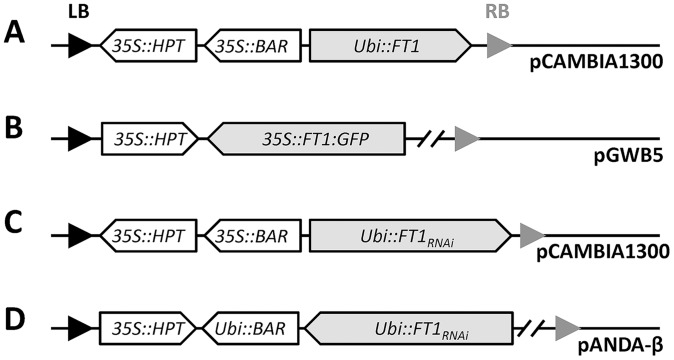
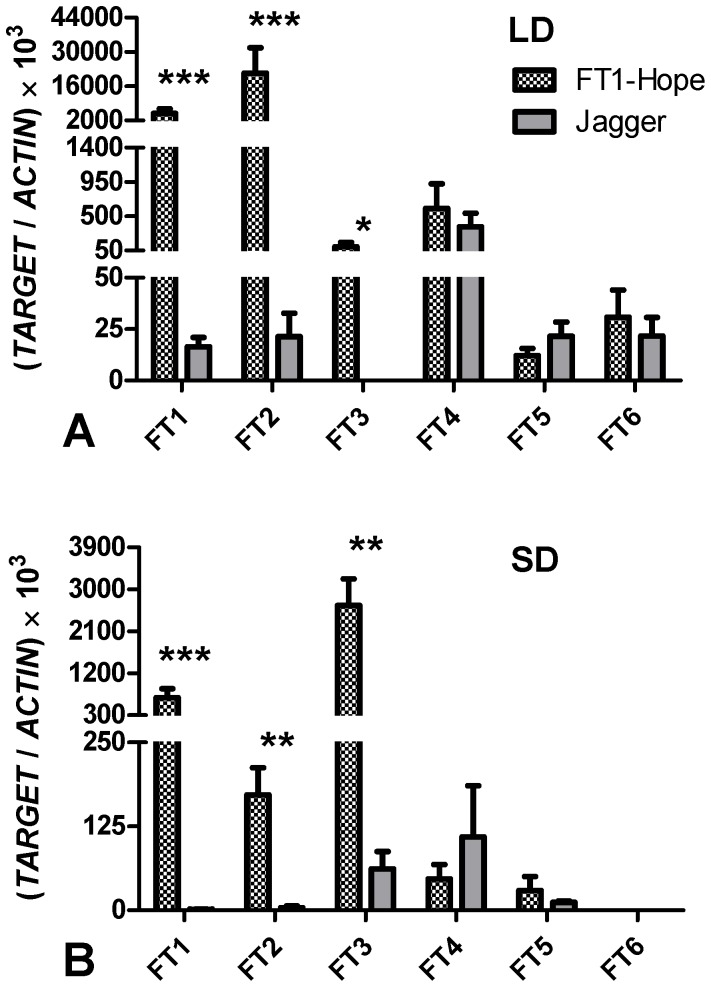
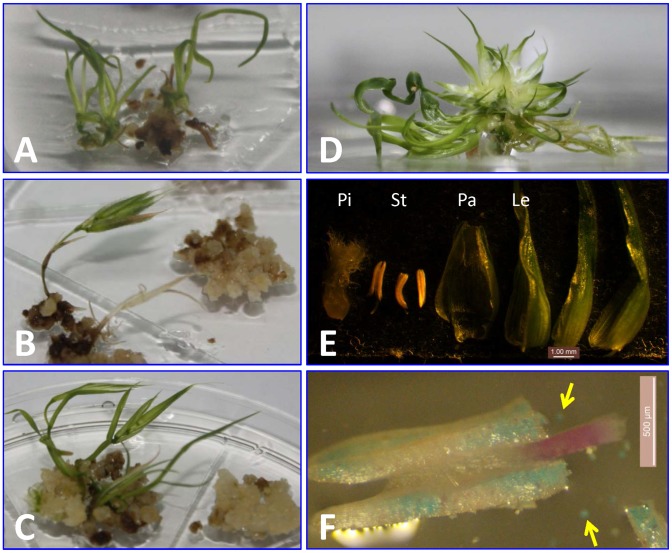
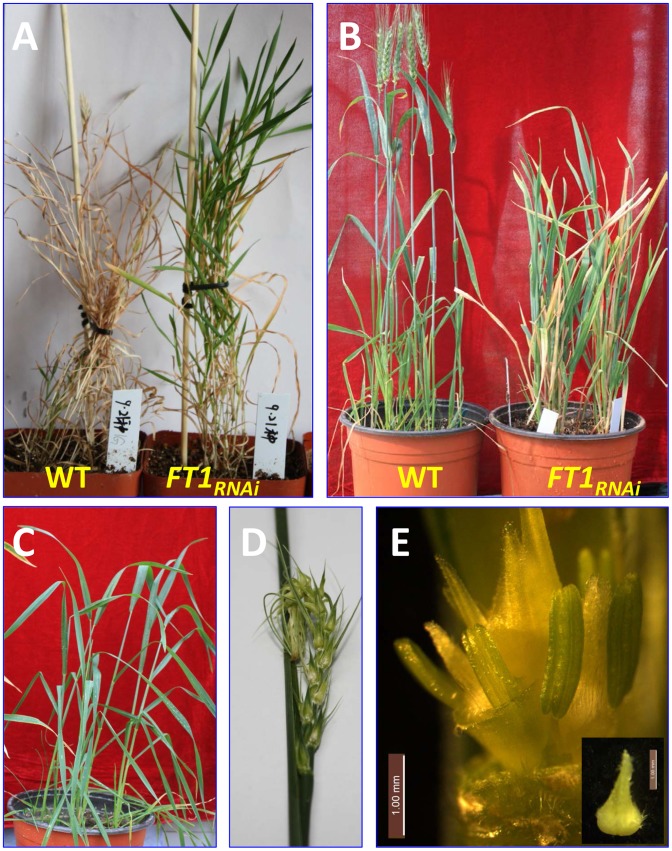
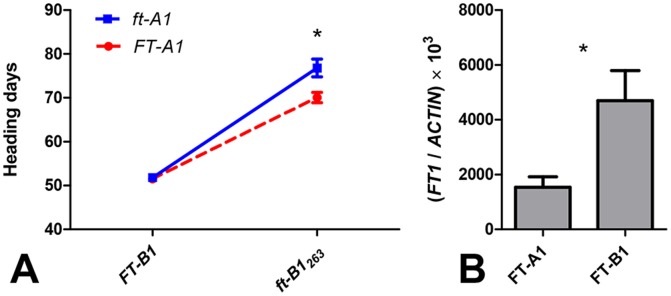
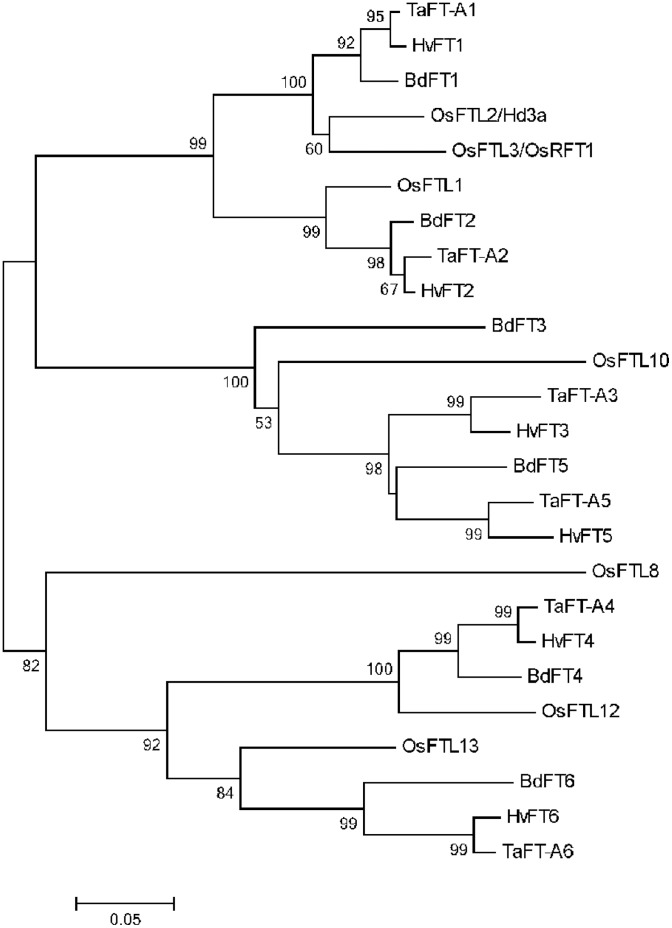
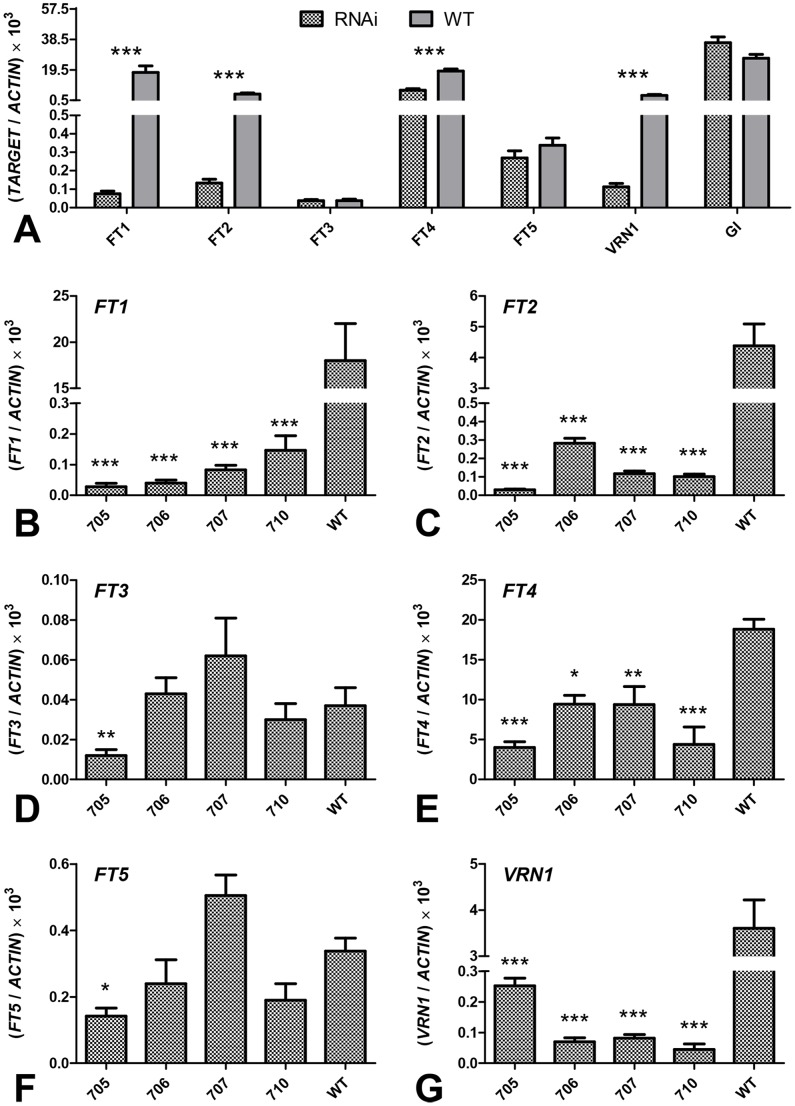
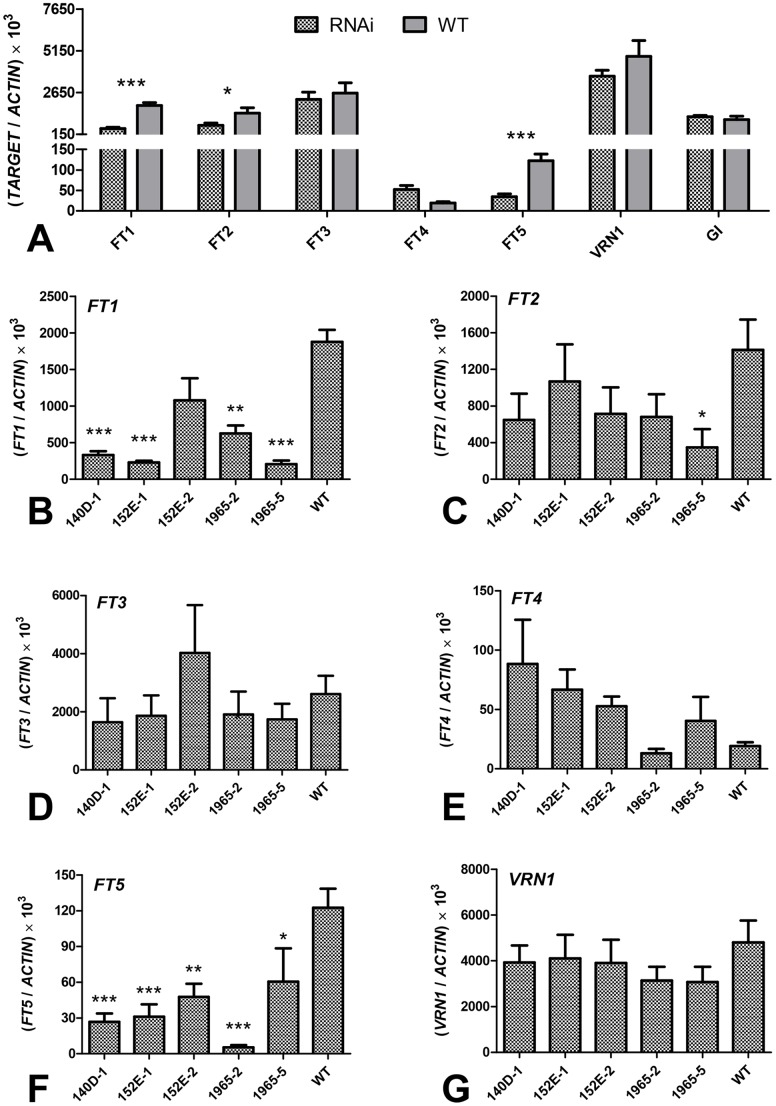
The phase transition from vegetative to reproductive growth is a critical event in the life cycle of flowering plants. FLOWERING LOCUS T (FT) plays a central role in the regulation of this transition by integrating signals from multiple flowering pathways in the leaves and transmitting them to the shoot apical meristem. In this study, we characterized FT homologs in the temperate grasses Brachypodium distachyon and polyploid wheat using transgenic and mutant approaches. Downregulation of FT1 by RNAi was associated with a significant downregulation of the FT-like genes FT2 and FT4 in Brachypodium and FT2 and FT5 in wheat. In a transgenic wheat line carrying a highly-expressed FT1 allele, FT2 and FT3 were upregulated under both long and short days. Overexpression of FT1 caused extremely early flowering during shoot regeneration in both Brachypodium and hexaploid wheat, and resulted in insufficient vegetative tissue to support the production of viable seeds. Downregulation of FT1 transcripts by RNA interference (RNAi) resulted in non-flowering Brachypodium plants and late flowering plants (2-4 weeks delay) in wheat. A similar delay in heading time was observed in tetraploid wheat plants carrying mutations for both FT-A1 and FT-B1. Plants homozygous only for mutations in FT-B1 flowered later than plants homozygous only for mutations in FT-A1, which corresponded with higher transcript levels of FT-B1 relative to FT-A1 in the early stages of development. Taken together, our data indicate that FT1 plays a critical role in the regulation of flowering in Brachypodium and wheat, and that this role is associated with the simultaneous regulation of other FT-like genes. The differential effects of mutations in FT-A1 and FT-B1 on wheat heading time suggest that different allelic combinations of FT1 homoeologs could be used to adjust wheat heading time to improve adaptation to changing environments.
从营养生长向生殖生长的阶段转变是开花植物生命周期中的一个关键事件。成花素基因T(FT)通过整合来自叶片中多个开花途径的信号并将其传递到茎尖分生组织,在这一转变的调控中发挥核心作用。在本研究中,我们利用转基因和突变体方法对温带禾本科植物短柄草和多倍体小麦中的FT同源基因进行了表征。RNA干扰(RNAi)介导的FT1下调与短柄草中FT样基因FT2和FT4以及小麦中FT2和FT5的显著下调相关。在携带高表达FT1等位基因的转基因小麦品系中,FT2和FT3在长日照和短日照条件下均上调。FT1的过表达导致短柄草和六倍体小麦在茎再生过程中极早开花,并导致营养组织不足,无法支持 viable种子的产生。RNA干扰(RNAi)介导的FT1转录本下调导致短柄草植株不开花,小麦植株开花延迟(延迟2 - 4周)。在携带FT - A1和FT - B1突变的四倍体小麦植株中也观察到抽穗期有类似延迟。仅FT - B1突变纯合的植株比仅FT - A1突变纯合的植株开花晚,这与发育早期FT - B1相对于FT - A1更高的转录水平相对应。综合来看,我们的数据表明FT1在短柄草和小麦的开花调控中起关键作用,并且这一作用与其他FT样基因的协同调控相关。FT - A1和FT - B1突变对小麦抽穗期的不同影响表明,FT1同源基因的不同等位基因组合可用于调整小麦抽穗期,以更好地适应不断变化的环境。