Jittiporn Kanjana, Suwanpradid Jutamas, Patel Chintan, Rojas Modesto, Thirawarapan Suwan, Moongkarndi Primchanien, Suvitayavat Wisuda, Caldwell Ruth B
Vision Discovery Institute, Georgia Regents University, Augusta, GA 30912, USA; Vascular Biology Center, Georgia Regents University, Augusta, GA 30912, USA; Department of Physiology, Faculty of Pharmacy, Mahidol University, 10400, Thailand.
Vision Discovery Institute, Georgia Regents University, Augusta, GA 30912, USA; Vascular Biology Center, Georgia Regents University, Augusta, GA 30912, USA.
Microvasc Res. 2014 May;93:72-9. doi: 10.1016/j.mvr.2014.03.005. Epub 2014 Apr 8.
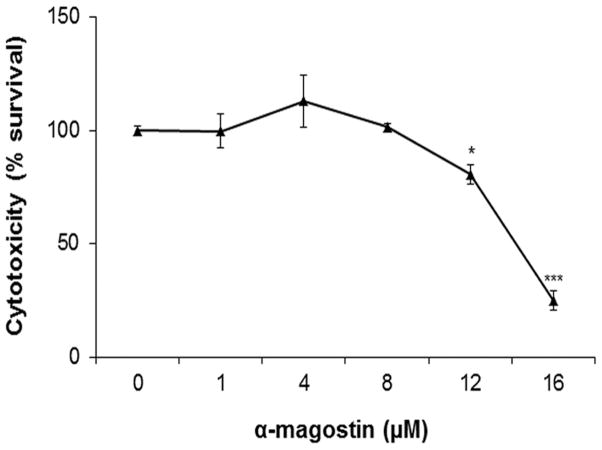
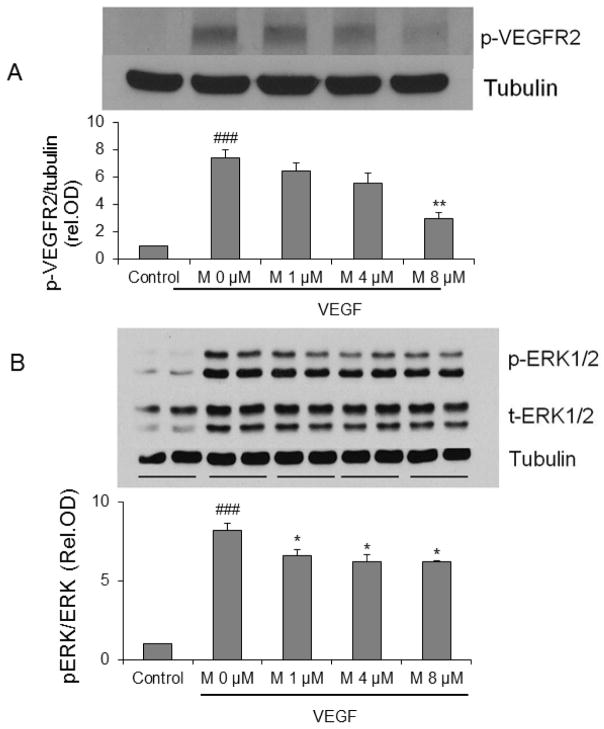
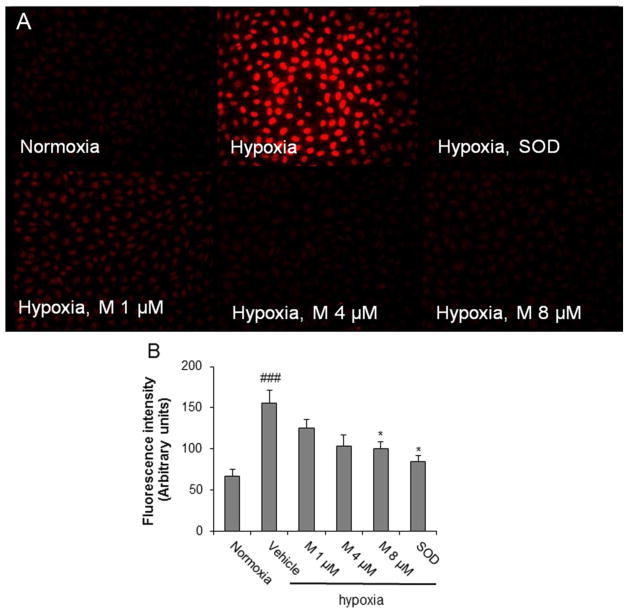
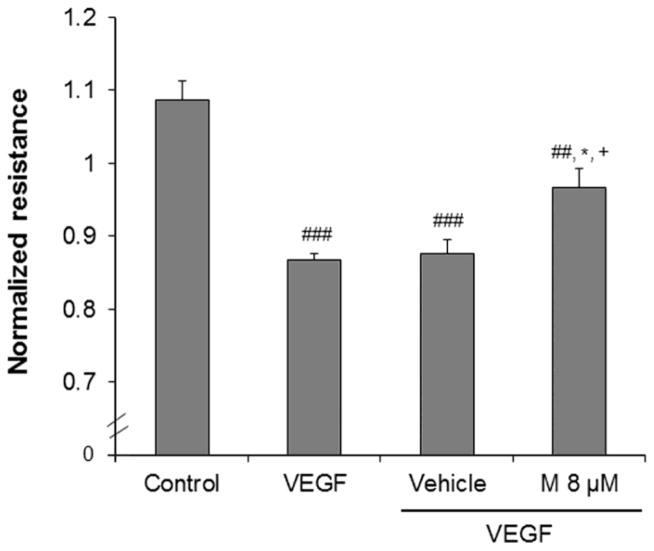
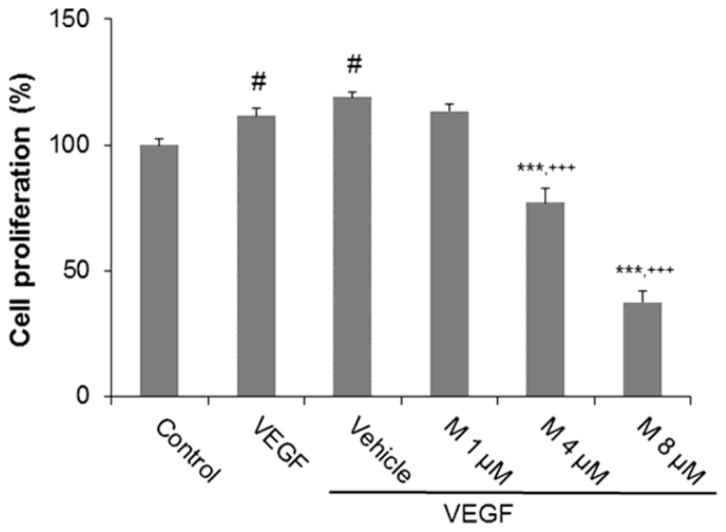
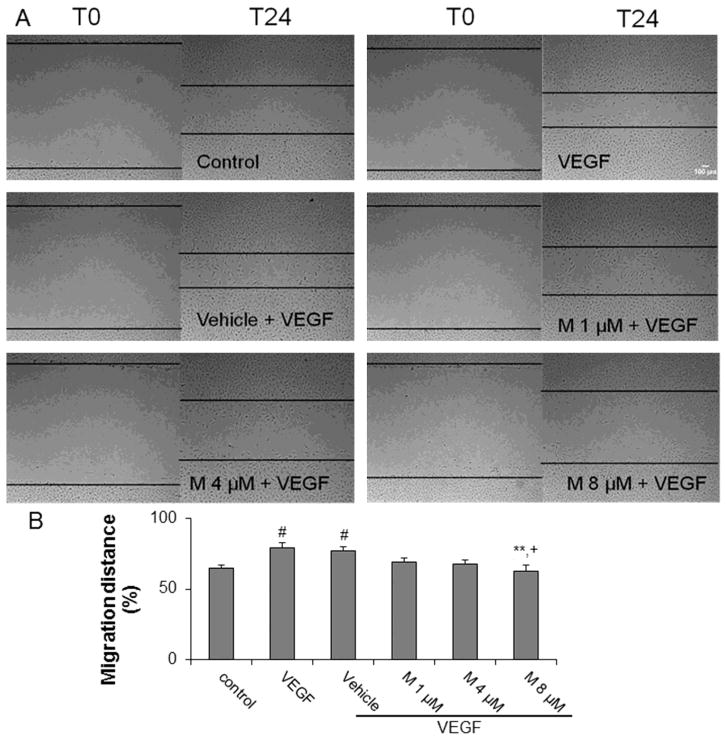
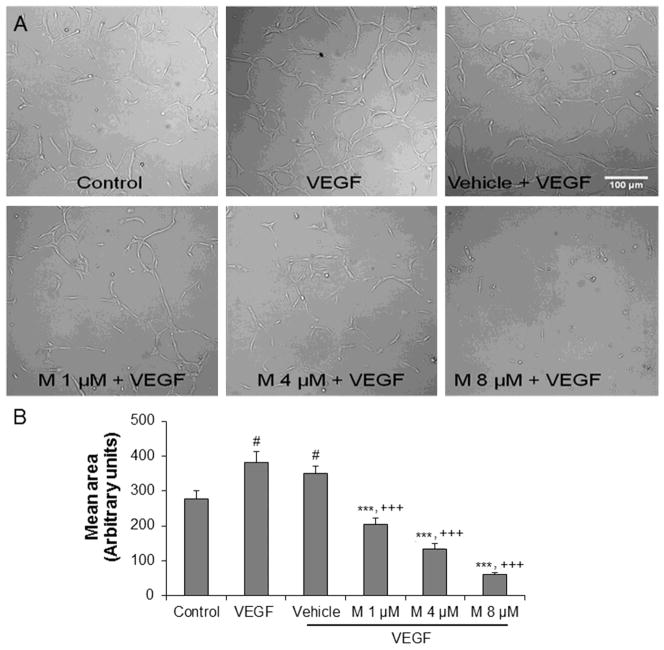
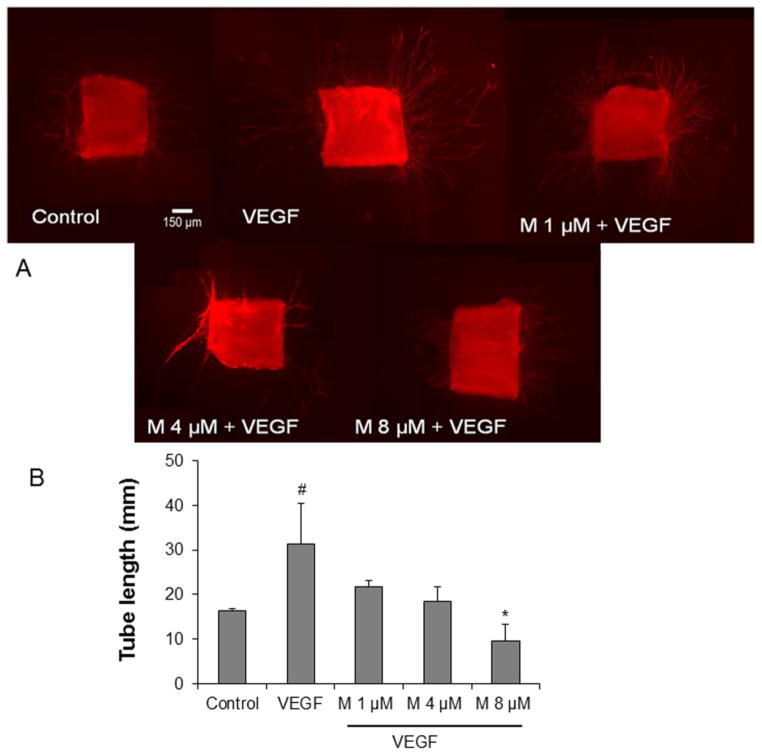
Retinal neovascularization is a major cause of vision loss in diseases characterized by retinal ischemia and is characterized by the pathological growth of abnormal vessels. Vascular endothelial growth factor (VEGF) is known to play an important role in this process. Oxidative stress has been strongly implicated in up-regulation of VEGF associated with neovascularization in various tissues. Hence, compounds with anti-oxidant actions can prevent neovascularization. α-Mangostin, a component of mangosteen (Garcinia mangostana Linn), has been shown to have an anti-oxidant property in pathological conditions involving angiogenesis such as cancer. However, the effect of α-mangostin on ROS formation and angiogenic function in microvascular endothelial cells has not been studied. Hence, this study demonstrated the anti-angiogenic effects of α-mangostin in relation to ROS formation in bovine retinal endothelial cells (REC). α-Mangostin significantly and dose-dependently reduced formation of ROS in hypoxia-treated REC. α-Mangostin also significantly and dose-dependently suppressed VEGF-induced increases in permeability, proliferation, migration and tube formation in REC and blocked angiogenic sprouting in the ex vivo aortic ring assay. In addition, α-mangostin inhibited VEGF-induced phosphorylation of VEGFR2 and ERK1/2-MAPK. According to our results, α-mangostin reduces oxidative stress and limits VEGF-induced angiogenesis through a process involving abrogation of VEGFR2 and ERK1/2-MAPK activation.
视网膜新生血管形成是导致以视网膜缺血为特征的疾病中视力丧失的主要原因,其特点是异常血管的病理性生长。血管内皮生长因子(VEGF)在这一过程中发挥重要作用。氧化应激与各种组织中与新生血管形成相关的VEGF上调密切相关。因此,具有抗氧化作用的化合物可以预防新生血管形成。α-山竹黄酮是山竹(莽吉柿)的一种成分,已被证明在涉及血管生成的病理状况(如癌症)中具有抗氧化特性。然而,α-山竹黄酮对微血管内皮细胞中活性氧生成和血管生成功能的影响尚未得到研究。因此,本研究证明了α-山竹黄酮对牛视网膜内皮细胞(REC)中活性氧生成的抗血管生成作用。α-山竹黄酮显著且呈剂量依赖性地减少缺氧处理的REC中活性氧的生成。α-山竹黄酮还显著且呈剂量依赖性地抑制VEGF诱导的REC中通透性增加、增殖、迁移和管腔形成,并在离体主动脉环试验中阻断血管生成芽生。此外,α-山竹黄酮抑制VEGF诱导的VEGFR2和ERK1/2-MAPK的磷酸化。根据我们的结果,α-山竹黄酮通过涉及消除VEGFR2和ERK1/2-MAPK激活的过程来降低氧化应激并限制VEGF诱导的血管生成。