Sterling Jeremy T, Springer Alan M, Iverson Sara J, Johnson Shawn P, Pelland Noel A, Johnson Devin S, Lea Mary-Anne, Bond Nicholas A
National Marine Mammal Laboratory, Alaska Fisheries Science Center, National Marine Fisheries Service, NOAA, Seattle, WA, United States of America.
Institute of Marine Science, University of Alaska Fairbanks, Fairbanks, AK, United States of America.
PLoS One. 2014 Apr 10;9(4):e93068. doi: 10.1371/journal.pone.0093068. eCollection 2014.
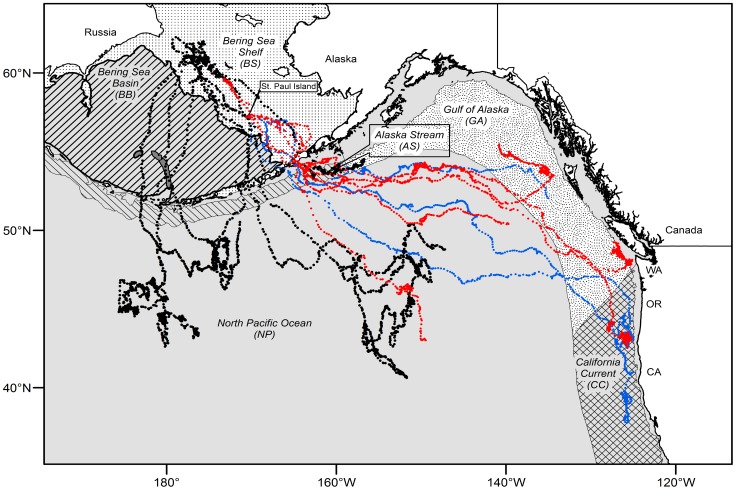
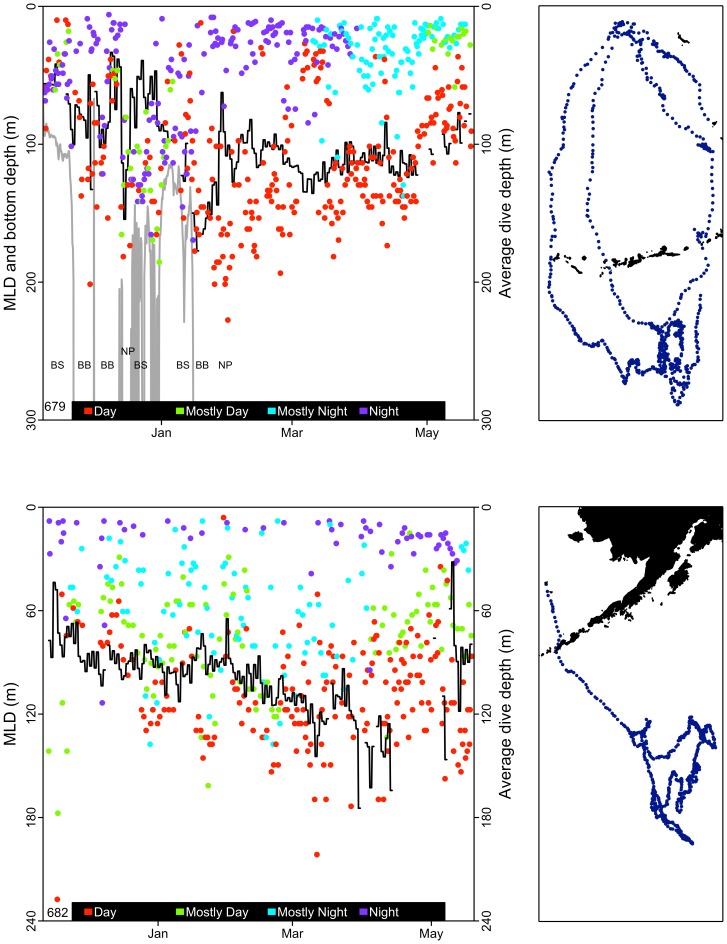
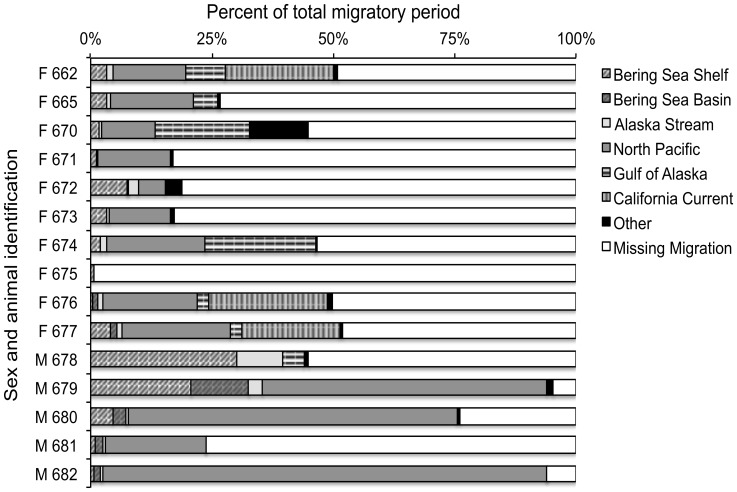
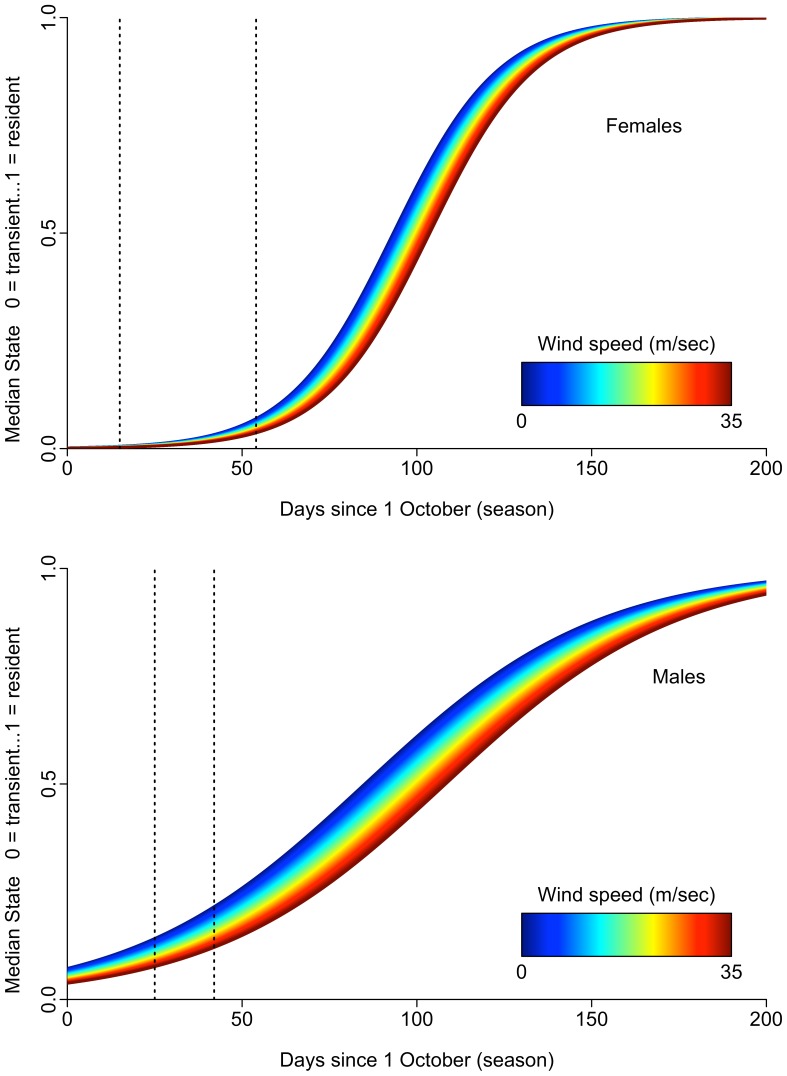
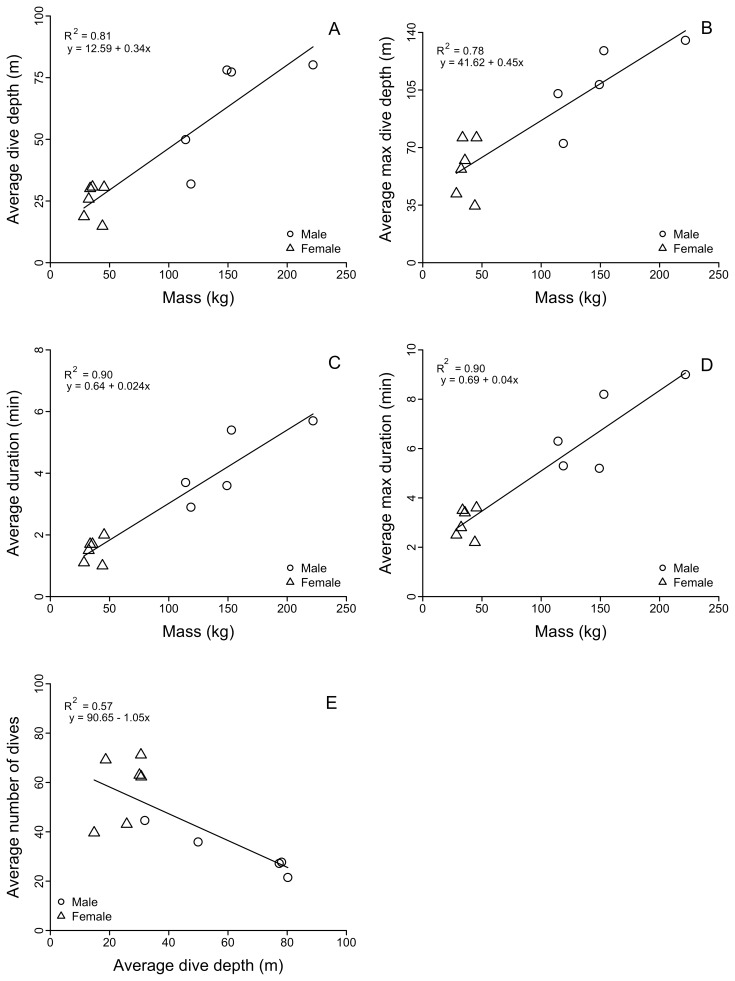
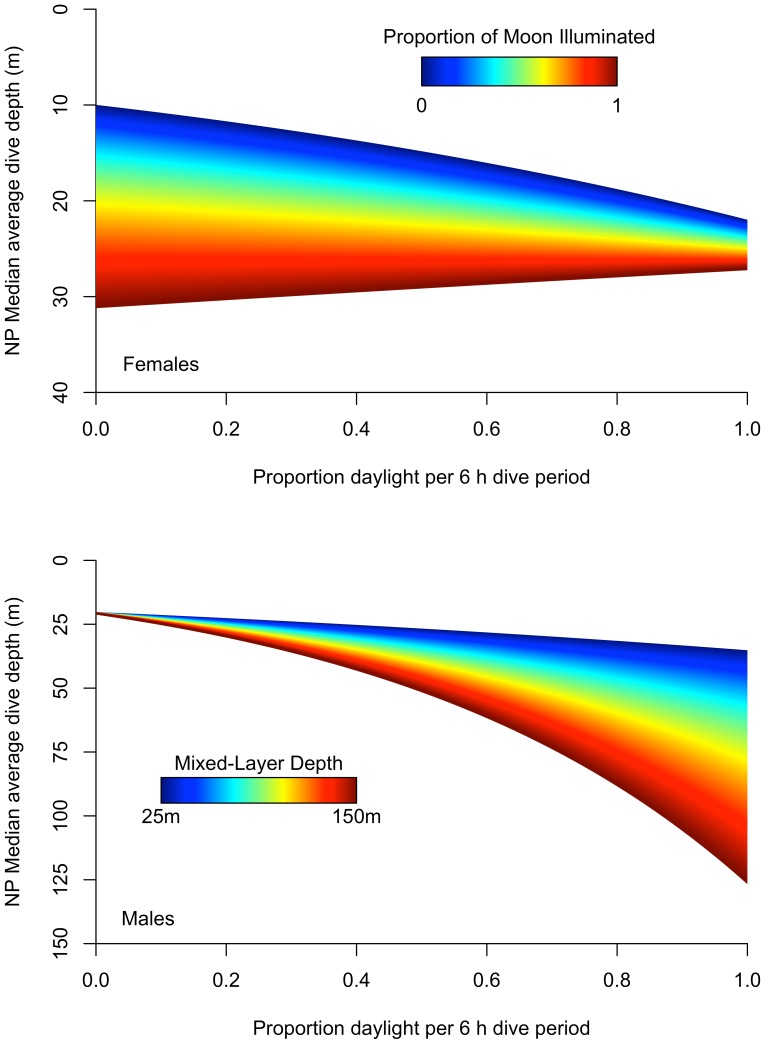
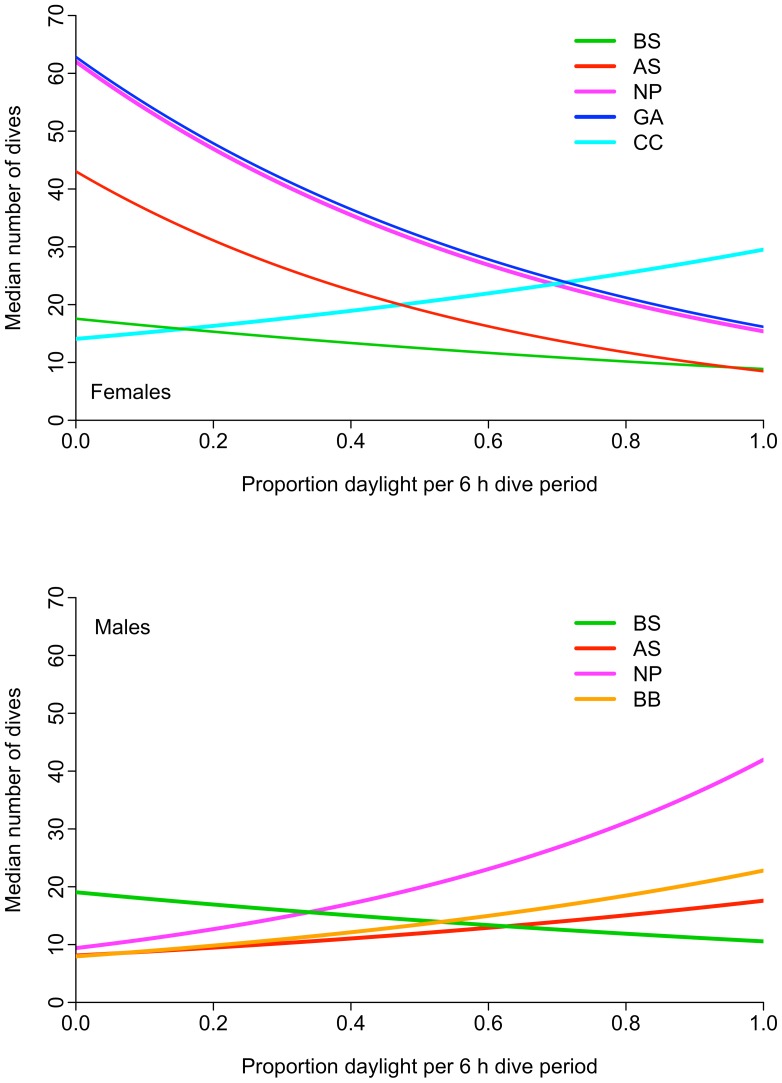
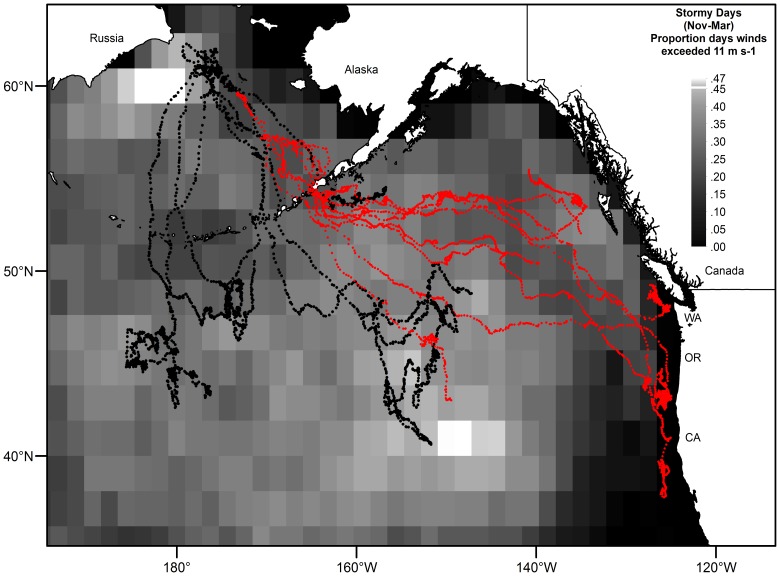
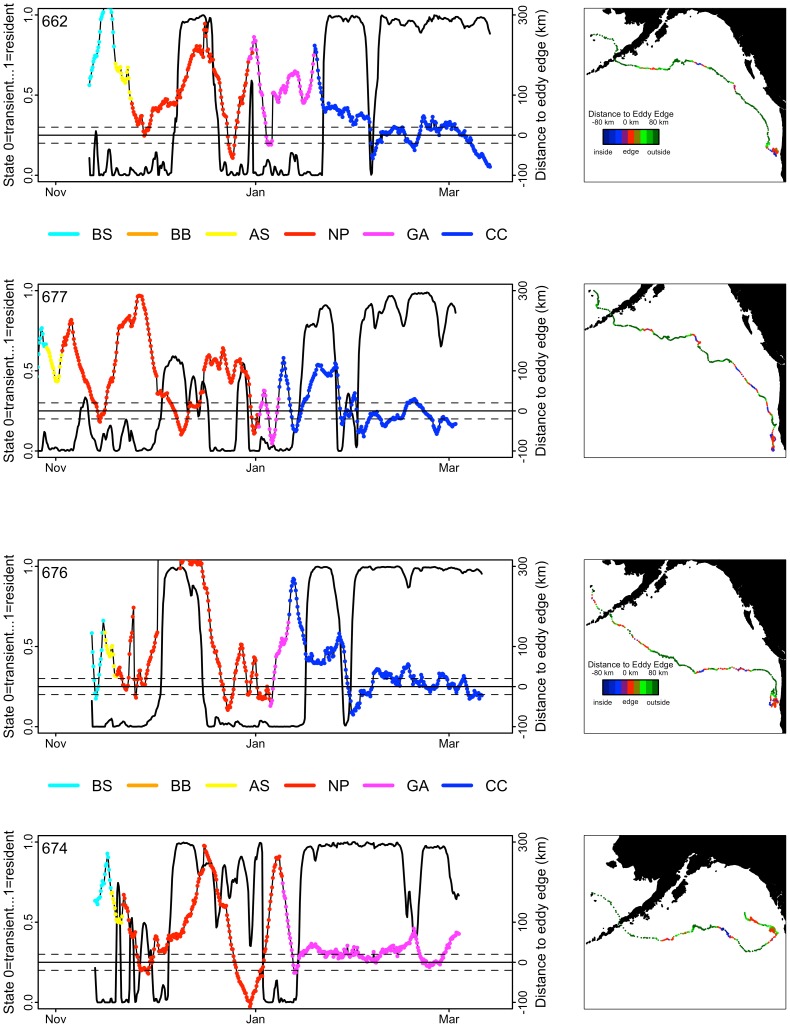
Adult male and female northern fur seals (Callorhinus ursinus) are sexually segregated in different regions of the North Pacific Ocean and Bering Sea during their winter migration. Explanations for this involve interplay between physiology, predator-prey dynamics, and ecosystem characteristics, however possible mechanisms lack empirical support. To investigate factors influencing the winter ecology of both sexes, we deployed five satellite-linked conductivity, temperature, and depth data loggers on adult males, and six satellite-linked depth data loggers and four satellite transmitters on adult females from St. Paul Island (Bering Sea, Alaska, USA) in October 2009. Males and females migrated to different regions of the North Pacific Ocean: males wintered in the Bering Sea and northern North Pacific Ocean, while females migrated to the Gulf of Alaska and California Current. Horizontal and vertical movement behaviors of both sexes were influenced by wind speed, season, light (sun and moon), and the ecosystem they occupied, although the expression of the behaviors differed between sexes. Male dive depths were aligned with the depth of the mixed layer during daylight periods and we suspect this was the case for females upon their arrival to the California Current. We suggest that females, because of their smaller size and physiological limitations, must avoid severe winters typical of the northern North Pacific Ocean and Bering Sea and migrate long distances to areas of more benign environmental conditions and where prey is shallower and more accessible. In contrast, males can better tolerate often extreme winter ocean conditions and exploit prey at depth because of their greater size and physiological capabilities. We believe these contrasting winter behaviors 1) are a consequence of evolutionary selection for large size in males, important to the acquisition and defense of territories against rivals during the breeding season, and 2) ease environmental/physiological constraints imposed on smaller females.
成年雄性和雌性北海狗(Callorhinus ursinus)在冬季迁徙期间在北太平洋和白令海的不同区域进行性别隔离。对此的解释涉及生理、捕食者 - 猎物动态和生态系统特征之间的相互作用,然而可能的机制缺乏实证支持。为了研究影响两性冬季生态的因素,我们于2009年10月在美国阿拉斯加白令海圣保罗岛的成年雄性北海狗身上部署了5个与卫星相连的电导率、温度和深度数据记录器,在成年雌性北海狗身上部署了6个与卫星相连的深度数据记录器和4个卫星发射器。雄性和雌性北海狗迁徙到北太平洋的不同区域:雄性在白令海和北太平洋北部越冬,而雌性则迁徙到阿拉斯加湾和加利福尼亚洋流区域。两性的水平和垂直移动行为受到风速、季节、光照(太阳和月亮)以及它们所处生态系统的影响,尽管两性行为的表现有所不同。雄性的潜水深度在白天与混合层深度一致,我们怀疑雌性到达加利福尼亚洋流区域时也是如此。我们认为,雌性由于体型较小和生理限制,必须避开北太平洋北部和白令海典型的严冬,长途迁徙到环境条件更适宜、猎物较浅且更容易获取的地区。相比之下,雄性由于体型更大和生理能力更强,能够更好地耐受冬季海洋中常常极端的条件,并在较深的深度捕食猎物。我们认为这些截然不同的冬季行为1)是雄性进化选择较大体型的结果,这在繁殖季节对获取和保卫领地对抗竞争对手很重要,2)缓解了较小体型雌性所面临的环境/生理限制。