Xiao Xiaoping, Liu Yang, Zhang Xiaoyan, Wang Jing, Li Zuofeng, Pang Xiaojing, Wang Penghua, Cheng Gong
Department of Basic Medical Sciences, School of Medicine, Tsinghua University, Beijing, People's Republic of China.
School of Life Sciences and Technology, Tongji University, Shanghai, People's Republic of China.
PLoS Pathog. 2014 Apr 10;10(4):e1004027. doi: 10.1371/journal.ppat.1004027. eCollection 2014 Apr.
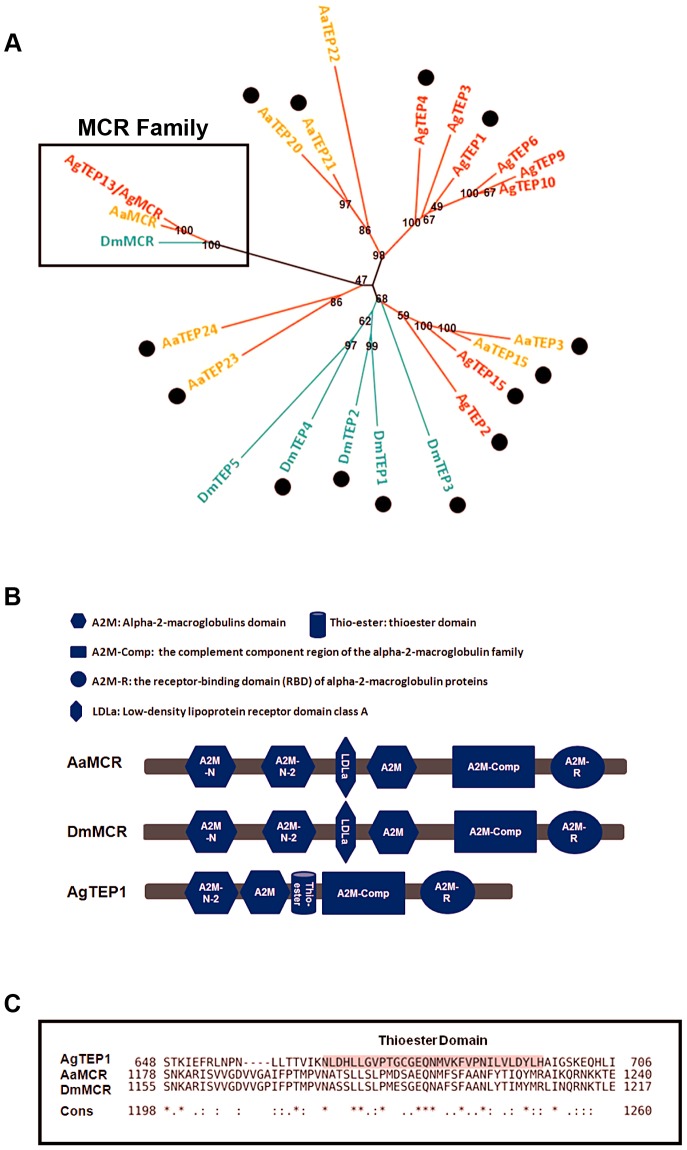
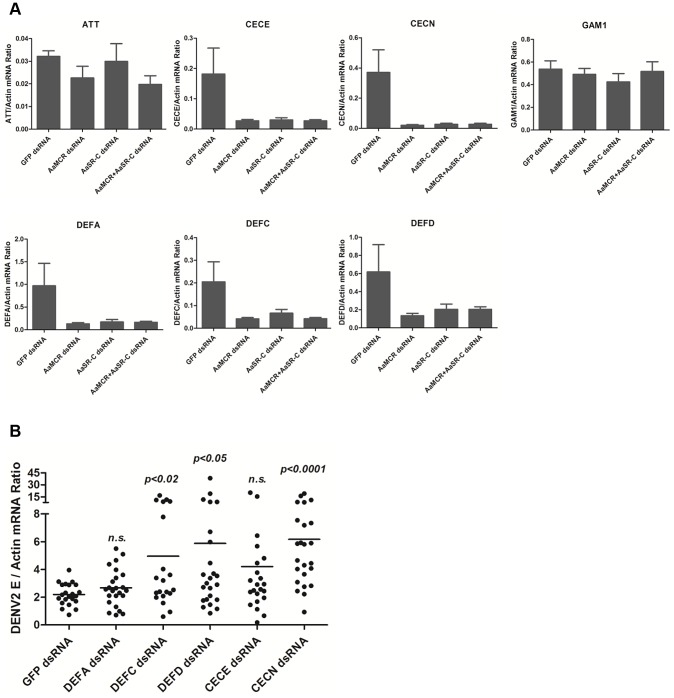
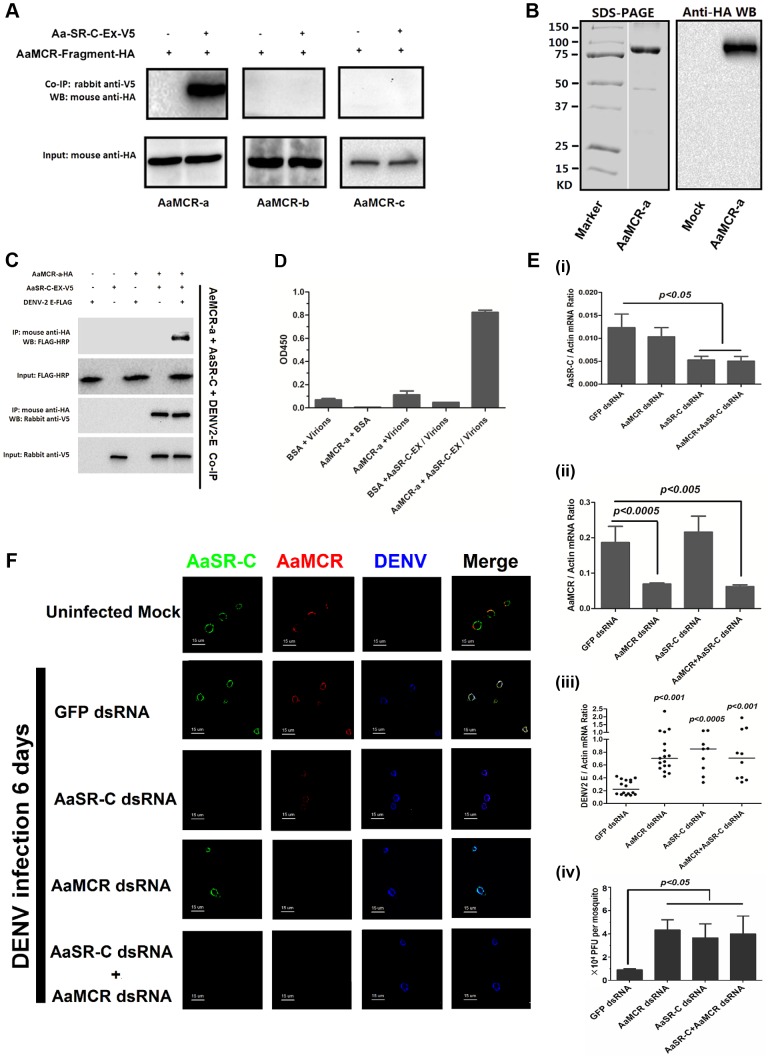
The complement system functions during the early phase of infection and directly mediates pathogen elimination. The recent identification of complement-like factors in arthropods indicates that this system shares common ancestry in vertebrates and invertebrates as an immune defense mechanism. Thioester (TE)-containing proteins (TEPs), which show high similarity to mammalian complement C3, are thought to play a key role in innate immunity in arthropods. Herein, we report that a viral recognition cascade composed of two complement-related proteins limits the flaviviral infection of Aedes aegypti. An A. aegypti macroglobulin complement-related factor (AaMCR), belonging to the insect TEP family, is a crucial effector in opposing the flaviviral infection of A. aegypti. However, AaMCR does not directly interact with DENV, and its antiviral effect requires an A. aegypti homologue of scavenger receptor-C (AaSR-C), which interacts with DENV and AaMCR simultaneously in vitro and in vivo. Furthermore, recognition of DENV by the AaSR-C/AaMCR axis regulates the expression of antimicrobial peptides (AMPs), which exerts potent anti-DENV activity. Our results both demonstrate the existence of a viral recognition pathway that controls the flaviviral infection by inducing AMPs and offer insights into a previously unappreciated antiviral function of the complement-like system in arthropods.
补体系统在感染早期发挥作用,直接介导病原体的清除。最近在节肢动物中发现的补体样因子表明,作为一种免疫防御机制,该系统在脊椎动物和无脊椎动物中有着共同的起源。含硫酯(TE)蛋白(TEPs)与哺乳动物补体C3高度相似,被认为在节肢动物的先天免疫中起关键作用。在此,我们报告由两种补体相关蛋白组成的病毒识别级联反应限制了埃及伊蚊的黄病毒感染。埃及伊蚊巨球蛋白补体相关因子(AaMCR)属于昆虫TEP家族,是对抗埃及伊蚊黄病毒感染的关键效应因子。然而,AaMCR并不直接与登革病毒相互作用,其抗病毒作用需要埃及伊蚊清道夫受体C(AaSR-C)的同源物,该同源物在体外和体内同时与登革病毒和AaMCR相互作用。此外,AaSR-C/AaMCR轴对登革病毒的识别调节了抗菌肽(AMPs)的表达,抗菌肽发挥了强大的抗登革病毒活性。我们的结果既证明了存在一种通过诱导抗菌肽来控制黄病毒感染的病毒识别途径,也为节肢动物中补体样系统以前未被认识的抗病毒功能提供了见解。