Pinto Harshini, Sharwood Robert E, Tissue David T, Ghannoum Oula
Hawkesbury Institute for the Environment, University of Western Sydney, Hawkesbury campus, Locked Bag 1797, Penrith 2751, NSW, Australia.
Hawkesbury Institute for the Environment, University of Western Sydney, Hawkesbury campus, Locked Bag 1797, Penrith 2751, NSW, Australia
J Exp Bot. 2014 Jul;65(13):3669-81. doi: 10.1093/jxb/eru155. Epub 2014 Apr 10.
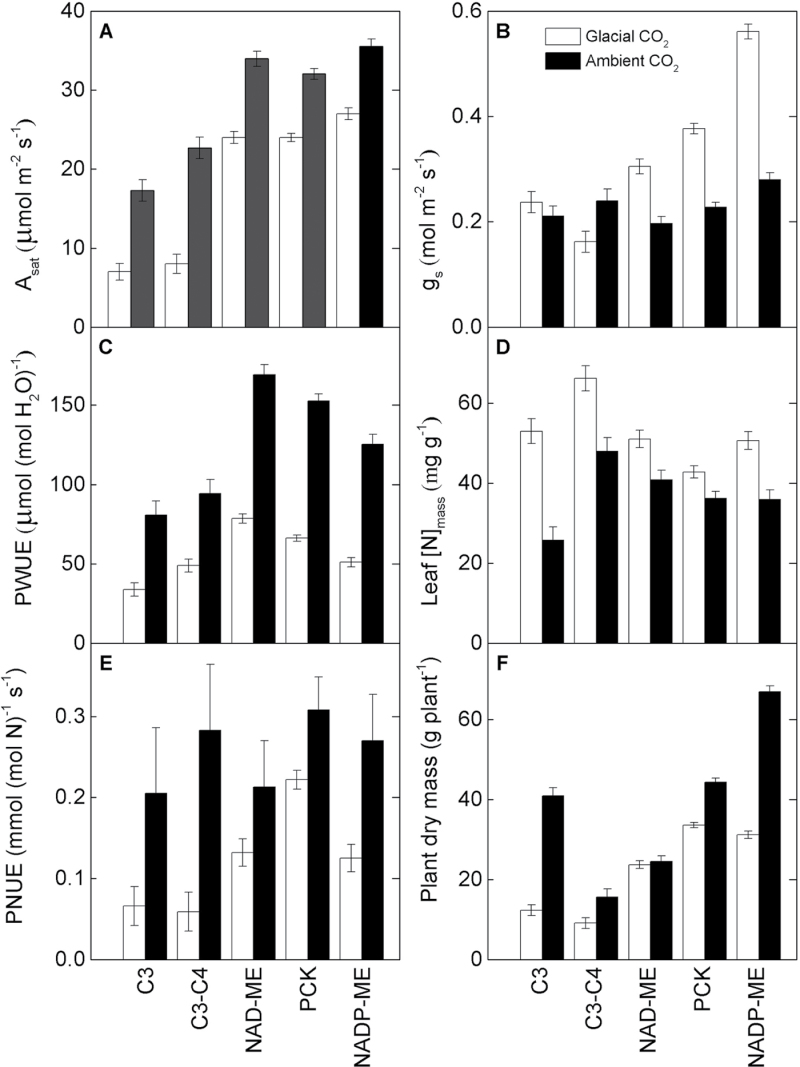
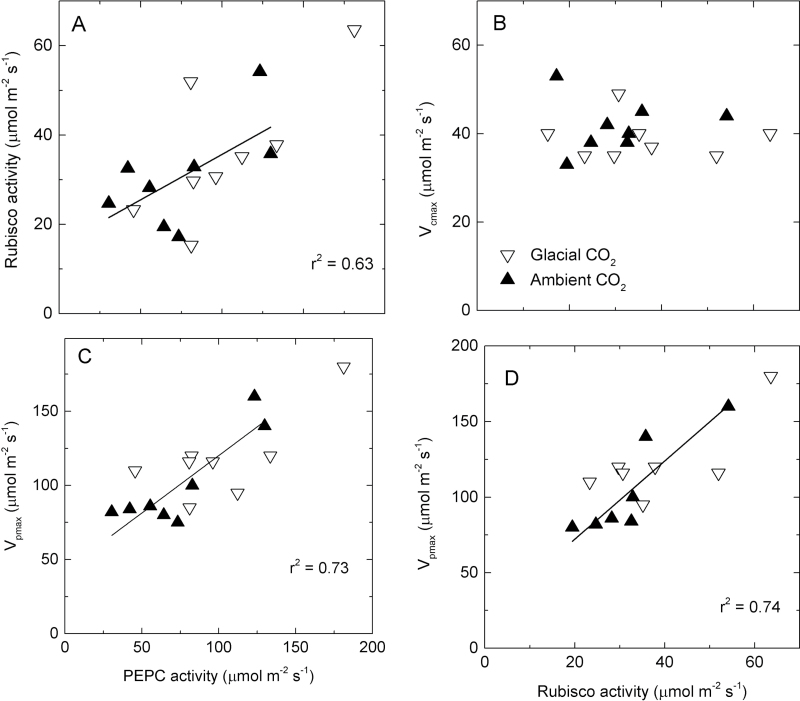
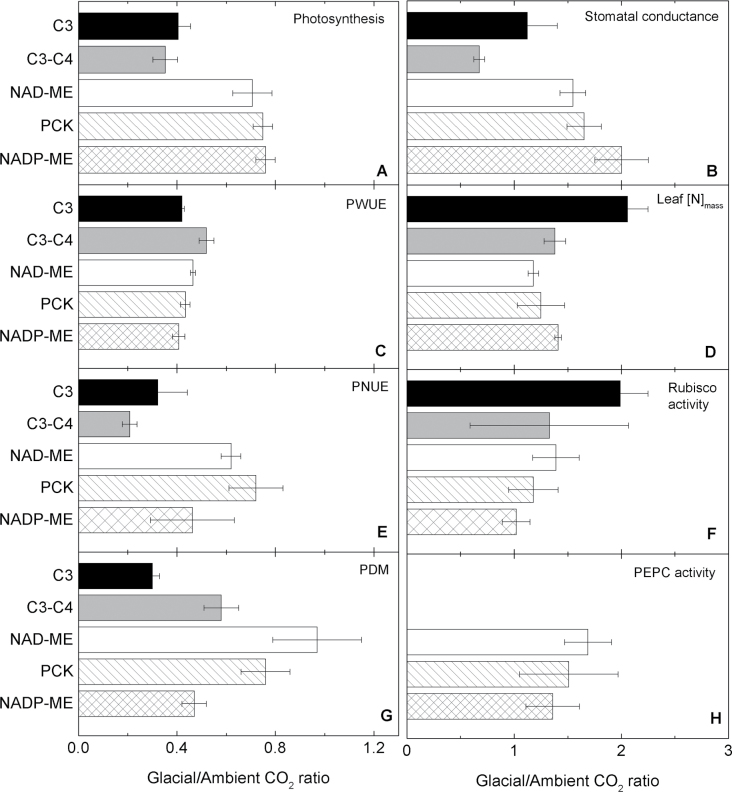
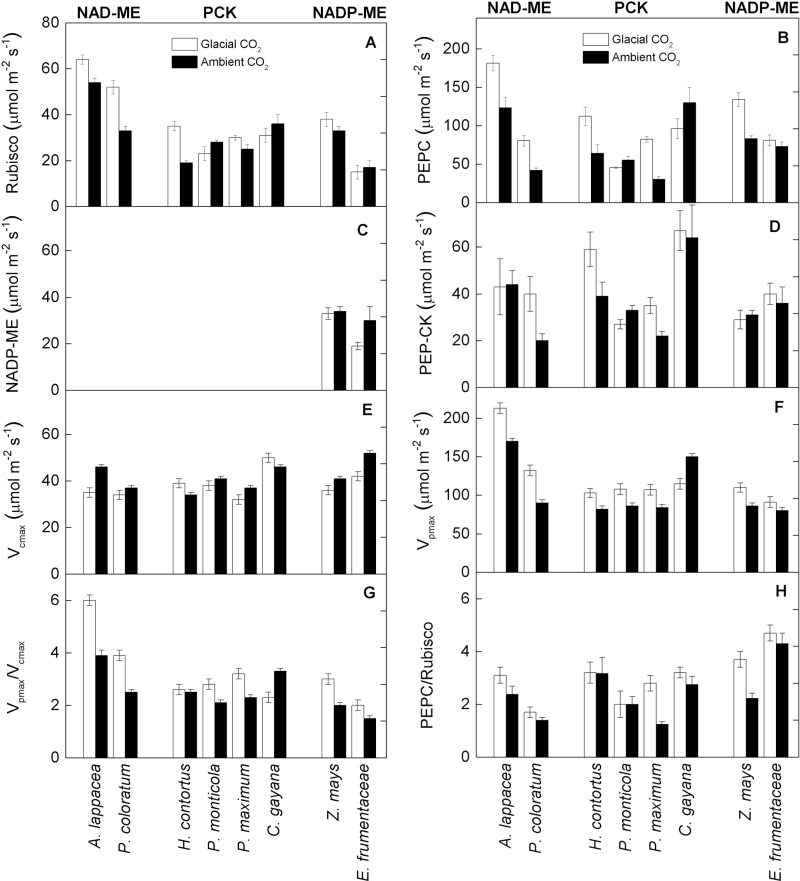
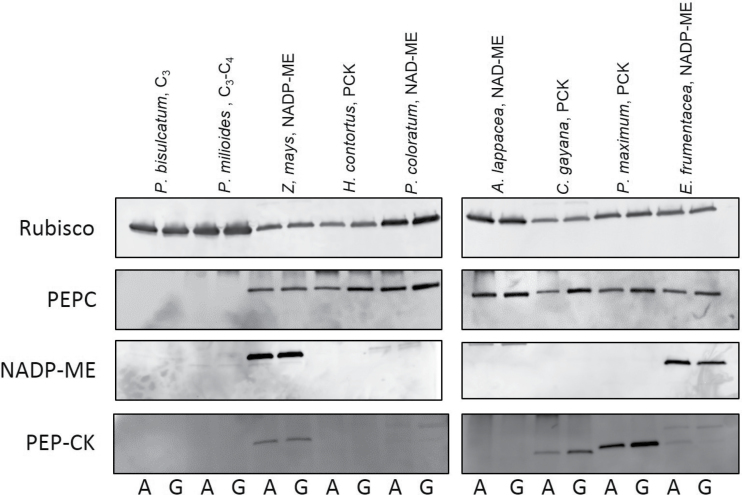
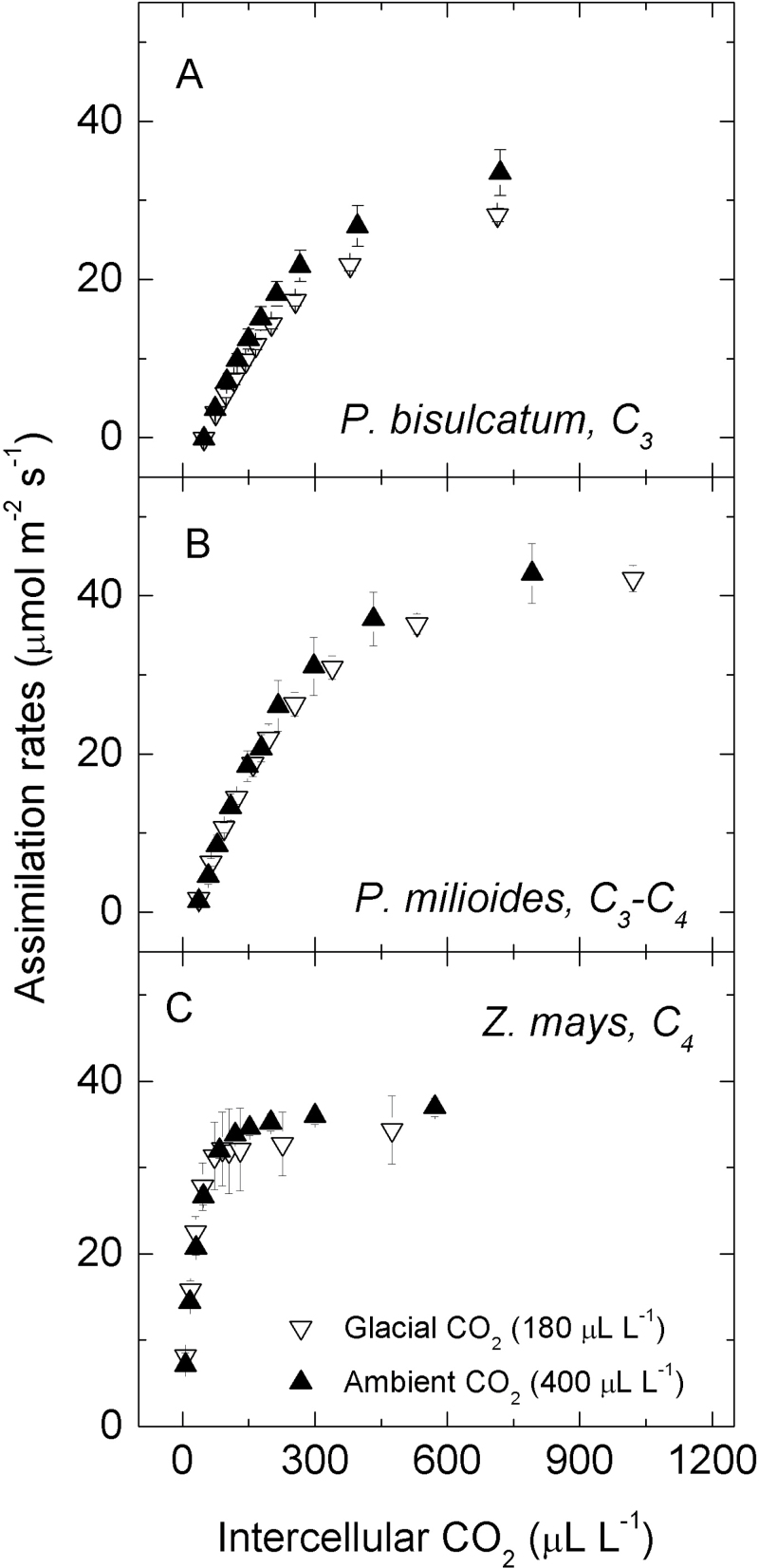
Most physiology comparisons of C3 and C4 plants are made under current or elevated concentrations of atmospheric CO2 which do not reflect the low CO2 environment under which C4 photosynthesis has evolved. Accordingly, photosynthetic nitrogen (PNUE) and water (PWUE) use efficiency, and the activity of the photosynthetic carboxylases [Rubisco and phosphoenolpyruvate carboxylase (PEPC)] and decarboxylases [NADP-malic enzyme (NADP-ME) and phosphoenolpyruvate carboxykinase (PEP-CK)] were compared in eight C4 grasses with NAD-ME, PCK, and NADP-ME subtypes, one C3 grass, and one C3-C4 grass grown under ambient (400 μl l(-1)) and glacial (180 μl l(-1)) CO2. Glacial CO2 caused a smaller reduction of photosynthesis and a greater increase of stomatal conductance in C4 relative to C3 and C3-C4 species. Panicum bisulcatum (C3) acclimated to glacial [CO2] by doubling Rubisco activity, while Rubisco was unchanged in Panicum milioides (C3-C4), possibly due to its high leaf N and Rubisco contents. Glacial CO2 up-regulated Rubisco and PEPC activities in concert for several C4 grasses, while NADP-ME and PEP-CK activities were unchanged, reflecting the high control exerted by the carboxylases relative to the decarboxylases on the efficiency of C4 metabolism. Despite having larger stomatal conductance at glacial CO2, C4 species maintained greater PWUE and PNUE relative to C3-C4 and C3 species due to higher photosynthetic rates. Relative to other C4 subtypes, NAD-ME and PEP-CK grasses had the highest PWUE and PNUE, respectively; relative to C3, the C3-C4 grass had higher PWUE and similar PNUE at glacial CO2. Biomass accumulation was reduced by glacial CO2 in the C3 grass relative to the C3-C4 grass, while biomass was less reduced in NAD-ME grasses compared with NADP-ME and PCK grasses. Under glacial CO2, high resource use efficiency offers a key evolutionary advantage for the transition from C3 to C4 photosynthesis in water- and nutrient-limited environments.
大多数对C3和C4植物的生理比较是在当前或升高的大气CO2浓度下进行的,而这些浓度并不能反映C4光合作用进化时的低CO2环境。因此,在环境CO2浓度(400 μl l(-1))和冰川期CO2浓度(180 μl l(-1))下,对8种具有NAD-ME、PCK和NADP-ME亚型的C4禾本科植物、1种C3禾本科植物和1种C3-C4禾本科植物的光合氮(PNUE)和水分(PWUE)利用效率,以及光合羧化酶[核酮糖-1,5-二磷酸羧化酶(Rubisco)和磷酸烯醇式丙酮酸羧化酶(PEPC)]和脱羧酶[NADP-苹果酸酶(NADP-ME)和磷酸烯醇式丙酮酸羧激酶(PEP-CK)]的活性进行了比较。与C3和C3-C4物种相比,冰川期CO2导致C4物种光合作用的降低幅度较小,气孔导度的增加幅度较大。双穗稷(C3)通过使Rubisco活性加倍来适应冰川期[CO2],而类黍稷(C3-C4)中的Rubisco没有变化,这可能是由于其叶片氮和Rubisco含量较高。对于几种C4禾本科植物,冰川期CO2协同上调了Rubisco和PEPC的活性,而NADP-ME和PEP-CK的活性没有变化,这反映了羧化酶相对于脱羧酶对C4代谢效率的高度控制。尽管在冰川期CO2下C4物种的气孔导度更大,但由于光合速率较高,其PWUE和PNUE相对于C3-C4和C3物种仍保持较高水平。相对于其他C4亚型,NAD-ME和PEP-CK禾本科植物分别具有最高的PWUE和PNUE;相对于C3,C3-C4禾本科植物在冰川期CO2下具有较高的PWUE和相似的PNUE。与C3-C4禾本科植物相比,冰川期CO2使C3禾本科植物的生物量积累减少,而与NADP-ME和PCK禾本科植物相比,NAD-ME禾本科植物的生物量减少较少。在冰川期CO2下,高资源利用效率为水分和养分受限环境中从C3光合作用向C4光合作用的转变提供了关键的进化优势。