J Med Entomol. 2014 Mar;51(2):375-81. doi: 10.1603/me13159.
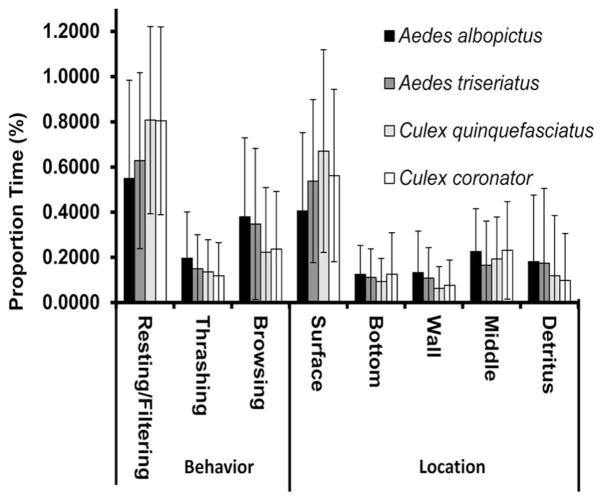
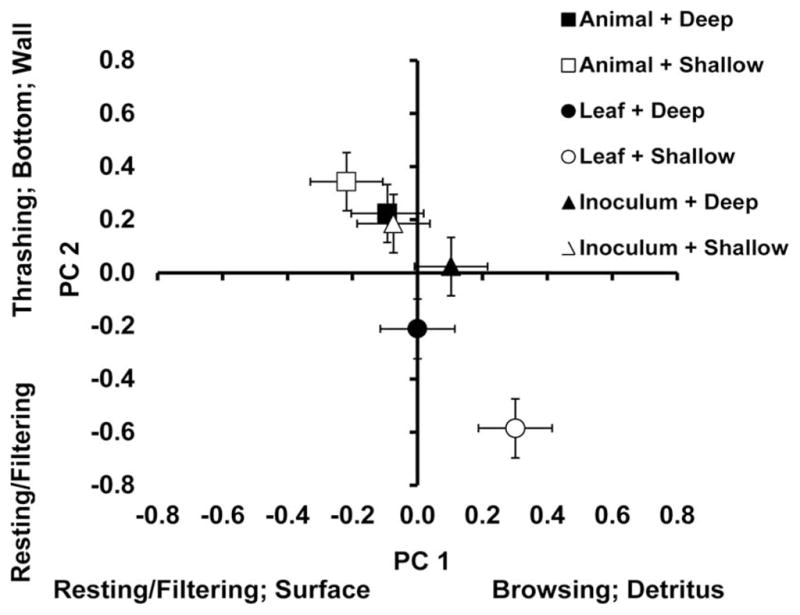
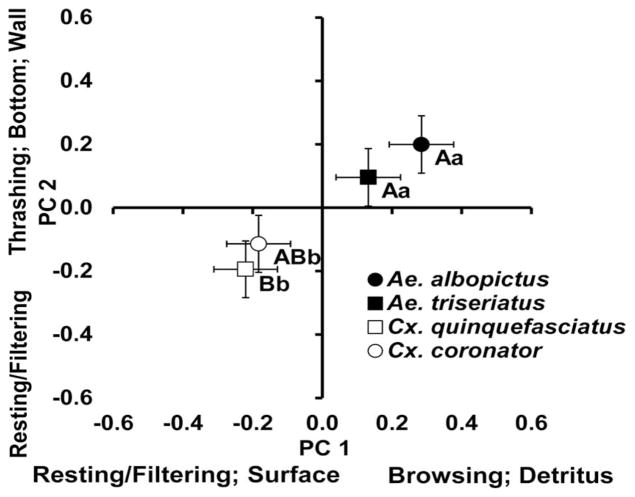
Mosquito larvae often exhibit different behaviors depending on the aspects of the aquatic environment, including the presence of different physical factors and detrital food sources. Regardless of these physical differences, different genera also devote different amounts of time to different behaviors. To determine if differences existed among four focal mosquito species (Aedes albopictus (Singh), Aedes triseriatus (Say), Culex quinquefasciatus (Say), Culex coronator Dyar & Knab), we recorded behaviors under different food environments (animal detritus, leaf detritus, and inoculum + inert material) and depths (shallow and deep). Based on past work, we predicted that larval mosquitoes in the genus Culex would spend more time filtering or resting at the surface of containers, whereas Aedes mosquitoes would spend more time browsing on surfaces. Behaviors were recorded for 30 min and were used to generate instantaneous scan census of behavior (thrashing, browsing, and resting or filtering) and locations (top, middle, bottom, wall, and detritus) of each larva every minute. There were significant differences in behaviors among the three detritus types and the four species (Culex generally different than Aedes), as well as a significant interaction between depth and detritus type. Consistent with predictions, Culex species spent more time filtering or resting, whereas Aedes larvae spent more time browsing on detritus. However, all four species changed their behavior similarly among the different environments, and Cx. coronator exhibited some similar behaviors as the two Aedes species. These behavioral differences may aid in explaining performance differences between different species and outcomes of interspecific encounters, which in turn can affect adult emergence and patterns of disease.
蚊虫幼虫的行为常常因水生环境的不同而表现出差异,包括不同物理因素和碎屑食物源的存在。无论这些物理差异如何,不同属的蚊虫也会将不同的时间用于不同的行为。为了确定四种有代表性的蚊虫(白纹伊蚊(Singh)、三带喙库蚊(Say)、致倦库蚊(Say)、刺扰伊蚊(Dyar & Knab))之间是否存在差异,我们在不同的食物环境(动物碎屑、叶片碎屑和接种物+惰性材料)和深度(浅和深)下记录了行为。基于过去的工作,我们预测库蚊属的幼虫蚊子会在容器表面花费更多的时间过滤或休息,而伊蚊属的蚊子会在表面浏览更多的时间。行为记录持续 30 分钟,并用于生成每分钟每只幼虫的行为(拍打、浏览和休息或过滤)和位置(顶部、中部、底部、墙壁和碎屑)的瞬时扫描行为普查。在三种碎屑类型和四个物种(库蚊通常与伊蚊不同)之间,行为存在显著差异,深度和碎屑类型之间也存在显著的相互作用。与预测一致,库蚊属的物种花费更多的时间过滤或休息,而伊蚊属的幼虫在碎屑上花费更多的时间浏览。然而,所有四个物种在不同环境中都表现出相似的行为变化,而 Cx. coronator 表现出与两种伊蚊属物种相似的一些行为。这些行为差异可能有助于解释不同物种之间的性能差异和种间相遇的结果,这反过来又会影响成虫的出现和疾病的模式。