New York University Cancer Institute, New York University Brain Tumor Center, New York University Langone Medical Center, New York, New York, United States of America.
Department of Pathology, Microbiology, and Immunology, University of California Davis, Davis, California, United States of America.
PLoS One. 2014 Apr 11;9(4):e94045. doi: 10.1371/journal.pone.0094045. eCollection 2014.
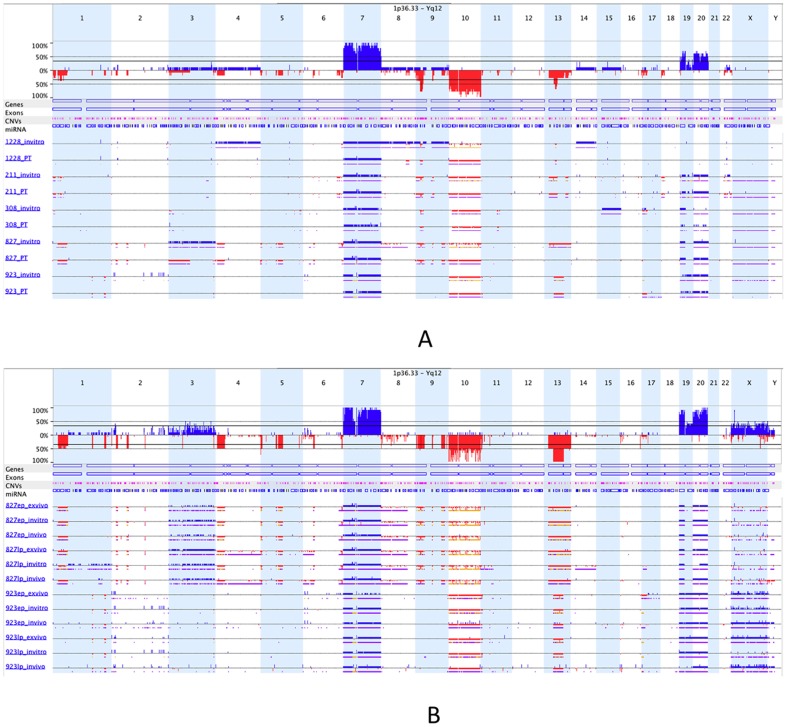
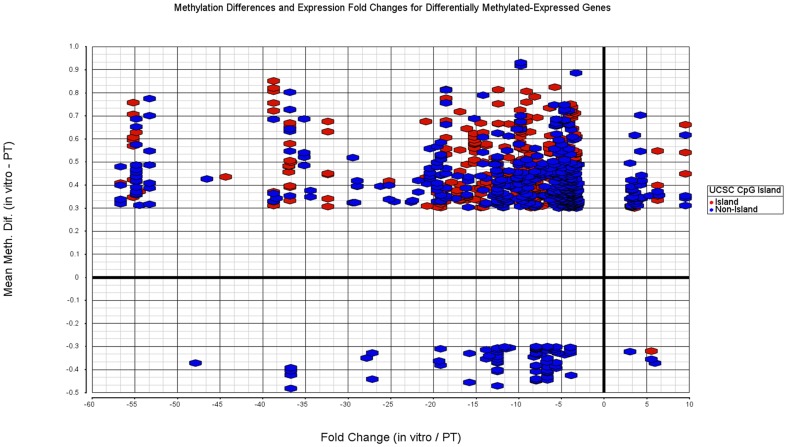
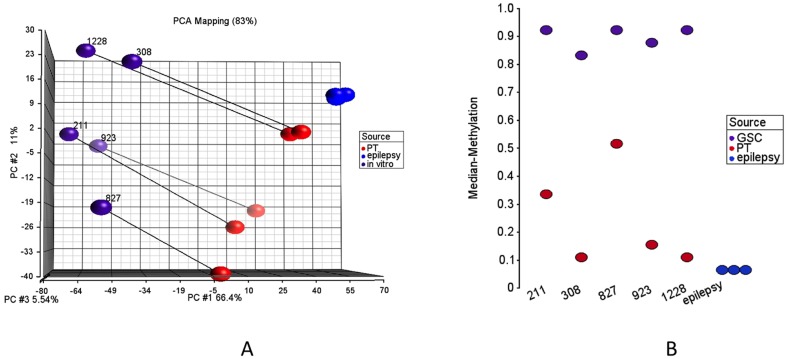
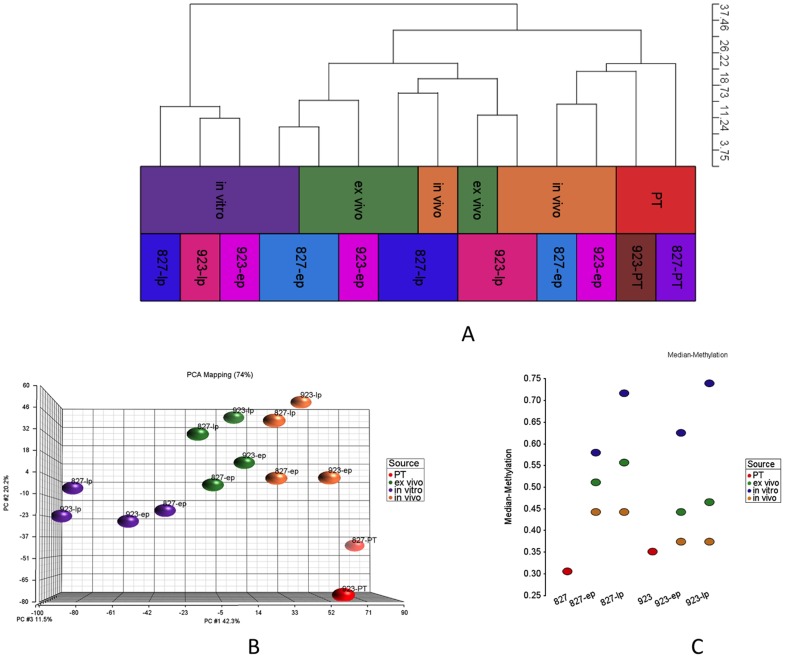
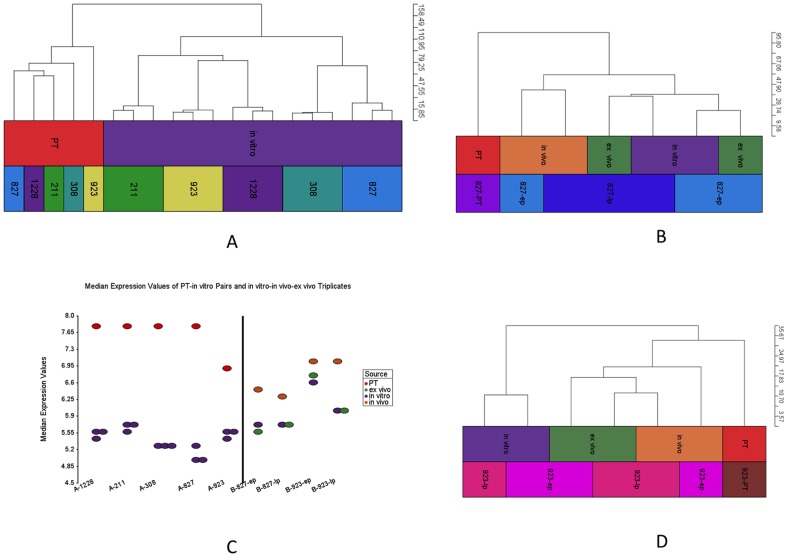
In vitro and in vivo models are widely used in cancer research. Characterizing the similarities and differences between a patient's tumor and corresponding in vitro and in vivo models is important for understanding the potential clinical relevance of experimental data generated with these models. Towards this aim, we analyzed the genomic aberrations, DNA methylation and transcriptome profiles of five parental tumors and their matched in vitro isolated glioma stem cell (GSC) lines and xenografts generated from these same GSCs using high-resolution platforms. We observed that the methylation and transcriptome profiles of in vitro GSCs were significantly different from their corresponding xenografts, which were actually more similar to their original parental tumors. This points to the potentially critical role of the brain microenvironment in influencing methylation and transcriptional patterns of GSCs. Consistent with this possibility, ex vivo cultured GSCs isolated from xenografts showed a tendency to return to their initial in vitro states even after a short time in culture, supporting a rapid dynamic adaptation to the in vitro microenvironment. These results show that methylation and transcriptome profiles are highly dependent on the microenvironment and growth in orthotopic sites partially reverse the changes caused by in vitro culturing.
在癌症研究中,体外和体内模型被广泛应用。对患者肿瘤与相应的体外和体内模型之间的相似性和差异性进行特征描述,对于理解这些模型所产生的实验数据的潜在临床相关性非常重要。为此,我们利用高分辨率技术平台,对五例亲本肿瘤以及由这些肿瘤中分离出的体外胶质瘤干细胞(GSC)系和相应的异种移植瘤的基因组畸变、DNA 甲基化和转录组谱进行了分析。我们发现,体外 GSC 的甲基化和转录组谱与其相应的异种移植瘤显著不同,而这些异种移植瘤实际上与它们的原始亲本肿瘤更为相似。这表明脑微环境在影响 GSC 的甲基化和转录模式方面可能起着至关重要的作用。与这种可能性一致的是,即使在体外培养很短时间后,从异种移植瘤中分离出的体外培养 GSC 也表现出回归其初始体外状态的趋势,这支持了 GSC 对体外微环境的快速动态适应。这些结果表明,甲基化和转录组谱高度依赖于微环境,而在原位生长可以部分逆转体外培养引起的变化。