Chiang Tsai-Shin, Yang Kai-Chiang, Chiou Ling-Ling, Huang Guan-Tarn, Lee Hsuan-Shu
Institute of Biotechnology, National Taiwan University, Taipei, Taiwan.
School of Dentistry, College of Oral Medicine, Taipei Medical University, Taipei, Taiwan.
PLoS One. 2014 Apr 14;9(4):e94885. doi: 10.1371/journal.pone.0094885. eCollection 2014.
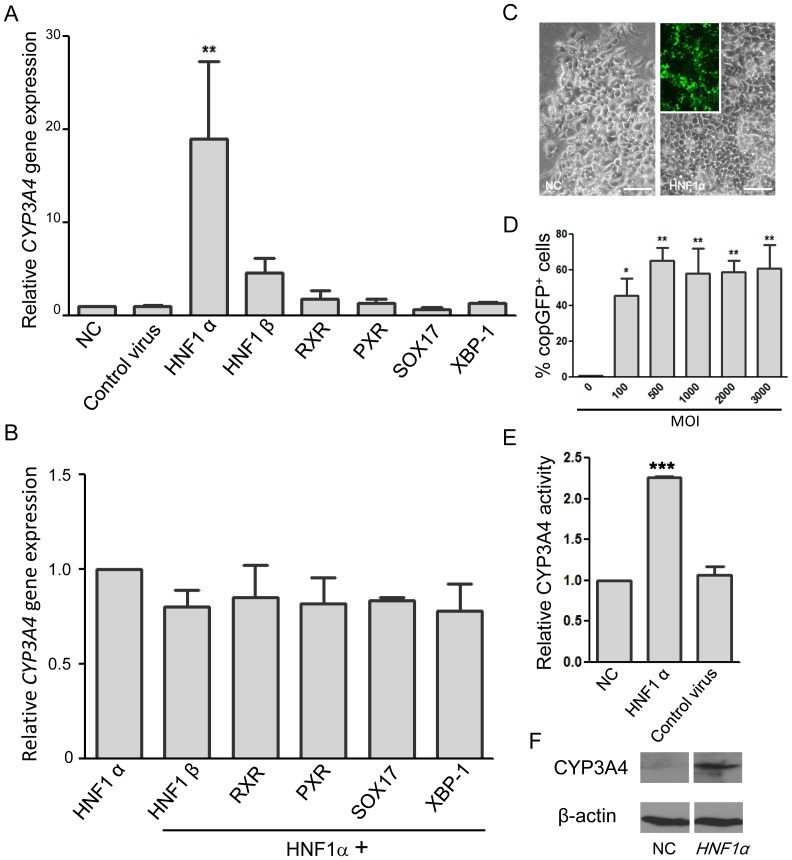
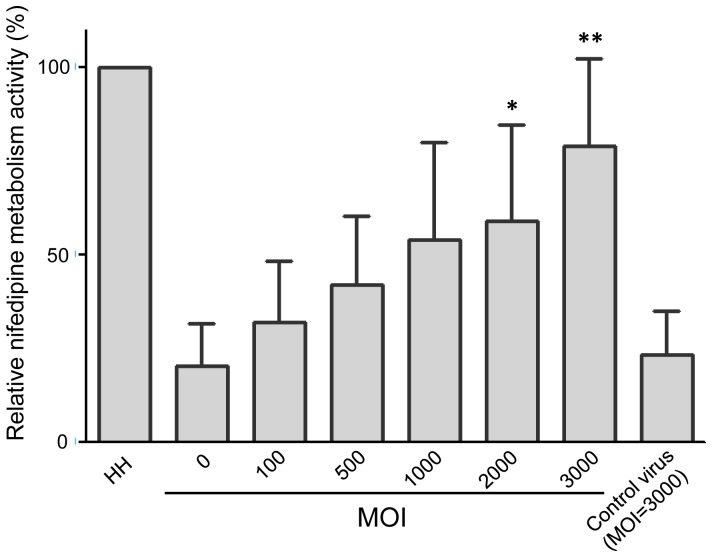
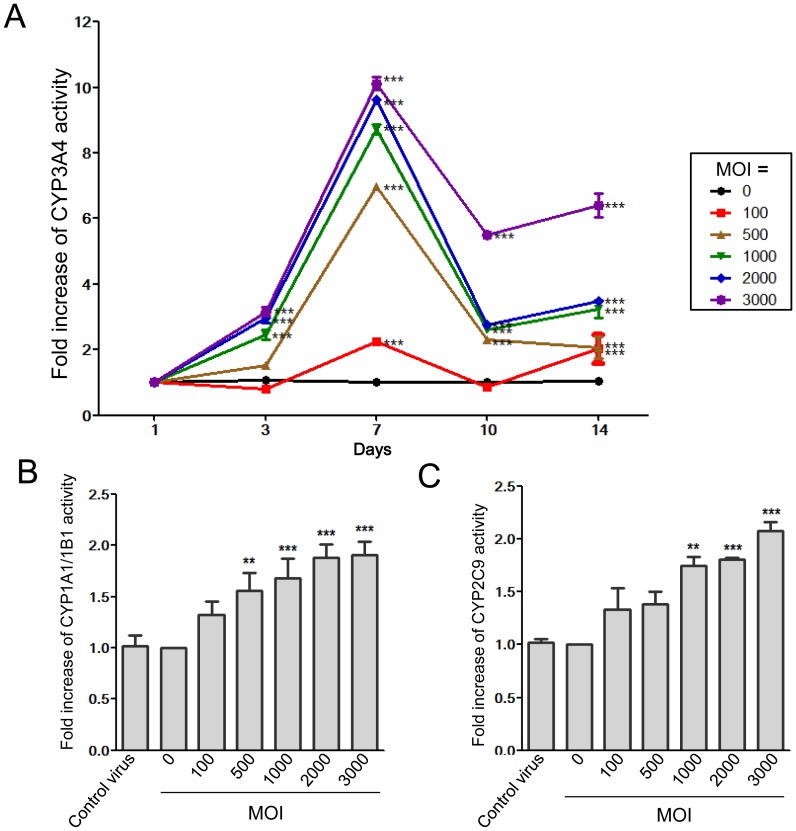
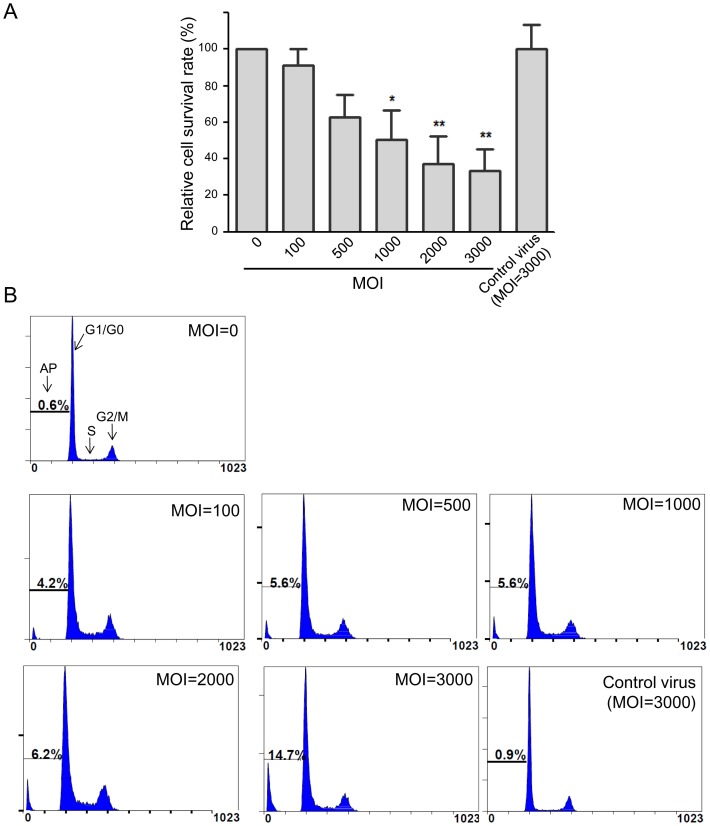
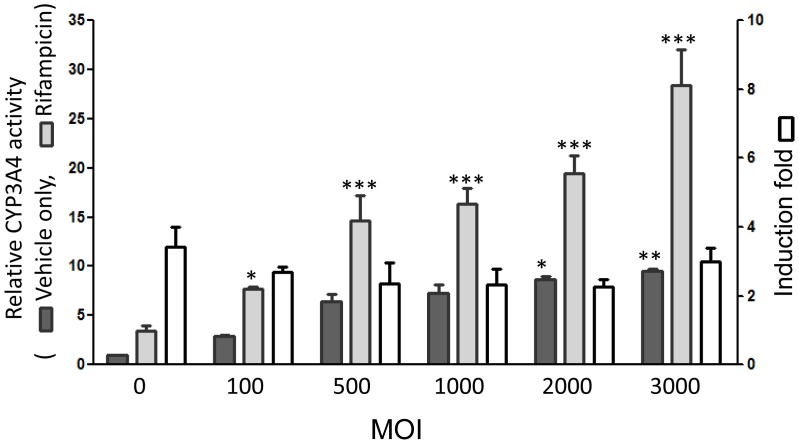
Human hepatoma cell lines are commonly used as alternatives to primary hepatocytes for the study of drug metabolism in vitro. However, the phase I cytochrome P450 (CYP) enzyme activities in these cell lines occur at a much lower level than their corresponding activities in primary hepatocytes, and thus these cell lines may not accurately predict drug metabolism. In the present study, we selected hepatocyte nuclear factor-1 alpha (HNF1α) from six transcriptional regulators for lentiviral transfection into Hep G2 cells to optimally increase their expression of the CYP3A4 enzyme, which is the major CYP enzyme in the human body. We subsequently found that HNF1α-transfected Hep G2 enhanced the CYP3A4 expression in a time- and dose-dependent manner and the activity was noted to increase with time and peaked 7 days. With a multiplicity of infection (MOI) of 100, CYP3A4 expression increased 19-fold and enzyme activity more than doubled at day 7. With higher MOI (1,000 to 3,000), the activity increased 8- to 10-fold; however, it was noted the higher MOI, the higher cell death rate and lower cell survival. Furthermore, the CYP3A4 activity in the HNF1α-transfected cells could be induced by CYP3A4-specific inducer, rifampicin, and metabolized nifedipine in a dose-dependent manner. With an MOI of 3,000, nifedipine-metabolizing activity was 6-fold of control and as high as 66% of primary hepatocytes. In conclusion, forceful delivery of selected transcriptional regulators into human hepatoma cells might be a valuable method to enhance the CYP activity for a more accurate determination of drug metabolism in vitro.
人肝癌细胞系通常被用作原代肝细胞的替代物,用于体外药物代谢研究。然而,这些细胞系中的I相细胞色素P450(CYP)酶活性远低于其在原代肝细胞中的相应活性,因此这些细胞系可能无法准确预测药物代谢。在本研究中,我们从六个转录调节因子中选择了肝细胞核因子-1α(HNF1α),通过慢病毒转染至Hep G2细胞中,以最佳地增加其CYP3A4酶的表达,CYP3A4酶是人体中的主要CYP酶。随后我们发现,转染HNF1α的Hep G2细胞以时间和剂量依赖性方式增强了CYP3A4的表达,并且其活性随时间增加并在第7天达到峰值。感染复数(MOI)为100时,CYP3A4表达增加了19倍,酶活性在第7天增加了一倍多。MOI更高(1000至3000)时,活性增加了8至10倍;然而,注意到MOI越高,细胞死亡率越高,细胞存活率越低。此外,转染HNF1α的细胞中的CYP3A4活性可被CYP3A4特异性诱导剂利福平诱导,并以剂量依赖性方式代谢硝苯地平。MOI为3000时,硝苯地平代谢活性是对照的6倍,高达原代肝细胞的66%。总之,将选定的转录调节因子强力导入人肝癌细胞可能是一种有价值的方法,可增强CYP活性,以便在体外更准确地测定药物代谢。