Department of Internal Medicine, 2 Department of Pathology and Immunology, and 3 Department of Anatomy and Neurobiology, Washington University School of Medicine, St. Louis, MO 63110.
J Exp Med. 2014 May 5;211(5):791-9. doi: 10.1084/jem.20131224. Epub 2014 Apr 14.
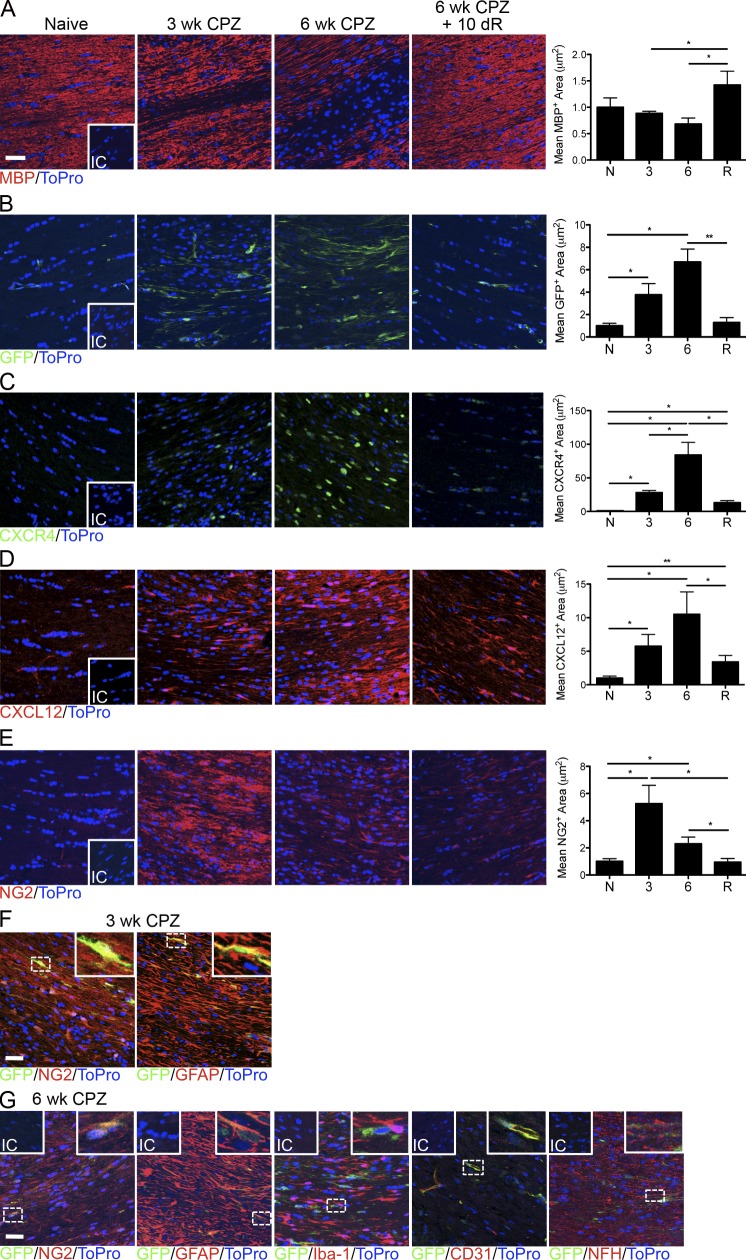
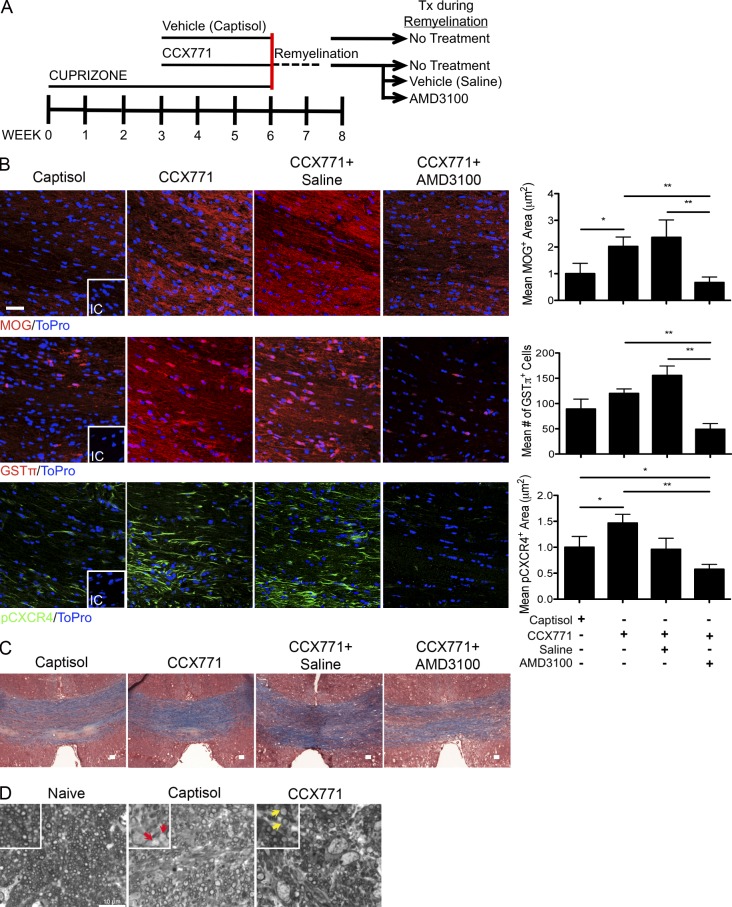
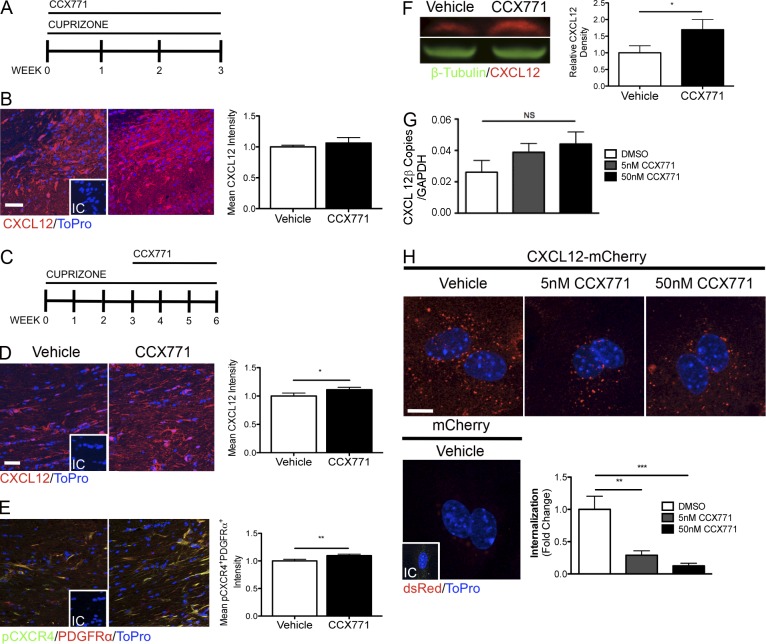
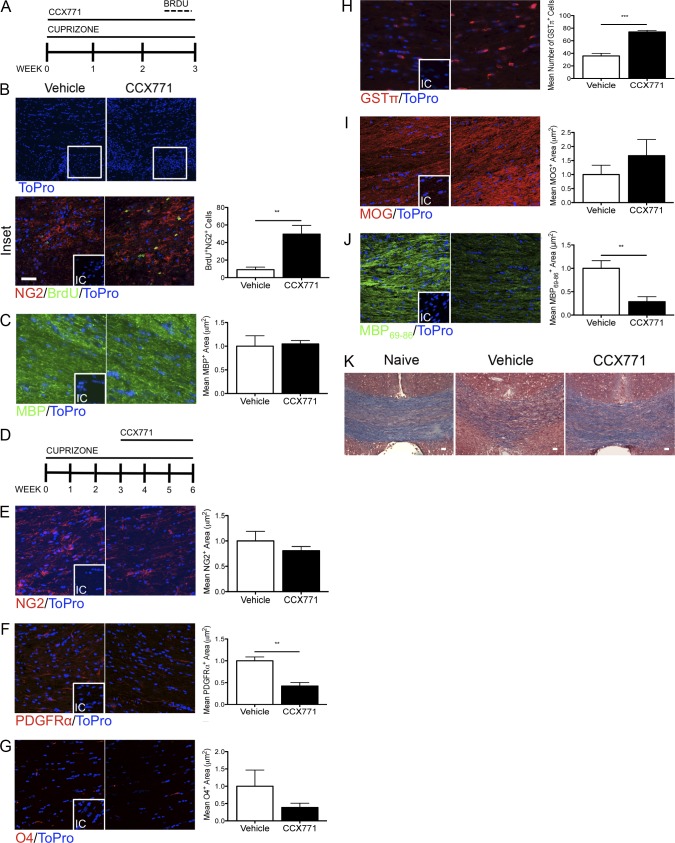
Current treatment modalities for the neurodegenerative disease multiple sclerosis (MS) use disease-modifying immunosuppressive compounds but do not promote repair. Although several potential targets that may induce myelin production have been identified, there has yet to be an approved therapy that promotes remyelination in the damaged central nervous system (CNS). Remyelination of damaged axons requires the generation of new oligodendrocytes from oligodendrocyte progenitor cells (OPCs). Although OPCs are detected in MS lesions, repair of myelin is limited, contributing to progressive clinical deterioration. In the CNS, the chemokine CXCL12 promotes remyelination via CXCR4 activation on OPCs, resulting in their differentiation into myelinating oligodendrocytes. Although the CXCL12 scavenging receptor CXCR7/ACKR3 (CXCR7) is also expressed by OPCs, its role in myelin repair in the adult CNS is unknown. We show that during cuprizone-induced demyelination, in vivo CXCR7 antagonism augmented OPC proliferation, leading to increased numbers of mature oligodendrocytes within demyelinated lesions. CXCR7-mediated effects on remyelination required CXCR4 activation, as assessed via both phospho-S339-CXCR4-specific antibodies and administration of CXCR4 antagonists. These findings identify a role for CXCR7 in OPC maturation during remyelination and are the first to use a small molecule to therapeutically enhance myelin repair in the demyelinated adult CNS.
目前针对神经退行性疾病多发性硬化症 (MS) 的治疗方法采用了改变疾病进程的免疫抑制化合物,但不能促进修复。虽然已经确定了几个可能诱导髓鞘生成的潜在靶点,但仍未有经批准的疗法能够促进受损中枢神经系统 (CNS) 中的髓鞘再生。受损轴突的髓鞘再生需要从少突胶质前体细胞 (OPC) 中产生新的少突胶质细胞。尽管在 MS 病变中检测到了 OPC,但髓鞘的修复很有限,这导致了临床恶化的进行性进展。在中枢神经系统中,趋化因子 CXCL12 通过 CXCR4 在 OPC 上的激活来促进髓鞘再生,导致其分化为髓鞘形成的少突胶质细胞。尽管 OPC 也表达趋化因子 CXCL12 清除受体 CXCR7/ACKR3 (CXCR7),但其在成年中枢神经系统中髓鞘修复中的作用尚不清楚。我们发现,在铜诱导的脱髓鞘过程中,体内 CXCR7 拮抗作用增强了 OPC 的增殖,导致脱髓鞘病变中成熟少突胶质细胞数量增加。通过磷酸化 S339-CXCR4 特异性抗体和 CXCR4 拮抗剂的给药,评估了 CXCR7 对髓鞘再生的影响需要 CXCR4 的激活。这些发现确定了 CXCR7 在髓鞘再生过程中 OPC 成熟中的作用,并且首次使用小分子在脱髓鞘的成年中枢神经系统中治疗性地增强髓鞘修复。