Department of Internal Medicine, Washington University School of Medicine, St Louis, MO 63110, USA.
Acta Neuropathol. 2012 Dec;124(6):847-60. doi: 10.1007/s00401-012-1034-0. Epub 2012 Aug 30.
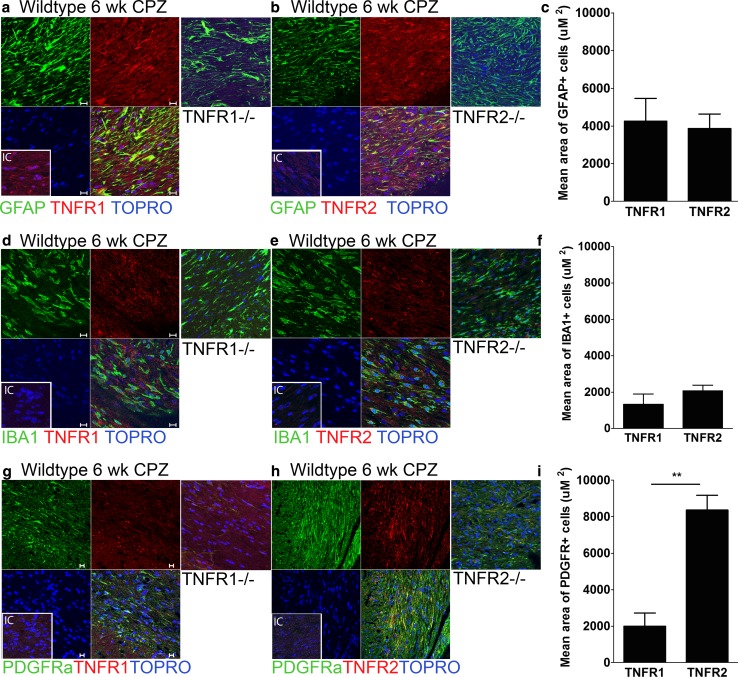
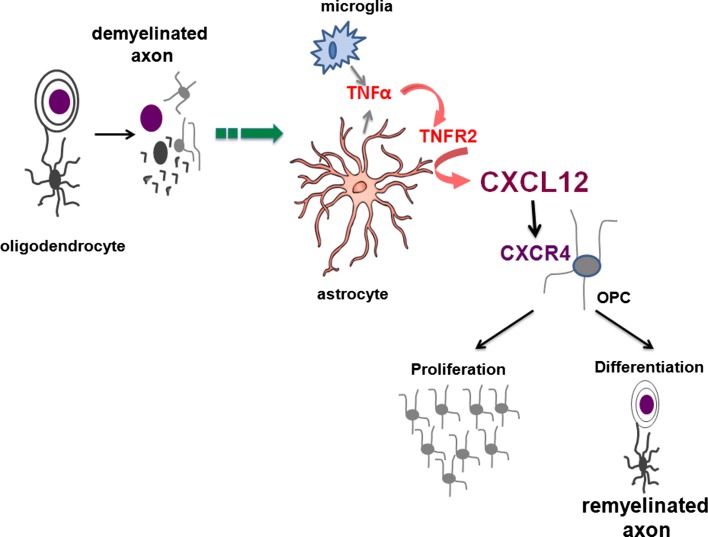
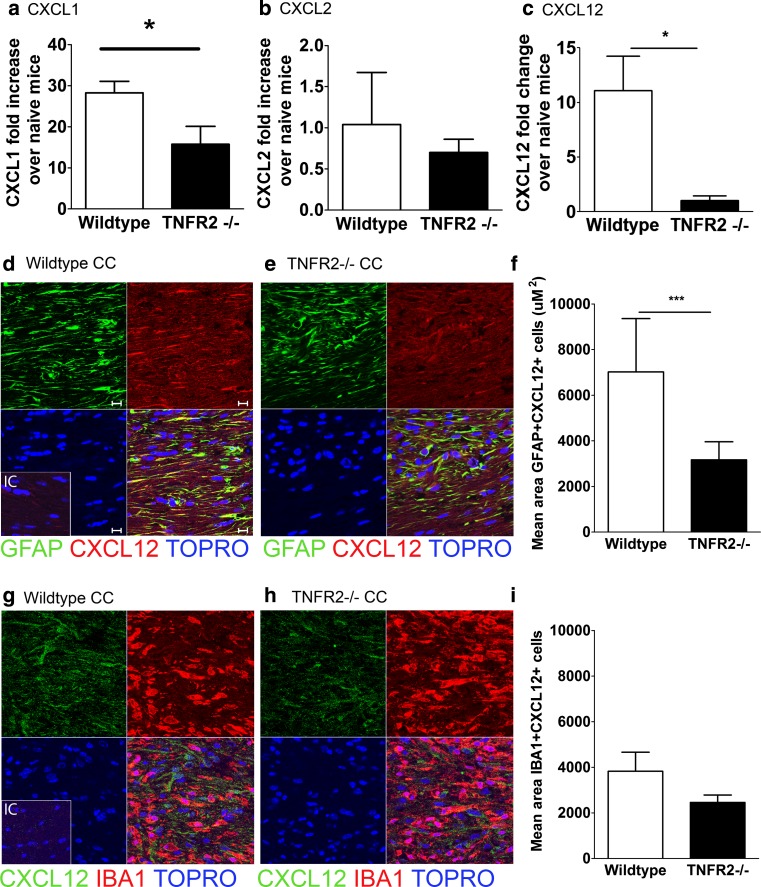
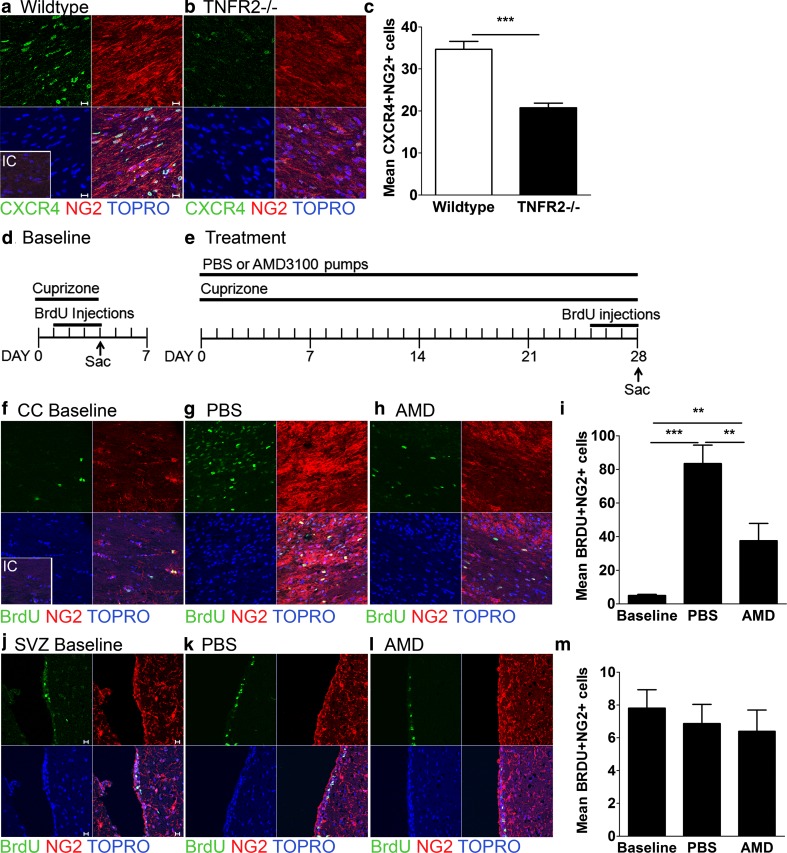
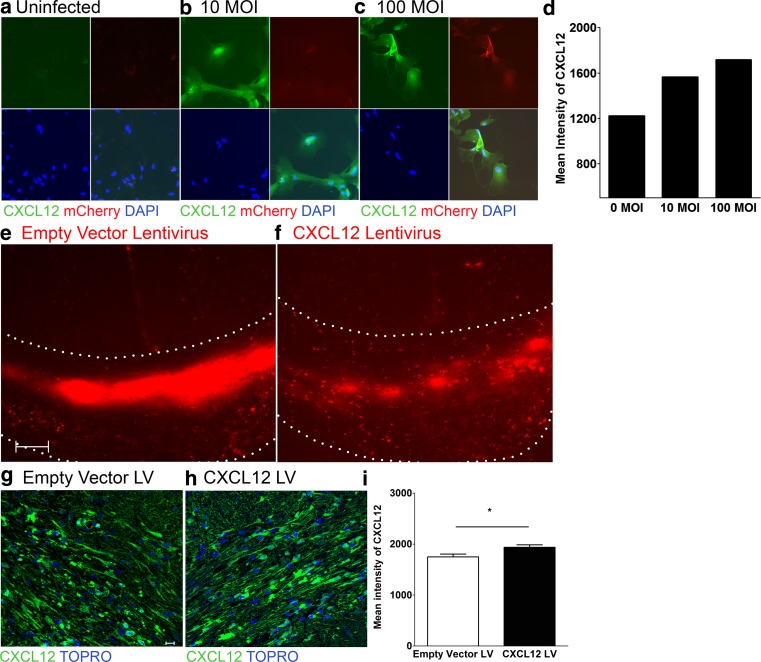
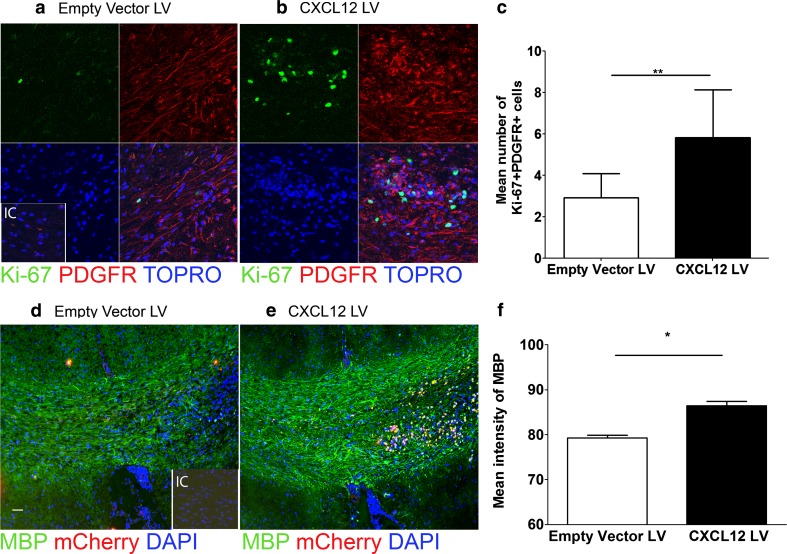
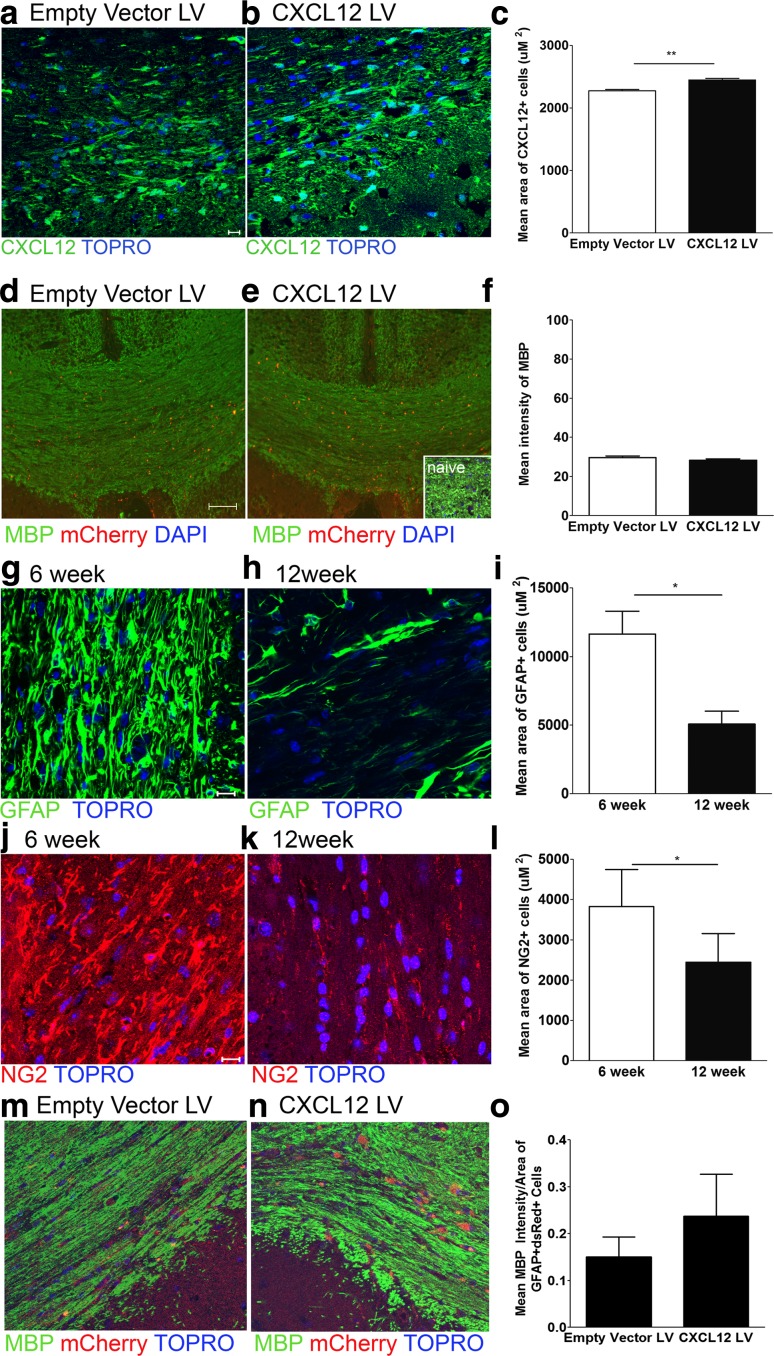
Multiple sclerosis (MS) is characterized by episodes of inflammatory demyelination with progressive failure of remyelination. Prior studies using murine models of MS indicate that remyelination within the adult central nervous system (CNS) requires the expression and activity of TNFR2 and CXCR4 by oligodendrocyte progenitor cells (OPCs), promoting their proliferation and differentiation into mature oligodendrocytes. Here, we extend these studies by examining the role of TNFR2 in the expression of the CXCR4 ligand, CXCL12, within the corpus callosum (CC) during cuprizone (CPZ) intoxication and by demonstrating that lentiviral-mediated gene delivery of CXCL12 to the demyelinated CC improves OPC proliferation and myelin expression during remyelination. Activated astrocytes and microglia express both TNFR1 and TNFR2 within the demyelinated CC. However, CPZ intoxicated TNFR2-/- mice exhibit loss of up-regulation of CXCL12 in astrocytes with concomitant decreases in numbers of CXCR4+ NG2+ OPCs within the CC. While CXCR4 antagonism does not affect OPC migration from subventricular zones into the CC, it decreases their proliferation and differentiation within the CC. Stereotactic delivery of lentivirus expressing CXCL12 protein into the CC of acutely demyelinated TNFR2-/- mice increases OPC proliferation and expression of myelin. In contrast, chronically demyelinated wild-type mice, which exhibit significant loss of astrocytes and OPCs, are unable to be rescued via CXCL12 lentivirus alone but instead required engraftment of CXCL12-expressing astrocytes for increased myelin expression. Our results show that TNFR2 activation induces CXCL12 expression in the demyelinated CC via autocrine signaling specifically within astrocytes, which promotes OPC proliferation and differentiation. In addition, gene delivery of critical pro-myelinating proteins might be a feasible approach for the treatment of remyelination failure in MS.
多发性硬化症(MS)的特征是炎症性脱髓鞘伴有进行性髓鞘修复失败。先前使用 MS 小鼠模型的研究表明,成年中枢神经系统(CNS)中的髓鞘修复需要少突胶质前体细胞(OPC)表达和激活 TNFR2 和 CXCR4,促进其增殖并分化为成熟的少突胶质细胞。在这里,我们通过研究 CPZ 中毒期间 TNFR2 在胼胝体(CC)中 CXCR4 配体 CXCL12 的表达中的作用,并证明 CXCL12 的慢病毒介导基因传递到脱髓鞘的 CC 可改善髓鞘修复期间 OPC 的增殖和髓鞘表达,从而扩展了这些研究。在脱髓鞘的 CC 中,活化的星形胶质细胞和小胶质细胞均表达 TNFR1 和 TNFR2。然而,CPZ 中毒的 TNFR2-/- 小鼠表现出星形胶质细胞中 CXCL12 的上调丧失,同时伴随着 CC 中 CXCR4+NG2+OPC 的数量减少。虽然 CXCR4 拮抗剂不影响 OPC 从侧脑室区迁移到 CC,但它会降低其在 CC 中的增殖和分化。立体定向地将表达 CXCL12 蛋白的慢病毒递送到急性脱髓鞘的 TNFR2-/- 小鼠的 CC 中会增加 OPC 的增殖和髓鞘的表达。相比之下,慢性脱髓鞘的野生型小鼠由于星形胶质细胞和 OPC 的大量丢失,不能仅通过 CXCL12 慢病毒单独挽救,而是需要植入表达 CXCL12 的星形胶质细胞以增加髓鞘表达。我们的结果表明,TNFR2 激活通过星形胶质细胞中特有的自分泌信号诱导脱髓鞘 CC 中的 CXCL12 表达,从而促进 OPC 的增殖和分化。此外,关键的促髓鞘蛋白的基因传递可能是治疗 MS 中髓鞘修复失败的可行方法。