Mikulecká Anna, Subrt Martin, Stuchlík Aleš, Kubová Hana
Institute of Physiology, Academy of Sciences of the Czech Republic Prague, Czech Republic.
Front Behav Neurosci. 2014 Mar 28;8:101. doi: 10.3389/fnbeh.2014.00101. eCollection 2014.
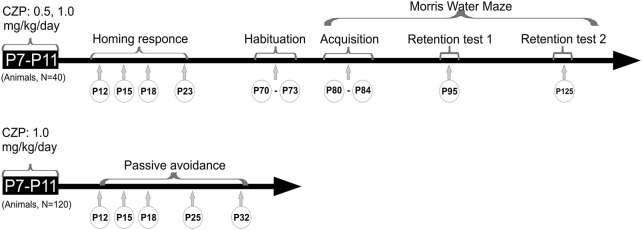
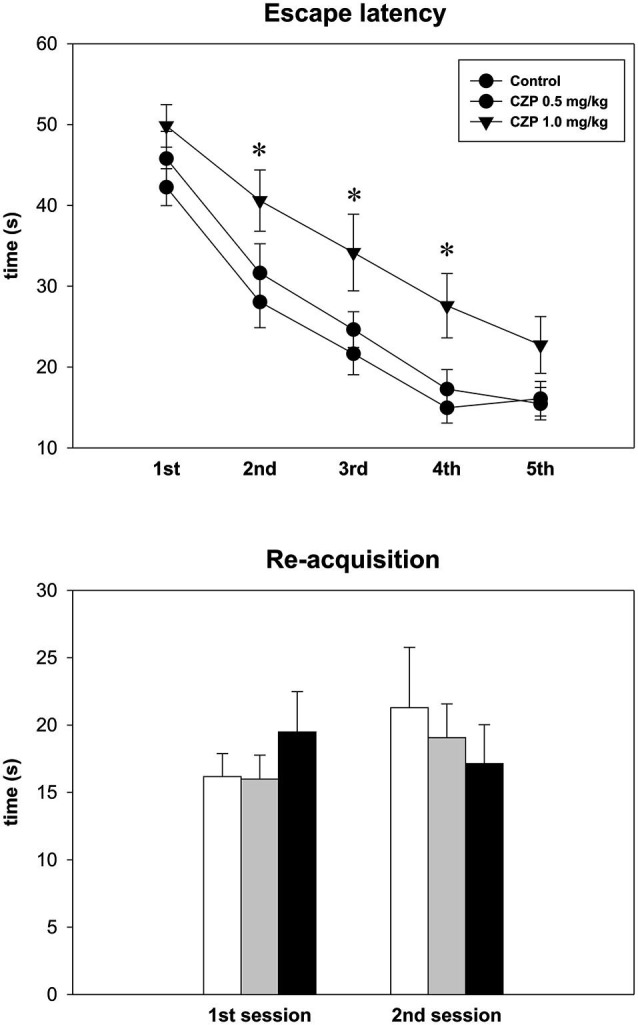
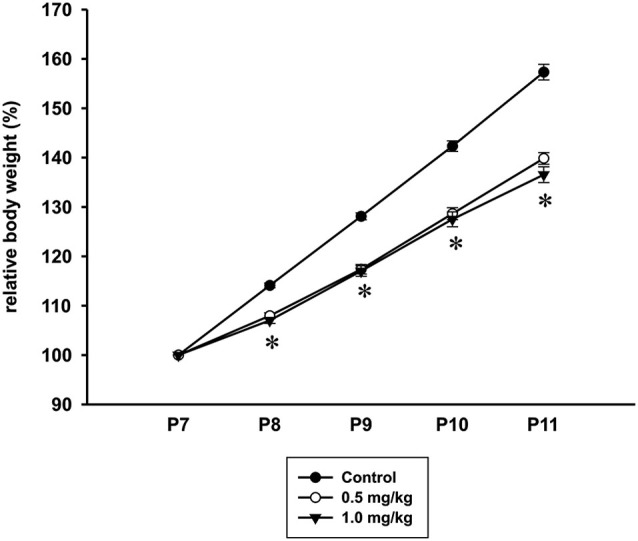
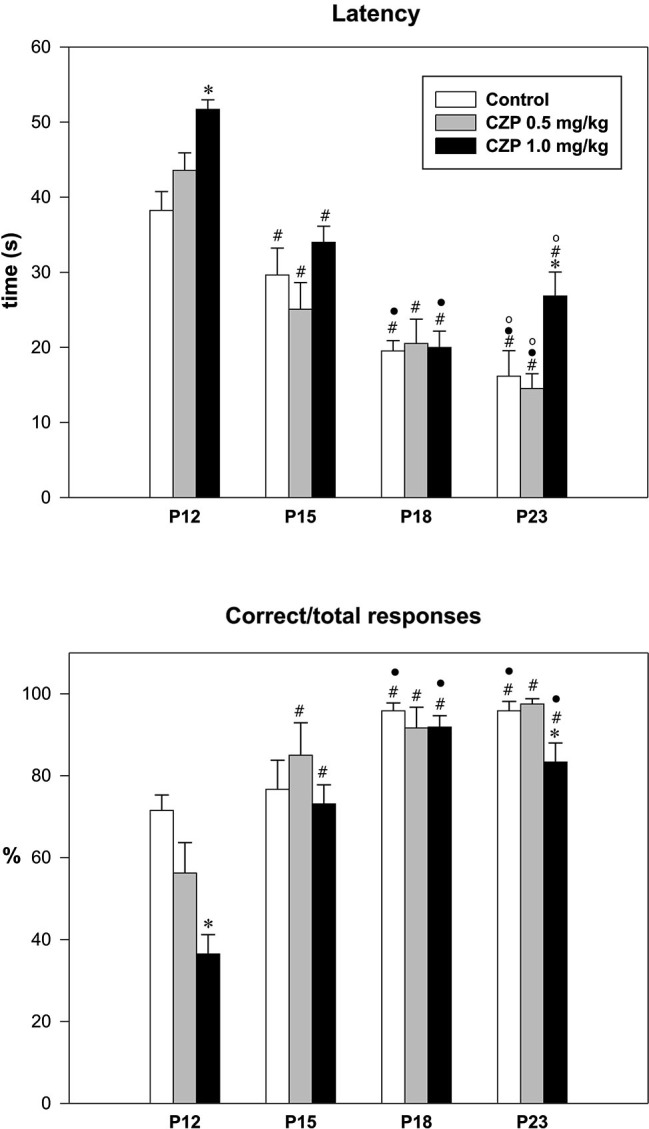
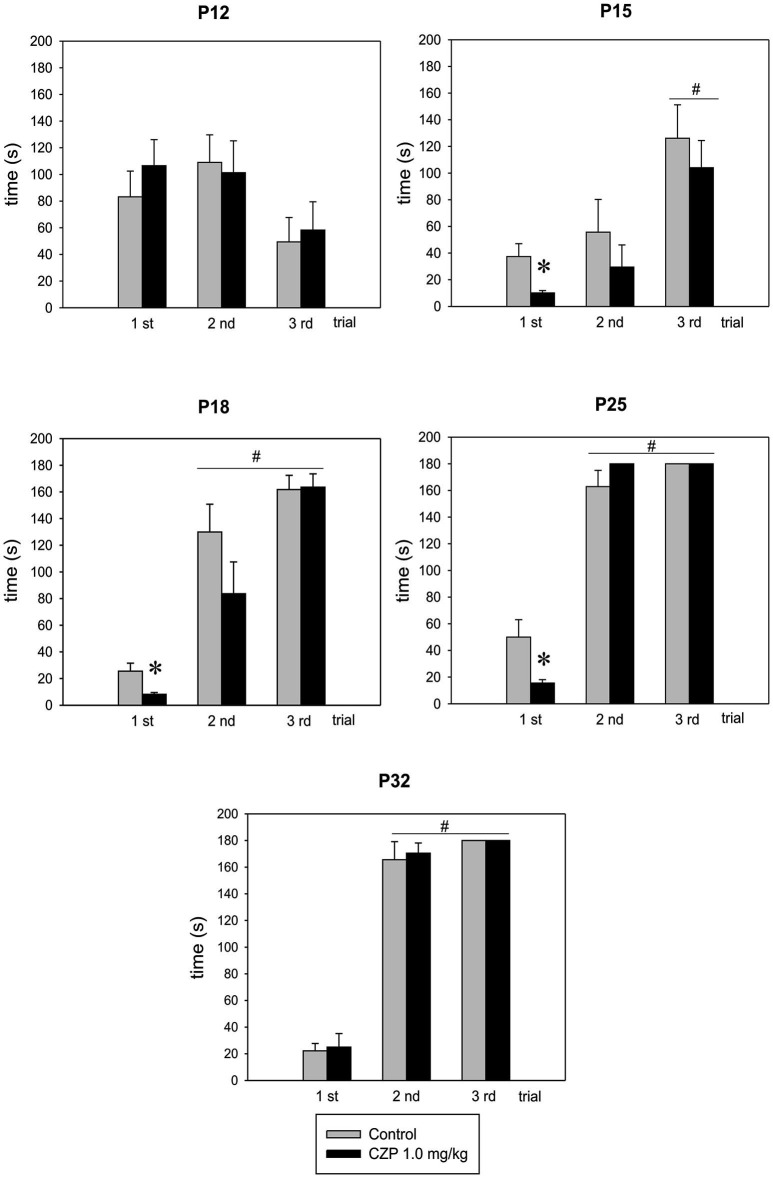
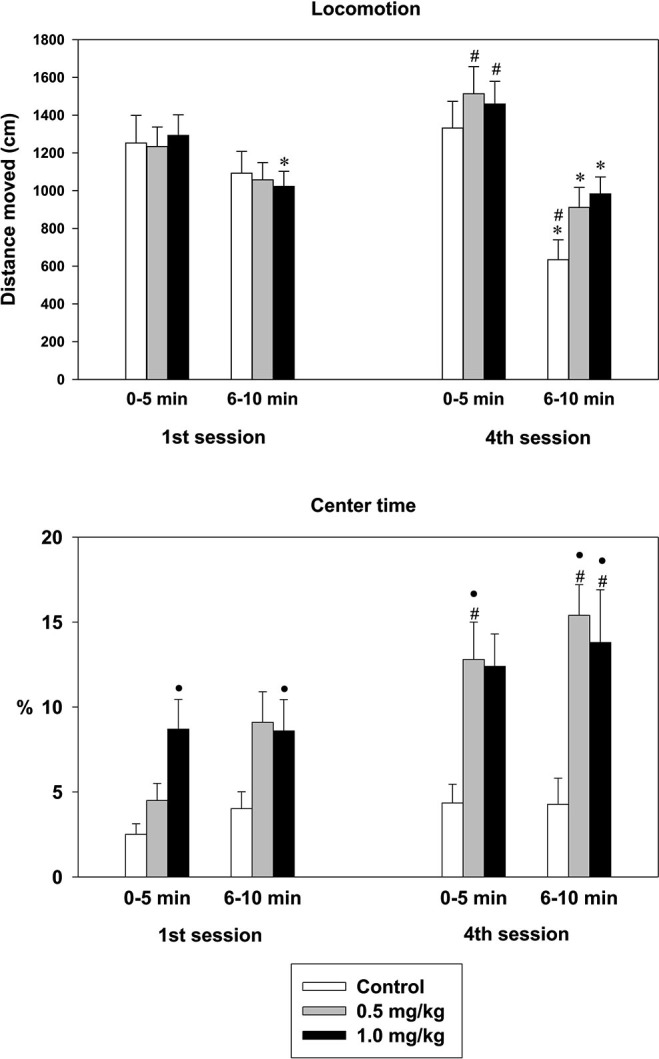
Clinical and experimental studies suggest possible risks associated with the repeated administration of benzodiazepines (BZDs) during the prenatal or early postnatal period on further development and behavior. In the present study, we assess short- and long-term effects of early exposure to clonazepam (CZP) on cognitive tasks. CZP (0.5 or 1.0 mg/kg/day) was administered from postnatal day (P)7 until P11, and animals were exposed to the following behavioral tests at different developmental stages: (1) a homing response (HR) test, which exploits the motivation of a rat pup to reach its home nest, was administered on P12, P15, P18 and P23 rats; (2) passive avoidance was tested in three trials (at 0, 2 and 24 h intervals) on P12, P15, P18, P25 and P32 rats; (3) within- and between-session habituation was tested in an open field (OF) at P70; and (4) a long-term memory (LTM) version of the Morris water maze (MWM) was tested at P80. A 1.0 mg/kg dose of CZP extended latency in the HR and decreased the number of correct responses when tested at P12 and P23. In the first trial of the passive avoidance test, latency to enter a dark compartment was shorter in the CZP-exposed rats. Both treated and control animals older than P15 learned the passive-avoidance response at the same rate. Irrespective of the treatments, all adult animals showed within-session habituation. Between-session habituation, however, was found only in the controls. With respect to the MWM test, all animals learned to reach the platform, but animals exposed to higher doses of CZP spent more time swimming in the first acquisition test. No difference between groups was found in a repeated acquisition test (10 and 40 days after the first acquisition test). The results of the present study show that even short-term exposure to CZP alters behavioral responsiveness in pre-weaning, juvenile and adult animals. Not only were changes observed on conventional cognitive tests in our study, but the changes also seem to be related to emotional/motivational responsiveness.
临床和实验研究表明,在产前或产后早期重复使用苯二氮䓬类药物(BZDs)可能会对进一步发育和行为产生风险。在本研究中,我们评估了早期接触氯硝西泮(CZP)对认知任务的短期和长期影响。从出生后第(P)7天至P11天给予CZP(0.5或1.0毫克/千克/天),并在不同发育阶段对动物进行以下行为测试:(1)在P12、P15、P18和P23的大鼠上进行归巢反应(HR)测试,该测试利用幼鼠返回其巢穴的动机;(2)在P12、P15、P18、P25和P32的大鼠上进行三次被动回避试验(间隔0、2和24小时);(3)在P70时在旷场(OF)中测试组内和组间习惯化;(4)在P80时测试莫里斯水迷宫(MWM)的长期记忆(LTM)版本。1.0毫克/千克剂量的CZP在P12和P23测试时延长了HR的潜伏期并减少了正确反应的数量。在被动回避测试的第一次试验中,接触CZP的大鼠进入暗室的潜伏期较短。P15以上的治疗组和对照组动物以相同的速率学习被动回避反应。无论治疗如何,所有成年动物在组内都表现出习惯化。然而,组间习惯化仅在对照组中发现。关于MWM测试,所有动物都学会了到达平台,但接触较高剂量CZP的动物在第一次获取测试中花费更多时间游泳。在重复获取测试(第一次获取测试后10天和40天)中未发现组间差异。本研究结果表明,即使短期接触CZP也会改变断奶前、幼年和成年动物的行为反应性。在我们的研究中,不仅在传统认知测试中观察到了变化,而且这些变化似乎还与情绪/动机反应性有关。