Department of Neurobiology, Nanjing Medical University, Nanjing, China.
Key Laboratory of Developmental Genes and Human Disease, Institute of Life Sciences, Southeast University, Nanjing, China.
Neural Plast. 2014;2014:827161. doi: 10.1155/2014/827161. Epub 2014 Mar 10.
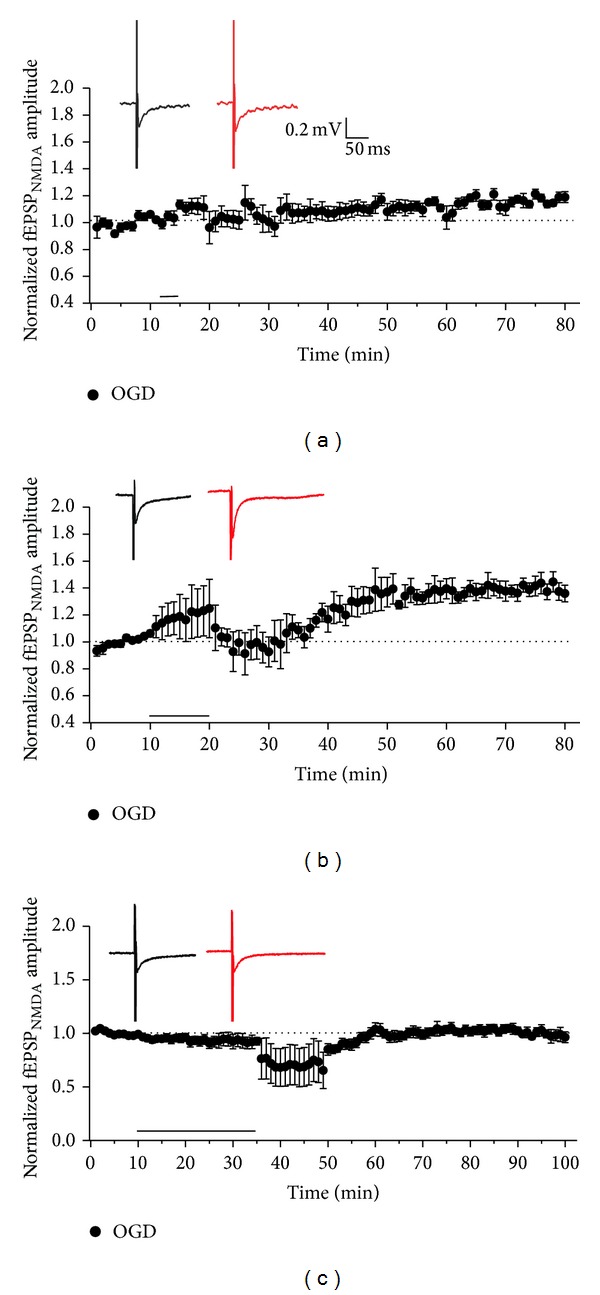
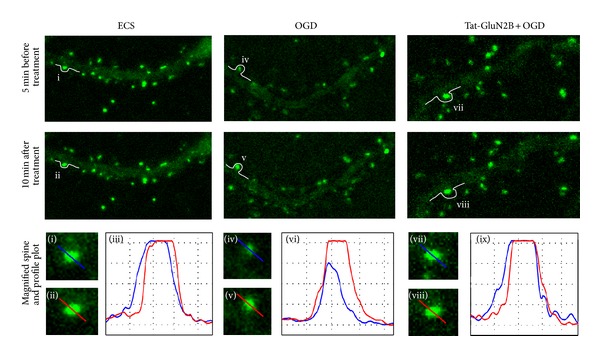
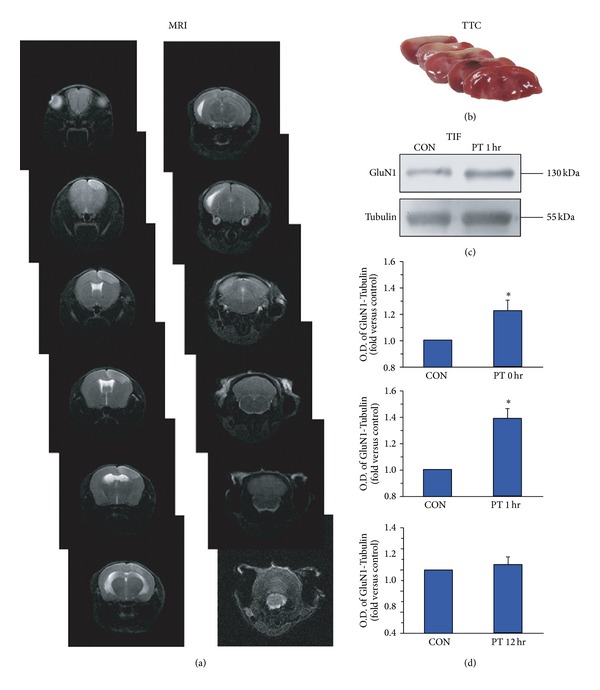
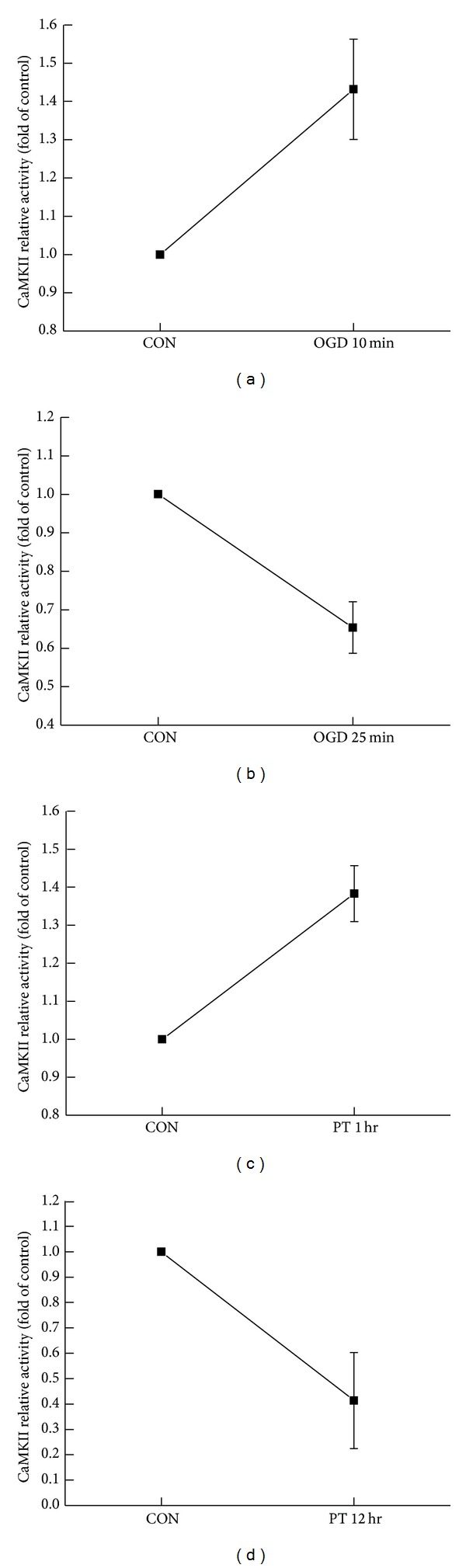
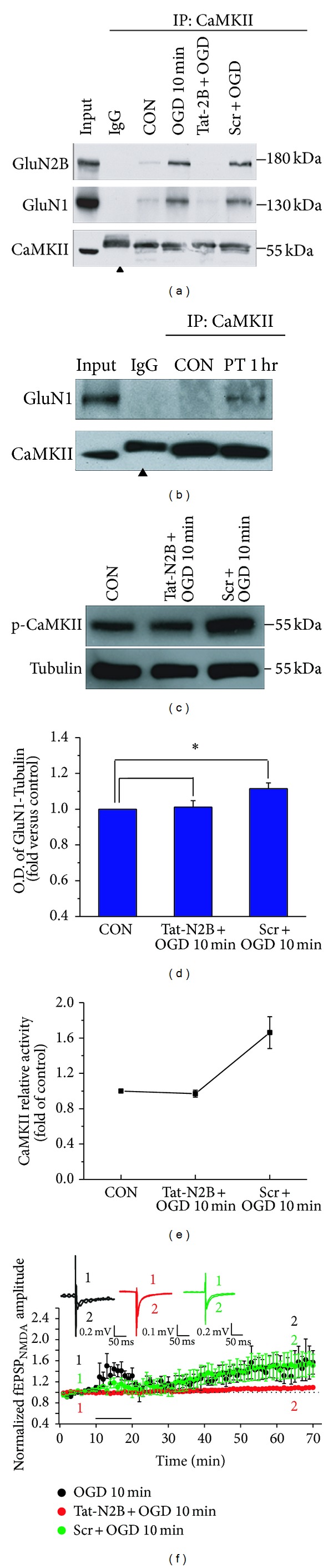
Active calcium/calmodulin-dependent protein kinase II (CaMKII) has been reported to take a critical role in the induction of long-term potentiation (LTP). Changes in CaMKII activity were detected in various ischemia models. It is tempting to know whether and how CaMKII takes a role in NMDA receptor (NMDAR)-mediated postischemic long-term potentiation (NMDA i-LTP). Here, we monitored changes in NMDAR-mediated field excitatory postsynaptic potentials (NMDA fEPSPs) at different time points following ischemia onset in vitro oxygen and glucose deprivation (OGD) ischemia model. We found that 10 min OGD treatment induced significant i-LTP in NMDA fEPSPs, whereas shorter (3 min) or longer (25 min) OGD treatment failed to induce prominent NMDA i-LTP. CaMKII activity or CaMKII autophosphorylation displays a similar bifurcated trend at different time points following onset of ischemia both in vitro OGD or in vivo photothrombotic lesion (PT) models, suggesting a correlation of increased CaMKII activity or CaMKII autophosphorylation with NMDA i-LTP. Disturbing the association between CaMKII and GluN2B subunit of NMDARs with short cell-permeable peptides Tat-GluN2B reversed NMDA i-LTP induced by OGD treatment. The results provide support to a notion that increased interaction between NMDAR and CaMKII following ischemia-induced increased CaMKII activity and autophosphorylation is essential for induction of NMDA i-LTP.
活性钙/钙调蛋白依赖性蛋白激酶 II(CaMKII)被报道在长时程增强(LTP)的诱导中起着关键作用。在各种缺血模型中都检测到 CaMKII 活性的变化。人们不禁想知道 CaMKII 是否以及如何在 NMDA 受体(NMDAR)介导的缺血后长时程增强(NMDA i-LTP)中发挥作用。在这里,我们在体外氧葡萄糖剥夺(OGD)缺血模型中观察到缺血开始后不同时间点 NMDA 受体介导的场兴奋性突触后电位(NMDA fEPSP)的变化。我们发现,10 分钟 OGD 处理诱导 NMDA fEPSP 产生明显的 i-LTP,而较短(3 分钟)或较长(25 分钟)OGD 处理未能诱导明显的 NMDA i-LTP。CaMKII 活性或 CaMKII 自磷酸化在体外 OGD 或体内光血栓形成损伤(PT)模型中,缺血开始后不同时间点显示出类似的分叉趋势,表明 CaMKII 活性或 CaMKII 自磷酸化的增加与 NMDA i-LTP 相关。用短细胞渗透性肽 Tat-GluN2B 干扰 CaMKII 与 NMDAR 的 GluN2B 亚基之间的关联,可逆转 OGD 处理诱导的 NMDA i-LTP。这些结果支持了这样一种观点,即在缺血诱导的 CaMKII 活性和自磷酸化增加后,NMDAR 与 CaMKII 之间的相互作用增加对于诱导 NMDA i-LTP 是必不可少的。