1 Colegio de Postgraduados, Campus Veracruz, Km 88.5, carretera federal Xalapa-Veracruz, C.P. 91690.
J Insect Sci. 2013;13:114. doi: 10.1673/031.013.11401.
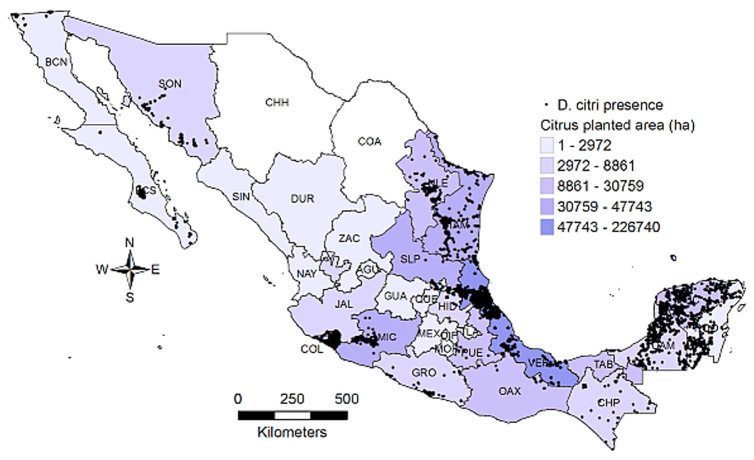
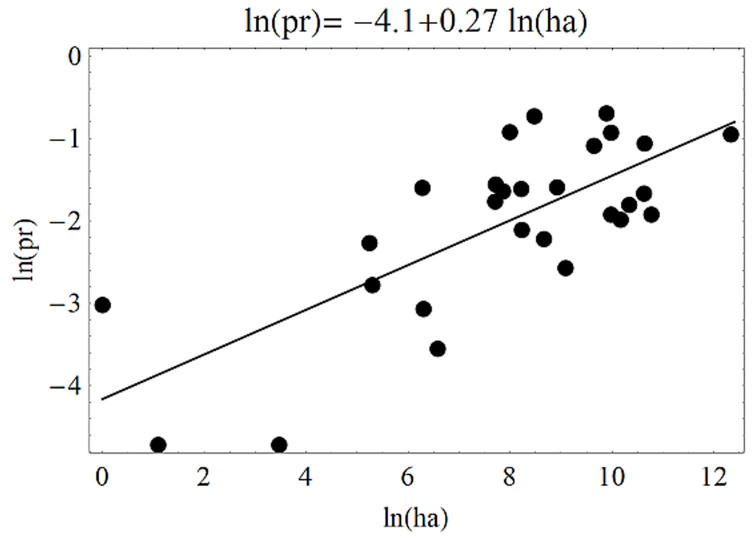
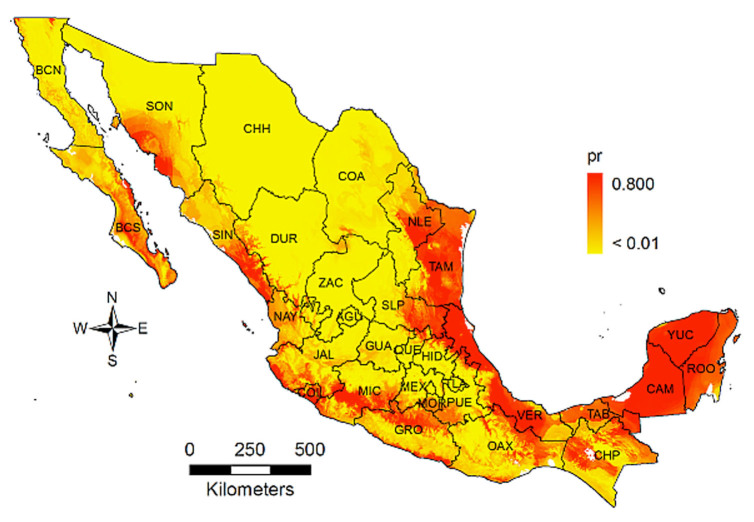
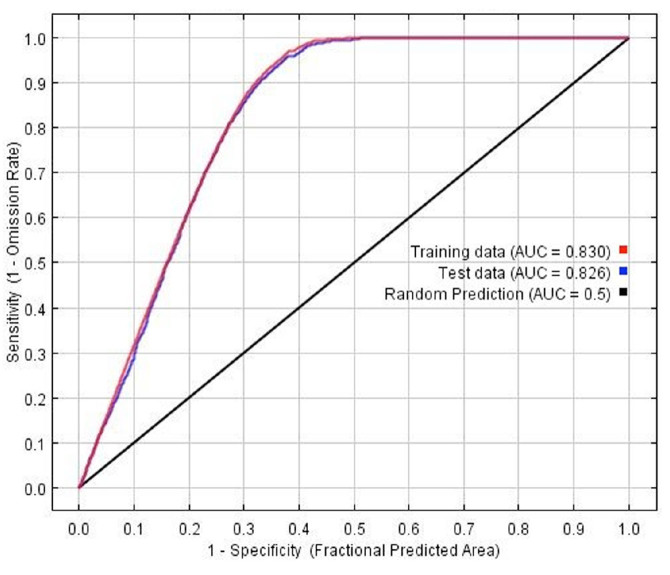
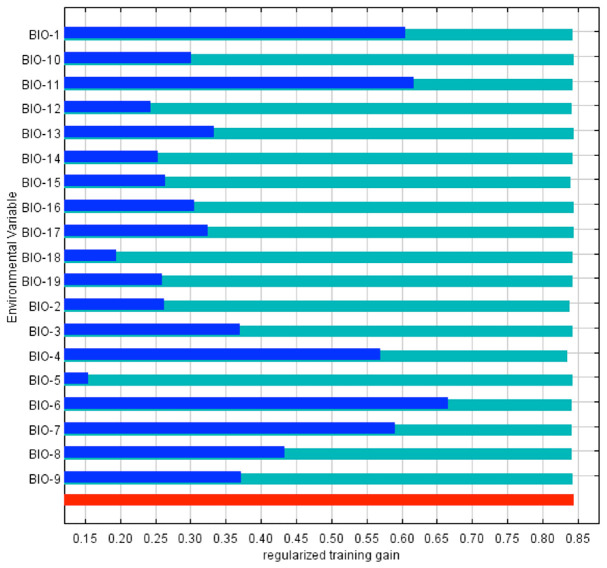
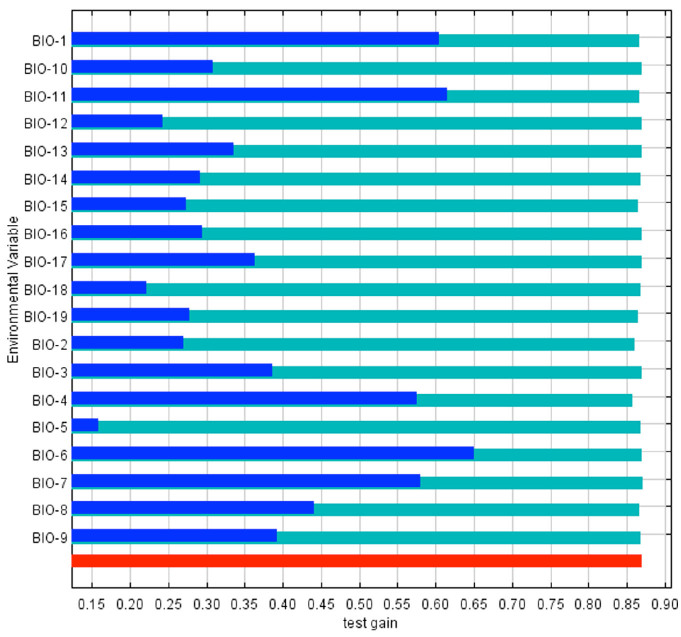
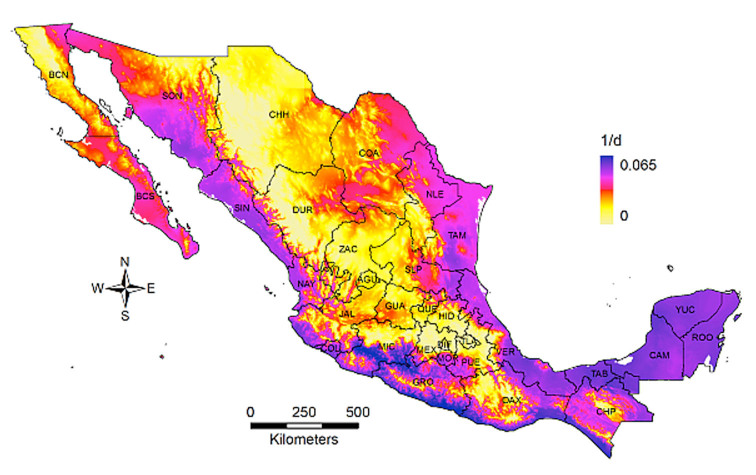
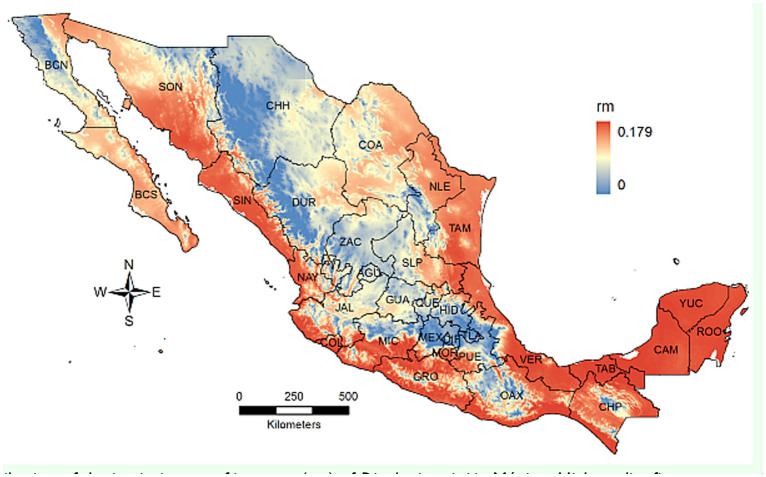
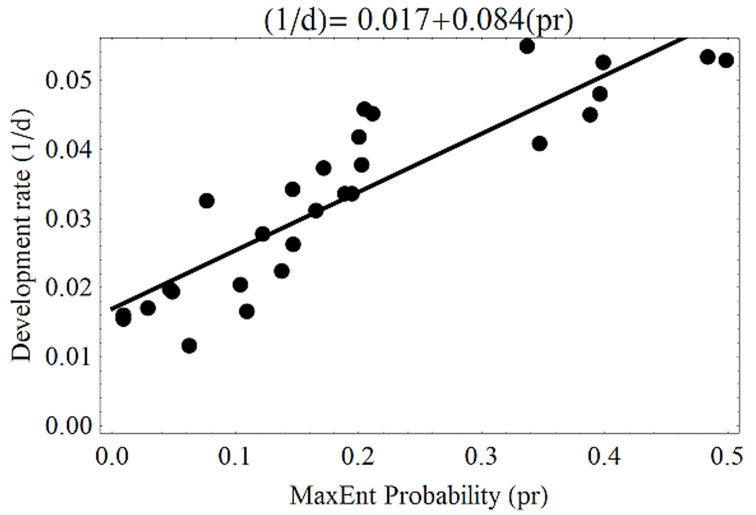
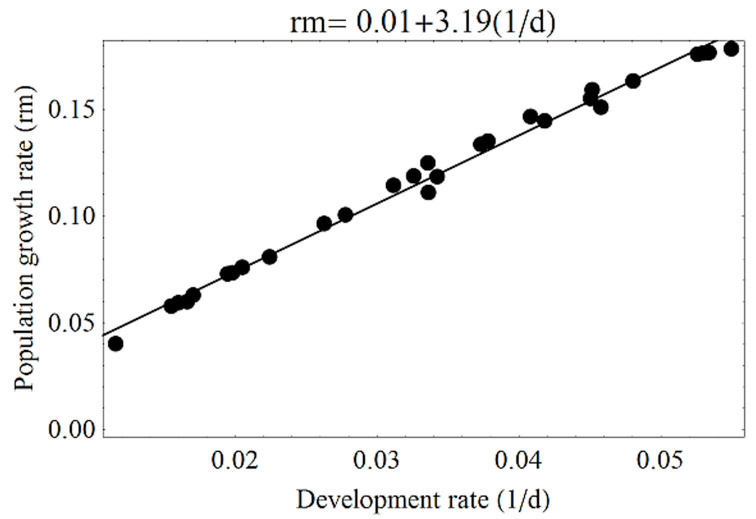
The Asian citrus psyllid, Diaphorina citri Kuwayama (Hemiptera: Psyllidae), is an introduced pest in Mexico and a vector of huanglongbing, a lethal citrus disease. Estimations of the habitat distribution and population growth rates of D. citri are required to establish regional and areawide management strategies and can be used as a pest risk analysis tools. In this study, the habitat distribution of D. citri in Mexico was computed with MaxEnt, an inductive, machine-learning program that uses bioclimatic layers and point location data. Geographic distributions of development and population growth rates were determined by fitting a temperature-dependent, nonlinear model and projecting the rates over the target area, using the annual mean temperature as the predictor variable. The results showed that the most suitable regions for habitat of D. citri comprise the Gulf of Mexico states, Yucatán Peninsula, and areas scattered throughout the Pacific coastal states. Less suitable areas occurred in northern and central states. The most important predictor variables were related to temperature. Development and growth rates had a distribution wider than habitat, reaching some of the northern states of México. Habitat, development, and population growth rates were correlated to each other and with the citrus producing area. These relationships indicated that citrus producing states are within the most suitable regions for the occurrence, development, and population growth of D. citri, therefore increasing the risk of huanglongbing dispersion.
亚洲柑橘木虱,Diaphorina citri Kuwayama(半翅目:木虱科),是墨西哥的一种入侵害虫,也是黄龙病的传播媒介,黄龙病是一种致命的柑橘病害。估计 D. citri 的栖息地分布和种群增长率对于建立区域和区域管理策略是必要的,并且可以用作害虫风险分析工具。在这项研究中,使用 MaxEnt 计算了 D. citri 在墨西哥的栖息地分布,MaxEnt 是一种归纳的、基于机器学习的程序,它使用生物气候层和点位置数据。通过拟合温度相关的非线性模型并将这些速率投影到目标区域,使用年平均温度作为预测变量,确定了发育和种群增长率的地理分布。结果表明,D. citri 最适宜的栖息地区域包括墨西哥湾各州、尤卡坦半岛和太平洋沿海各州的分散地区。在北部和中部各州,适宜性较低。最重要的预测变量与温度有关。发育和生长速率的分布范围比栖息地更广,达到了墨西哥北部的一些州。栖息地、发育和种群增长率彼此相关,也与柑橘生产区相关。这些关系表明,柑橘生产州位于 D. citri 发生、发育和种群增长的最适宜区域内,因此增加了黄龙病扩散的风险。