Ritson Dougal J, Sutherland John D
MRC-Laboratory of Molecular Biology, Cambridge Biomedical Campus, Francis Crick Avenue, Cambridge, CB2 0QH, UK,
J Mol Evol. 2014 May;78(5):245-50. doi: 10.1007/s00239-014-9617-0. Epub 2014 Apr 16.
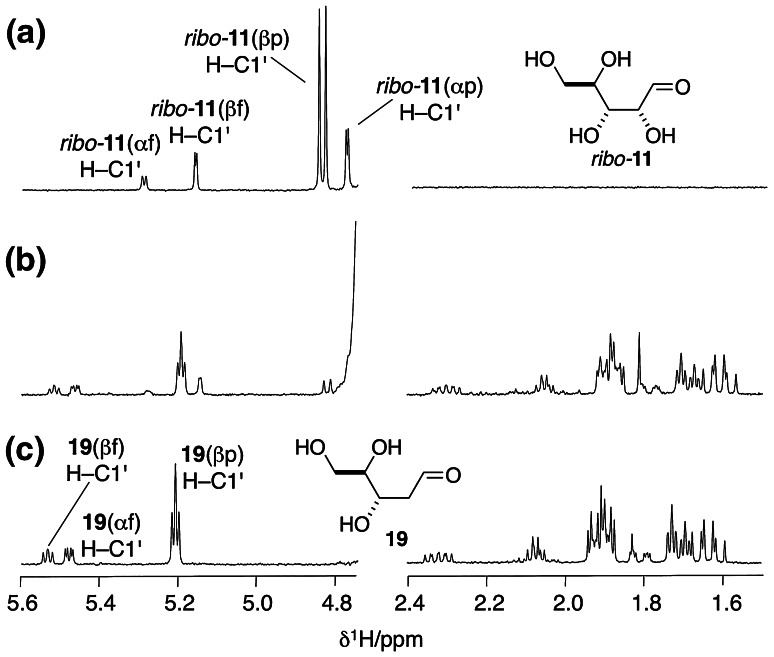
Soon after the origin of RNA-based life, depletion of prebiotically synthesised ribonucleotides would have driven the evolution of a biosynthetic pathway to these key building blocks. Ribozyme-catalysed nucleosidation-the key biosynthetic step-requires that ribose and the nucleobases are produced by abiotic chemistry and are relatively stable to the conditions of their synthesis. The most plausible prebiotic synthesis of sugars involves photoreduction of cyanohydrins by hydrogen sulphide in the presence of copper(I) cyanide, and we therefore subjected ribose to these conditions whereupon it was partially converted to 2-deoxyribose. Furthermore, a derivative of uracil is reduced under similar conditions to thymine. Thus, DNA biosynthetic precursors can be formed abiotically from those of RNA allowing for an early evolutionary transition to life based on RNA and DNA.
在基于RNA的生命起源后不久,益生元合成的核糖核苷酸的耗尽会推动生物合成途径向这些关键组成部分的进化。核酶催化的核苷化——关键的生物合成步骤——要求核糖和核碱基由非生物化学产生,并且对其合成条件相对稳定。最合理的益生元糖合成涉及在氰化亚铜存在下,硫化氢对氰醇的光还原反应,因此我们将核糖置于这些条件下,结果它部分转化为了2-脱氧核糖。此外,尿嘧啶的一种衍生物在类似条件下被还原为胸腺嘧啶。因此,DNA生物合成前体可以由RNA的前体通过非生物方式形成,从而实现从基于RNA的生命向基于RNA和DNA的生命的早期进化转变。