Hirst Adam M, Frame Fiona M, Maitland Norman J, O'Connell Deborah
Department of Physics, York Plasma Institute, University of York, Heslington, York YO10 5DD, UK.
YCR Cancer Research Unit, Department of Biology, University of York, Heslington, York YO10 5DD, UK.
Biomed Res Int. 2014;2014:878319. doi: 10.1155/2014/878319. Epub 2014 Mar 13.
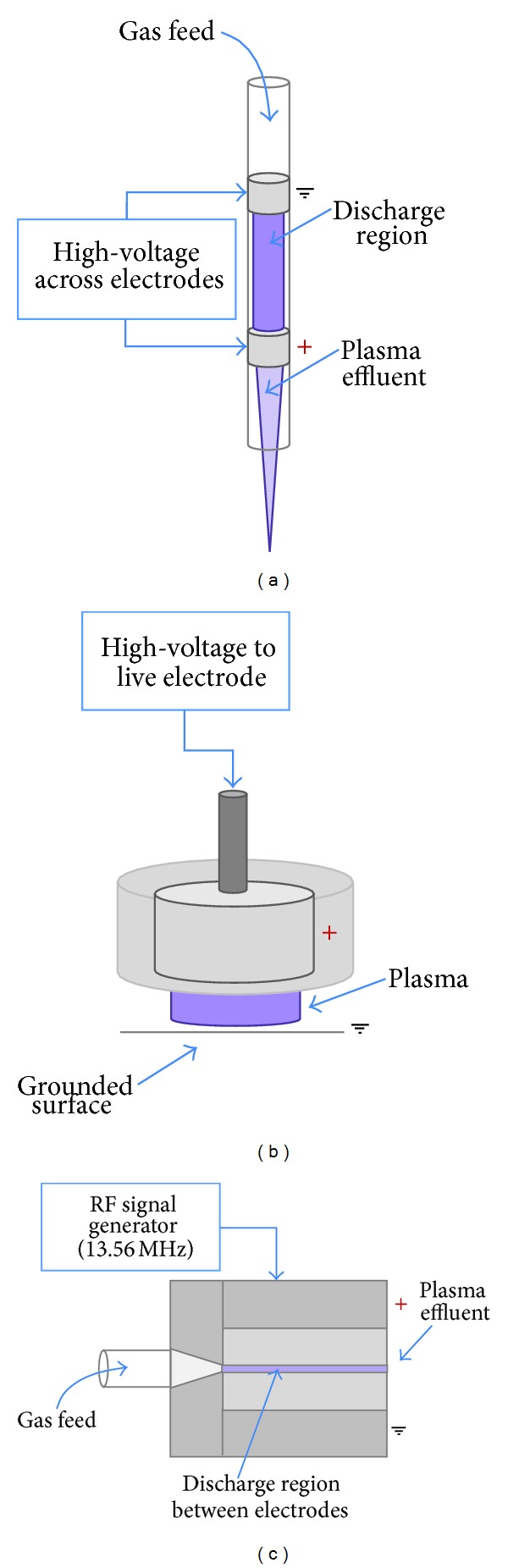
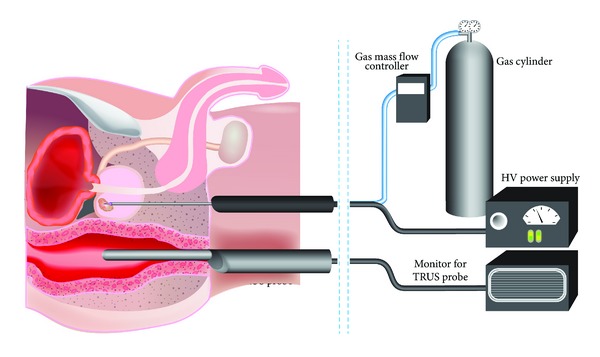
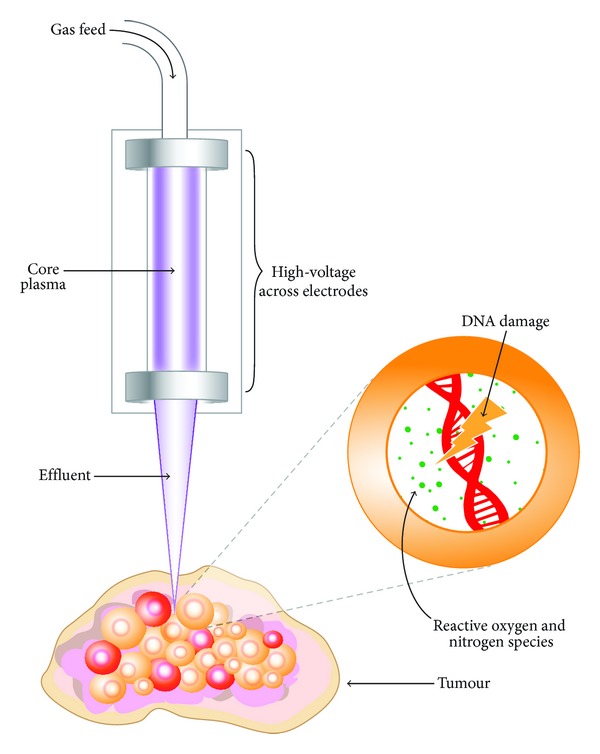
Despite considerable advances in recent years for the focal treatment of localized prostate cancer, high recurrence rates and detrimental side effects are still a cause for concern. In this review, we compare current focal therapies to a potentially novel approach for the treatment of early onset prostate cancer: low temperature plasma. The rapidly evolving plasma technology has the potential to deliver a wide range of promising medical applications via the delivery of plasma-induced reactive oxygen and nitrogen species. Studies assessing the effect of low temperature plasma on cell lines and xenografts have demonstrated DNA damage leading to apoptosis and reduction in cell viability. However, there have been no studies on prostate cancer, which is an obvious candidate for this novel therapy. We present here the potential of low temperature plasma as a focal therapy for prostate cancer.
尽管近年来局部前列腺癌的聚焦治疗取得了显著进展,但高复发率和有害的副作用仍然令人担忧。在本综述中,我们将当前的聚焦治疗方法与一种潜在的治疗早期前列腺癌的新方法进行比较:低温等离子体。快速发展的等离子体技术有可能通过输送等离子体诱导的活性氧和氮物种来实现广泛的有前景的医学应用。评估低温等离子体对细胞系和异种移植影响的研究表明,其可导致DNA损伤,进而引发细胞凋亡并降低细胞活力。然而,目前尚无关于前列腺癌的研究,而前列腺癌显然是这种新疗法的理想候选对象。我们在此展示了低温等离子体作为前列腺癌聚焦治疗方法的潜力。