Campbell Georgia, Krishnan Kim J, Deschauer Marcus, Taylor Robert W, Turnbull Doug M
Wellcome Trust Centre for Mitochondrial Research, and Newcastle University Centre for Brain Ageing and Vitality, Institute for Ageing and Health, Newcastle University, Newcastle upon Tyne, UK.
Department of Neurology, Martin-Luther-University Halle-Wittenberg, Ernst-Grube Str. 40, Halle (Saale) D-06120, Germany.
Hum Mol Genet. 2014 Sep 1;23(17):4612-20. doi: 10.1093/hmg/ddu176. Epub 2014 Apr 15.
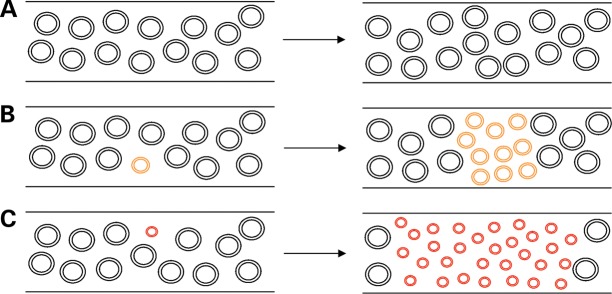
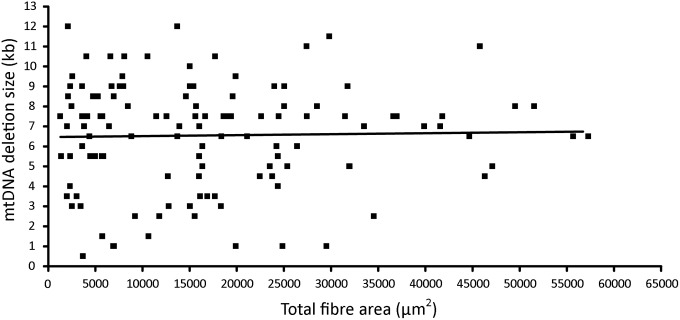
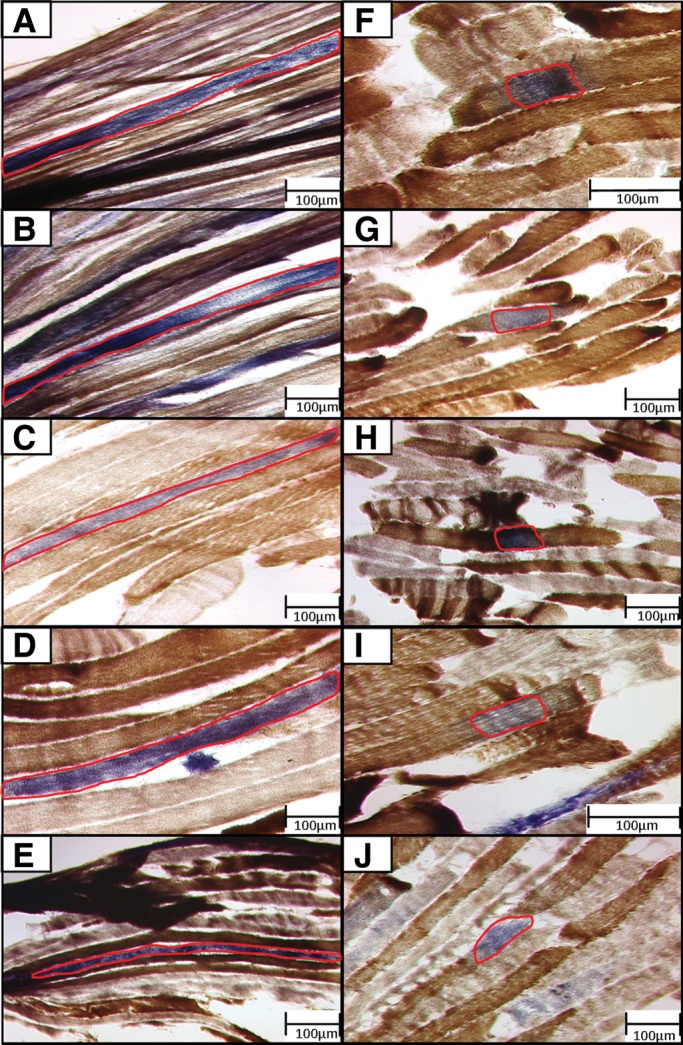
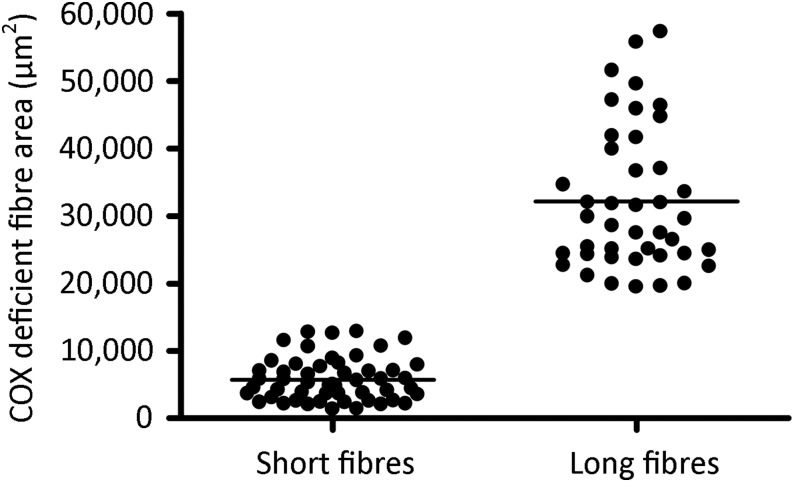
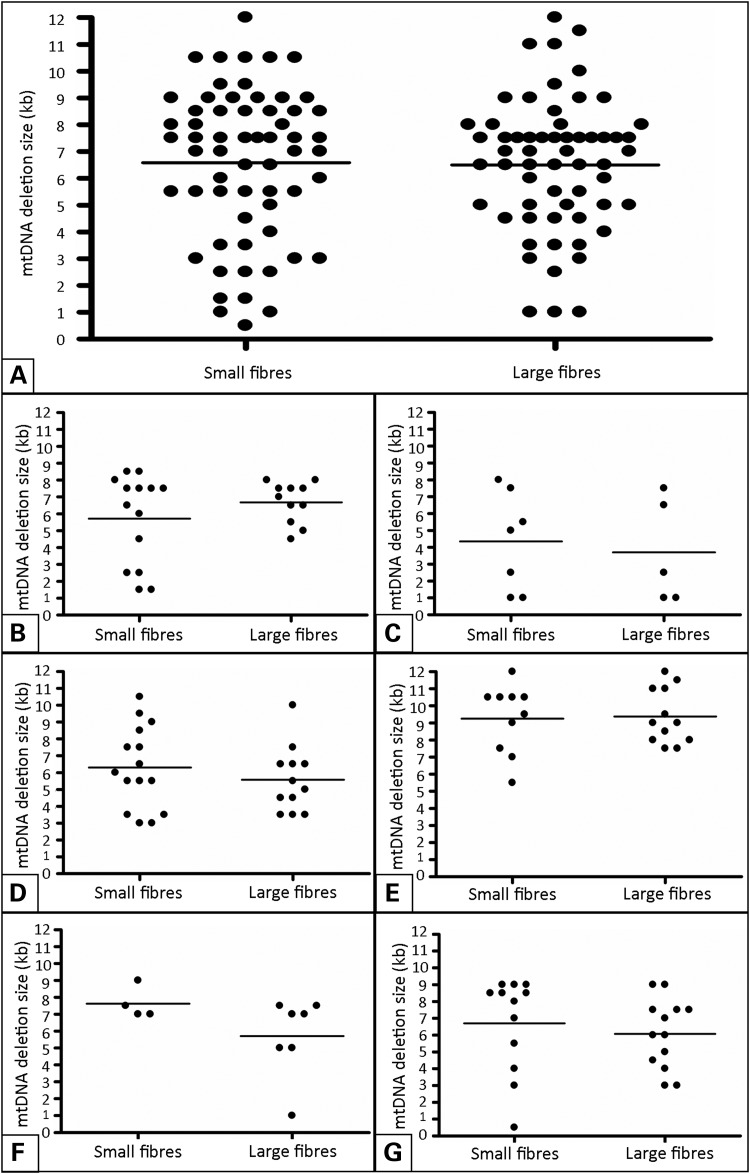
Large-scale mitochondrial DNA (mtDNA) deletions are an important cause of mitochondrial disease, while somatic mtDNA deletions cause focal respiratory chain deficiency associated with ageing and neurodegenerative disorders. As mtDNA deletions only cause cellular pathology at high levels of mtDNA heteroplasmy, an mtDNA deletion must accumulate to levels which can result in biochemical dysfunction-a process known as clonal expansion. A number of hypotheses have been proposed for clonal expansion of mtDNA deletions, including a replicative advantage for deleted mitochondrial genomes inferred by their smaller size--implying that the largest mtDNA deletions would also display a replicative advantage over smaller mtDNA deletions. We proposed that in muscle fibres from patients with mtDNA maintenance disorders, which lead to the accumulation of multiple mtDNA deletions, we would observe the largest mtDNA deletions spreading the furthest longitudinally through individual muscle fibres by means of a greater rate of clonal expansion. We characterized mtDNA deletions in patients with mtDNA maintenance disorders from a range of 'large' and 'small' cytochrome c oxidase (COX)-deficient regions in skeletal muscle fibres. We measured the size of clonally expanded deletions in 62 small and 60 large individual COX-deficient f regions. No significant difference was observed in individual patients or in the total dataset (small fibre regions mean 6.59 kb--large fibre regions mean 6.51 kb). Thus no difference existed in the rate of clonal expansion throughout muscle fibres between mtDNA deletions of different sizes; smaller mitochondrial genomes therefore do not appear to have an inherent replicative advantage in human muscle.
大规模线粒体DNA(mtDNA)缺失是线粒体疾病的一个重要病因,而体细胞mtDNA缺失会导致与衰老和神经退行性疾病相关的局灶性呼吸链缺陷。由于mtDNA缺失仅在mtDNA高异质性水平时才会引发细胞病变,因此mtDNA缺失必须积累到能够导致生化功能障碍的水平——这一过程称为克隆性扩增。关于mtDNA缺失的克隆性扩增,已经提出了一些假说,包括根据其较小的尺寸推断缺失的线粒体基因组具有复制优势——这意味着最大的mtDNA缺失相对于较小的mtDNA缺失也会表现出复制优势。我们提出,在患有mtDNA维持障碍的患者的肌纤维中,由于会导致多个mtDNA缺失的积累,我们会观察到最大的mtDNA缺失通过更高的克隆性扩增速率在单个肌纤维中纵向传播得最远。我们从骨骼肌纤维中一系列“大”和“小”的细胞色素c氧化酶(COX)缺陷区域,对患有mtDNA维持障碍的患者的mtDNA缺失进行了表征。我们测量了62个小的和60个大的单个COX缺陷f区域中克隆性扩增缺失的大小。在个体患者或整个数据集中均未观察到显著差异(小纤维区域平均为6.59 kb——大纤维区域平均为6.51 kb)。因此,不同大小的mtDNA缺失在整个肌纤维中的克隆性扩增速率没有差异;因此,较小的线粒体基因组在人类肌肉中似乎没有内在的复制优势。