State Key Laboratory of Biotherapy, West China School of Medicine, West China Hospital, Sichuan University, Chengdu, People's Republic of China.
State Key Laboratory of Biotherapy, West China School of Medicine, West China Hospital, Sichuan University, Chengdu, People's Republic of China; Department of Thoracic Oncology, Cancer Center, West China Hospital, Sichuan University, Chengdu, People's Republic of China.
Transl Oncol. 2014 Apr;7(2):221-9. doi: 10.1016/j.tranon.2014.02.007. Epub 2014 Mar 4.
This study investigated the synergistic effect of sunitinib and rapamycin on tumor growth and metastasis in murine breast cancer model.
The synergistic antitumor effect of sunitinib and rapamycin on tumor growth and metastasis was investigated. Myeloid-derived suppressor cells (MDSCs) in spleens and lungs were assessed. Tumor hypoxia, vessel density and micrometastasis were evaluated. Versican, indoleamine 2,3-dioxygenase (IDO), arginase 1, interleukin-6 (IL-6), IL-10, and transforming growth factor β (TGF-β) in the lungs and tumors were examined. IL-6 and TGF-β in the blood were evaluated.
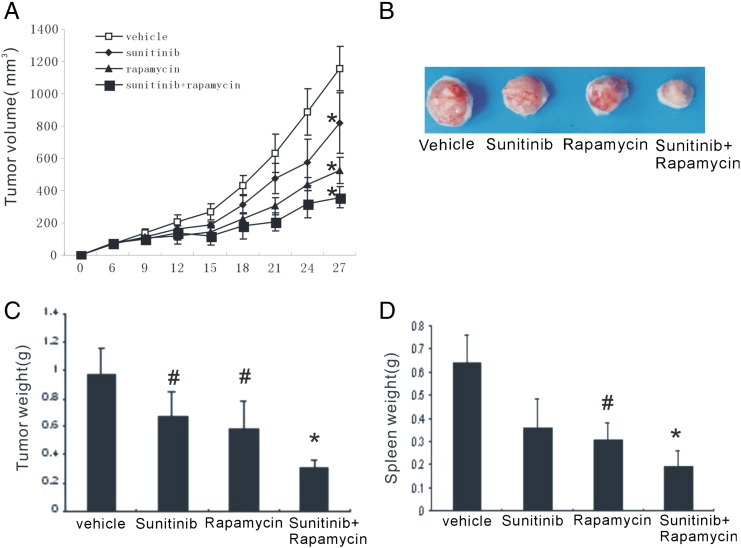
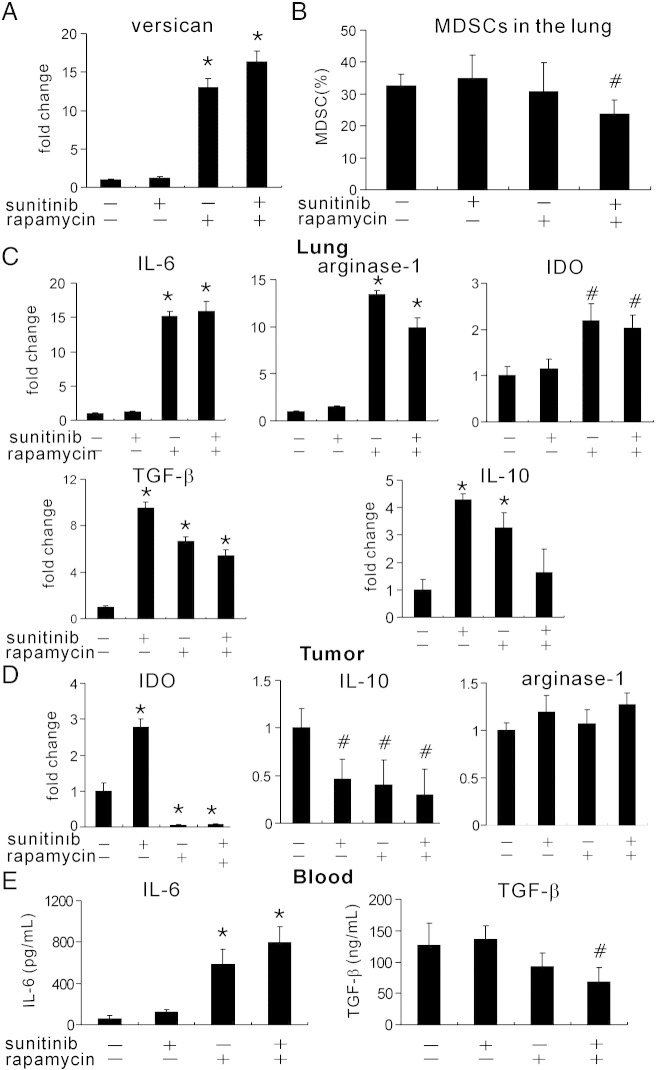
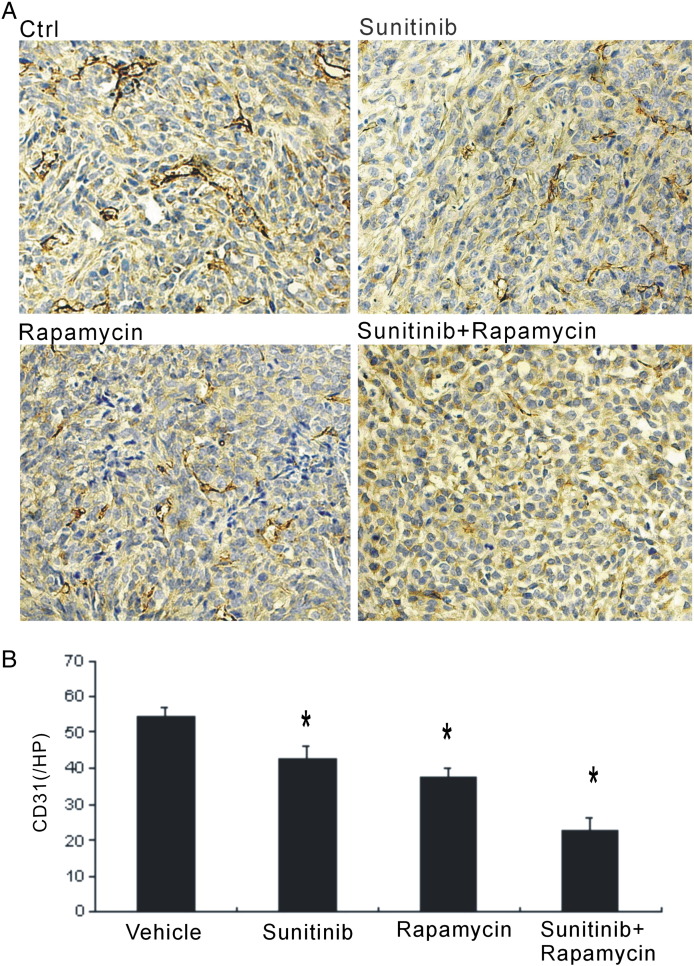
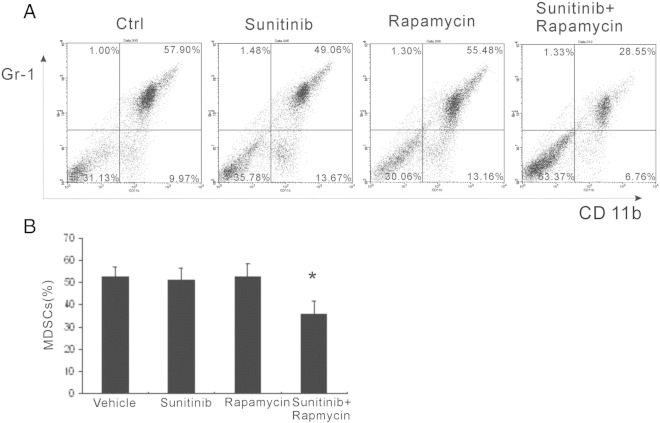
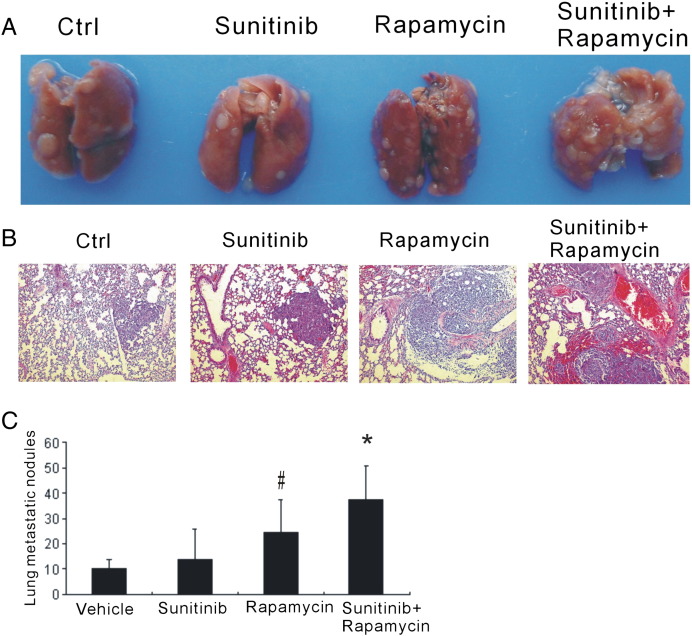
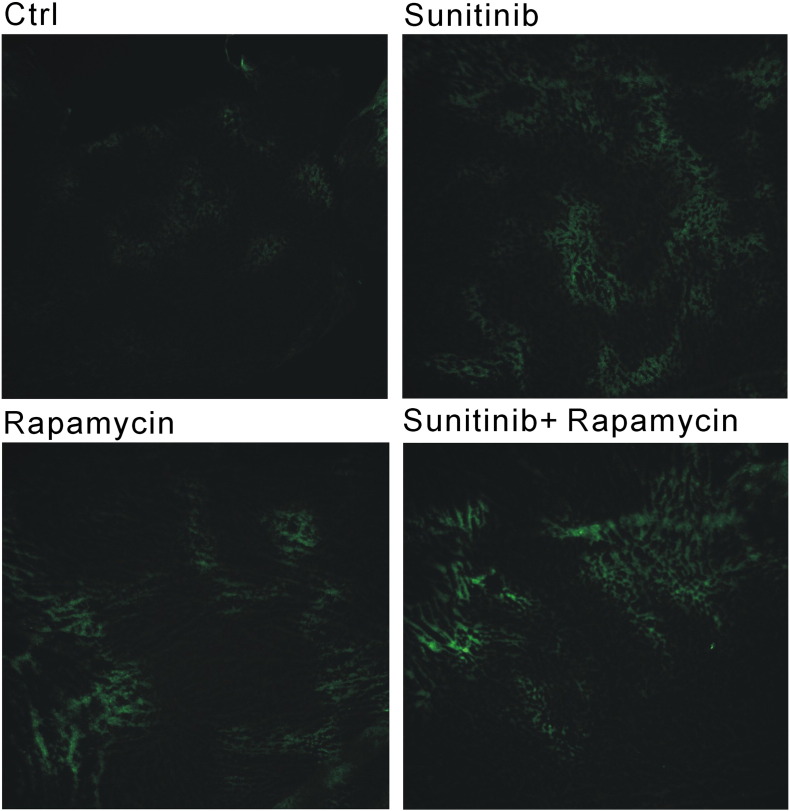
Synergism between sunitinib and rapamycin on tumor growth was observed. Sunitinib plus rapamycin reduced splenomegaly, MDSCs in spleens and lungs, and microvessel density in tumor microenvironment, while exacerbated hypoxia and promoted cancer lung metastasis. Sunitinib plus rapamycin markedly induced versican, IDO, arginase 1, IL-6, and TGF-β expression in the lungs, whereas it reduced IDO and IL-10 expression in the primary tumor tissues. IL-6 levels in the circulation were increased after rapamycin and combination therapies.
The combination of sunitinib plus rapamycin reduced the tumor growth but promoted tumor metastasis. This study warrants that further mTOR inhibition treatment should be closely watched in clinical setting, especially combined with antiangiogenic therapy.
本研究旨在探讨舒尼替尼和雷帕霉素对乳腺癌模型中肿瘤生长和转移的协同作用。
研究了舒尼替尼和雷帕霉素对肿瘤生长和转移的协同抗肿瘤作用。评估了脾脏和肺部髓源抑制细胞(MDSC)。评估了肿瘤缺氧、血管密度和微转移。检测了肺部和肿瘤中的硫酸软骨素、吲哚胺 2,3-双加氧酶(IDO)、精氨酸酶 1、白细胞介素-6(IL-6)、白细胞介素-10(IL-10)和转化生长因子-β(TGF-β)。检测了血液中的 IL-6 和 TGF-β。
舒尼替尼和雷帕霉素联合使用对肿瘤生长具有协同作用。舒尼替尼加雷帕霉素可减少脾肿大、脾脏和肺部的 MDSC 以及肿瘤微环境中的微血管密度,同时加重缺氧并促进癌症肺转移。舒尼替尼加雷帕霉素可显著诱导肺部硫酸软骨素、IDO、精氨酸酶 1、IL-6 和 TGF-β 的表达,而降低原发性肿瘤组织中的 IDO 和 IL-10 表达。雷帕霉素和联合治疗后,循环中的 IL-6 水平增加。
舒尼替尼加雷帕霉素可减少肿瘤生长,但促进肿瘤转移。本研究表明,在临床实践中应密切关注进一步的 mTOR 抑制治疗,特别是与抗血管生成治疗联合使用。