Department of Electronics, Information and Bioengineering, Politecnico di Milano Milan, Italy.
Department of Electronics, Information and Bioengineering, Politecnico di Milano Milan, Italy ; BIND - Behavioral Imaging and Neural Dynamics Center, University "G. d'Annunzio" Chieti, Italy ; Department of Medicine and Aging Science, University "G. d'Annunzio" Chieti, Italy.
Front Hum Neurosci. 2014 Apr 1;8:186. doi: 10.3389/fnhum.2014.00186. eCollection 2014.
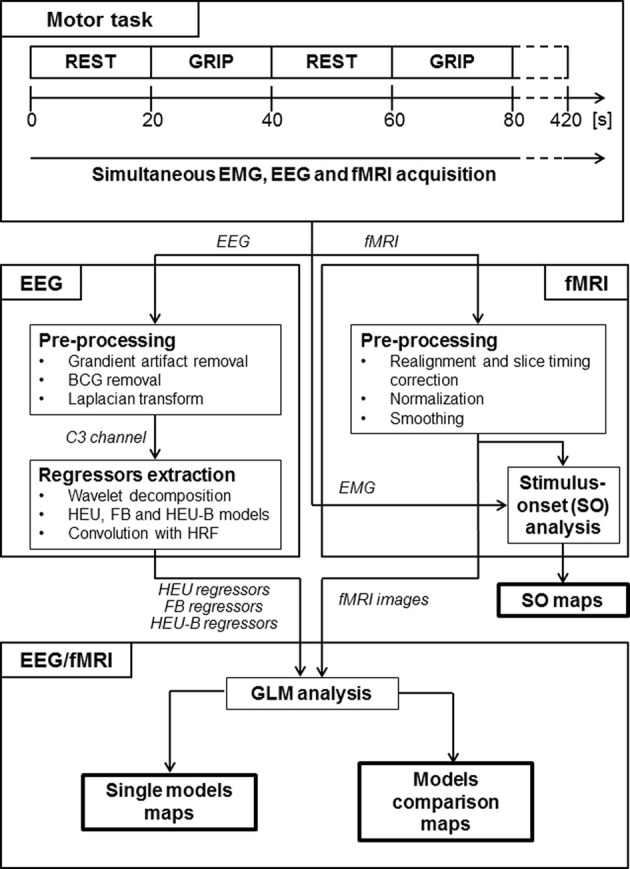
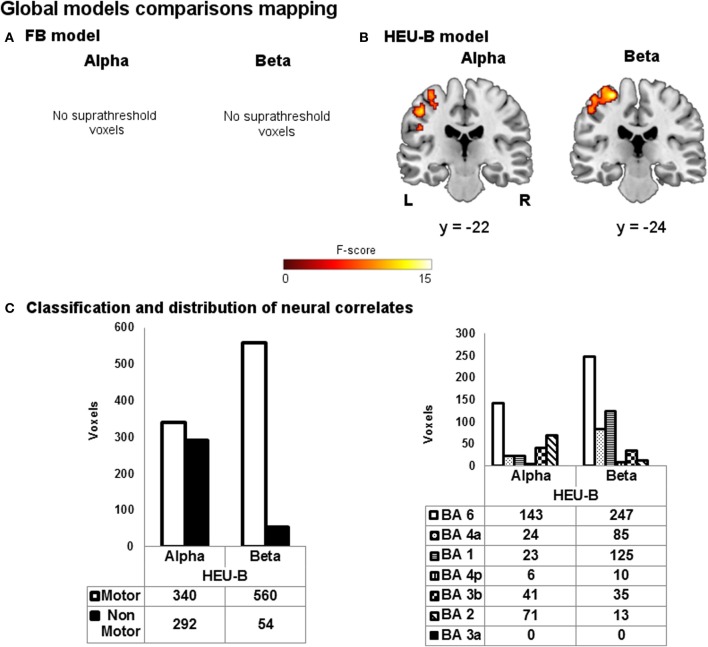
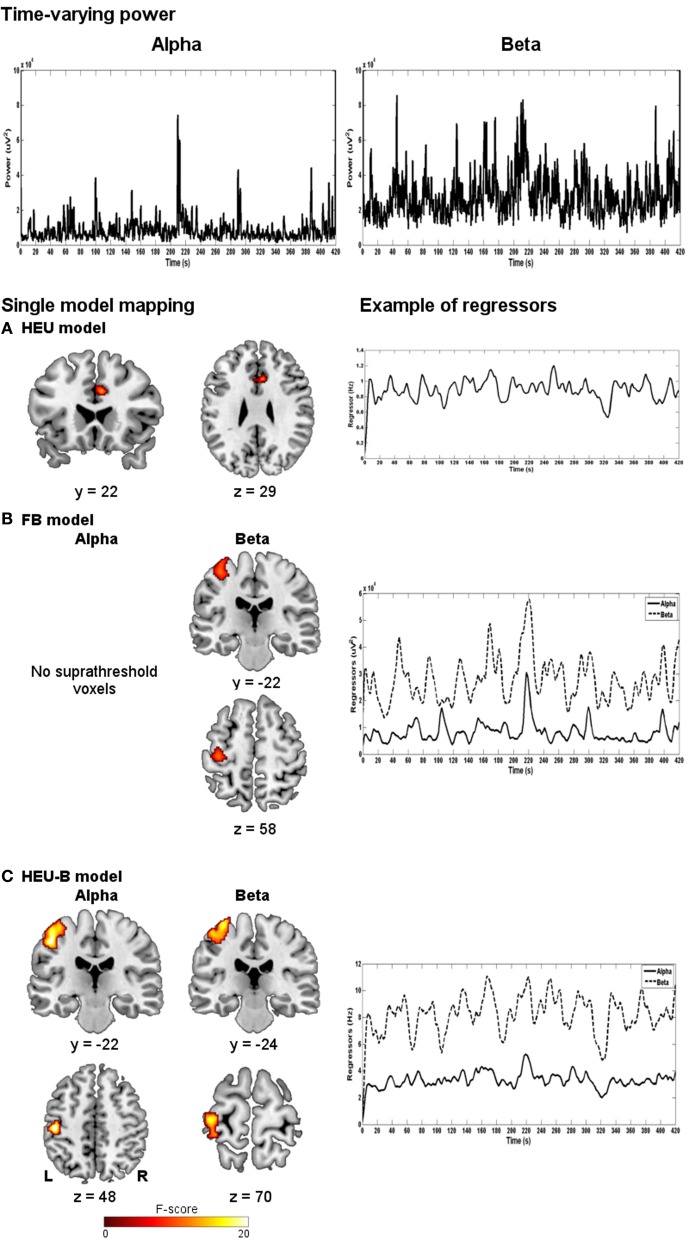
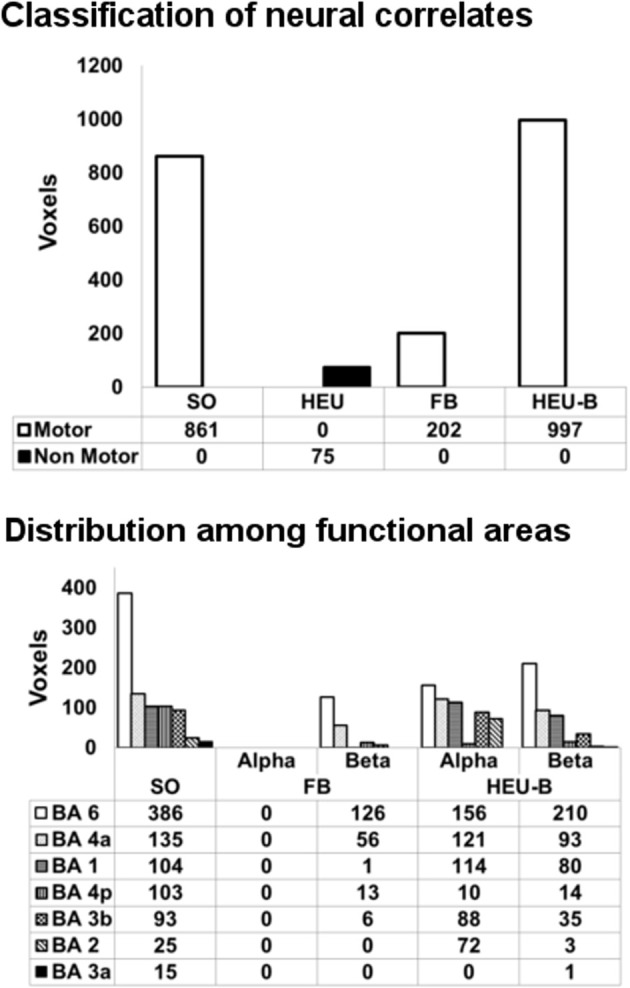
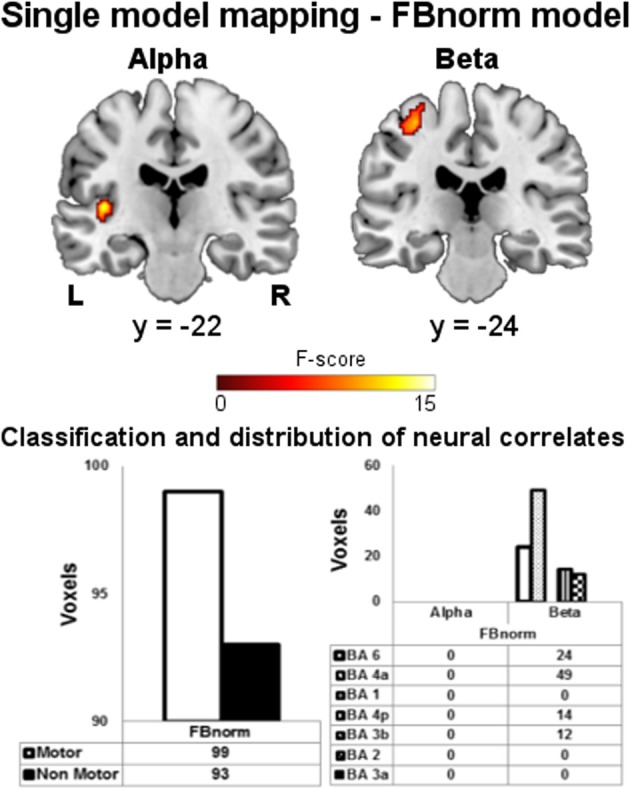
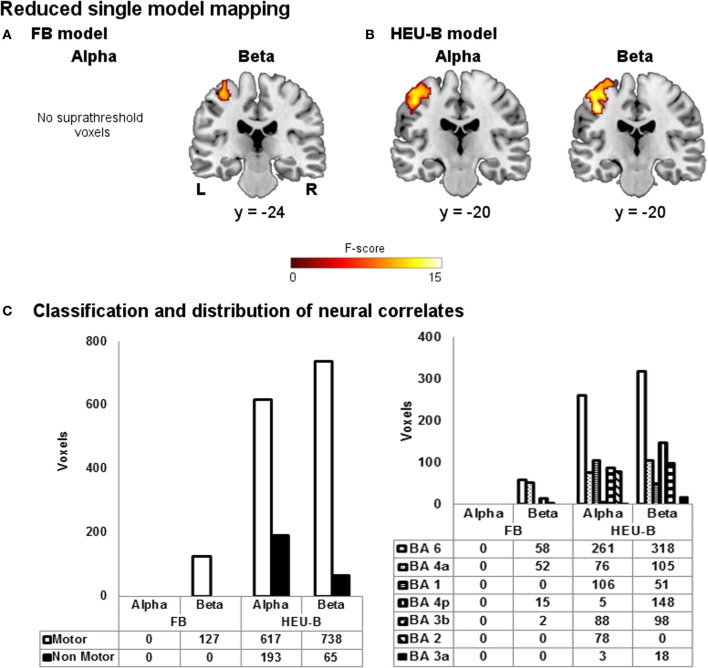
In the last decade, an increasing interest has arisen in investigating the relationship between the electrophysiological and hemodynamic measurements of brain activity, such as EEG and (BOLD) fMRI. In particular, changes in BOLD have been shown to be associated with changes in the spectral profile of neural activity, rather than with absolute power. Concurrently, recent findings showed that different EEG rhythms are independently related to changes in the BOLD signal: therefore, it would be also important to distinguish between the contributions of the different EEG rhythms to BOLD fluctuations when modeling the relationship between the two signals. Here we propose a method to perform EEG-informed fMRI analysis where the changes in the spectral profile are modeled, and, at the same time, the distinction between rhythms is preserved. We compared our model with two other frequency-dependent regressors modeling using simultaneous EEG-fMRI data from healthy subjects performing a motor task. Our results showed that the proposed method better captures the correlations between BOLD signal and EEG rhythms modulations, identifying task-related, well localized activated volumes. Furthermore, we showed that including among the regressors also EEG rhythms not primarily involved in the task enhances the performance of the analysis, even when only correlations with BOLD signal and specific EEG rhythms are explored.
在过去的十年中,人们对研究大脑活动的电生理和血液动力学测量(如 EEG 和(BOLD)fMRI)之间的关系产生了越来越大的兴趣。特别是,已经表明 BOLD 的变化与神经活动的频谱分布的变化有关,而不是与绝对功率有关。同时,最近的研究结果表明,不同的 EEG 节律与 BOLD 信号的变化独立相关:因此,在建模两个信号之间的关系时,区分不同 EEG 节律对 BOLD 波动的贡献也很重要。在这里,我们提出了一种进行 EEG 指导 fMRI 分析的方法,其中对频谱分布的变化进行建模,同时保留节律之间的区别。我们将我们的模型与使用来自执行运动任务的健康受试者的同时 EEG-fMRI 数据建模的另外两种频率相关回归器进行了比较。我们的结果表明,所提出的方法更好地捕捉了 BOLD 信号与 EEG 节律调制之间的相关性,确定了与任务相关的、位置明确的激活体积。此外,我们还表明,即使仅探索与 BOLD 信号和特定 EEG 节律的相关性,将不在任务中主要涉及的 EEG 节律也包括在回归器中,也可以提高分析的性能。