Ogawa Aiko, Firth Amy L, Ariyasu Sanae, Yamadori Ichiro, Matsubara Hiromi, Song Shanshan, Fraidenburg Dustin R, Yuan Jason X-J
Department of Clinical Science, National Hospital Organization Okayama Medical CenterTamasu, Kita-kuOkayama, Japan.
The Salk Institute of Biological Studies, La Jolla, California.
Physiol Rep. 2013 Dec 29;1(7):e00190. doi: 10.1002/phy2.190. eCollection 2013 Dec 1.
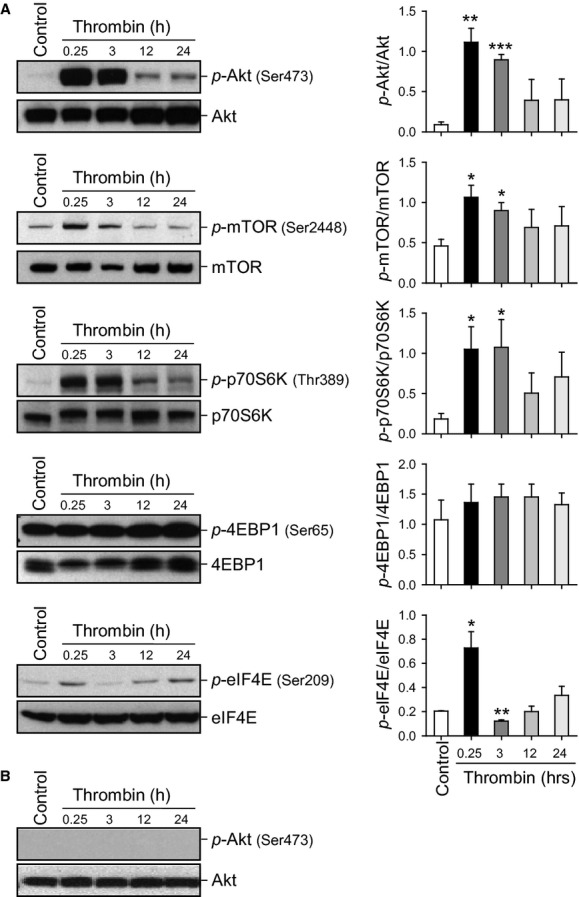
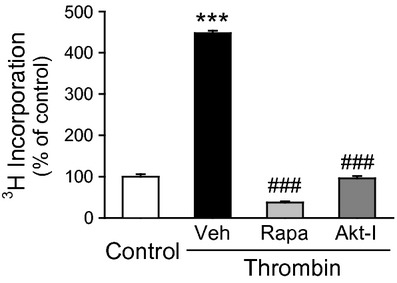
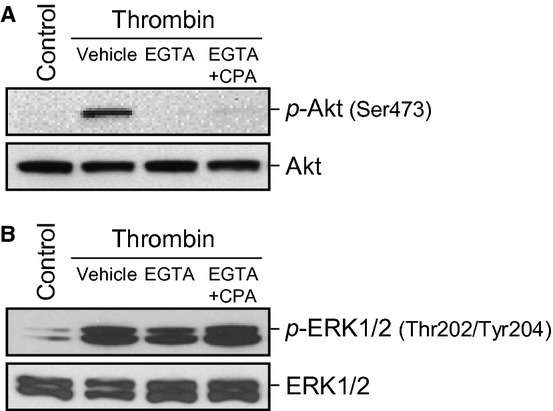
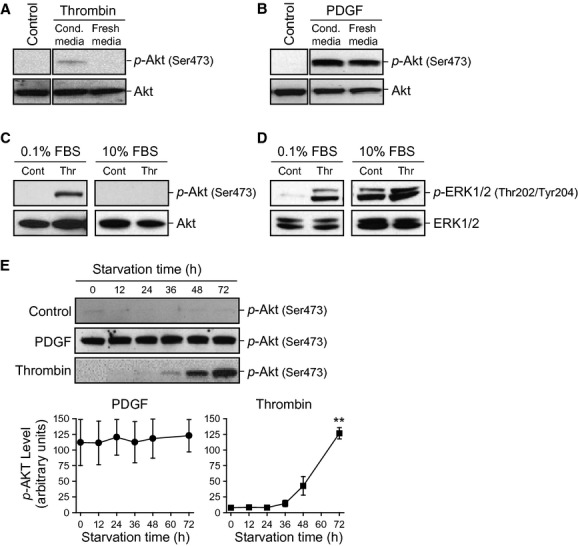
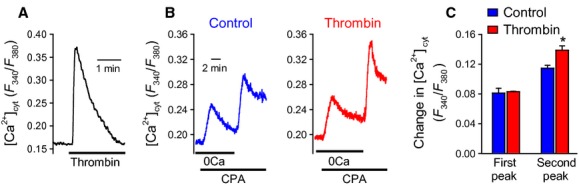
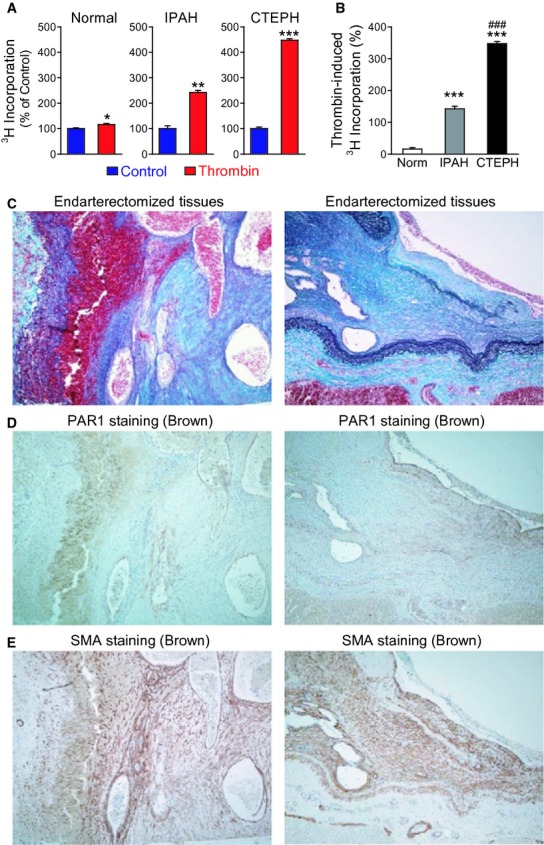
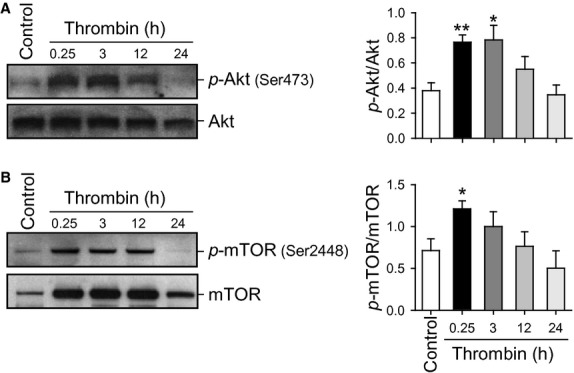
Chronic thromboembolic pulmonary hypertension (CTEPH) has been increasingly recognized as a common source of elevated pulmonary vascular resistance and pulmonary hypertension. It is clear that development of pulmonary thromboemboli is the inciting event for this process, yet it remains unclear why some patients have persistent pulmonary artery occlusion leading to distal pulmonary vascular remodeling and CTEPH. Thrombin, a serine protease, is an integral part of the common coagulation cascade, yet thrombin also has direct cellular effects through interaction with the family of PAR membrane receptors. This study is designed to determine the effects of thrombin on Akt signaling in pulmonary artery smooth muscle cells (PASMC) from normal humans and pulmonary hypertension patients. Thrombin treatment of PASMC resulted in a transient increase in Akt phosphorylation and had similar effects on the downstream targets of the Akt/mTOR pathway. Ca(2+) is shown to be required for Akt phosphorylation as well as serum starvation, a distinct effect compared to platelet-derived growth factor. Thrombin treatment was associated with a rise in intracellular [Ca(2+)] and enhanced store-operated calcium entry (SOCE). These effects lead to enhanced proliferation, which is more dramatic in both IPAH and CTEPH PASMC. Enhanced proliferation is also shown to be attenuated by inhibition of Akt/mTOR in CTEPH PASMC. Thrombin has direct effects on PASMC increasing intracellular [Ca(2+)] and PASMC proliferation, an effect attributed to Akt phosphorylation. The current results implicate the effects of thrombin in the pathogenesis of idiopathic pulmonary arterial hypertension (IPAH) and CTEPH, which may potentially be a novel therapeutic target.
慢性血栓栓塞性肺动脉高压(CTEPH)已越来越被认为是肺血管阻力升高和肺动脉高压的常见原因。显然,肺血栓栓塞的形成是这一过程的起始事件,但仍不清楚为何有些患者会出现持续性肺动脉阻塞,导致远端肺血管重塑和CTEPH。凝血酶是一种丝氨酸蛋白酶,是常见凝血级联反应不可或缺的一部分,然而凝血酶还可通过与PAR膜受体家族相互作用产生直接的细胞效应。本研究旨在确定凝血酶对正常人及肺动脉高压患者肺动脉平滑肌细胞(PASMC)中Akt信号传导的影响。凝血酶处理PASMC导致Akt磷酸化短暂增加,且对Akt/mTOR途径的下游靶点有类似影响。已表明Akt磷酸化以及血清饥饿均需要Ca(2+),这与血小板衍生生长因子相比是一种独特的效应。凝血酶处理与细胞内[Ca(2+)]升高及储存-操作性钙内流(SOCE)增强有关。这些效应导致增殖增强,在特发性肺动脉高压(IPAH)和CTEPH的PASMC中更为显著。在CTEPH的PASMC中,抑制Akt/mTOR也可使增强的增殖减弱。凝血酶对PASMC有直接影响,可增加细胞内[Ca(2+)]和PASMC增殖,这种效应归因于Akt磷酸化。目前的结果表明凝血酶在特发性肺动脉高压(IPAH)和CTEPH的发病机制中发挥作用,这可能是一个潜在的新型治疗靶点。