Institute for Stem Cell Biology and Regenerative Medicine, Stanford University School of Medicine, Stanford, California 94305, USA.
Department of Developmental Biology, Stanford University School of Medicine, Stanford, California 94305, USA.
Nat Cell Biol. 2014 May;16(5):469-78. doi: 10.1038/ncb2956. Epub 2014 Apr 20.
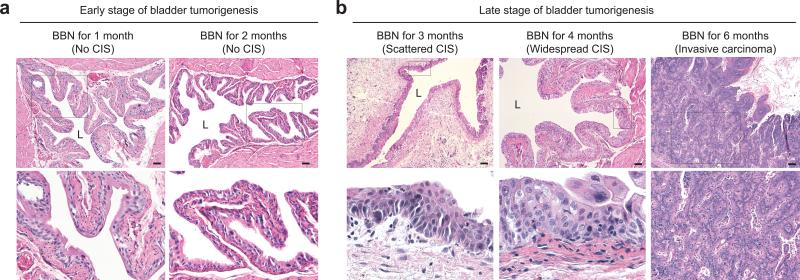
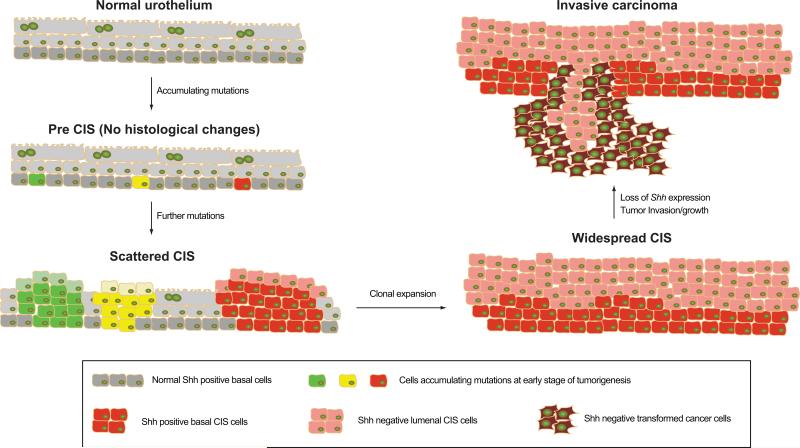
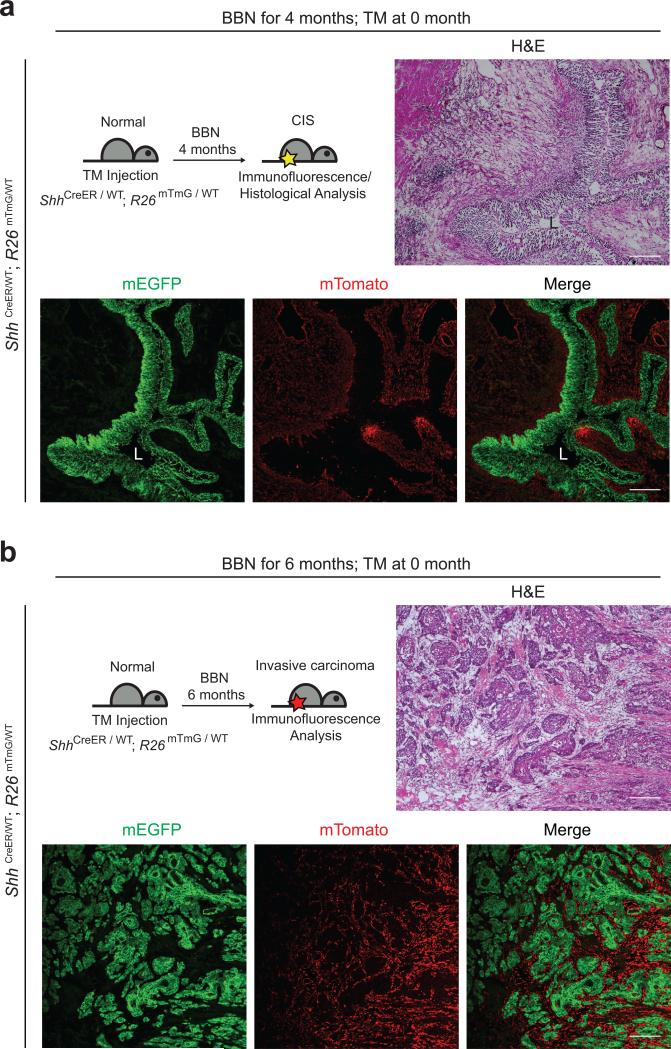
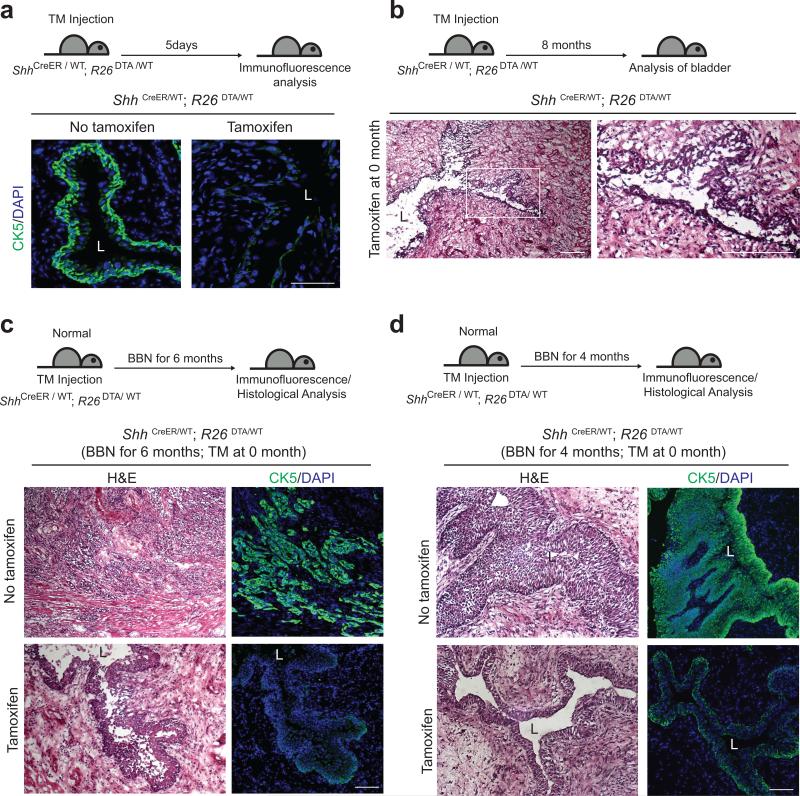
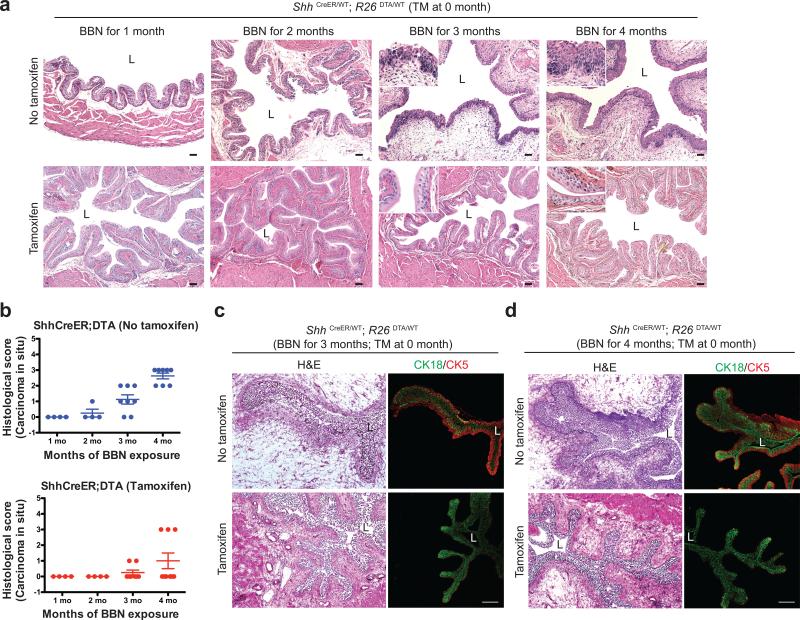
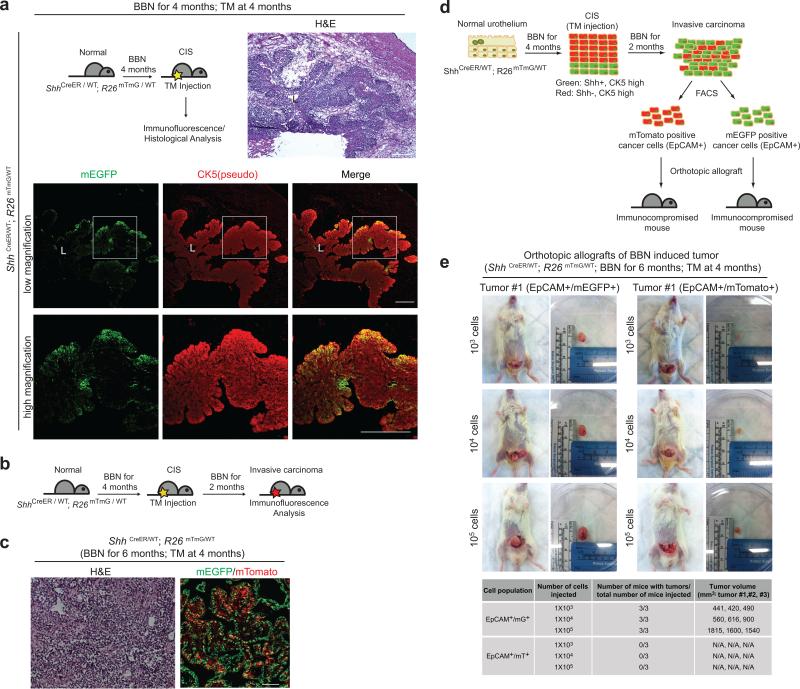
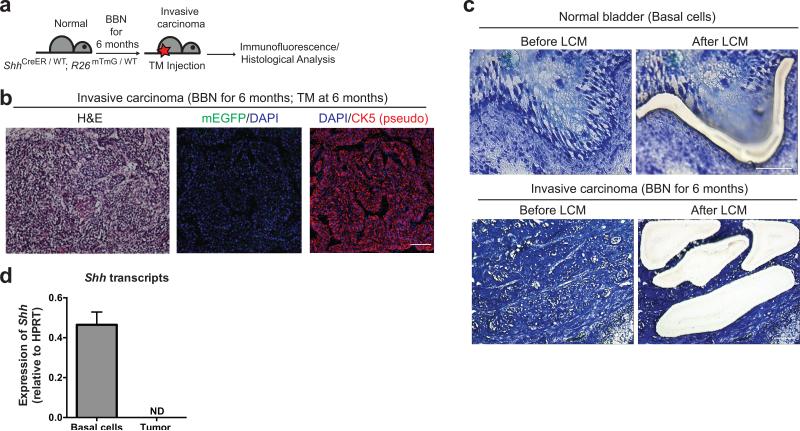
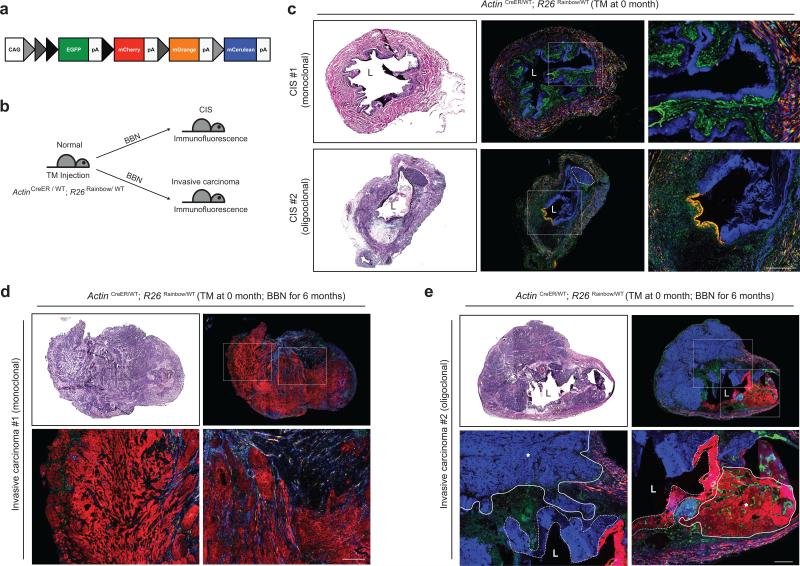
Understanding how malignancies arise within normal tissues requires identification of the cancer cell of origin and knowledge of the cellular and tissue dynamics of tumour progression. Here we examine bladder cancer in a chemical carcinogenesis model that mimics muscle-invasive human bladder cancer. With no prior bias regarding genetic pathways or cell types, we prospectively mark or ablate cells to show that muscle-invasive bladder carcinomas arise exclusively from Sonic hedgehog (Shh)-expressing stem cells in basal urothelium. These carcinomas arise clonally from a single cell whose progeny aggressively colonize a major portion of the urothelium to generate a lesion with histological features identical to human carcinoma in situ. Shh-expressing basal cells within this precursor lesion become tumour-initiating cells, although Shh expression is lost in subsequent carcinomas. We thus find that invasive carcinoma is initiated from basal urothelial stem cells but that tumour cell phenotype can diverge significantly from that of the cancer cell of origin.
要了解恶性肿瘤如何在正常组织中产生,需要确定癌症的起源细胞,并了解肿瘤进展的细胞和组织动态。在这里,我们在一种模拟肌肉浸润性人类膀胱癌的化学致癌模型中检查膀胱癌。我们没有预先确定遗传途径或细胞类型的偏见,而是前瞻性地标记或消融细胞,以表明肌肉浸润性膀胱癌仅起源于基底尿路上皮中表达 Sonic hedgehog (Shh) 的干细胞。这些癌从单个细胞克隆性产生,其后代积极定植大部分尿路上皮,生成具有与人类原位癌相同组织学特征的病变。在这个前体病变中表达 Shh 的基底细胞成为肿瘤起始细胞,尽管 Shh 表达在随后的癌中丢失。因此,我们发现浸润性癌是从基底尿路上皮干细胞开始的,但肿瘤细胞表型可能与起源细胞的癌症细胞明显不同。