Rossodivita Alyssa A, Boudoures Anna L, Mecoli Jonathan P, Steenkiste Elizabeth M, Karl Andrea L, Vines Eudora M, Cole Arron M, Ansbro Megan R, Thompson Jeffrey S
Department of Biology, Denison University, Granville, OH 43023, USA.
Department of Biology, Denison University, Granville, OH 43023, USA
Nucleic Acids Res. 2014 Jun;42(10):6286-99. doi: 10.1093/nar/gku242. Epub 2014 Apr 19.
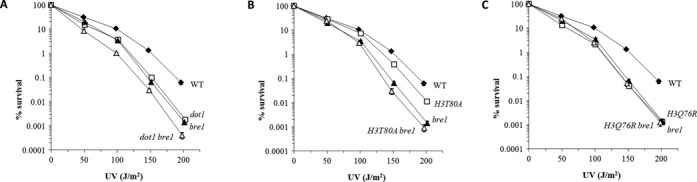
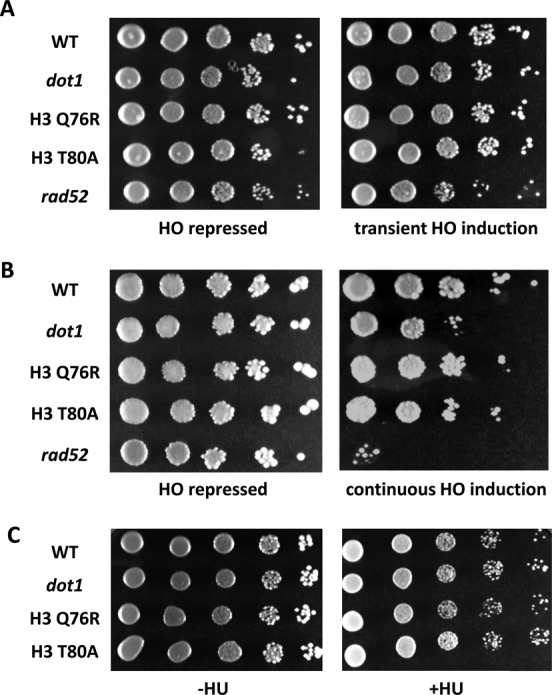
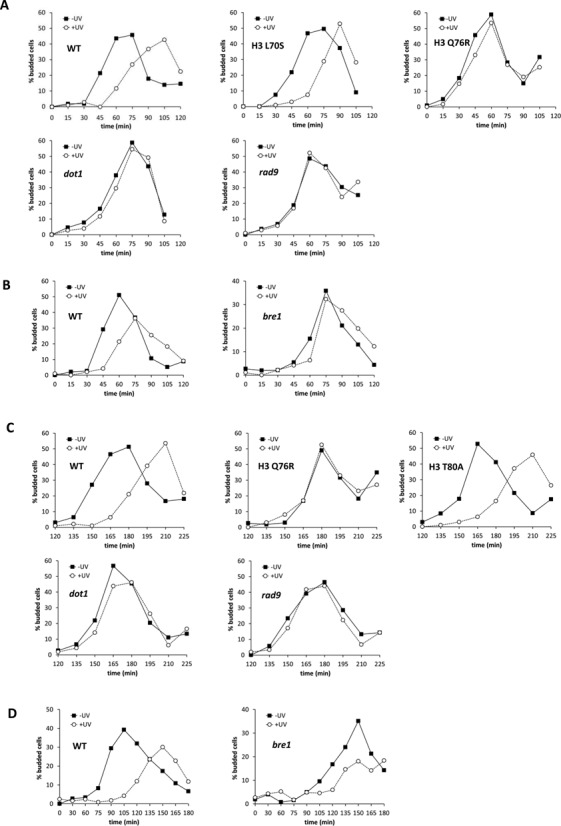
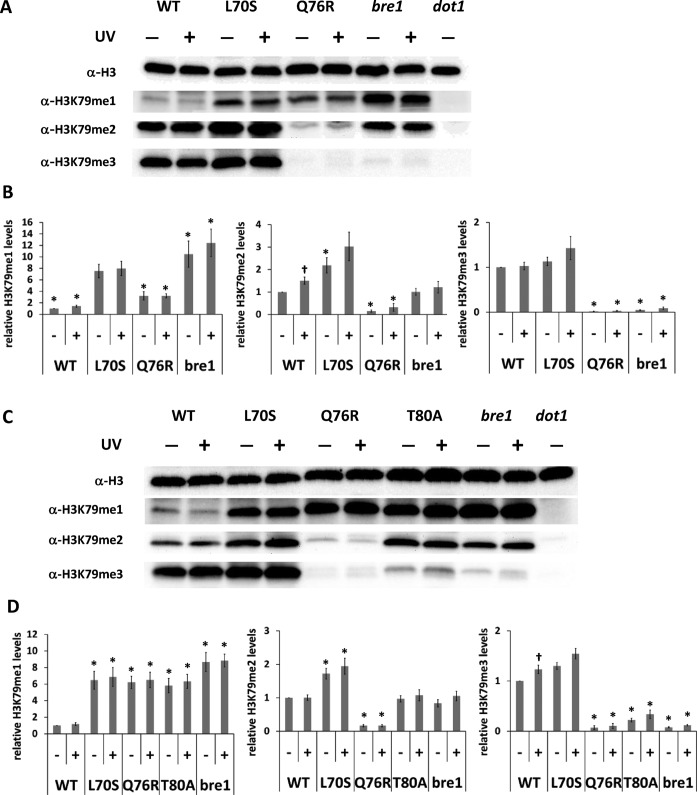
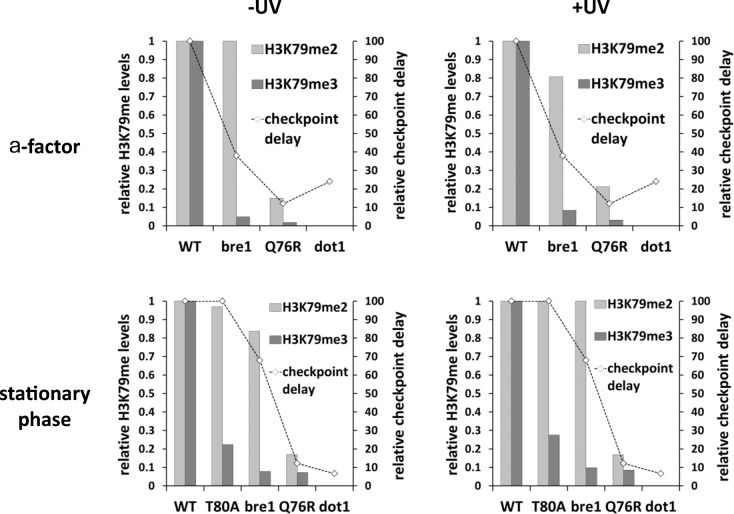
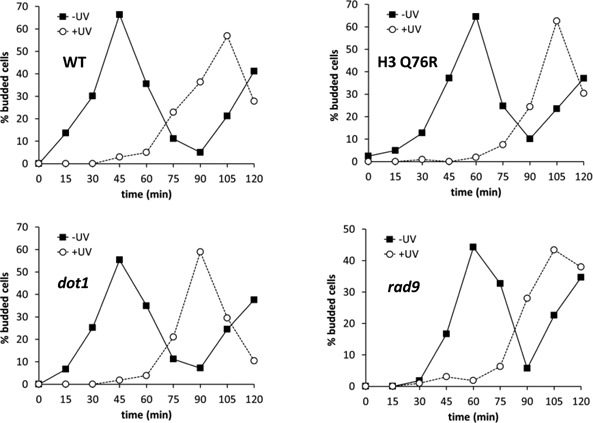
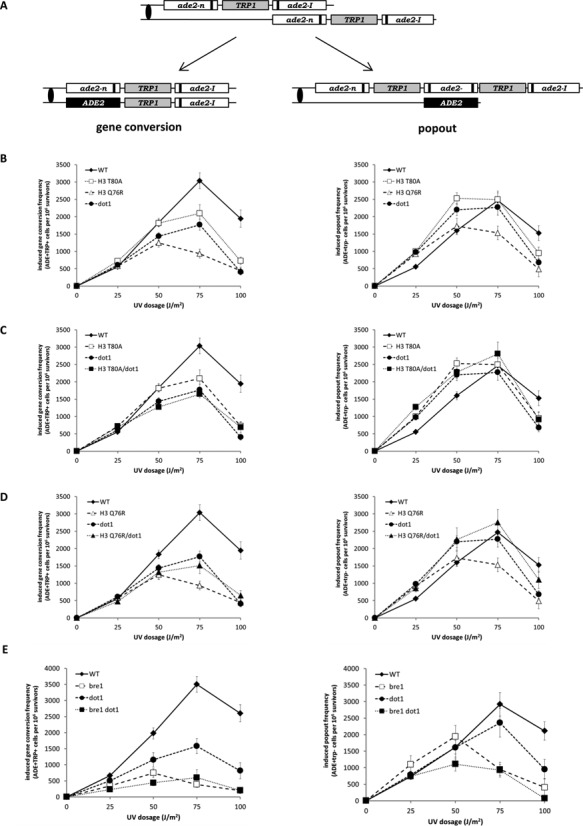
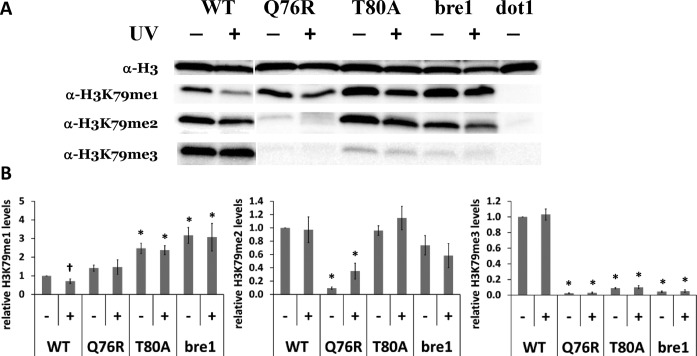
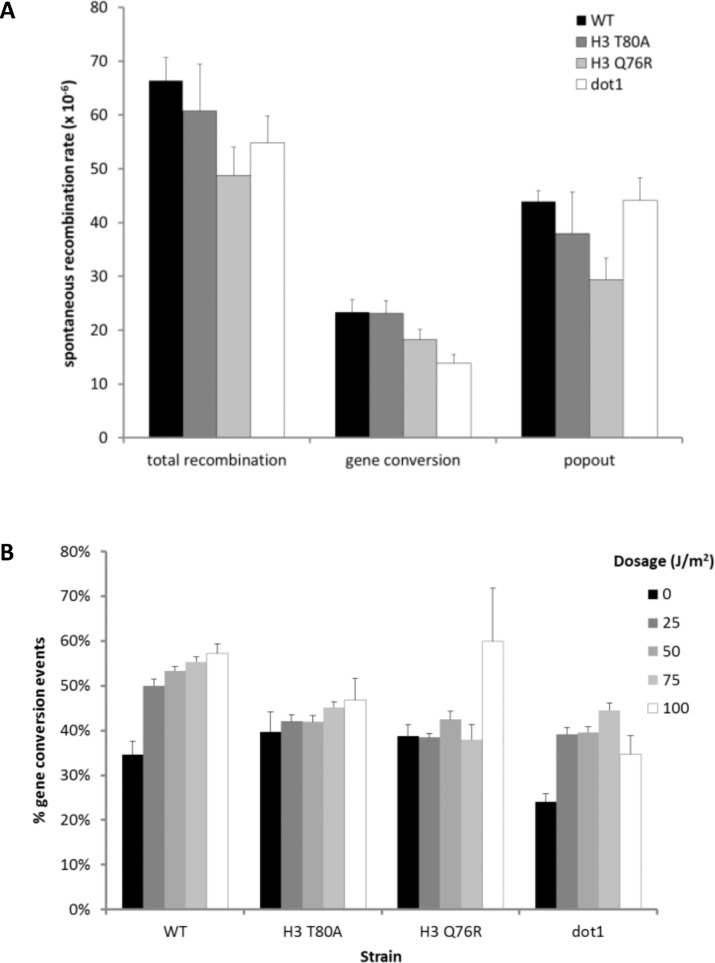
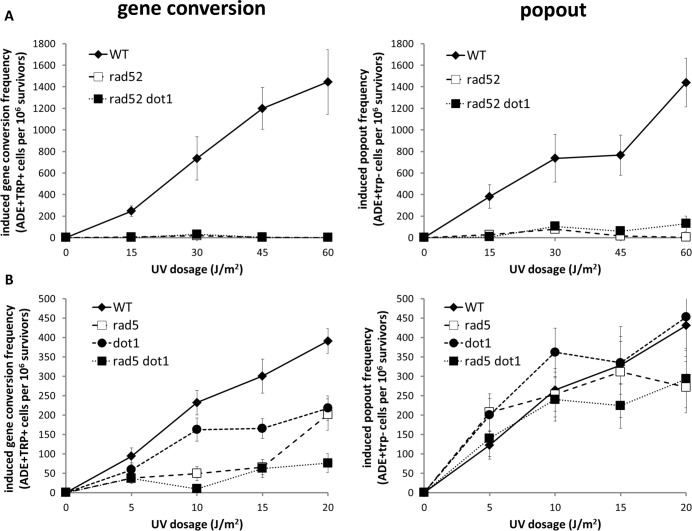
Histone post-translational modifications have been shown to contribute to DNA damage repair. Prior studies have suggested that specific H3K79 methylation states play distinct roles in the response to UV-induced DNA damage. To evaluate these observations, we examined the effect of altered H3K79 methylation patterns on UV-induced G1/S checkpoint response and sister chromatid exchange (SCE). We found that the di- and trimethylated states both contribute to activation of the G1/S checkpoint to varying degrees, depending on the synchronization method, although methylation is not required for checkpoint in response to high levels of UV damage. In contrast, UV-induced SCE is largely a product of the trimethylated state, which influences the usage of gene conversion versus popout mechanisms. Regulation of H3K79 methylation by H2BK123 ubiquitylation is important for both checkpoint function and SCE. H3K79 methylation is not required for the repair of double-stranded breaks caused by transient HO endonuclease expression, but does play a modest role in survival from continuous exposure. The overall results provide evidence for the participation of H3K79 methylation in UV-induced recombination repair and checkpoint activation, and further indicate that the di- and trimethylation states play distinct roles in these DNA damage response pathways.
组蛋白翻译后修饰已被证明有助于DNA损伤修复。先前的研究表明,特定的H3K79甲基化状态在对紫外线诱导的DNA损伤的反应中发挥不同作用。为了评估这些观察结果,我们研究了改变的H3K79甲基化模式对紫外线诱导的G1/S检查点反应和姐妹染色单体交换(SCE)的影响。我们发现,二甲基化和三甲基化状态均根据同步方法在不同程度上有助于G1/S检查点的激活,尽管对高水平紫外线损伤的检查点反应不需要甲基化。相比之下,紫外线诱导的SCE在很大程度上是三甲基化状态的产物,其影响基因转换与弹出机制的使用。H2BK123泛素化对H3K79甲基化的调节对于检查点功能和SCE都很重要。H3K79甲基化对于由瞬时HO核酸内切酶表达引起的双链断裂的修复不是必需的,但在连续暴露后的存活中确实起适度作用。总体结果为H3K79甲基化参与紫外线诱导的重组修复和检查点激活提供了证据,并进一步表明二甲基化和三甲基化状态在这些DNA损伤反应途径中发挥不同作用。