International Centre for Allied Health Evidence, University of South Australia , Adelaide, South Australia , Australia.
School of Psychology, Social Work and Social Policy, University of South Australia , Australia.
PeerJ. 2014 Mar 27;2:e331. doi: 10.7717/peerj.331. eCollection 2014.
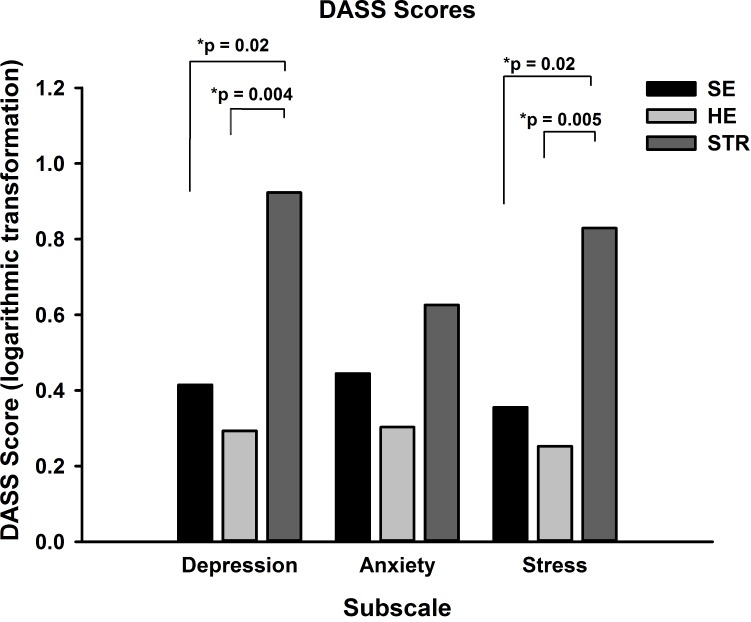
Purpose. People with stroke living in the community have an increased prevalence of depression and lower quality of life than healthy older adults. This cross-sectional observational study investigated whether participation in regular exercise was associated with improved mood and quality of life. Methods. We recruited three groups of community dwelling participants: 13 healthy older adults, 17 adults post-stroke who regularly participated in group exercise at a community fitness facility and 10 adults post-stroke who did not regularly exercise. We measured mood using the Depression, Anxiety, Stress Scale (DASS) and quality of life using the Assessment of Quality of Life (AQoL) scale. Results. Levels of stress and depression were significantly greater in the people with stroke who did not undertake regular exercise (p = 0.004 and p = 0.004 respectively), although this group had more recent strokes (p < 0.001). Both stroke groups had lower quality of life scores (p = 0.04) than the healthy adults. Conclusions. This small, community-based study confirms that people following stroke report poorer quality of life than stroke-free individuals. However, those who exercise regularly have significantly lower stress and depression compared to stroke survivors who do not. Future research should focus on the precise type and amount of exercise capable of improving mood following stroke.
与健康老年人相比,居住在社区中的中风患者抑郁和生活质量较低。本横断面观察性研究调查了定期运动是否与改善情绪和生活质量有关。
我们招募了三组社区居住的参与者:13 名健康老年人,17 名定期在社区健身设施参加团体运动的中风后成年人,以及 10 名不经常运动的中风后成年人。我们使用抑郁、焦虑和压力量表(DASS)测量情绪,使用生活质量评估量表(AQoL)测量生活质量。
不进行定期运动的中风患者的压力和抑郁水平显著更高(分别为 p = 0.004 和 p = 0.004),尽管该组最近发生过中风(p < 0.001)。两组中风患者的生活质量评分均较低(p = 0.04),低于健康成年人。
这项基于社区的小型研究证实,中风患者的生活质量比无中风患者差。然而,与不运动的中风幸存者相比,定期运动的人压力和抑郁明显更低。未来的研究应重点关注能够改善中风后情绪的运动类型和运动量。