Kharitonenkov Alexei, Adams Andrew C
Eli Lilly and Company, Diabetes Research, Indianapolis, IN 46285, USA.
Mol Metab. 2013 Dec 27;3(3):221-9. doi: 10.1016/j.molmet.2013.12.003. eCollection 2014 Jun.
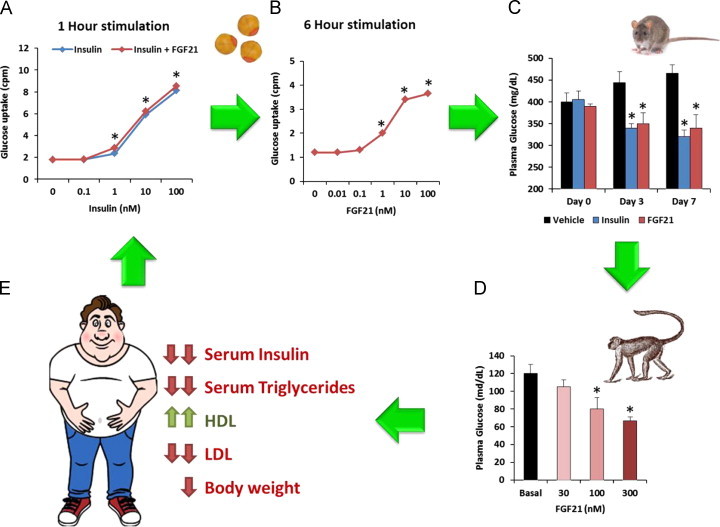
Since the discovery of insulin in 1921, protein therapeutics have become vital tools in the treatment of diabetes mellitus. This heritage has been extended with the comparatively recent introduction of recombinant and re-engineered insulins, in addition to the advent of GLP1 agonists. FGF21 represents an example of a novel experimental protein therapy which is able to induce favorable metabolic effects in various species ranging from rodents to man. The aim of this review is to communicate the story of the FGF21 drug discovery path from identification in a functional in vitro screen, to the eventual evaluation of its utility in patients. Given that the development of FGF21 advanced hand-in-hand with rapidly evolving scientific research around this target, we have also attempted to describe our view of recent developments regarding the mechanistic understanding of FGF21 biology.
自1921年胰岛素被发现以来,蛋白质疗法已成为治疗糖尿病的重要工具。除了GLP1激动剂的出现外,重组胰岛素和重新设计的胰岛素的相对较新引入也延续了这一传统。FGF21是一种新型实验性蛋白质疗法的例子,它能够在从啮齿动物到人类的各种物种中诱导出有利的代谢效应。本综述的目的是讲述FGF21药物发现过程的故事,从在功能性体外筛选中被识别,到最终评估其在患者中的效用。鉴于FGF21的开发与围绕该靶点的快速发展的科学研究同步推进,我们还试图描述我们对FGF21生物学机制理解的最新进展的看法。