Palacios-Ortega Sara, Varela-Guruceaga Maider, Milagro Fermín Ignacio, Martínez José Alfredo, de Miguel Carlos
Department of Biochemistry and Genetics, University of Navarra, Pamplona, Spain.
Department of Nutrition Food Science and Physiology, University of Navarra, Pamplona, Spain; Physiopathology of Obesity and Nutrition CIBERobn, Carlos III Health Research Institute, Madrid, Spain.
PLoS One. 2014 Apr 21;9(4):e95100. doi: 10.1371/journal.pone.0095100. eCollection 2014.
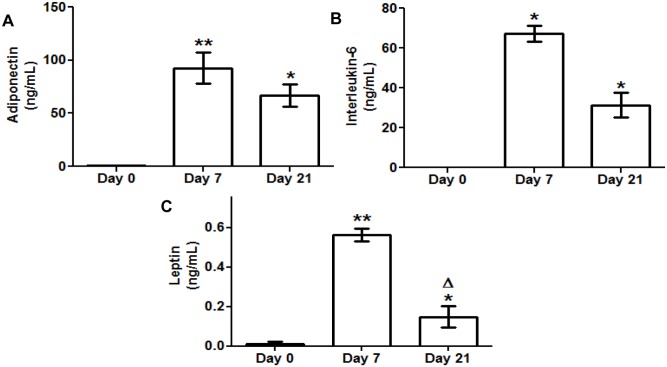
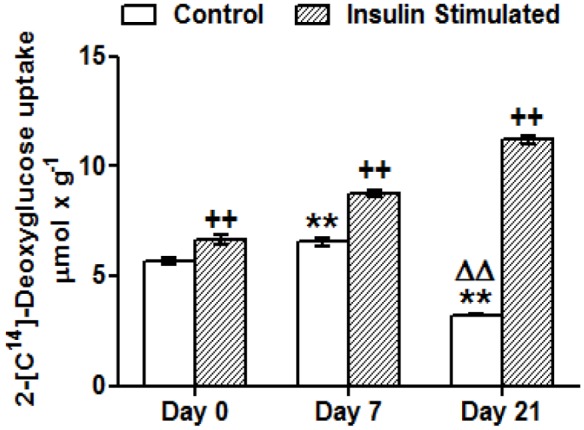
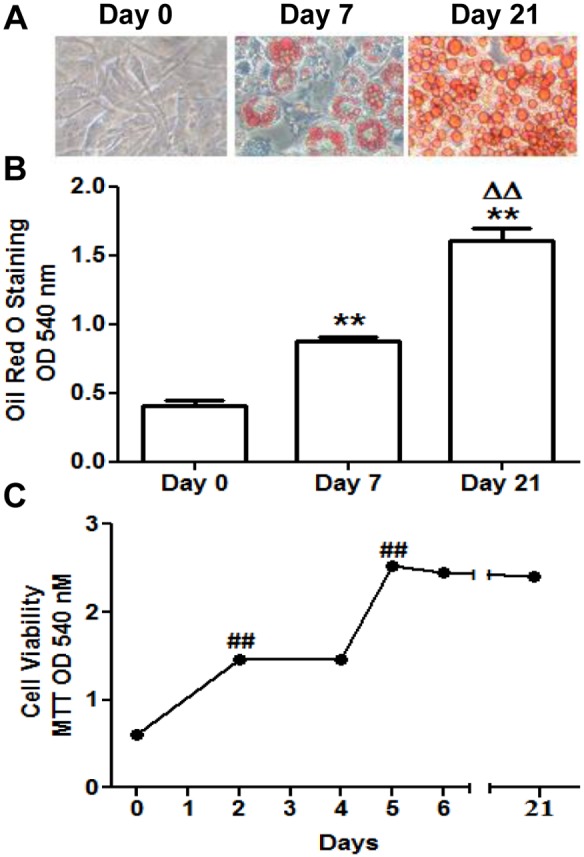
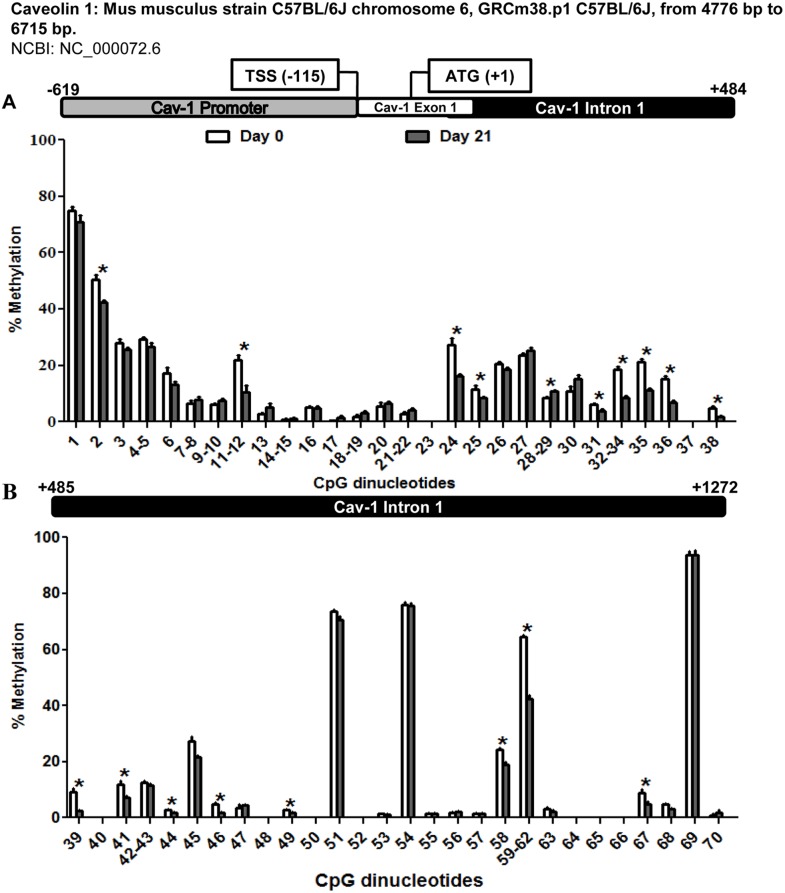
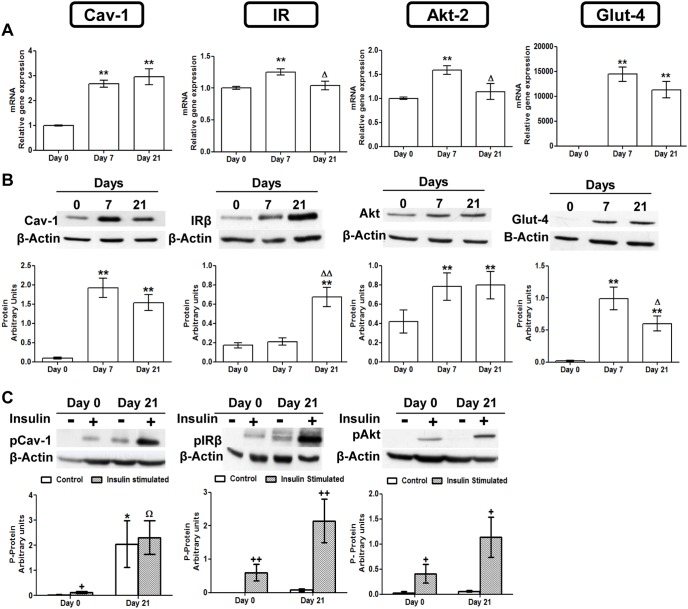
Caveolin 1 (Cav-1) is an essential constituent of adipocyte caveolae which binds the beta subunit of the insulin receptor (IR) and is implicated in the regulation of insulin signaling. We have found that, during adipocyte differentiation of 3T3-L1 cells the promoter, exon 1 and first intron of the Cav-1 gene undergo a demethylation process that is accompanied by a strong induction of Cav-1 expression, indicating that epigenetic mechanisms must have a pivotal role in this differentiation process. Furthermore, IR, PKB-Akt and Glut-4 expression are also increased during the differentiation process suggesting a coordinated regulation with Cav-1. Activation of Cav-1 protein by phosphorylation arises during the differentiation process, yet in fully mature adipocytes insulin is no longer able to significantly increase Cav-1 phosphorylation. However, these long-term differentiated cells are still able to respond adequately to insulin, increasing IR and PKB-Akt phosphorylation and glucose uptake. The activation of Cav-1 during the adipocyte differentiation process could facilitate the maintenance of insulin sensitivity by these fully mature adipocytes isolated from additional external stimuli. However, under the influence of physiological conditions associated to obesity, such as chronic inflammation and hypoxia, insulin sensitivity would finally be compromised.
小窝蛋白1(Cav-1)是脂肪细胞小窝的重要组成部分,它与胰岛素受体(IR)的β亚基结合,并参与胰岛素信号传导的调节。我们发现,在3T3-L1细胞的脂肪细胞分化过程中,Cav-1基因的启动子、外显子1和第一个内含子经历了去甲基化过程,同时伴随着Cav-1表达的强烈诱导,这表明表观遗传机制在这个分化过程中一定起着关键作用。此外,在分化过程中IR、PKB-Akt和Glut-4的表达也增加,这表明它们与Cav-1存在协同调节。在分化过程中,Cav-1蛋白通过磷酸化被激活,但在完全成熟的脂肪细胞中,胰岛素不再能够显著增加Cav-1的磷酸化。然而,这些长期分化的细胞仍然能够对胰岛素做出充分反应,增加IR和PKB-Akt的磷酸化以及葡萄糖摄取。在脂肪细胞分化过程中Cav-1的激活可能有助于这些完全成熟的脂肪细胞维持胰岛素敏感性,使其免受额外外部刺激的影响。然而,在与肥胖相关的生理条件影响下,如慢性炎症和缺氧,胰岛素敏感性最终会受到损害。