URT Genomics of Diabetes-IEOS, CNR & Department of Translational Medicine, Federico II University of Naples, Via Pansini 5, 80131, Naples, Italy.
Lundberg Laboratory for Diabetes Research, Department of Molecular and Clinical Medicine, Sahlgrenska Academy, University of Gothenburg, Gothenburg, Sweden.
Diabetologia. 2018 Feb;61(2):369-380. doi: 10.1007/s00125-017-4471-4. Epub 2017 Oct 24.
AIMS/HYPOTHESIS: Subcutaneous adipocyte hypertrophy is associated with insulin resistance and increased risk of type 2 diabetes, and predicts its future development independent of obesity. In humans, subcutaneous adipose tissue hypertrophy is a consequence of impaired adipocyte precursor cell recruitment into the adipogenic pathway rather than a lack of precursor cells. The zinc finger transcription factor known as zinc finger protein (ZFP) 423 has been identified as a major determinant of pre-adipocyte commitment and maintained white adipose cell function. Although its levels do not change during adipogenesis, ectopic expression of Zfp423 in non-adipogenic murine cells is sufficient to activate expression of the gene encoding peroxisome proliferator-activated receptor γ (Pparγ; also known as Pparg) and increase the adipogenic potential of these cells. We investigated whether the Zfp423 gene is under epigenetic regulation and whether this plays a role in the restricted adipogenesis associated with hypertrophic obesity.
Murine 3T3-L1 and NIH-3T3 cells were used as fibroblasts committed and uncommitted to the adipocyte lineage, respectively. Human pre-adipocytes were isolated from the stromal vascular fraction of subcutaneous adipose tissue of 20 lean non-diabetic individuals with a wide adipose cell size range. mRNA levels were measured by quantitative real-time PCR, while methylation levels were analysed by bisulphite sequencing. Chromatin structure was analysed by micrococcal nuclease protection assay, and DNA-methyltransferases were chemically inhibited by 5-azacytidine. Adipocyte differentiation rate was evaluated by Oil Red O staining.
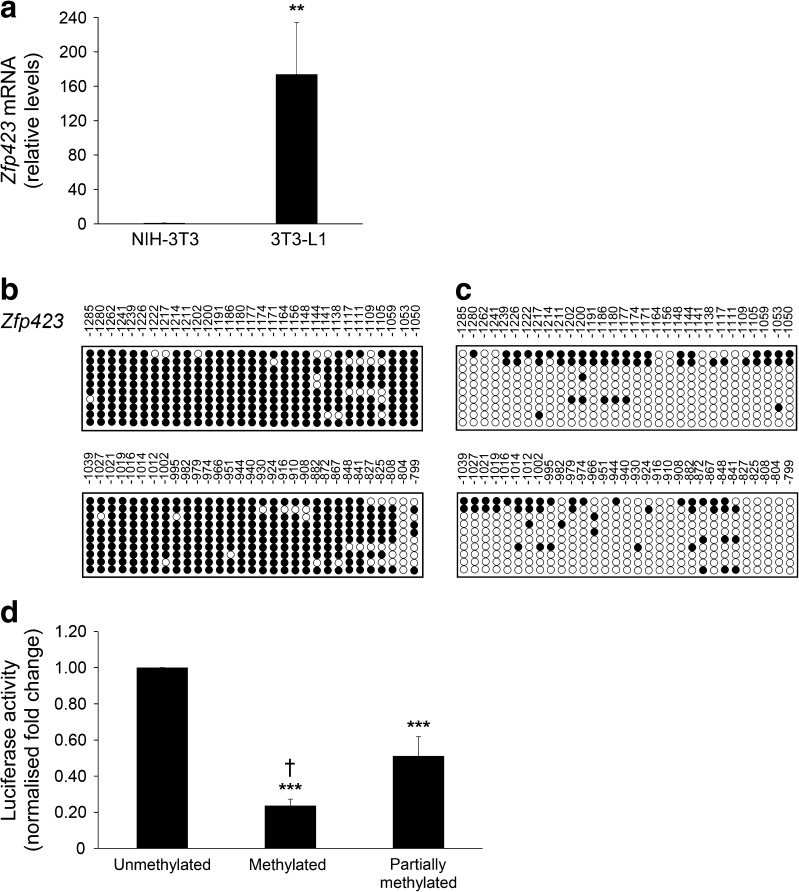
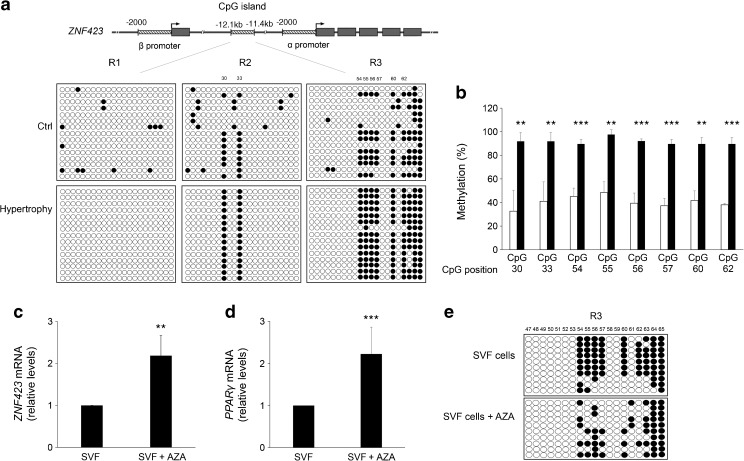
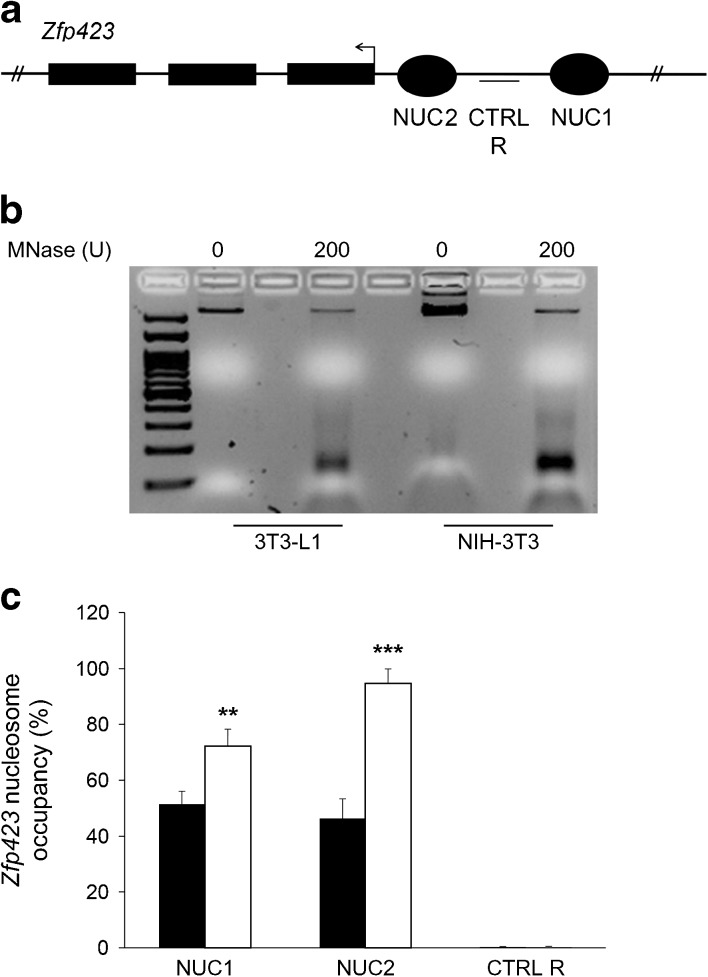
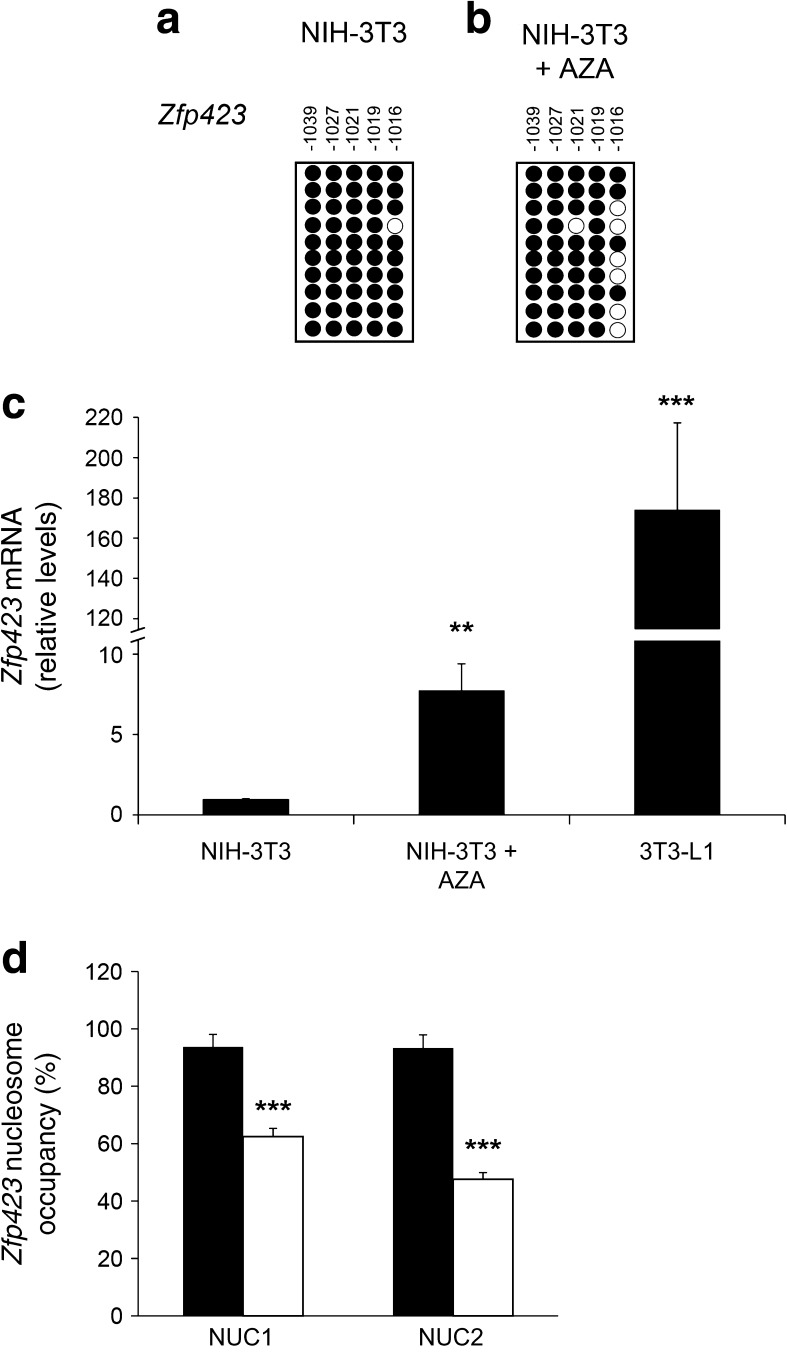
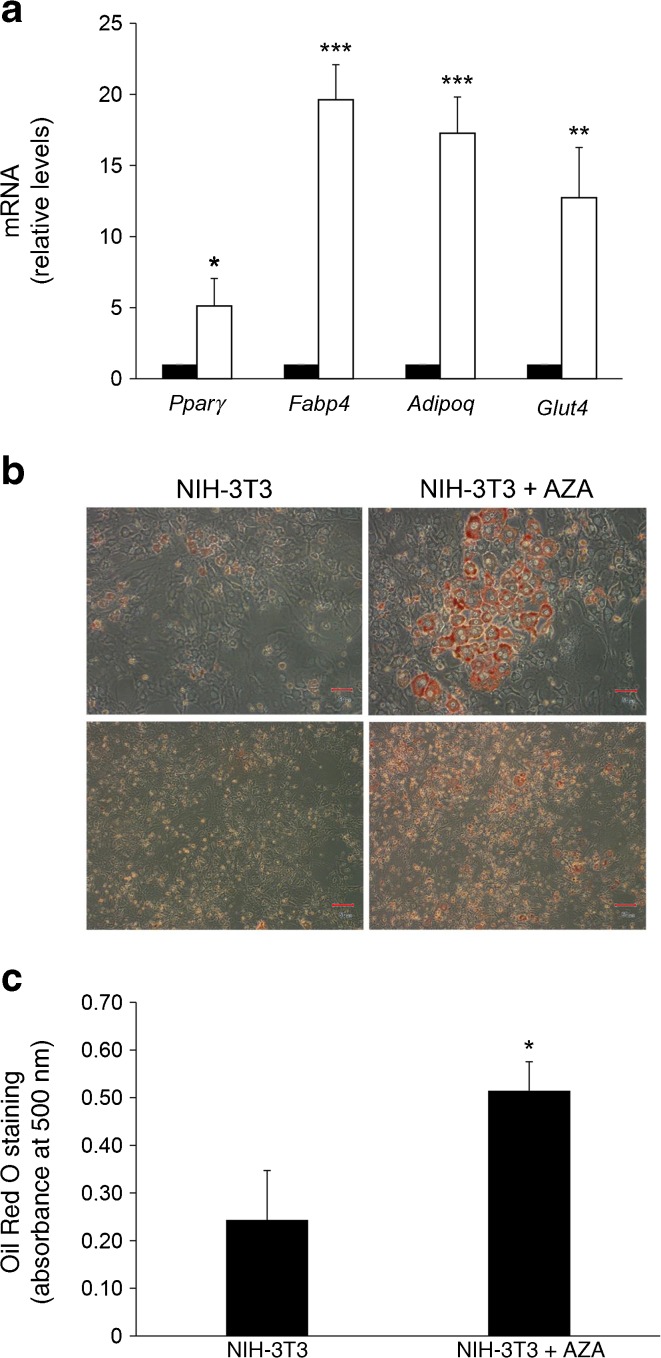
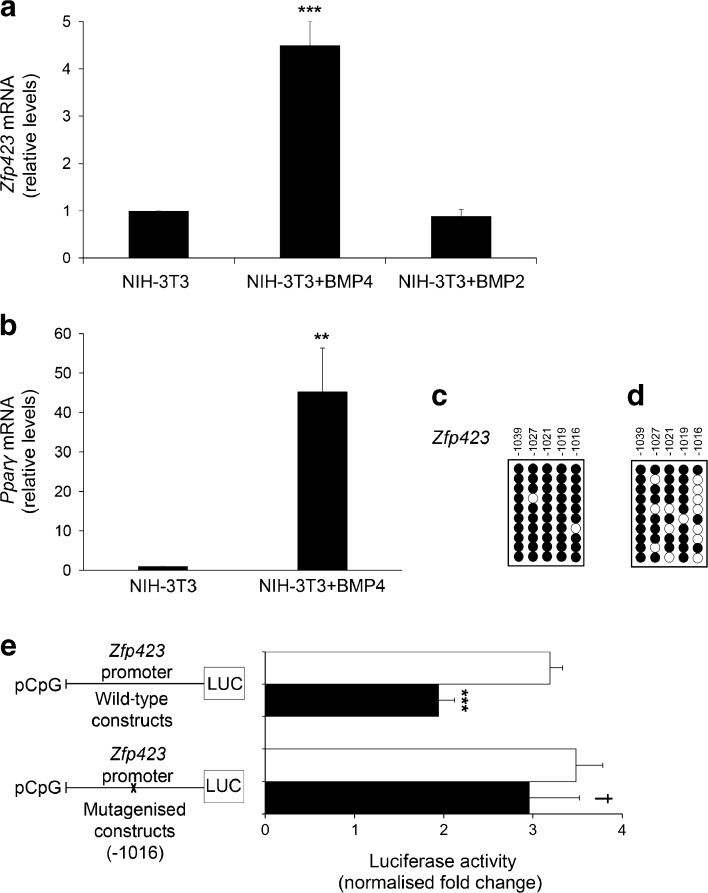
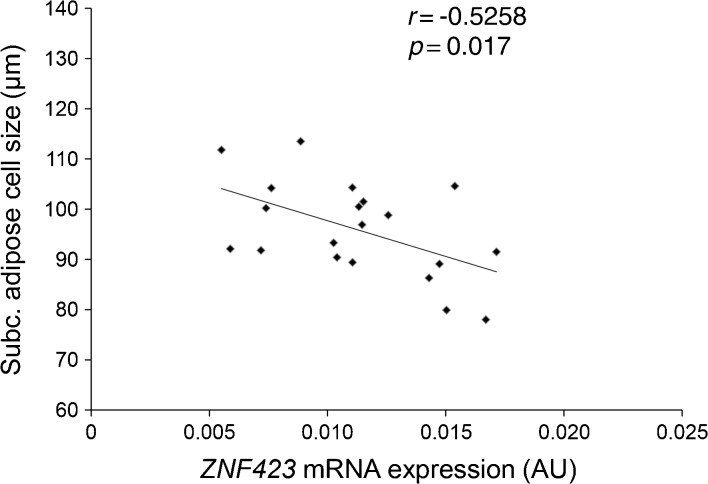
Comparison of uncommitted (NIH-3T3) and committed (3T3-L1) adipose precursor cells revealed that Zfp423 expression increased (p < 0.01) in parallel with the ability of the cells to differentiate into mature adipocytes owing to both decreased promoter DNA methylation (p < 0.001) and nucleosome occupancy (nucleosome [NUC] 1 p < 0.01; NUC2 p < 0.001) in the 3T3-L1 compared with NIH-3T3 cells. Interestingly, non-adipogenic epigenetic profiles can be reverted in NIH-3T3 cells as 5-azacytidine treatment increased Zfp423 mRNA levels (p < 0.01), reduced DNA methylation at a specific CpG site (p < 0.01), decreased nucleosome occupancy (NUC1, NUC2: p < 0.001) and induced adipocyte differentiation (p < 0.05). These epigenetic modifications can also be initiated in response to changes in the pre-adipose cell microenvironment, in which bone morphogenetic protein 4 (BMP4) plays a key role. We finally showed that, in human adipocyte precursor cells, impaired epigenetic regulation of zinc nuclear factor (ZNF)423 (the human orthologue of murine Zfp423) was associated with inappropriate subcutaneous adipose cell hypertrophy. As in NIH-3T3 cells, the normal ZNF423 epigenetic profile was rescued by 5-azacytidine exposure.
CONCLUSIONS/INTERPRETATION: Our results show that epigenetic events regulate the ability of precursor cells to commit and differentiate into mature adipocytes by modulating ZNF423, and indicate that dysregulation of these mechanisms accompanies subcutaneous adipose tissue hypertrophy in humans.
目的/假设:皮下脂肪细胞肥大与胰岛素抵抗和 2 型糖尿病风险增加有关,并且可以预测其未来的发展,而与肥胖无关。在人类中,皮下脂肪组织肥大是由于脂肪前体细胞招募到脂肪生成途径受损而不是前体细胞缺乏所致。锌指转录因子锌指蛋白(ZFP)423 已被确定为前脂肪细胞定向和维持白色脂肪细胞功能的主要决定因素。尽管其水平在脂肪生成过程中没有变化,但在非脂肪生成的鼠细胞中异位表达 Zfp423 足以激活过氧化物酶体增殖物激活受体 γ(Pparγ;也称为 Pparg)基因的表达,并增加这些细胞的脂肪生成潜力。我们研究了 Zfp423 基因是否受表观遗传调控,以及这种调控是否在与肥大性肥胖相关的有限脂肪生成中发挥作用。
使用 3T3-L1 和 NIH-3T3 细胞作为分别已定向和未定向成脂肪细胞系的成纤维细胞。从 20 名具有广泛脂肪细胞大小范围的非糖尿病瘦个体的皮下脂肪组织的基质血管部分分离人前脂肪细胞。通过定量实时 PCR 测量 mRNA 水平,通过亚硫酸氢盐测序分析甲基化水平。通过微球菌核酸酶保护测定分析染色质结构,并通过 5-氮杂胞苷化学抑制 DNA-甲基转移酶。通过油红 O 染色评估脂肪细胞分化率。
比较未定向(NIH-3T3)和定向(3T3-L1)脂肪前体细胞发现,由于细胞分化为成熟脂肪细胞的能力增加(p <0.01),Zfp423 表达增加(p <0.01),这归因于启动子 DNA 甲基化减少(p <0.001)和核小体占据(核小体[NUC]1 p <0.01;NUC2 p <0.001)在 3T3-L1 与 NIH-3T3 细胞相比。有趣的是,5-氮杂胞苷处理可增加 Zfp423 mRNA 水平(p <0.01),降低特定 CpG 位点的甲基化(p <0.01),降低核小体占据(NUC1,NUC2:p <0.001)并诱导脂肪细胞分化(p <0.05),从而使 NIH-3T3 细胞中的非脂肪生成表观遗传特征可以逆转。这些表观遗传修饰也可以响应前脂肪细胞微环境的变化而启动,其中骨形态发生蛋白 4(BMP4)起着关键作用。我们最后表明,在人类脂肪前体细胞中,锌核因子(ZNF)423(鼠 Zfp423 的人类同源物)的表观遗传调控受损与不当的皮下脂肪细胞肥大有关。与 NIH-3T3 细胞一样,5-氮杂胞苷暴露可挽救正常的 ZNF423 表观遗传特征。
结论/解释:我们的结果表明,表观遗传事件通过调节 ZNF423 来调节前体细胞的定向和分化为成熟脂肪细胞的能力,并表明这些机制的失调伴随着人类皮下脂肪组织肥大。