Moneo Victoria, Serelde Beatriz G, Blanco-Aparicio Carmen, Diaz-Uriarte Ramon, Avilés Pablo, Santamaría Gemma, Tercero Juan C, Cuevas Carmen, Carnero Amancio
Instituto de Biomedicina de Sevilla, IBIS/Hospital Universitario Virgen del Rocio/CSIC/Universidad de Sevilla, Sevilla, Spain.
BMC Cancer. 2014 Apr 23;14:281. doi: 10.1186/1471-2407-14-281.
Zalypsis(®) is a marine compound in phase II clinical trials for multiple myeloma, cervical and endometrial cancer, and Ewing's sarcoma. However, the determinants of the response to Zalypsis are not well known. The identification of biomarkers for Zalypsis activity would also contribute to broaden the spectrum of tumors by selecting those patients more likely to respond to this therapy.
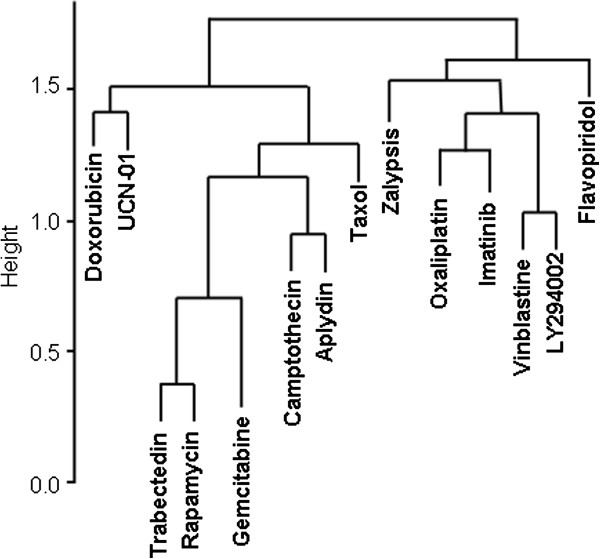
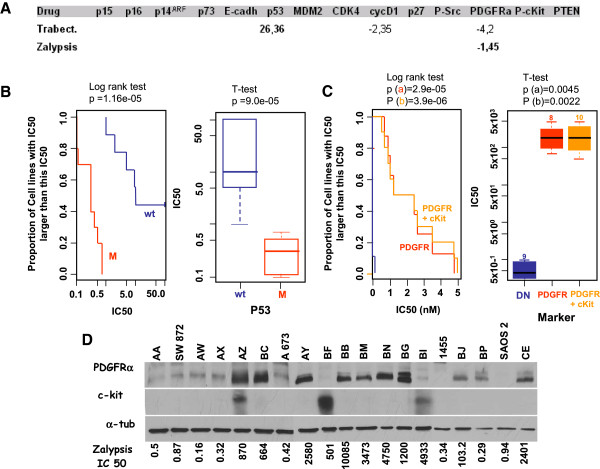
Using in vitro drug sensitivity data coupled with a set of molecular data from a panel of sarcoma cell lines, we developed molecular signatures that predict sensitivity to Zalypsis. We verified these results in culture and in vivo xenograft studies.
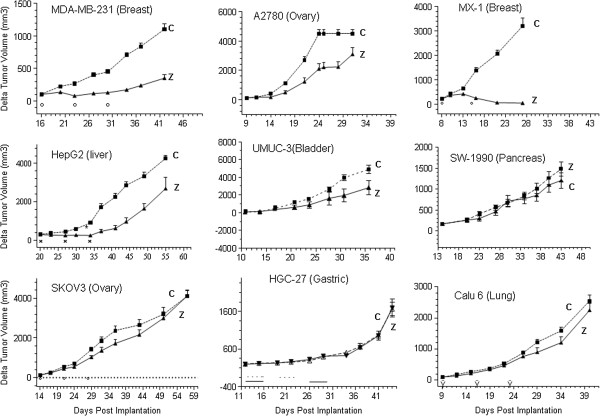
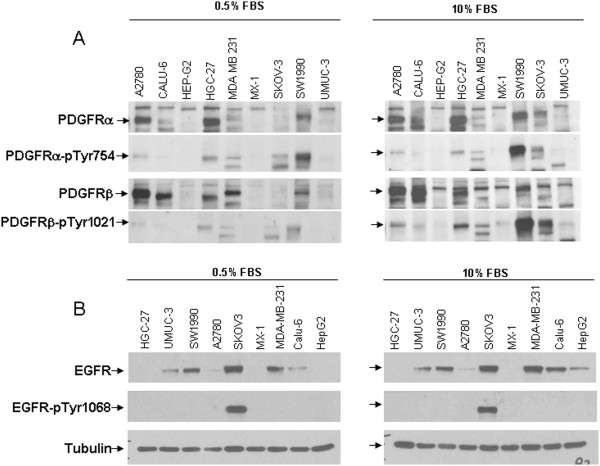
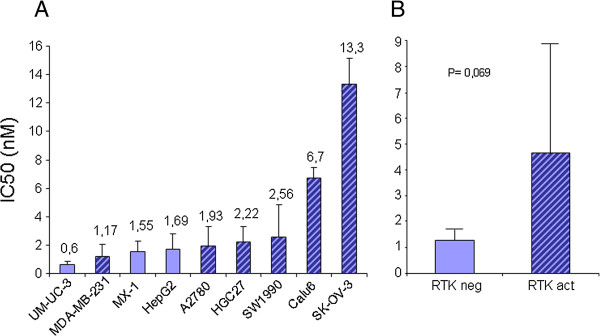
Zalypsis resistance was dependent on the expression levels of PDGFRα or constitutive phosphorylation of c-Kit, indicating that the activation of tyrosine kinase receptors (TKRs) may determine resistance to Zalypsis. To validate our observation, we measured the levels of total and active (phosphorylated) forms of the RTKs PDGFRα/β, c-Kit, and EGFR in a new panel of diverse solid tumor cell lines and found that the IC50 to the drug correlated with RTK activation in this new panel. We further tested our predictions about Zalypsis determinants for response in vivo in xenograft models. All cells lines expressing low levels of RTK signaling were sensitive to Zalypsis in vivo, whereas all cell lines except two with high levels of RTK signaling were resistant to the drug.
RTK activation might provide important signals to overcome the cytotoxicity of Zalypsis and should be taken into consideration in current and future clinical trials.
Zalypsis(®)是一种正在进行多发性骨髓瘤、宫颈癌和子宫内膜癌以及尤因肉瘤二期临床试验的海洋化合物。然而,对Zalypsis反应的决定因素尚不清楚。确定Zalypsis活性的生物标志物也将有助于通过选择那些更可能对该疗法有反应的患者来扩大肿瘤谱。
利用体外药物敏感性数据以及一组肉瘤细胞系的分子数据,我们开发了预测对Zalypsis敏感性的分子特征。我们在培养和体内异种移植研究中验证了这些结果。
Zalypsis耐药性取决于PDGFRα的表达水平或c-Kit的组成性磷酸化,表明酪氨酸激酶受体(TKRs)的激活可能决定对Zalypsis的耐药性。为了验证我们的观察结果,我们在一组新的不同实体瘤细胞系中测量了RTKs PDGFRα/β、c-Kit和EGFR的总形式和活性(磷酸化)形式的水平,发现该药物的IC50与该新细胞系中的RTK激活相关。我们进一步在异种移植模型中测试了我们对Zalypsis体内反应决定因素的预测。所有表达低水平RTK信号的细胞系在体内对Zalypsis敏感而除两个具有高水平RTK信号的细胞系外的所有细胞系对该药物耐药。
RTK激活可能提供重要信号以克服Zalypsis的细胞毒性,并且在当前和未来的临床试验中应予以考虑。