Feng Jian, Wilkinson Matthew, Liu Xiaochuan, Purushothaman Immanuel, Ferguson Deveroux, Vialou Vincent, Maze Ian, Shao Ningyi, Kennedy Pamela, Koo JaWook, Dias Caroline, Laitman Benjamin, Stockman Victoria, LaPlant Quincey, Cahill Michael E, Nestler Eric J, Shen Li
Genome Biol. 2014 Apr 22;15(4):R65. doi: 10.1186/gb-2014-15-4-r65.
Increasing evidence supports a role for altered gene expression in mediating the lasting effects of cocaine on the brain, and recent work has demonstrated the involvement of chromatin modifications in these alterations. However, all such studies to date have been restricted by their reliance on microarray technologies that have intrinsic limitations.
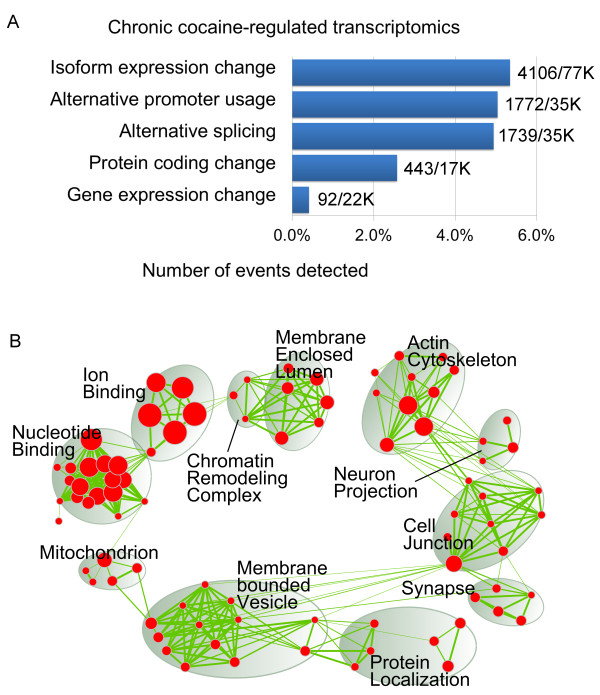
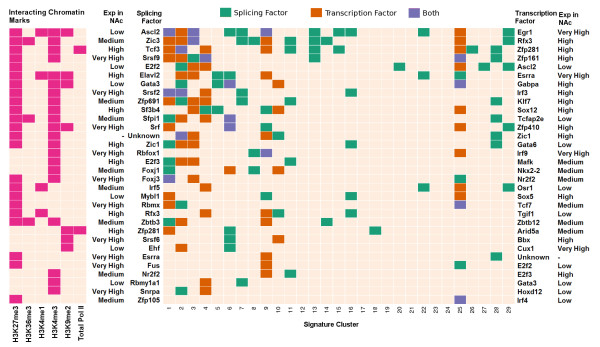
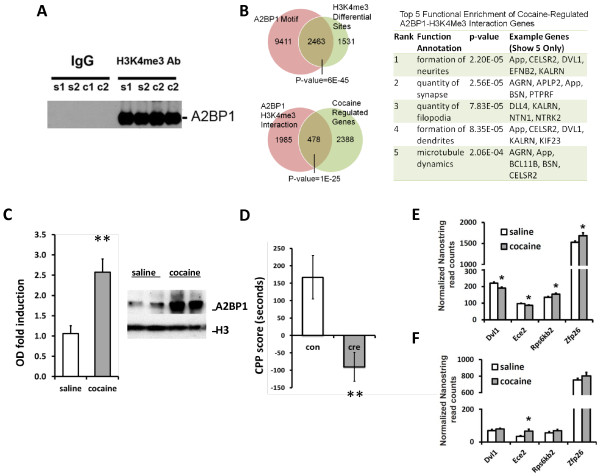
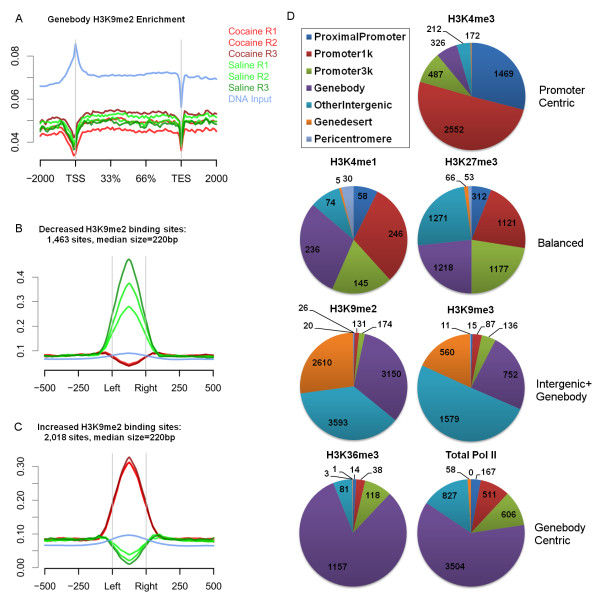
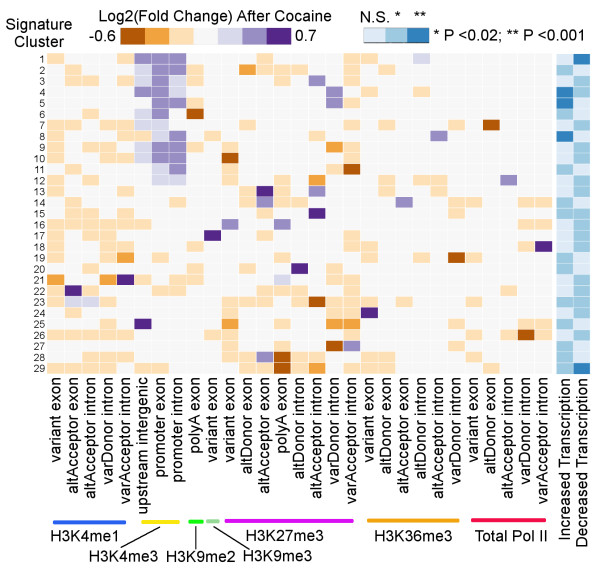
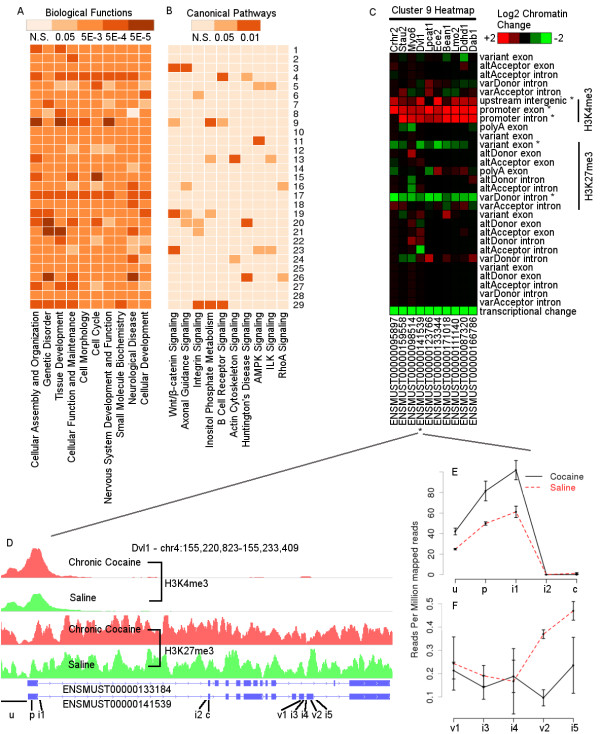
We use next generation sequencing methods, RNA-seq and ChIP-seq for RNA polymerase II and several histone methylation marks, to obtain a more complete view of cocaine-induced changes in gene expression and associated adaptations in numerous modes of chromatin regulation in the mouse nucleus accumbens, a key brain reward region. We demonstrate an unexpectedly large number of pre-mRNA splicing alterations in response to repeated cocaine treatment. In addition, we identify combinations of chromatin changes, or signatures, that correlate with cocaine-dependent regulation of gene expression, including those involving pre-mRNA alternative splicing. Through bioinformatic prediction and biological validation, we identify one particular splicing factor, A2BP1(Rbfox1/Fox-1), which is enriched at genes that display certain chromatin signatures and contributes to drug-induced behavioral abnormalities. Together, this delineation of the cocaine-induced epigenome in the nucleus accumbens reveals several novel modes of regulation by which cocaine alters the brain.
We establish combinatorial chromatin and transcriptional profiles in mouse nucleus accumbens after repeated cocaine treatment. These results serve as an important resource for the field and provide a template for the analysis of other systems to reveal new transcriptional and epigenetic mechanisms of neuronal regulation.
越来越多的证据支持基因表达改变在介导可卡因对大脑的持久影响中发挥作用,并且最近的研究表明染色质修饰参与了这些改变。然而,迄今为止所有此类研究都受到其对具有内在局限性的微阵列技术的依赖的限制。
我们使用下一代测序方法,即RNA测序(RNA-seq)以及针对RNA聚合酶II和几种组蛋白甲基化标记的染色质免疫沉淀测序(ChIP-seq),以更全面地了解可卡因诱导的基因表达变化以及小鼠伏隔核(一个关键的脑奖赏区域)中多种染色质调控模式的相关适应性变化。我们证明,反复给予可卡因会导致大量前体mRNA剪接改变。此外,我们鉴定出与可卡因依赖的基因表达调控相关的染色质变化组合或特征,包括那些涉及前体mRNA可变剪接的变化。通过生物信息学预测和生物学验证,我们确定了一个特定的剪接因子A2BP1(Rbfox1/Fox-1),它在显示某些染色质特征的基因中富集,并导致药物诱导的行为异常。总之,对伏隔核中可卡因诱导的表观基因组的这种描绘揭示了可卡因改变大脑的几种新调控模式。
我们建立了反复给予可卡因后小鼠伏隔核中的组合染色质和转录图谱。这些结果是该领域的重要资源,并为分析其他系统以揭示神经元调控的新转录和表观遗传机制提供了模板。