Fishberg Department of Neuroscience and Friedman Brain Institute, Icahn School of Medicine at Mount Sinai, New York, New York.
Department of Neurology, Massachusetts General Hospital, Boston, Massachusetts.
Biol Psychiatry. 2018 Aug 1;84(3):167-179. doi: 10.1016/j.biopsych.2017.11.027. Epub 2017 Dec 5.
Lasting changes in gene expression in brain reward regions, including nucleus accumbens (NAc), contribute to persistent functional changes in the addicted brain. We and others have demonstrated that altered expression of several candidate transcription factors in NAc regulates drug responses. A recent large-scale genome-wide study from our group predicted transcription factor E2F3 (E2F3) as a prominent upstream regulator of cocaine-induced changes in gene expression and alternative splicing.
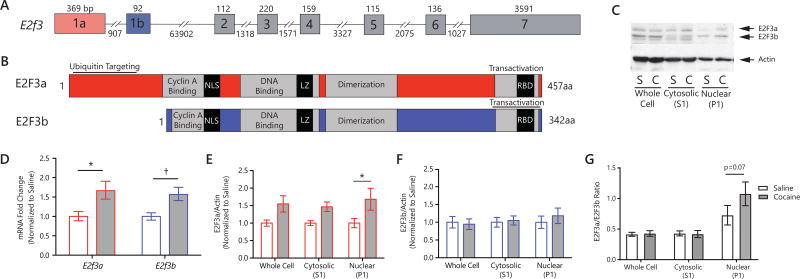
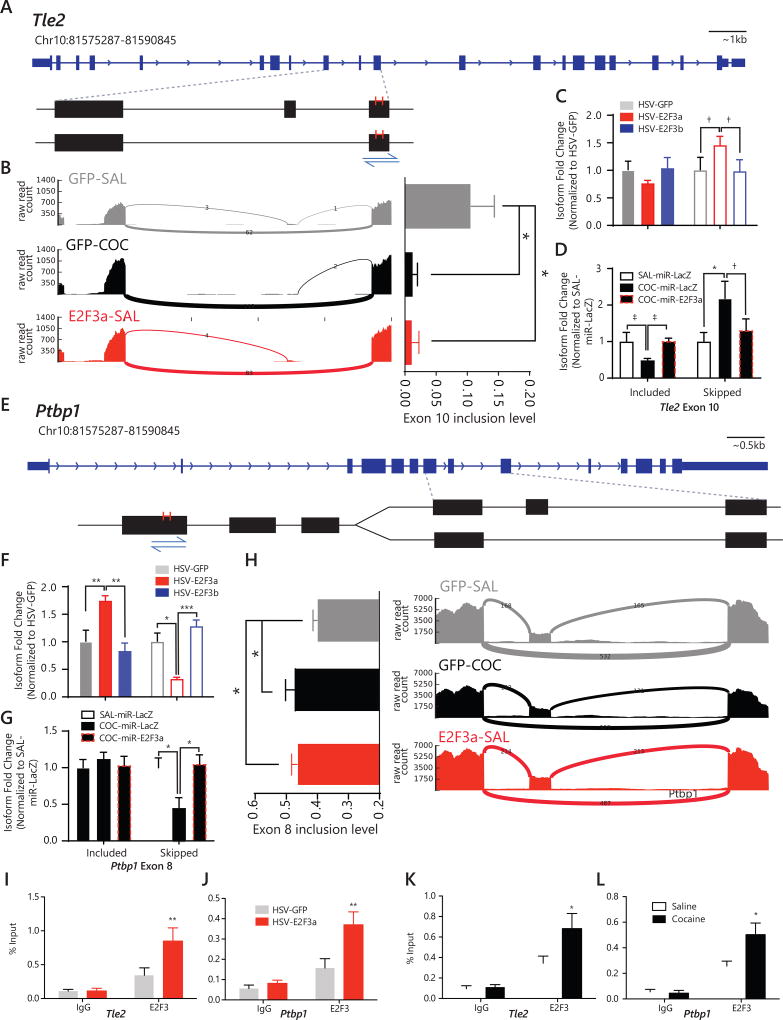
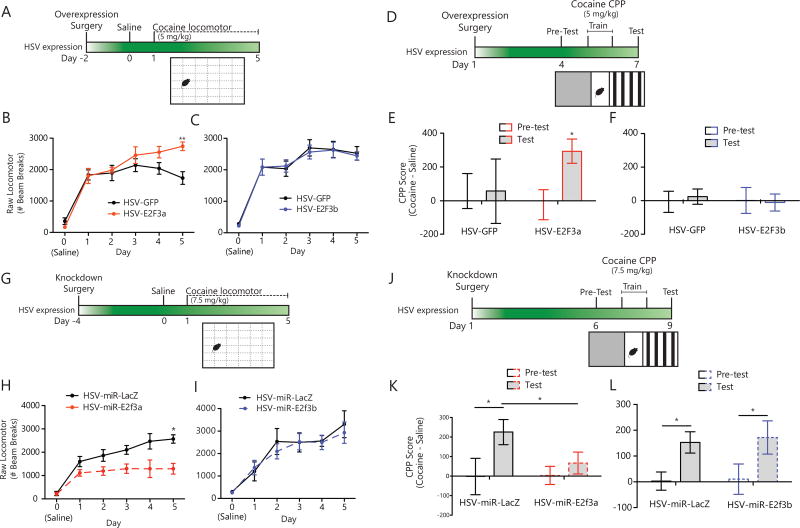
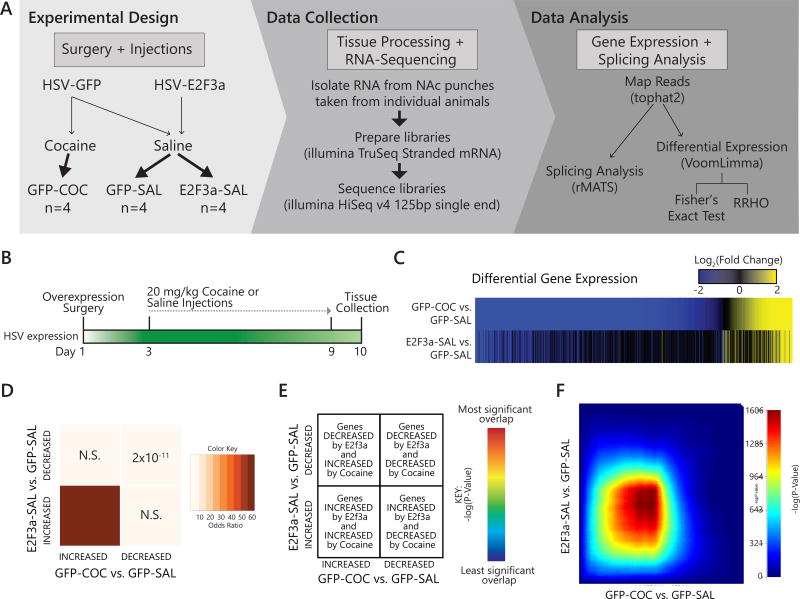
We studied expression of two E2F3 isoforms-E2F3a and E2F3b-in mouse NAc after repeated cocaine administration and assayed the effects of overexpression or depletion of E2f3 isoforms in NAc on cocaine behavioral responses. We then performed RNA sequencing to investigate the effect of E2f3a overexpression in this region on gene expression and alternative splicing and performed quantitative chromatin immunoprecipitation at downstream targets in NAc following E2f3a overexpression or repeated cocaine exposure. Sample sizes varied between experiments and are noted in the text.
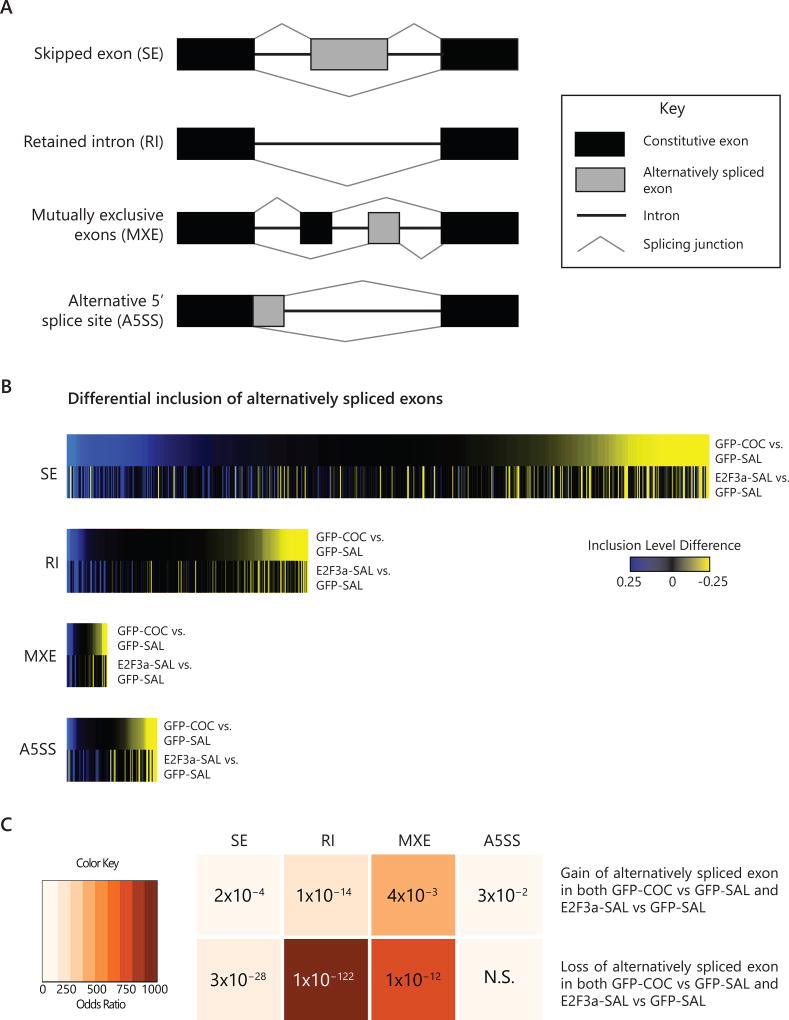
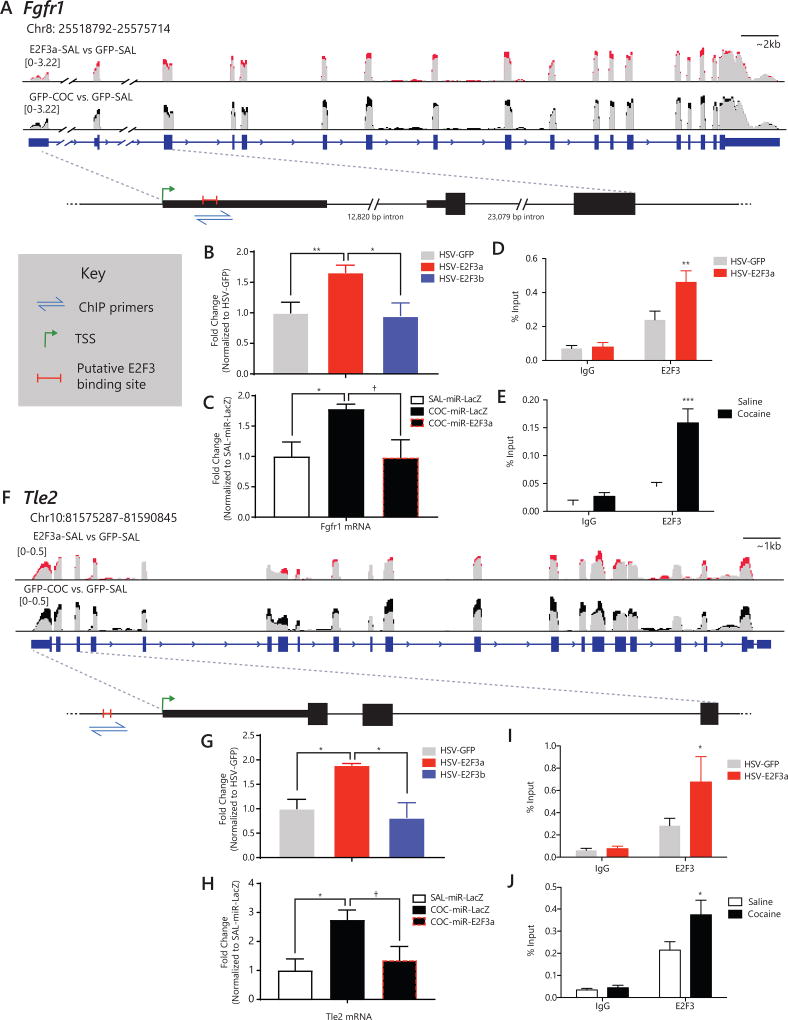
We showed that E2f3a, but not E2f3b, overexpression or knockdown in mouse NAc regulates cocaine-induced locomotor and place conditioning behavior. Furthermore, we demonstrated that E2f3a overexpression substantially recapitulates genome-wide transcriptional profiles and alternative splicing induced by cocaine. We further validated direct binding of E2F3a at key target genes following cocaine exposure.
This study establishes E2F3a as a novel transcriptional regulator of cocaine action in NAc. The findings reveal a crucial role for E2F3a in the regulation of cocaine-elicited behavioral states. Moreover, the importance of this role is bolstered by the extensive recapitulation of cocaine's transcriptional effects in NAc by overexpression of E2f3a.
大脑奖励区域(包括伏隔核)中基因表达的持久变化导致成瘾大脑中持续的功能变化。我们和其他人已经证明,NAc 中几种候选转录因子的表达改变调节了药物反应。我们小组最近进行的一项大规模全基因组研究预测转录因子 E2F3(E2F3)是可卡因诱导的基因表达和选择性剪接变化的主要上游调节剂。
我们在重复给予可卡因后研究了小鼠 NAc 中两种 E2F3 异构体(E2F3a 和 E2F3b)的表达,并检测了 NAc 中 E2f3 异构体过表达或耗竭对可卡因行为反应的影响。然后,我们进行了 RNA 测序,以研究该区域中 E2f3a 过表达对基因表达和选择性剪接的影响,并在 E2f3a 过表达或重复可卡因暴露后在 NAc 中进行下游靶标的定量染色质免疫沉淀。实验之间的样本量有所不同,并在文本中注明。
我们表明,E2f3a(而非 E2f3b)过表达或耗竭可调节小鼠 NAc 中的可卡因诱导的运动和位置条件反射行为。此外,我们证明 E2f3a 过表达可极大地重现可卡因诱导的全基因组转录谱和选择性剪接。我们进一步验证了 E2f3a 在可卡因暴露后对关键靶基因的直接结合。
这项研究确立了 E2f3a 作为 NAc 中可卡因作用的新型转录调节剂。研究结果揭示了 E2f3a 在调节可卡因诱导的行为状态中的关键作用。此外,E2f3a 过表达可极大地重现可卡因在 NAc 中的转录效应,这进一步证明了其重要作用。