Experimental Psychology Lab, Psychology Department, European Medical School, Carl von Ossietzky University, Oldenburg, Germany.
Experimental Psychology Lab, Psychology Department, European Medical School, Carl von Ossietzky University, Oldenburg, Germany; Research Centre Neurosensory Science, Carl von Ossietzky University, Oldenburg, Germany.
PLoS One. 2014 Apr 24;9(4):e96159. doi: 10.1371/journal.pone.0096159. eCollection 2014.
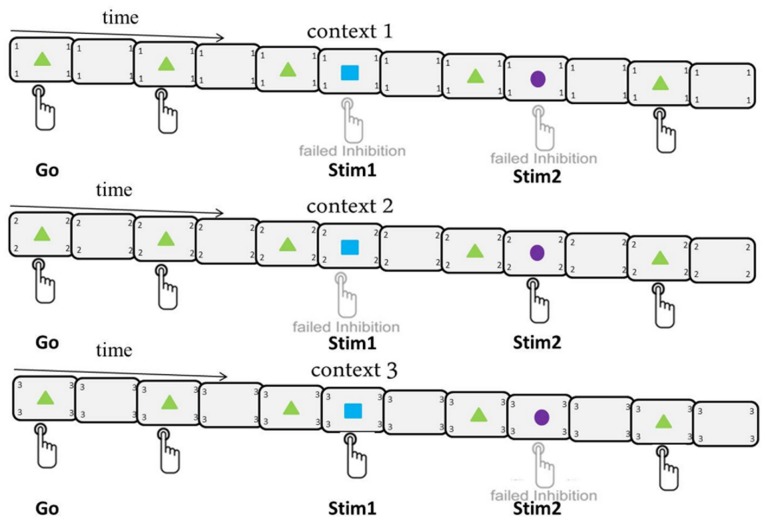
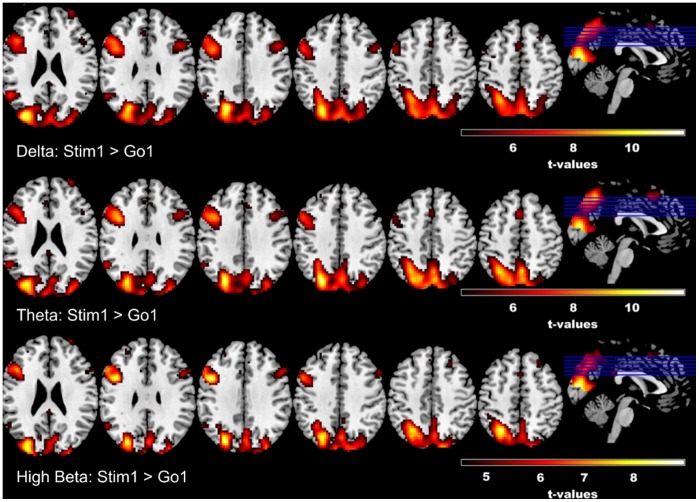
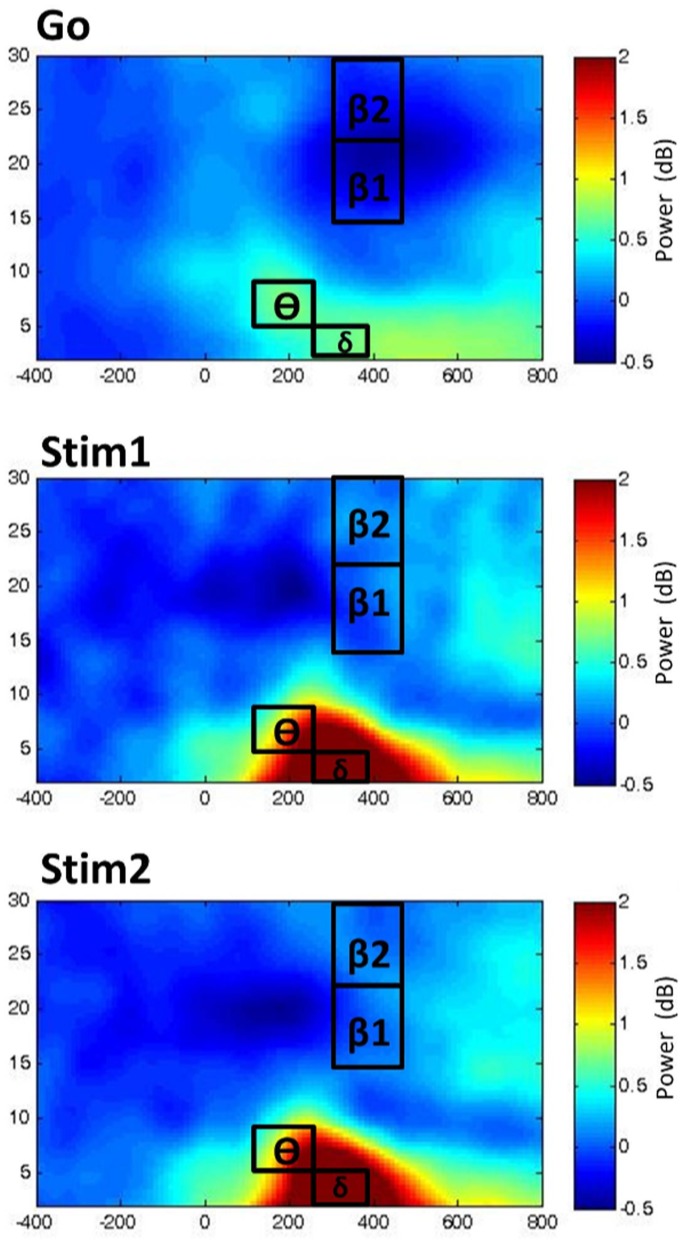
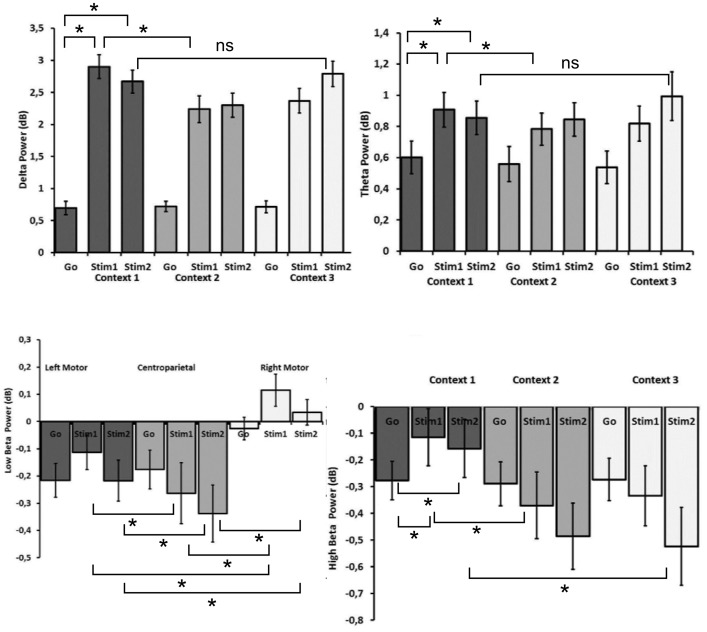
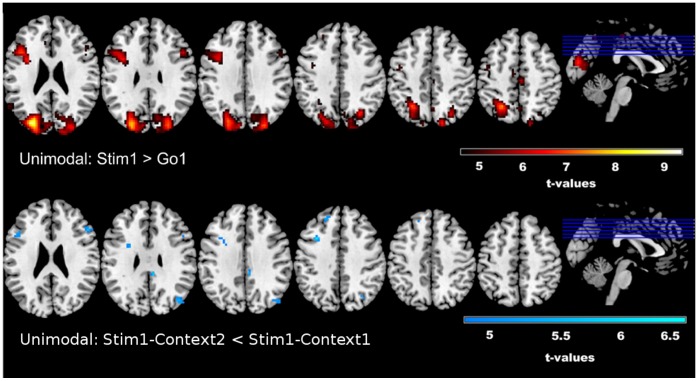
Humans are rarely faced with one simple task, but are typically confronted with complex stimulus constellations and varying stimulus-relevance in a given situation. Through modifying the prototypical stop-signal task and by combined recording and analysis of electroencephalography (EEG) and functional magnetic resonance imaging (fMRI), we studied the effects of stimulus relevance for the generation of a response or its inhibition. Stimulus response mappings were modified by contextual cues, indicating which of two different stimuli following a go stimulus was relevant for stopping. Overall, response inhibition, that is comparing successful stopping to a stop-signal against go-signal related processes, was associated with increased activity in right inferior and left midfrontal regions, as well as increased EEG delta and theta power; however, stimulus-response conditions in which the most infrequent stop-signal was relevant for inhibition, were associated with decreased activity in regions typically involved in response inhibition, as well as decreased activity in the delta and theta bands as compared to conditions wherein the relevant stop-signal frequency was higher. Behaviorally, this (aforementioned) condition, which demanded inhibition only from the most infrequent stimulus, was also associated with reduced reaction times and lower error rates. This pattern of results does not align with typical stimulus frequency-driven findings and suggests interplay between task relevance and stimulus frequency of the stop-signal. Moreover, with a multimodal EEG-fMRI analysis, we demonstrated significant parameterization for response inhibition with delta, theta and beta time-frequency values, which may be interpreted as reflecting conflict monitoring, evaluative and/or motor processes as suggested by previous work (Huster et al., 2013; Aron, 2011). Further multimodal results suggest a possible neurophysiological and behavioral benefit under conditions whereby the most infrequent stimulus demanded inhibition, indicating that the frequency of the stop-signal interacts with the current stimulus-response contingency. These results demonstrate that response inhibition is prone to influence from other cognitive functions, making it difficult to dissociate real inhibitory capabilities from the influence of moderating mechanisms.
人类很少面临单一的任务,而是通常在特定情境下面对复杂的刺激组合和变化的刺激相关性。通过修改原型停止信号任务,并结合记录和分析脑电图(EEG)和功能磁共振成像(fMRI),我们研究了刺激相关性对产生反应或抑制反应的影响。通过上下文线索修改刺激反应映射,指示跟随 Go 刺激的两个不同刺激中的哪一个与停止相关。总体而言,与成功停止相比,反应抑制,即比较停止信号与 Go 信号相关过程,与右下方和左中前额区域的活动增加以及 EEG 德尔塔和θ功率增加相关;然而,对于最不频繁的停止信号与抑制相关的刺激-反应条件,与通常参与反应抑制的区域的活动减少以及与相关停止信号频率较高的条件相比,德尔塔和θ频段的活动减少相关。行为上,这种(上述)条件,即仅从最不频繁的刺激中要求抑制,也与反应时间缩短和错误率降低有关。这种结果模式与典型的刺激频率驱动发现不一致,表明任务相关性和停止信号的刺激频率之间存在相互作用。此外,通过多模态 EEG-fMRI 分析,我们用德尔塔、θ 和β时频值对反应抑制进行了显著的参数化,这可以解释为反映冲突监测、评估和/或运动过程,如先前的工作(Huster 等人,2013 年;Aron,2011 年)所建议的。进一步的多模态结果表明,在最不频繁的刺激要求抑制的情况下,可能存在神经生理和行为上的好处,这表明停止信号的频率与当前的刺激-反应关联相互作用。这些结果表明,反应抑制容易受到其他认知功能的影响,使得难以将真实的抑制能力与调节机制的影响区分开来。