Ding Dale, Starke Robert M, Liu Kenneth C
Department of Neurological Surgery, University of Virginia, Charlottesville, VA, United States.
J Cerebrovasc Endovasc Neurosurg. 2014 Mar;16(1):26-31. doi: 10.7461/jcen.2014.16.1.26. Epub 2014 Mar 31.
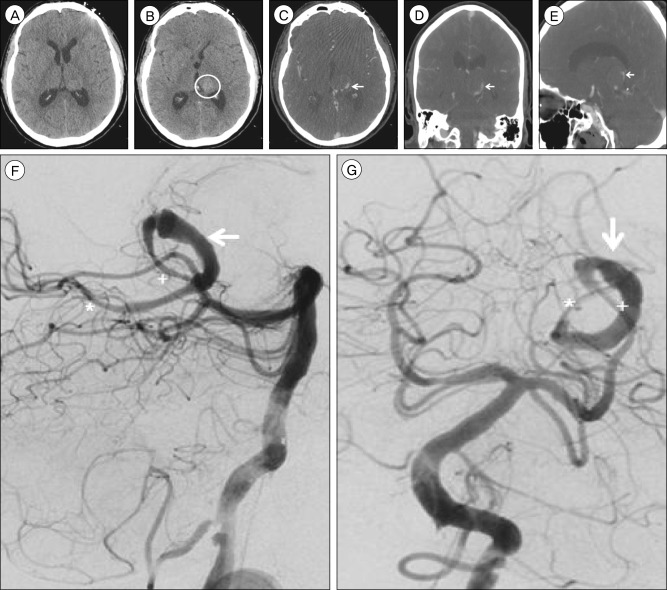
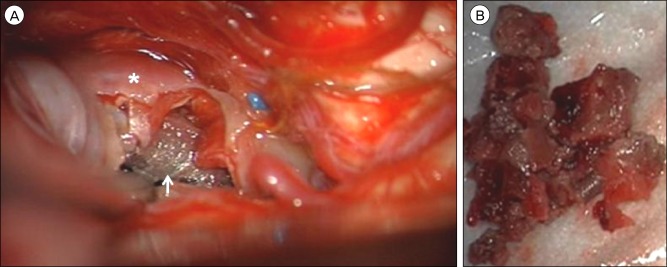
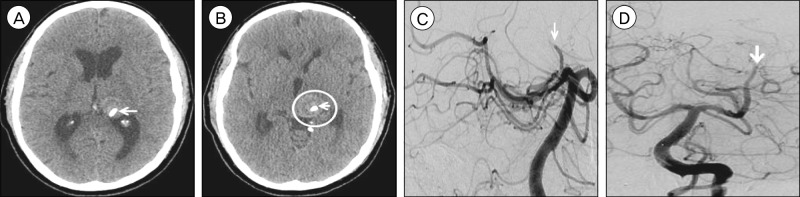
Treatment of giant posterior circulation aneurysms, via endovascular or microsurgical approaches, carries a high risk of morbidity and mortality. While flow-diverting stents (FDSs) represent a potent therapy for endovascular reconstruction of complex aneurysms, they are also associated with novel complications for which effective salvage techniques are lacking. We present a unique complication from failed treatment with a FDS. A 51 year-old male presented with increasing headaches secondary to a giant, fusiform aneurysm of the left posterior cerebral artery, which was largely thrombosed. Due to progressive enlargement of the aneurysm corresponding to worsening clinical symptoms, the lesion was treated with two Pipeline embolization devices (ev3, Plymouth, MN, United States). Three months after Pipeline embolization device treatment, complete posterior cerebral artery occlusion was observed at the origin of the proximal stent. Despite the lack of arterial inflow, the aneurysm dome continued to grow, resulting in obstructive hydrocephalus. Therefore microsurgical intervention was undertaken to trap and excise the aneurysm. The patient's postoperative course was complicated by multiple venous infarcts, ultimately resulting in death. Successful microsurgical obliteration of aneurysms previously treated with FDSs is extremely difficult. A combination of judicious preoperative planning and meticulous intraoperative surgical technique are requisite for effective management of these complicated cases.
通过血管内或显微外科方法治疗巨大的后循环动脉瘤,具有较高的发病和死亡风险。虽然血流导向支架(FDS)是复杂动脉瘤血管内重建的有效治疗方法,但它们也会引发一些新的并发症,而目前缺乏有效的补救技术。我们报告了一例因FDS治疗失败而出现的独特并发症。一名51岁男性因左大脑后动脉巨大梭形动脉瘤(大部分已血栓形成)导致头痛加重前来就诊。由于动脉瘤随着临床症状恶化而逐渐增大,该病变采用了两枚Pipeline栓塞装置(ev3,美国明尼苏达州普利茅斯)进行治疗。在Pipeline栓塞装置治疗三个月后,在近端支架起始处观察到大脑后动脉完全闭塞。尽管缺乏动脉血流,但动脉瘤瘤顶仍继续生长,导致梗阻性脑积水。因此,进行了显微外科干预,以夹闭并切除动脉瘤。患者术后出现多处静脉梗死,最终导致死亡。对于先前接受FDS治疗的动脉瘤,成功进行显微外科闭塞极为困难。对于这些复杂病例的有效管理,需要明智的术前规划和细致的术中手术技巧相结合。