Department of Molecular and Human Genetics, Baylor College of Medicine, Houston, TX 77030, USA.
Institute of Molecular Biotechnology (IMBA) of the Austrian Academy of Sciences, 1030 Vienna, Austria.
Cell. 2014 Apr 24;157(3):636-50. doi: 10.1016/j.cell.2014.02.058.
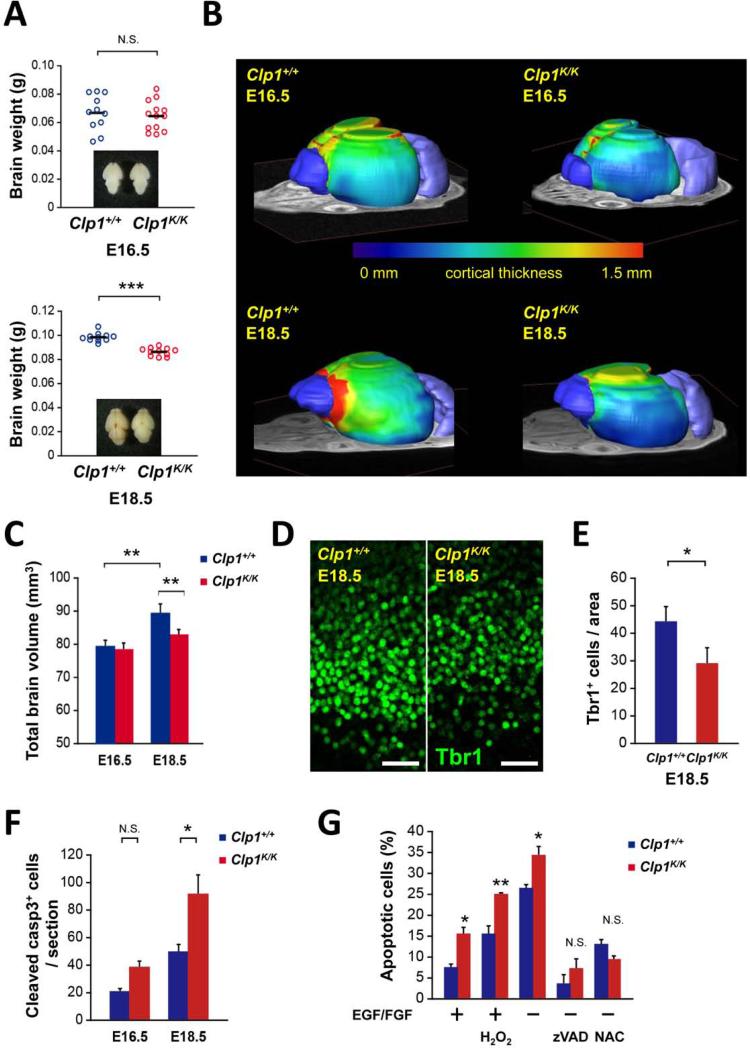
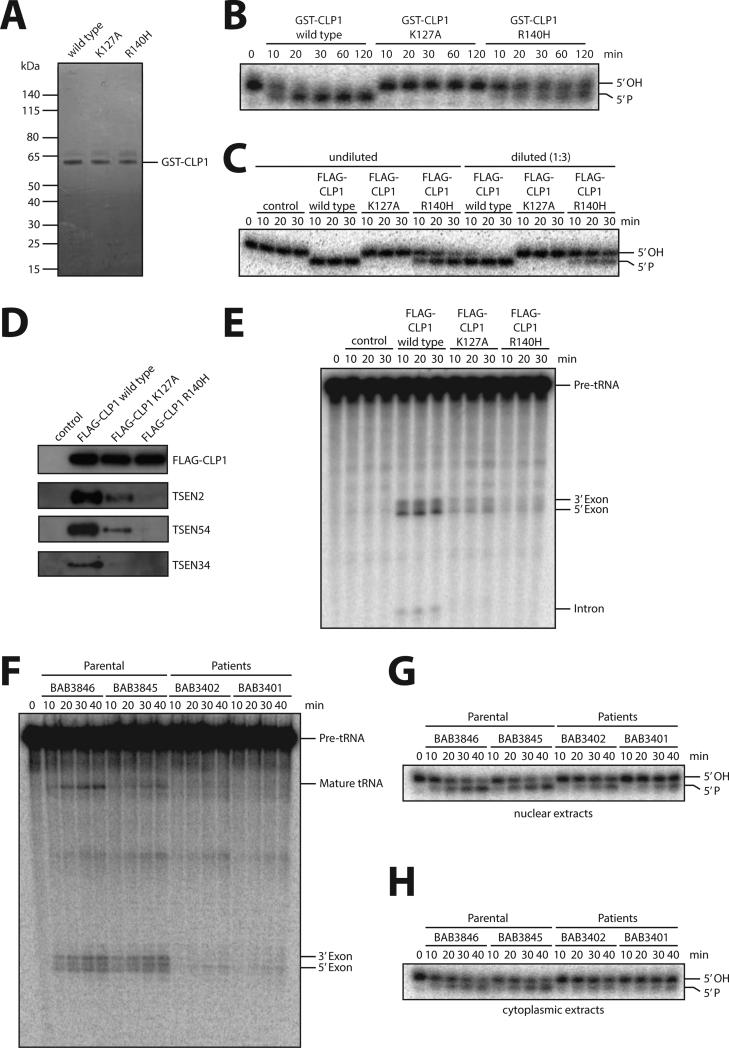
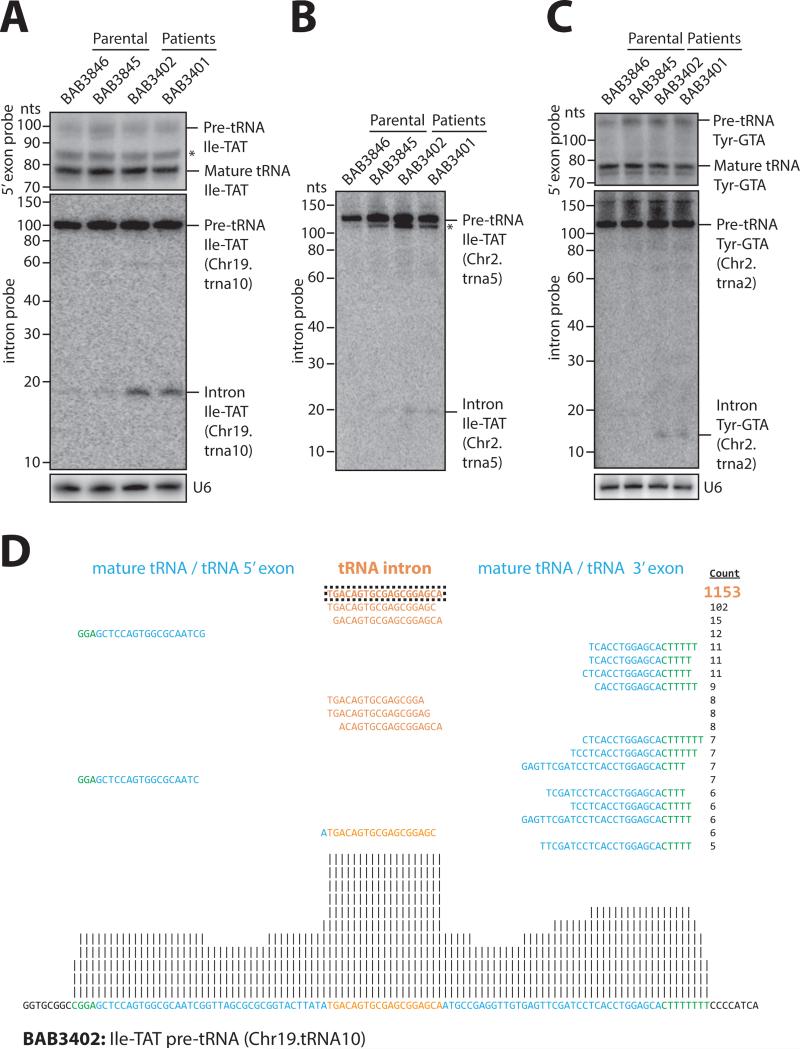
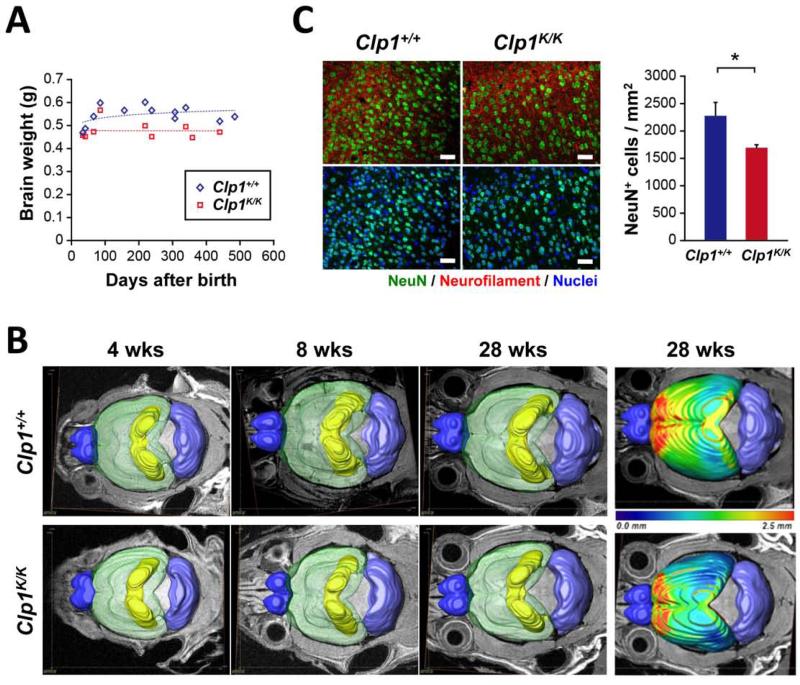
CLP1 is a RNA kinase involved in tRNA splicing. Recently, CLP1 kinase-dead mice were shown to display a neuromuscular disorder with loss of motor neurons and muscle paralysis. Human genome analyses now identified a CLP1 homozygous missense mutation (p.R140H) in five unrelated families, leading to a loss of CLP1 interaction with the tRNA splicing endonuclease (TSEN) complex, largely reduced pre-tRNA cleavage activity, and accumulation of linear tRNA introns. The affected individuals develop severe motor-sensory defects, cortical dysgenesis, and microcephaly. Mice carrying kinase-dead CLP1 also displayed microcephaly and reduced cortical brain volume due to the enhanced cell death of neuronal progenitors that is associated with reduced numbers of cortical neurons. Our data elucidate a neurological syndrome defined by CLP1 mutations that impair tRNA splicing. Reduction of a founder mutation to homozygosity illustrates the importance of rare variations in disease and supports the clan genomics hypothesis.
CLP1 是一种参与 tRNA 剪接的 RNA 激酶。最近,研究表明 CLP1 激酶缺失的小鼠表现出一种神经肌肉疾病,伴有运动神经元丧失和肌肉瘫痪。人类基因组分析现在在五个无关的家族中鉴定出 CLP1 纯合错义突变(p.R140H),导致 CLP1 与 tRNA 剪接内切酶(TSEN)复合物的相互作用丧失,前 tRNA 切割活性大大降低,以及线性 tRNA 内含子的积累。受影响的个体表现出严重的运动感觉缺陷、皮质发育不良和小头症。携带激酶缺失的 CLP1 的小鼠也由于与皮质神经元数量减少相关的神经元祖细胞死亡增加而出现小头症和皮质脑体积减少。我们的数据阐明了一种由 CLP1 突变引起的神经系统综合征,这些突变会损害 tRNA 剪接。将一个创始突变降低到纯合性,说明了疾病中罕见变异的重要性,并支持了族基因组学假说。