IMBA, Institute of Molecular Biotechnology of the Austrian Academy of Sciences, Vienna 1030, Austria.
Nature. 2013 Mar 28;495(7442):474-80. doi: 10.1038/nature11923. Epub 2013 Mar 10.
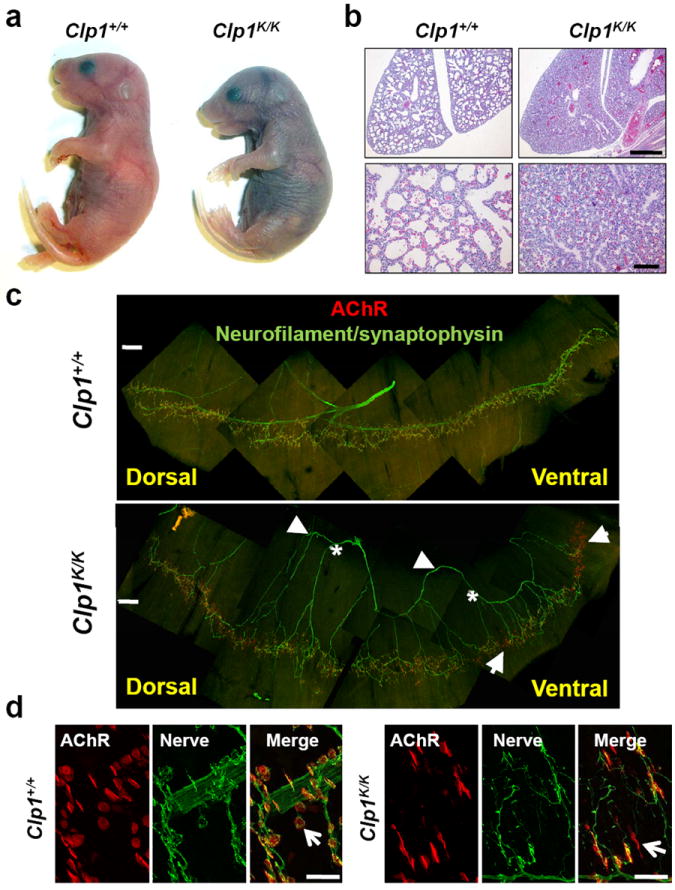
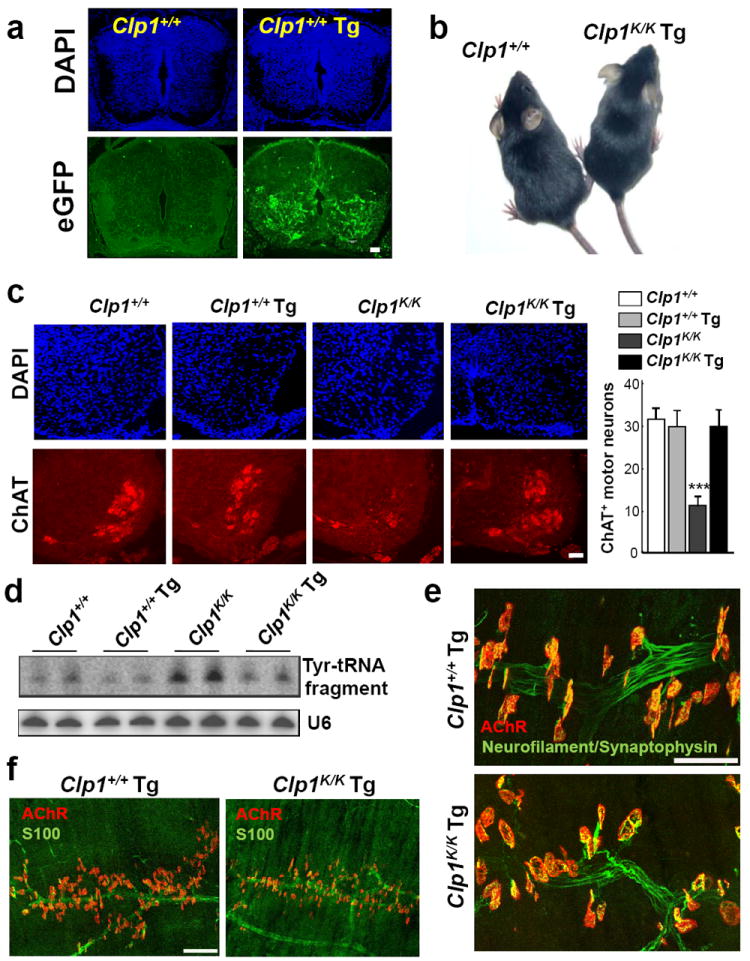
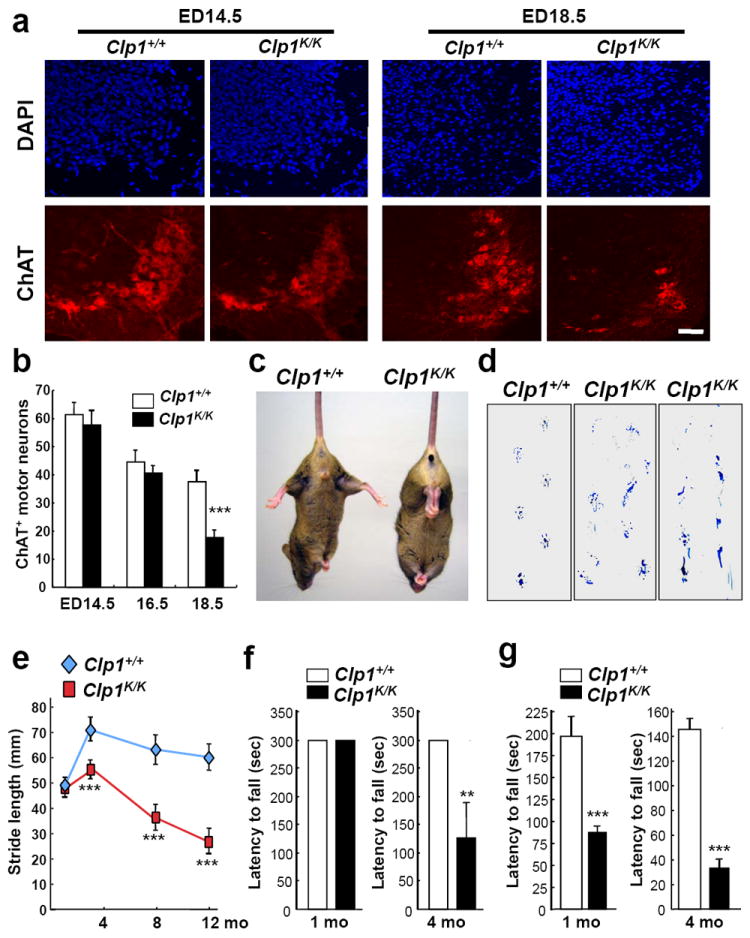
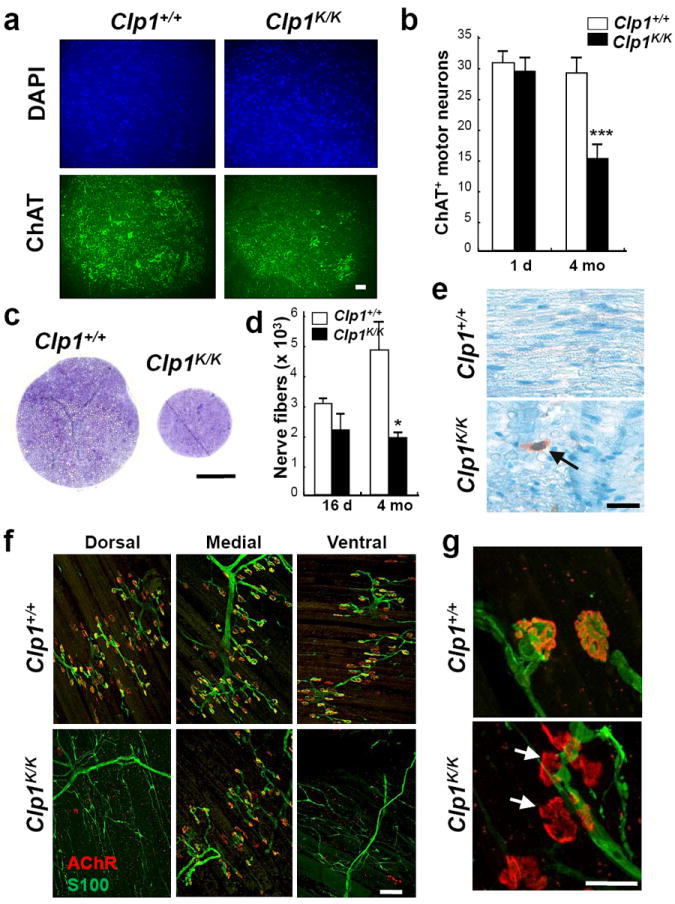
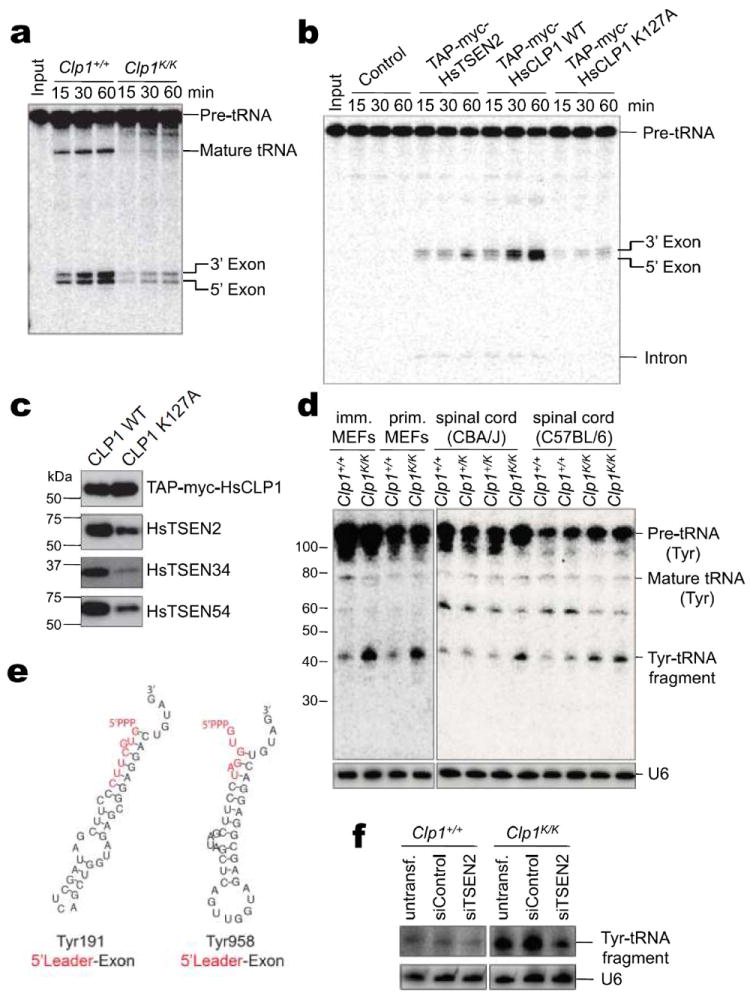
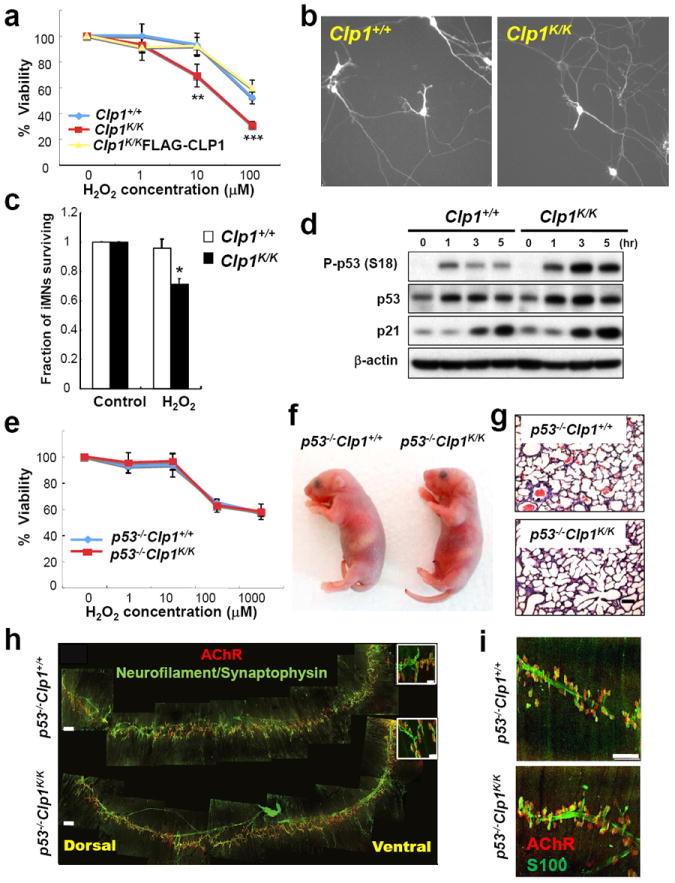
CLP1 was the first mammalian RNA kinase to be identified. However, determining its in vivo function has been elusive. Here we generated kinase-dead Clp1 (Clp1(K/K)) mice that show a progressive loss of spinal motor neurons associated with axonal degeneration in the peripheral nerves and denervation of neuromuscular junctions, resulting in impaired motor function, muscle weakness, paralysis and fatal respiratory failure. Transgenic rescue experiments show that CLP1 functions in motor neurons. Mechanistically, loss of CLP1 activity results in accumulation of a novel set of small RNA fragments, derived from aberrant processing of tyrosine pre-transfer RNA. These tRNA fragments sensitize cells to oxidative-stress-induced p53 (also known as TRP53) activation and p53-dependent cell death. Genetic inactivation of p53 rescues Clp1(K/K) mice from the motor neuron loss, muscle denervation and respiratory failure. Our experiments uncover a mechanistic link between tRNA processing, formation of a new RNA species and progressive loss of lower motor neurons regulated by p53.
CLP1 是第一个被鉴定的哺乳动物 RNA 激酶。然而,确定其体内功能一直难以捉摸。在这里,我们生成了激酶失活的 Clp1(Clp1(K/K))小鼠,这些小鼠表现出与外周神经轴突变性相关的进行性脊髓运动神经元丧失和运动终板去神经支配,导致运动功能受损、肌肉无力、瘫痪和致命性呼吸衰竭。转基因拯救实验表明 CLP1 在运动神经元中发挥作用。从机制上讲,CLP1 活性的丧失导致一组新型小 RNA 片段的积累,这些片段来源于酪氨酸前转移 RNA 的异常加工。这些 tRNA 片段使细胞对氧化应激诱导的 p53(也称为 TRP53)激活和 p53 依赖性细胞死亡敏感。p53 的遗传失活可使 Clp1(K/K)小鼠免于运动神经元丧失、肌肉去神经支配和呼吸衰竭。我们的实验揭示了 tRNA 加工、新型 RNA 物种形成和由 p53 调节的下运动神经元进行性丧失之间的机制联系。